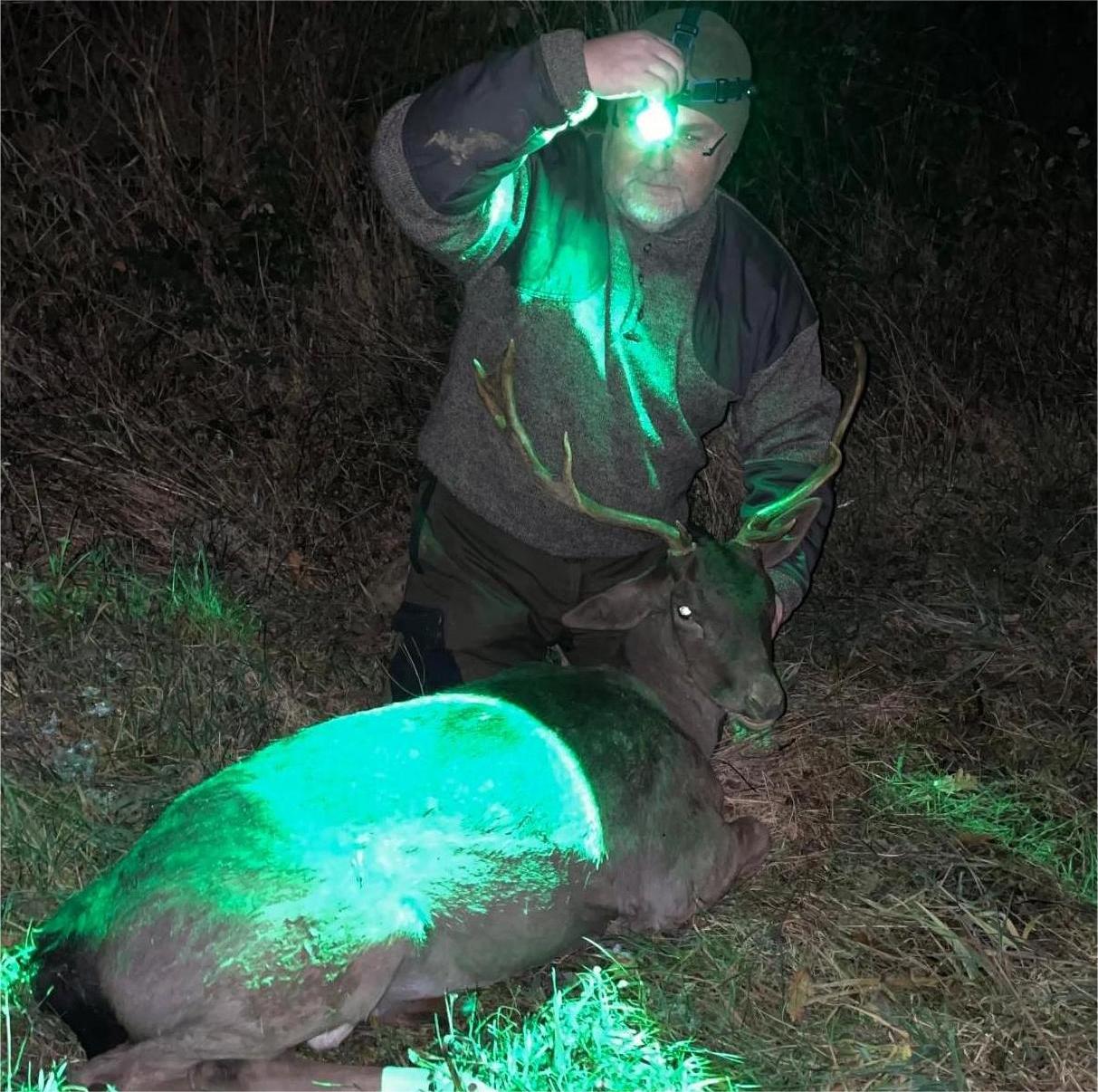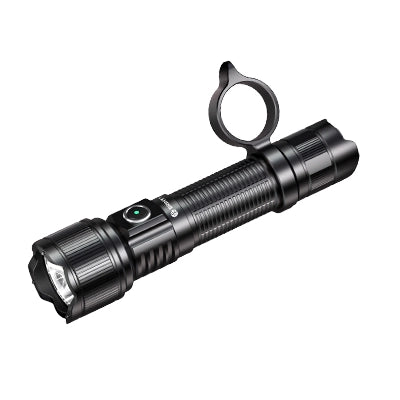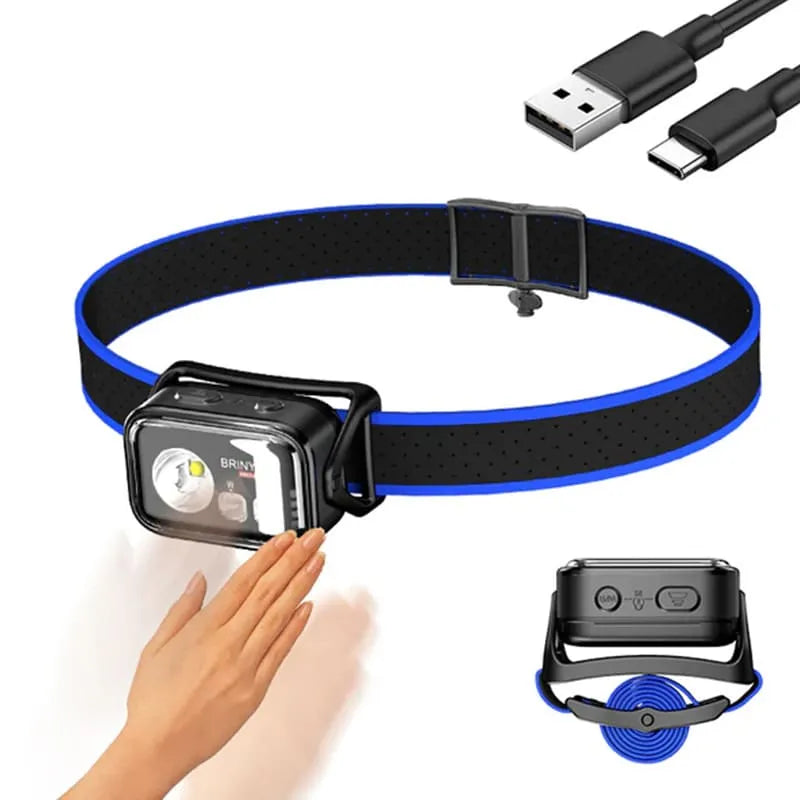


The best bait for a hog trap is fermented sour corn (whole kernel corn soaked in water, beer, and yeast for 3–5 days). It creates a pungent, acidic aroma that feral hogs detect from over a mile away while deer largely ignore it. For the trap-shy mature boars that won't enter any enclosure, supplement the trap with a diesel-soaked rubbing post 20 yards away and deploy a green-light night hunting system like the Brinyte T28 Artemis to take them while they circle. The complete system — trap bait + deer-proof attractant + stealth lighting — solves what no single bait can.

✔ Hunters who've baited traps only to find deer ate every kernel by morning
✔ Anyone who wants a complete hog removal system — not just a list of things pigs eat
1. Why Most "Best Bait for Hog Trap" Lists Are Useless
Type best bait for hog trap into Google, and you'll find the same five bullet points repeated across two dozen websites: corn, Jell-O, fruit, diesel, and commercial hog attractant. The information is not wrong. It's just incomplete to the point of being useless.
Here's what those lists never tell you: corn attracts deer faster than it attracts hogs. If you've ever baited a hog trap in whitetail country, you already know this. You spend a week conditioning a sounder to enter your corral trap, only to find the corn gone and fresh deer tracks everywhere. The hogs never even got a taste. Your trap became a deer feeder.
The real question is not "what do hogs eat?" — a feral pig will eat literally anything. The real question is: what attracts hogs faster than it attracts everything else? And the corollary that almost no article addresses: what do you do about the hogs that absolutely refuse to enter any trap?
The best bait for a hog trap is not the one hogs like most — it's the one that attracts hogs while repelling deer. On land with a healthy deer population, any corn-based bait that doesn't actively deter whitetails is a waste of time. The bait you choose must solve the non-target animal problem first, and the hog attraction problem second.
2. Best Bait for Hog Trap: 5 Options Compared Side-by-Side
Below is the only bait comparison table you'll need. Unlike every other "best hog bait" article, we've added two columns that actually matter: Deer Resistance and Cost Per Trap Set. Because if your bait costs $40 and the deer eat it in one night, you're not trapping hogs — you're running a wildlife buffet.
| Bait Type | Attraction Speed | Deer Resistance | Cost Per Set | Best For |
|---|---|---|---|---|
| Sour Corn | ⭐⭐⭐⭐⭐ (1+ mile scent cone) | ⭐⭐⭐⭐ (Deer avoid fermented odor) | $3–5 | All-purpose; best overall |
| Diesel-Soaked Corn | ⭐⭐⭐⭐ (Boars only) | ⭐⭐⭐⭐⭐ (Deer hate petroleum) | $5–8 | Targeting mature boars |
| Commercial Hog Attractant | ⭐⭐⭐ (Variable by brand) | ⭐⭐ (Most attract deer too) | $15–25 | Convenience; no prep time |
| Fruit & Berries | ⭐⭐ (Seasonal; rots fast) | ⭐ (Deer eat it all) | Free–$10 | Supplement only |
| Straight Corn (Dry) | ⭐⭐⭐ (Works; no scent cone) | ⭐ (Deer favorite) | $2–4 | Budget option; deer country = waste of money |
Sour corn is the best bait for a hog trap because it solves the deer problem and the attraction problem simultaneously. The fermentation process creates an odor profile that hogs find irresistible at extreme distances while making the bait actively unappealing to whitetails — a combination no commercial product reliably delivers at this price point.
3. The Sour Corn Recipe: Step-by-Step (With Ratios That Actually Work)
Every article mentions sour corn. Almost none gives you a precise ratio. Here's the exact hog trapping bait recipe that's been field-tested on sounders across Texas and Florida:
🥣 Sour Corn — Exact Recipe
- Container: 5-gallon bucket with lid (do not seal fully — gas buildup will explode a tight lid)
- Fill: Bucket ¾ full with whole kernel corn (approximately 40 lbs)
- Fermentation starter: 2–3 cans of the cheapest beer you can find, OR 1 packet of active dry yeast dissolved in warm water
- Water: Add enough to cover the corn by 2 inches
- Optional accelerant: 1 cup of sugar (feeds the yeast, speeds fermentation)
- Time: 3–5 days in direct sun. Stir once daily. Ready when the smell makes you gag.
- Deployment: Scatter 5–10 lbs in a concentrated pile inside the trap. Replenish every 2–3 days.
4. The Diesel Method: The Best Hog Attractant for Traps That Deer Won't Touch
If sour corn is the all-purpose champion, diesel corn for hogs is the precision tool. This method exploits a behavior that has nothing to do with hunger — and that's exactly why it works when everything else fails.
Feral hogs are plagued by external parasites: ticks, lice, and mites. To remove them, hogs rub vigorously against rough surfaces — trees, fence posts, large rocks. By soaking a burlap sack or a 4×4 wooden post in diesel fuel and securing it near your trap site, you create a functional rubbing station that carries an odor hogs associate with relief. They approach it not because they're hungry, but because they itch.
The critical side benefit: deer and turkeys have zero interest in diesel. This is one of the only attractants on the market that is genuinely selective for hogs. Place the diesel post 15–20 yards from your trap, and position yourself downwind between the two. Boars that stop short of the trap will still stop at the post — and that's a shot opportunity.
5. The Hog Your Trap Cannot Catch: Understanding Trap-Shy Behavior
Here's a truth that most trapping guides avoid: traps catch about 80% of a sounder. The remaining 20% — usually the oldest, largest, and most destructive animals — will never step inside.
Old trappers have a name for these animals: trap-shy hogs. They've seen corral traps before. They've watched littermates get caught. They know what a bait pile looks like, and they know that enclosed spaces with only one exit are dangerous. These hogs will circle a trap for hours, feeding on scattered corn at the edges, but they will not enter.
I once spent three weeks trying to trap a 280-pound boar in central Texas. The trap camera showed him on site every single night between 11 PM and 2 AM. He'd walk the perimeter, sniff the entrance, and then back away. In 21 nights, he never crossed the threshold. We finally took him at 1:30 AM with a green light and a clean shot from 80 yards — standing next to a diesel-soaked post we'd installed specifically for him.
The lesson: A trap is a tool, not a solution. When the trap fails — and it will — you need a secondary method. That method is night hunting over bait with a light that the hog cannot perceive as a threat.
Traps capture approximately 80% of a sounder. The remaining 20% — trap-shy mature boars and sows — require a completely different strategy. These animals cannot be baited into confinement, but they can be patterned. They visit bait sites on predictable schedules, they prefer the edges to the center, and they are acutely aware of any change in their environment. The solution is to hunt them on their own terms: at night, with equipment they cannot detect.
6. The Brinyte T28 Artemis: Built for the Hog That Won't Go In
This is where every other best bait for hog trap article ends — with a list of things to put in a bucket. But if you've read this far, you understand that bait alone cannot finish the job. The final 20% of hogs require you to be on the ground, at night, with equipment that exploits their specific biological weaknesses.
Wild hogs have dichromatic vision — meaning they possess only two types of cone photoreceptors in their retina, compared to the three found in humans. Research on feral swine retinal structure confirms that their cone cells are predominantly sensitive to short wavelengths (blue-violet range), with minimal to zero response to wavelengths above 520nm. This means green light (520–560nm) registers to a hog as a dim, non-threatening gray, while red light (620–750nm) is effectively invisible.
The Brinyte T28 Artemis was engineered specifically around this biological reality. It integrates white, red, and green LEDs into a single body with a patented silent rotary selector — no clicking through modes, no external filters to fumble with in the dark. Use red to navigate to your stand undetected. Transition to green to scan the bait site from 100+ yards. The 525-meter beam throw gives you positive identification at distances that would be impossible with a flood-first light.
But the T28's defining feature for trap-shy hog hunting is something most hunters overlook: stepless dimming.
Why Stepless Dimming Matters More Than Brightness
Hogs may not see green light as brightly as humans do, but their visual system is exquisitely tuned to changes in luminance. A light that suddenly jumps from "off" to "medium" creates a sharp shadow displacement — and that displacement triggers flight, regardless of the light's color. The T28's stepless dimmer allows you to gradually increase brightness from 0% to 100% without any discrete jumps. The light "grows" on the scene so slowly that the hog's motion-detection system never registers a change. This is not a convenience feature. It's a hunting necessity.
🔦 Brinyte T28 Artemis — The Trap-Shy Hog Solution
The only hunting light that combines wavelength-specific stealth (green light for hogs' retinal blind spot) with stepless luminance control (to defeat their motion-detection system). When your trap has caught everything it can, the T28 is how you get the rest.
Shop T28 Artemis →Bait alone is not a hog removal strategy — it's one component of a three-part system. Trap what you can with sour corn (80% of the sounder). Pattern the trap-shy survivors with diesel posts and trail cameras. Take the remaining 20% with a wavelength-optimized night hunting light that exploits their specific retinal limitations. This is the only approach that consistently clears an entire sounder from a property.
7. Before You Bait: Know Your State's Hog Baiting Laws
Hog baiting regulations vary dramatically by state. What's standard practice in Texas may be illegal in California. Before deploying any attractant — especially diesel or fermented bait on public land — verify the current regulations for your state through your wildlife agency.
- Texas, Florida, Georgia, Louisiana: Generally permit baiting on private land for feral hogs. Some restrictions may apply on public hunting lands.
- California: Baiting regulations are stricter. Verify before deploying.
- Public Land (any state): Often restricts or prohibits baiting entirely. Always check.
Don't Let the Biggest Hog Get Away
Your trap catches the sounder. The T28 catches the one that's too smart for the trap. Complete your hog removal system.
Shop Hunting Lights →About Brinyte
Founded in 2009 — 50+ patents, ISO9001 certified. Brinyte builds hunting lights for the trappers who set bait after dark, the landowners reclaiming their property from invasive sounders, and the night hunters who know that the biggest hog is always the one that won't go in. All products tested to ANSI/NEMA FL1 standards.
"Engineered for the mission — proven in the field."
Founded 2009 · 50+ Patents · ISO9001
❓ Frequently Asked Questions — Hog Trap Bait
What is the best bait for a hog trap?
The best bait for a hog trap is fermented sour corn — whole kernel corn soaked in water, beer, and yeast for 3–5 days. It creates a scent cone that hogs detect from over a mile away while deer avoid the fermented odor. For trap-shy boars, supplement with a diesel-soaked rubbing post outside the trap.
How do you keep deer out of a hog trap?
The most effective method is using hog trap bait that deer won't eat — specifically fermented sour corn (deer avoid the rancid odor) or diesel-soaked corn (deer hate petroleum smells). Both attractants exploit the hog's superior tolerance for strong, fermented, and chemical odors that whitetails instinctively avoid.
What is a trap-shy hog and how do you catch one?
A trap-shy hog is a mature boar or sow that has learned to avoid box and corral traps — often after watching other hogs get caught. These animals will circle a trap but never enter. The only reliable method is night hunting over bait using a wavelength-optimized green light (520–560nm) like the Brinyte T28, which hogs cannot clearly perceive. Set up downwind of a diesel rubbing post and take them while they're focused on the post.
Can hogs see green light?
Feral hogs have dichromatic vision with cone cells that are largely insensitive to wavelengths above 520nm. Green light (520–560nm) appears to them as a dim, non-threatening gray. However, hogs are highly sensitive to sudden changes in brightness — which is why a light with stepless dimming (gradual 0–100% brightness control) is critical. The Brinyte T28's stepless dimmer eliminates the shadow displacement that triggers flight.
How long does it take to trap a sounder of hogs?
With sour corn bait, most sounders begin entering a corral trap within 3–7 days of conditioning. The key is to leave the trap gate wired open for the first 3–5 days so hogs become comfortable feeding inside. Once the entire sounder is entering regularly, set the trigger. Expect to catch 80% of the group. The remaining trap-shy individuals require night hunting.
Is it legal to bait hogs with diesel?
Regulations vary by state. Texas, Florida, Georgia, and Louisiana generally permit diesel-based attractants on private land with some restrictions. Many states prohibit petroleum products on public land or near water sources. Always verify current regulations through your state wildlife agency before deploying any chemical attractant.