

When the Grid Goes Down: The One Item Your Bug-Out Bag Is Missing
✔ Preppers & bug out bag enthusiasts
✔ Anyone who has experienced a multi‑day blackout
✔ Tactical users wanting the best flashlight for grid down situations
1. The 2 AM Reality: When Darkness Becomes a Threat

It's 2:17 AM. A transformer blows a block away. The house goes silent — no hum from the refrigerator, no glow from the nightlight. You reach for your phone: 12% battery. The garage door won't open. Your kids are awake, asking what happened.
You grab your emergency kit — the one you spent hours assembling. Inside: three days of water, freeze‑dried meals, a first‑aid kit, and a plastic flashlight from the checkout aisle. You click the switch. Nothing. You shake it. A weak, flickering beam emerges — barely enough to find the stairs, let alone assess what's happening outside. This is why power outage preparedness starts with the right gear, and the best emergency flashlight for home is not the one from the dollar store.
When the grid fails, your emergency kit's lighting is the first system you'll rely on — and the one most people get wrong. A cheap plastic light with a dying battery isn't an emergency tool; it's a false sense of security. The difference between a well‑lit path and stumbling in darkness can mean everything.
2. Why 2026 Demands Real Preparedness
The trend line is unmistakable. America's electrical grid is aging, extreme weather events are intensifying, and the risk landscape has expanded beyond natural disasters alone. This is why power outage preparedness kit essentials must include a reliable, professional‑grade light.
- Extreme weather: NOAA documented 27 separate billion‑dollar weather and climate disasters in the United States during 2024 alone. The 2024 Atlantic hurricane season was extremely active, with 18 named storms including 11 hurricanes.
- Grid reliability: The North American Electric Reliability Corporation (NERC) has repeatedly warned that the grid is under increasing strain from both weather extremes and rising demand.
- Cyber and physical threats: According to a 2025 white paper from Brattle Group and Dragos, state‑linked threat groups are actively searching for ways to disrupt U.S. energy infrastructure.
3. The 3‑Layer Emergency Lighting Defense
You don't need one light. You need three, each serving a distinct role. This framework ensures you always have illumination — whether you're in bed, in your car, or away from home when the grid fails.
| Layer | Role | Core Requirements | Brinyte Solution |
|---|---|---|---|
| Layer 1: EDC | Always on your person | Compact, high‑output, momentary activation | PT16 (2000 lm / 92,500 cd) |
| Layer 2: Home Primary | Family emergency light | High runtime, versatile beam, multiple outputs | ZT40 (zoomable) OR PT16A (300h low mode) |
| Layer 3: Vehicle Backup | Glove‑compartment standby | Durable, cold‑resistant, spare batteries | Any 21700 light + CR123A option |
A three‑layer lighting system — EDC, home primary, vehicle backup — guarantees you're never left in the dark. Unifying your battery platform (21700 across all layers) lets you swap spares between lights, doubling your effective runtime without carrying specialized batteries.
4. Layer 1 — EDC Light: Brinyte PT16 (Pocket Insurance)

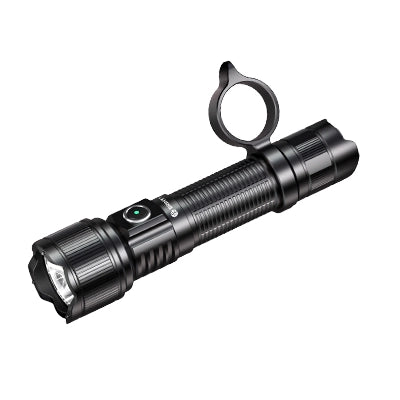
The first layer is the one you always have on you. Not in the garage. Not in the emergency bin. On your belt, in your pocket, or in your daily bag. When building a bug out bag, the best bug out bag light needs to be compact yet powerful enough for genuine emergencies. The Brinyte PT16 fits this role perfectly.
- 2000 lumens — enough to momentarily disorient a threat or instantly illuminate an entire backyard.
- 92,500 candela (608‑meter beam distance) — from your front porch, you can scan the entire street.
- Instant‑access strobe — dedicated tail switch for high‑stress scenarios.
- 21700 5000mAh battery with USB‑C charging — no proprietary chargers.
The PT16's combination of 2000 lumens, 92,500 candela, and 608‑meter throw outperforms lights twice its size. For daily carry, few lights offer this much capability in a pocket‑friendly form factor — making it the best tactical flashlight for home defense when you're away from your primary kit.
5. Layer 2 — Home Primary Light: ZT40 vs PT16A
Your home primary light is the one you grab when the situation demands more than a pocket torch. It lives with your emergency supplies — and it needs to handle everything from navigating dark hallways to sweeping the yard for hazards. Both the ZT40 and PT16A serve as excellent tactical flashlights for home use, but they excel in different areas.
Option A: Brinyte ZT40 — The Zoomable All‑Rounder

The ZT40 features a 6°–70° zoomable beam — twist the head to go from a tight, long‑range spotlight to a wide, room‑filling flood. For a home with a yard or property to monitor, this versatility is invaluable.
- 1650 lumens peak output.
- 490‑meter beam distance in spot mode — scan the fence line from your back porch.
- IPX8 waterproof (submersible to 2 meters).
Option B: Brinyte PT16A — The Endurance Champion

The PT16A prioritizes runtime above all else. While it delivers a staggering 3000 lumens in turbo mode, its true emergency superpower is the 5‑lumen low mode with 300 hours of runtime — nearly two weeks of continuous illumination on a single charge.
- 300 hours on Low — ideal for prolonged outages.
- 900 lumens / 3h50m on High — sustained brightness for active tasks.
- IP68 waterproof — fully dust‑tight and submersible.
6. Battery Strategy: 21700 vs 18650 vs CR123A
When comparing 18650 vs 21700 flashlight batteries, the 21700 offers roughly 50% greater capacity (5000mAh vs 3500mAh) with better energy density and cold‑weather performance. For emergency use, the choice of battery chemistry directly impacts how long your light will last. Below is a detailed comparison to help you decide what battery is best for your emergency flashlight.
| Feature | 21700 Li‑ion | 18650 Li‑ion | CR123A Lithium Primary |
|---|---|---|---|
| Typical Capacity | 4000‑5000 mAh | 2500‑3500 mAh | ~1500 mAh |
| Energy (Wh) | 14.4‑18.0 Wh | 9.0‑12.6 Wh | ~4.5 Wh |
| Rechargeable | ✅ Yes (500+ cycles) | ✅ Yes | ❌ No (single use) |
| Shelf Life | 2‑3 years (80% charge) | 2‑3 years | 10+ years |
| Cold Weather Performance | Good (down to -10°C) | Moderate | Excellent (‑40°C) |
| USB‑C Charging | ✅ Common (built‑in) | ⚠️ Rare | ❌ Not applicable |
| Best Use Case | Home primary & EDC | Budget/compact lights | Vehicle kits, extreme cold |
7. How to Choose Your Emergency Light
🔦 Which Emergency Light Fits Your Home?
Use this quick guide to match your living situation and primary threat to the right Brinyte model.
🏙️ Apartment / Urban
Priorities: long runtime, compact size, low‑mode efficiency.
👉 PT16A – 300 hours on low mode, 3000 lumens when needed.
View PT16A →🏡 House with Yard
Priorities: zoomable beam, distance scanning, flood for yard.
👉 ZT40 – 6°–70° zoom, 490m throw, 1650 lumens.
View ZT40 →🎒 EDC / Bug‑Out Bag
Priorities: pocketable, high candela, instant strobe.
👉 PT16 – 2000 lumens, 92,500 cd, 608m throw.
View PT16 →🚗 Vehicle / Extreme Cold
Priorities: dual‑fuel (CR123A), rugged build, long shelf life.
👉 PT16 + CR123A spares – works with 2×CR123A batteries.
View PT16 →8. Layer 3 — Vehicle Backup & Battery Strategy
The third layer lives in your vehicle — glove compartment, center console, or trunk. Its job is to be there when you're away from home and the grid fails.
Vehicle light recommendations: Any 21700‑based Brinyte light works, but consider adding a small supply of CR123A lithium primary batteries. These offer a 10‑year shelf life and perform reliably in extreme cold, where rechargeable lithium‑ion cells lose capacity. The PT16 and PT16A can both run on CR123A batteries (two per light), making them ideal dual‑fuel options for vehicle storage.
Unified battery platform: If your EDC light, home light, and vehicle light all use the same 21700 battery, a single spare battery backs up every light you own. In a prolonged outage, you can rotate batteries between layers — the PT16A sips power on low mode, while the PT16 stays ready for high‑output tasks.
❓ Frequently Asked Questions
What is the best emergency flashlight for home?
The best emergency flashlight for home depends on your living situation. For apartments, the PT16A's 300‑hour low mode is ideal. For houses with yards, the ZT40's zoomable beam (6°–70°) allows you to scan distances. For EDC, the PT16 fits in a pocket with 2000 lumens and 92,500 candela.
What is the best flashlight for grid down scenarios?
The best flashlight for grid down emergencies is a three‑light system: an EDC light (PT16), a home primary light (ZT40 or PT16A), and a vehicle backup. All three share the 21700 battery platform, ensuring battery interchangeability and maximum runtime.
Are 18650 or 21700 batteries better for flashlights?
21700 batteries are superior for emergency flashlights. They offer roughly 50% greater capacity (5000mAh vs 3500mAh), better energy density, and improved cold‑weather performance compared to 18650 cells. All Brinyte emergency lights use the 21700 format.
How long will a flashlight last during a power outage?
The Brinyte PT16A on its 5‑lumen low mode runs up to 300 hours (nearly two weeks) on a single charge. The ZT40 on low runs 3 hours 45 minutes. For extended outages, a small solar panel or power bank paired with USB‑C rechargeable lights ensures indefinite runtime.
What battery is best for emergency flashlight?
For home use, a 21700 rechargeable battery (5000mAh) offers the best balance of capacity and convenience. For vehicle kits or extreme cold, keep CR123A lithium primaries as backups — they have a 10‑year shelf life and perform well below freezing.
Ready to Build Your Emergency Lighting Defense?
Don't wait for the lights to go out. Shop Brinyte PT16, ZT40, and PT16A — professional‑grade emergency lights you can rely on.
🔦 Shop Emergency Lights →About Brinyte
Founded in 2009, Brinyte designs tactical and outdoor lighting for professionals who demand reliability when it matters most. Our products are field‑tested, built to exacting specifications, and trusted by hunters, law enforcement, and emergency preparedness experts. Brinyte holds 30+ patents and ISO9001 certification.
👉 About Brinyte | About the Author | Tactical Flashlights | All Guides
🔍 Fact‑Checking Policy: All product specifications based on manufacturer data and field testing. Emergency preparedness statistics sourced from NOAA, NERC, and SafeHome.org (2025).
"Professional tools for responsible preparedness."
Founded 2009 · 30+ Patents · ISO9001