

Night Crew Hunting Lights: Complete Guide to Gear, Tactics & Success
✔ Hunters building a layered nighttime lighting system
✔ Shooters comparing gun-mounted vs handheld vs headlamp options
✔ Anyone who needs to understand night hunting laws by state

1. What Is "Night Crew" Hunting?
The term "Night Crew" originates from a group of dedicated predator hunters who popularized the use of white light for nighttime coyote hunting. Their television series on the Sportsman Channel showcases aggressive, high-intensity tactics using thermal imaging, night vision optics, and high-powered lights to turn darkness into an advantage.
A predator hunting methodology that prioritizes positive target identification through white light over the traditional red/green-only approach. Night Crew hunters use white light as a primary tool at the moment of engagement, believing that visual certainty outweighs the risk of momentarily spooking an animal. This philosophy, pioneered by Chris Robinson and team, has redefined nighttime predator hunting for a generation of hunters.
The core principle: use the right tool for the job, and don't be afraid to use white light when it makes sense. While red and green lights excel for stealthy approaches, white light provides unparalleled clarity for target identification — critical when shot certainty is non-negotiable.
2. Core Equipment: The Right Light for the Job
At the heart of any Night Crew setup is a high-quality hunting light with specific capabilities:
- High Lumen Output: For positive identification at distance. Look for 650+ lumens for scanning open fields.
- Long Throw (Candela): Beam distance matters more than raw lumens. Target 50,000+ candela for spotting eyes at 300+ yards.
- Adjustable Zoom: Zoom from flood (70°) to spot (6°) for scanning and target focus with one light.
- Multi-Color Capability: White for ID, red for stealth approach, green for contrast scanning.
- USB-C Rechargeable: Field charging from any power source without proprietary chargers.

Top Recommended Lights for Night Crew Hunting
| Model | Max Output | Beam Throw | Colors | Battery | Key Features |
|---|---|---|---|---|---|
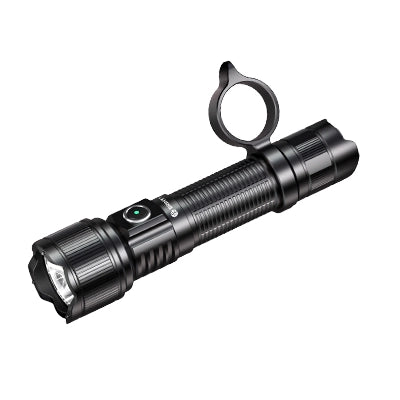
| 🥇 Brinyte T28 Artemis | 1000 lm | 525 m (69,600 cd) | White / Red / Green / IR | 21700 5000mAh USB‑C | Zoomable (6°–70°), tri-color rotary switch, stepless dimming, wireless remote |
| Wicked Lights A51iC | N/A (red/green) | ~230 m | Red / Green / White | 18650 | Rotary color system, compact for bow/rifle |
| Predator Tactics Coyote Reaper | 350+ lm | ~457 m | Red / Green / White / IR | 2×CR123A / 18650 | Adjustable focus, intensity control, scope ready |
| Sniper Hog Lights Hyperion 66 | High output | Long-range | Red / Green / White | 18650 | Aircraft aluminum, hard anodized |
The T28 Artemis's tri-color rotary switch enables silent, instant switching between white, red, and green — no button-cycling that spooks game. Its 6°–70° zoomable beam covers both wide-field scanning and pinpoint target identification at 525 meters. The stepless dimmer (2%–100%) eliminates preset mode clicking. Powered by a 5000mAh 21700 battery with USB-C, it's designed for all-night deployments without proprietary charging hardware.
3. Mounting Methods: Gun-Mounted vs. Handheld vs. Headlamp

How you deploy your light is as important as the light itself. Each mounting method serves a distinct purpose in the Night Crew system.
- Gun-Mounted Lights: Ideal for the moment of engagement. A WML ensures your beam follows your muzzle. The T28 Artemis supports Picatinny and M‑LOK mounts with optional remote pressure switch.
- Handheld Flashlights: Best for scanning and searching independently of your firearm. Use a high-powered handheld to scan fields before shouldering your rifle.
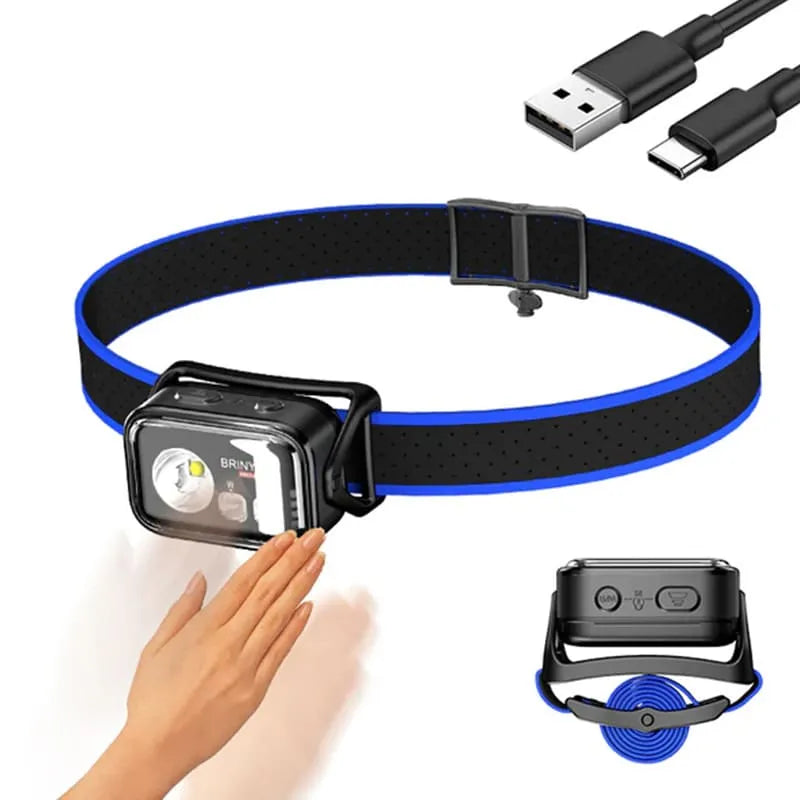
- Headlamps: Essential for hands-free utility — walking trails, gear handling, field dressing. The HL28 Artemis offers multi-color in a headlamp format.
Experienced Night Crew hunters carry both a gun-mounted light and a handheld: handheld for scanning, weapon-mounted for final engagement.
4. Complete Night Hunting Lighting Strategy

Success at night depends on a layered lighting system that adapts to terrain, weather, and animal behavior.
- White Light: Best for final identification and precision shot placement. Use sparingly — only when you're ready to shoot.
- Red Light: Least visible to nocturnal animals. Ideal for approach and scanning phases. Preserves your night vision.
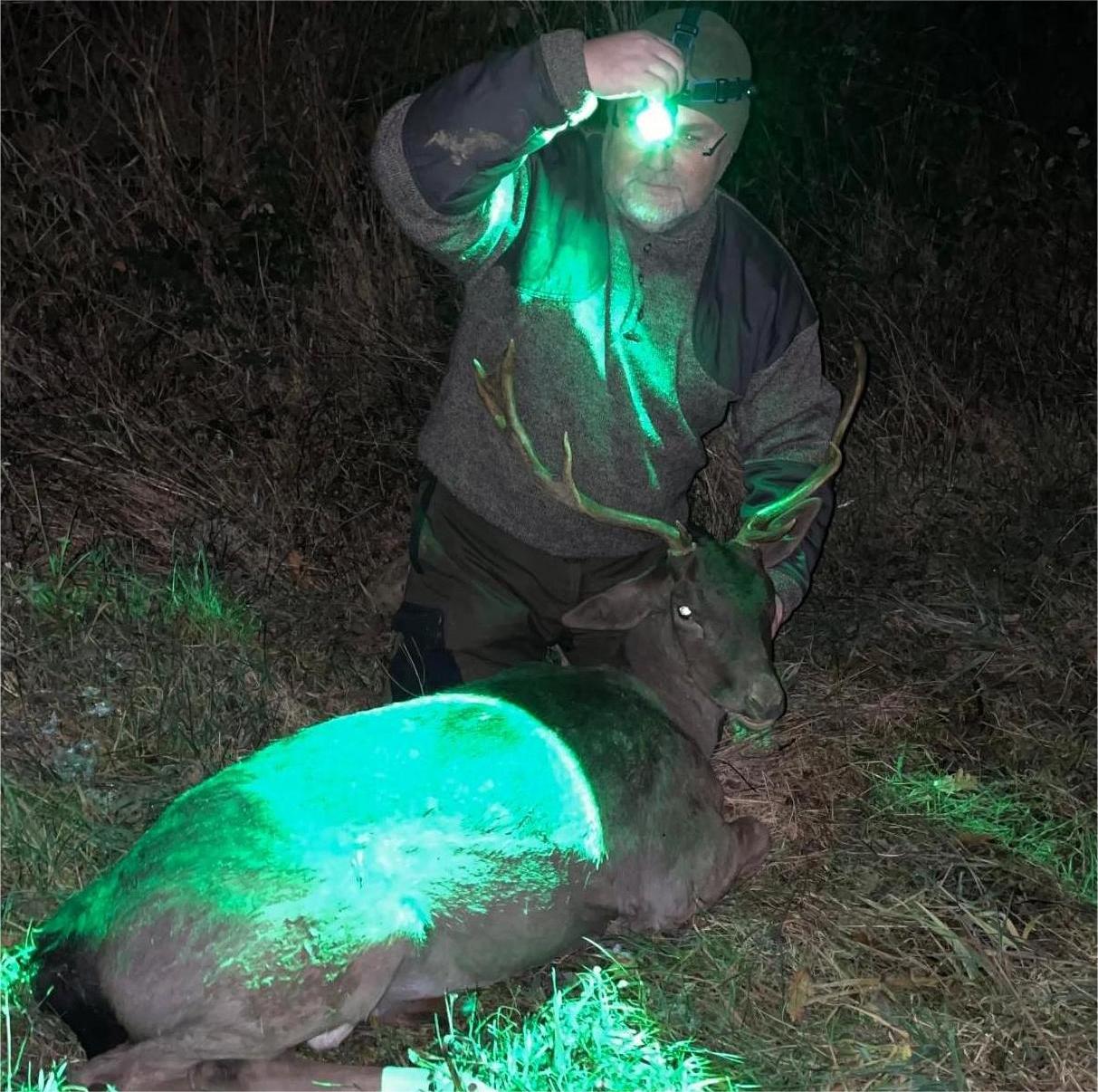
- Green Light: Enhances contrast for eye shine detection. Longer effective range than red in open terrain. Popular for predator and hog hunting.
Use red or green light for your initial approach and scanning. When you spot a coyote, switch to white light only for final positive identification and shot placement. This sequence balances stealth with the visual clarity required for ethical hunting. A tri-color light like the T28 Artemis executes this entire sequence from one unit — no light swaps, no fumbling.
For a complete breakdown of color strategy, see our guide: Red vs Green vs White Light for Hunting.
5. Brightness Control: Low, Medium, High
High lumen numbers look impressive but uncontrolled brightness causes reflection, washout, and spooked game. Use these brightness guidelines:
- Low modes: Navigation, scanning, movement — preserves night vision and reduces detection risk.
- Medium modes: Eye detection, terrain reading — balances visibility and stealth.
- High modes: Brief identification only — use for positive target ID just before the shot.
The T28 Artemis features a stepless dimmer tail switch — brightness adjusts from 2% to 100% without clicking through preset modes. This is a critical advantage for Night Crew hunters who adapt brightness on the fly without audible or visible mode changes.
6. Legal Considerations: Know Your State Laws
Night hunting regulations vary dramatically by state. Here are key highlights from our 2026 Night Hunting Regulations Guide:
Any light on private land for hogs/coyotes — green/white preferred. Illegal night hunting = Class A misdemeanor.
No vehicle shining. Handheld/head‑mounted lights allowed. Spotlighting with firearm = misdemeanor + 7‑year hunting ban.
Lights allowed for furbearers/nongame in specific zones; prohibited where general deer season is open.
Red light recommended; night vision/thermal restricted in certain applications. Closed‑season violations = heavy penalties.

Step-by-Step: Build Your Night Crew Lighting System
- Step 1 — Choose Your Primary Scanning Light: A tri-color zoomable flashlight (white/red/green) with 50,000+ candela forms your core tool. This light handles approach, scanning, and target ID. The Brinyte T28 Artemis is purpose-built for this role.
- Step 2 — Add a Weapon-Mounted Light: Mount your scanning light or a dedicated WML to your rifle via Picatinny or M‑LOK. A remote pressure switch enables hands-free activation during engagement without shifting grip.
- Step 3 — Include a Headlamp: A multi-color headlamp handles navigation, gear management, and field dressing. The HL28 Artemis provides red/white/green in a hands-free format.
- Step 4 — Verify State Laws: Night hunting legality varies by state. Confirm allowed light colors, weapon restrictions, and season dates with your state wildlife agency before any hunt.
❓ Frequently Asked Questions — Night Crew Hunting
What makes Night Crew hunting different from traditional night hunting?
Night Crew hunting emphasizes white light for positive target identification, combined with high-intensity tactics. Traditional night hunting relies primarily on red or green lights for stealth; Night Crew hunters use white light as a primary engagement tool, believing that visual clarity at the moment of the shot is paramount.
Will coyotes spook from white light?
Some will, some won't. Field observations show that certain coyotes respond to any light color. The Night Crew approach uses white light at the critical moment — final identification and shot placement — rather than continuous illumination. For scanning and approach, red or green light remains the safer choice.
Is a zoomable beam necessary for Night Crew hunting?
Yes — a zoomable beam (like the T28 Artemis's 6°–70° adjustment) allows you to scan wide fields in flood mode, then zoom to a tight spotlight for long-range target ID — all with one light. Without zoom, you'd need multiple lights or compromise effectiveness in certain terrain.
Can the Brinyte T28 Artemis be used as a gun-mounted light?
Yes. The T28 Artemis is compatible with optional Picatinny and M‑LOK mounts, and a remote pressure switch enables hands-free activation. It serves as both a handheld scanning light and a weapon-mounted engagement light.
What is the runtime of the T28 Artemis?
With the included 5000mAh 21700 battery: approximately 135 minutes on white, 220 minutes on red, and 270 minutes on green. That's sufficient for multiple nights of hunting on a single charge. USB-C charging enables field recharging from any power bank or vehicle.
Is night hunting legal in my state?
Night hunting laws vary significantly by state. Many states allow night hunting for coyotes and feral hogs on private land, but restrictions on light color, vehicle use, and thermal optics differ. Always check your state wildlife agency's website before heading out.
Build Your Night Crew Lighting System
Explore the Brinyte Artemis series — tri-color zoomable hunting lights engineered for the predator hunter who demands white-light precision and all-night reliability.
Shop Hunting LightsAbout Brinyte
Founded in 2009, Brinyte specializes in hunting and tactical lighting. Our products are developed with input from experienced predator hunters, field-tested in real conditions, and engineered for reliability. Brinyte holds 50+ patents and ISO9001 certification.
👉 About Brinyte | Hunting Lights Collection | About the Author
🔍 Fact-Checking Policy: All technical claims are based on product specifications, field reports from the predator hunting community, and published night hunting regulations.
"Professional tools for responsible hunters."
Founded 2009 · 50+ Patents · ISO9001
• Brinyte T28 Artemis / HL28 Artemis Official Product Specifications
• Wicked Lights / Predator Tactics / Sniper Hog Lights — Published Manufacturer Data
• Sportsman Channel "Night Crew" — Predator Hunting Television Series
• State Wildlife Agency Night Hunting Regulations (TX, PA, CA, WI)