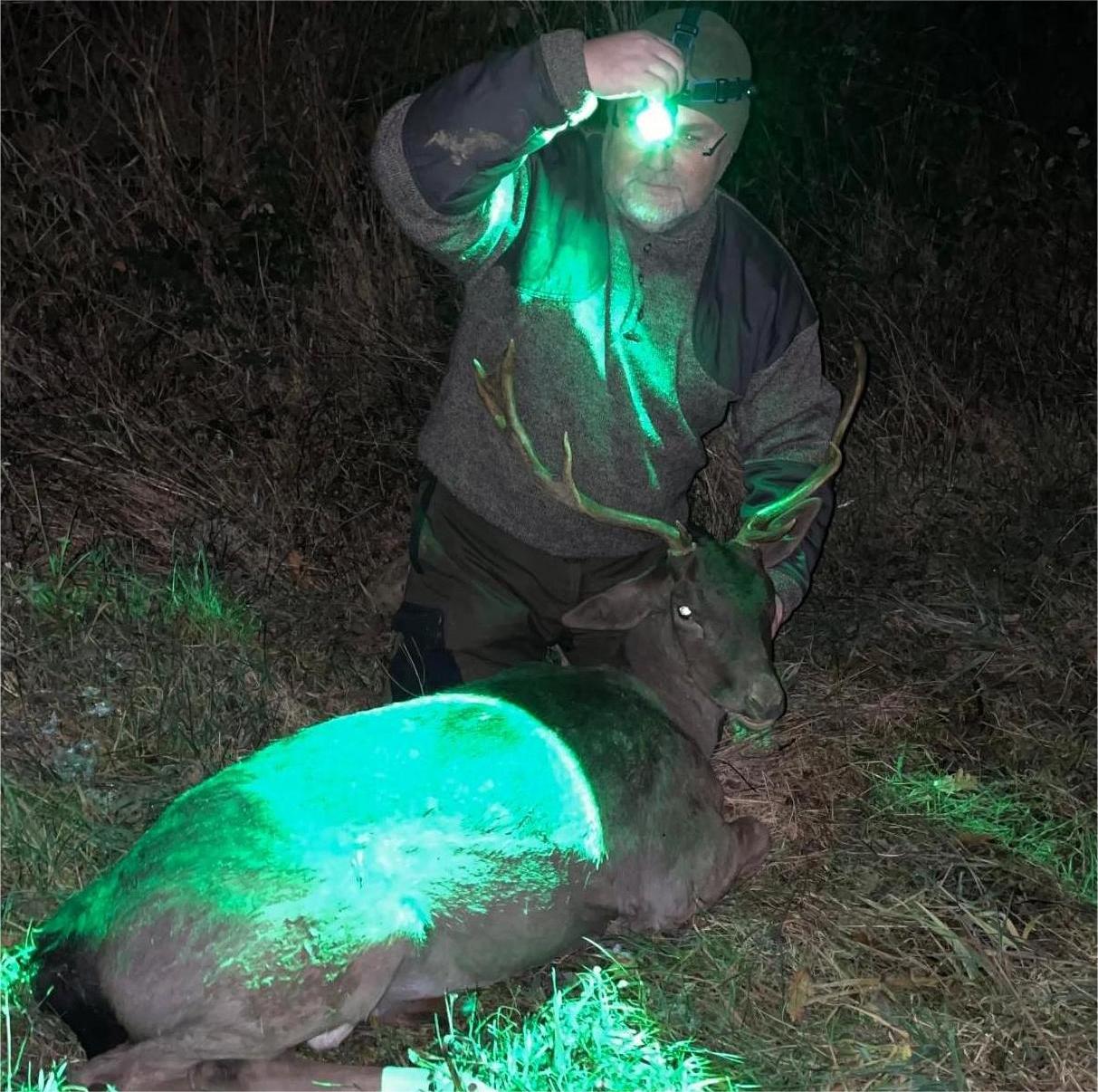

Introduction
Tracking bloodstains at night is one of the most challenging parts of hunting.
Light is often the decisive factor - what matters is not the brightness of the light, but whether it can clearly show the contrast on the ground.
A blood tracking light is designed specifically for this task. Unlike ordinary flashlights, it focuses on contrast, visibility and visual recognition rather than just brightness. Choosing the right blood tracking lamp can save several hours of search time and avoid missing important clues in low light conditions.
This guide explains what a blood tracking light is, why standard flashlights often fall short, and how to choose the right flashlight for night hunting.
What Is a Blood Tracking Light?
A blood tracking light is a specialized flashlight designed to make blood trails easier to see on natural surfaces such as grass, soil, leaves, and forest floors.
Instead of relying on intense white light, blood tracking flashlights use:
- Specific light colors to increase contrast
- Wide, even beams to scan ground efficiently
- Optional flashing modes to enhance visual detection
From a visual science perspective, the human eye detects differences in contrast more effectively than absolute brightness. Blood tracking lights are built around this principle, helping hunters notice subtle color changes that standard lights often wash out.
Why Regular Flashlights Often Fail in Blood Tracking
A regular flashlight can work—but it has limitations.
Most white lights are designed for distance or general illumination. When used for blood tracking:
- Bright white beams can flatten colors, making blood blend into dirt or leaves
- Focused hotspots reduce peripheral awareness
- Glare and reflection may hide small drops
Many hunters assume “brighter is better,” but in blood tracking, too much brightness can actually reduce visibility. This is why specialized blood tracking flashlights exist—to prioritize contrast over intensity.

Key Features That Make a Good Blood Tracking Flashlight
Not all blood tracking lights are the same. These features matter more than lumen numbers.
Multi-Color Light and Contrast
Different colors interact with blood and terrain differently:
- Green light often enhances contrast against vegetation
- Red light reduces glare and eye strain
- White light remains useful for general navigation

Wide Beam vs Focused Beam
Blood tracking is a ground-based task.
A wide, even beam helps:
- Scan larger areas
- Maintain awareness of surrounding signs
- Reduce missed droplets near the edges
Tightly focused beams are better for distance spotting, not ground tracking.
Multi-color systems allow hunters to adapt to changing ground conditions rather than relying on a single solution.
Flashing Modes and Visual Detection
Flashing or pulsing light modes can make blood stand out by triggering the eye’s motion detection response.
This isn’t about brightness—it’s about drawing attention to contrast changes. When used correctly, flashing modes can reveal patterns that steady light sometimes misses.
How to Choose the Best Blood Tracking Light for Your Hunt
There is no single “best blood tracking light” for everyone. The right choice depends on how and where you hunt.
- If you hunt in dense woods or grass, a multi-color light with a wide beam is more effective
- If tracking sessions last a long time, battery capacity and efficiency matter
- If you prefer scanning without stopping, intuitive controls and stable output are key
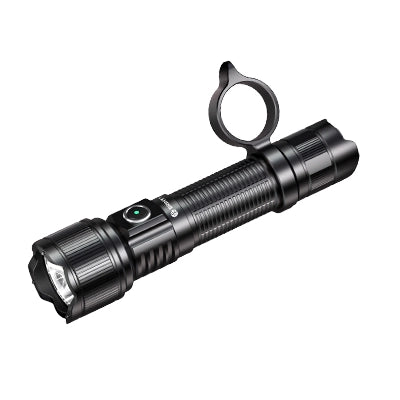
Some hunters choose compact, multi-mode tools like Brinyte SPECTRA T5X because they combine color options, wide illumination, and dedicated tracking modes in one device—reducing the need to carry multiple lights.
Blood Tracking Light vs Headlamp: Which One Works Better?
Both tools have advantages.
Handheld blood tracking lights:
- Offer better control over beam direction
- Allow angle adjustment to reduce glare
- Are often brighter and more versatile
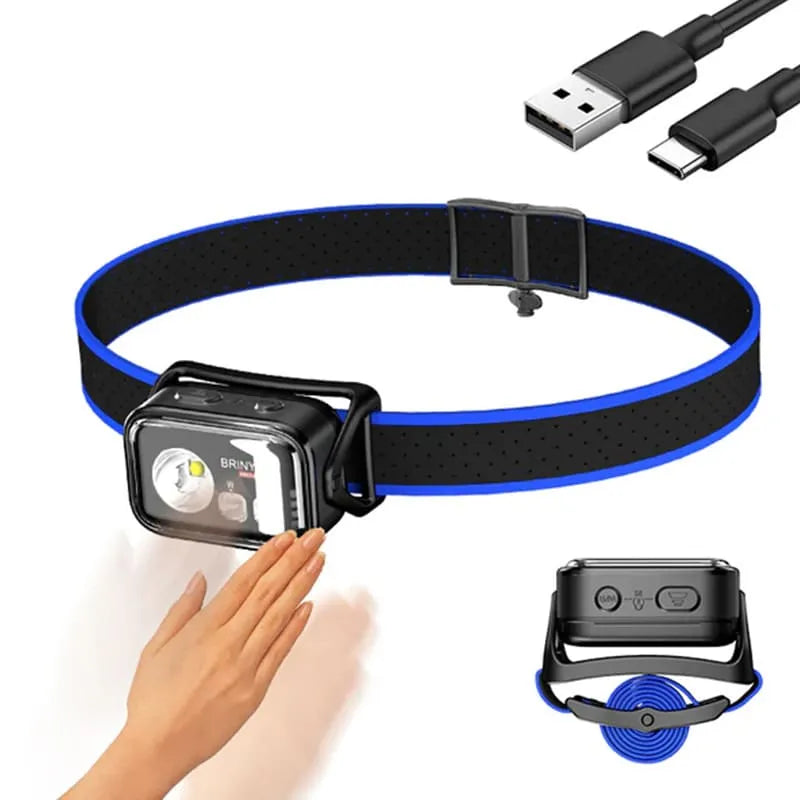
Headlamps:
- Keep hands free
- Work well for continuous movement
- May struggle with precise ground scanning
Many experienced hunters use both, switching depending on terrain and fatigue.

Common Mistakes Hunters Make When Tracking Blood at Night
Even with the right light, mistakes happen.
- Moving too fast and missing small signs
- Using maximum brightness at all times
- Failing to change light color when terrain changes
- Focusing only straight ahead instead of scanning wide
Blood tracking rewards patience and adaptability. Adjusting light settings is often more effective than increasing brightness.
Final Thoughts: Choosing a Blood Tracking Light That Fits Your Style
A blood tracking flashlight isn’t about chasing lumen numbers or buying the most expensive tool. It’s about seeing what others miss.
The best blood tracking light is the one that matches your hunting environment, tracking habits, and visual preferences. Multi-color systems, wide beams, and controlled output consistently outperform standard flashlights in real-world tracking scenarios.
Tools like SRPECTRA T5X represent a modern approach to blood tracking—designed around contrast, control, and real hunting conditions rather than raw brightness alone.
Frequently Asked Questions
What is the best light color for blood tracking?
No color is suitable for all situations.
Green light usually enhances the contrast between grass and leaves, while red light can reduce glare and eye fatigue. Many hunters prefer multi-color bloodstain tracking lights so that they can adjust the color according to different terrains instead of relying on just one color.
Do blood tracking lights really work better than regular flashlights?
Yes, in most tracking scenarios, they do work.
The design of ordinary flashlights focuses on brightness and illumination distance, while blood-tracking lamps emphasize contrast and ground visibility. This difference is particularly evident on dark soil, damp leaves or uneven forest ground.
Is brighter always better for blood tracking at night?
Not necessarily.
Excessively high brightness can make the color differences blurred, making it even harder for small blood drops to be seen. Controlling the output power and an appropriate contrast is usually more effective than the maximum lumen value.
Are flashing modes useful for blood tracking?
Flashing or pulsing modes can help in certain conditions.
They trigger the eye’s motion and contrast detection, making blood stand out against complex backgrounds. However, steady light is still preferred by some hunters for close inspection.
Can I use a headlamp instead of a blood tracking flashlight?
You can, but each tool has limitations.
Headlamps offer hands-free use, while handheld blood tracking lights allow better beam control and angle adjustment. Many experienced hunters carry both and switch depending on terrain and fatigue.
What features should I look for in a blood tracking flashlight?
Focus on contrast-related features rather than raw brightness:
- Multi-color light options
- Wide, even beam patterns
- Stable output and intuitive controls
These features matter more than lumen numbers in real tracking conditions.
Are multi-color blood tracking lights worth it?
For most hunters, yes.
Terrain, vegetation, and blood appearance change constantly during tracking. Multi-color systems—such as Brinyte SPECTRA T5X—offer flexibility that single-color lights simply can’t provide.
Can a blood tracking light replace a regular hunting flashlight?
In many cases, it can handle both tasks.
While a general flashlight may still be useful for long-distance spotting, a well-designed blood tracking light is more effective for ground scanning, recovery work, and close-range navigation.