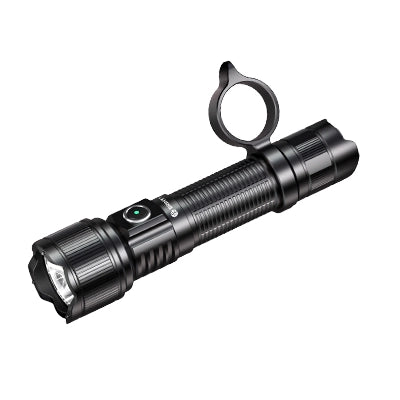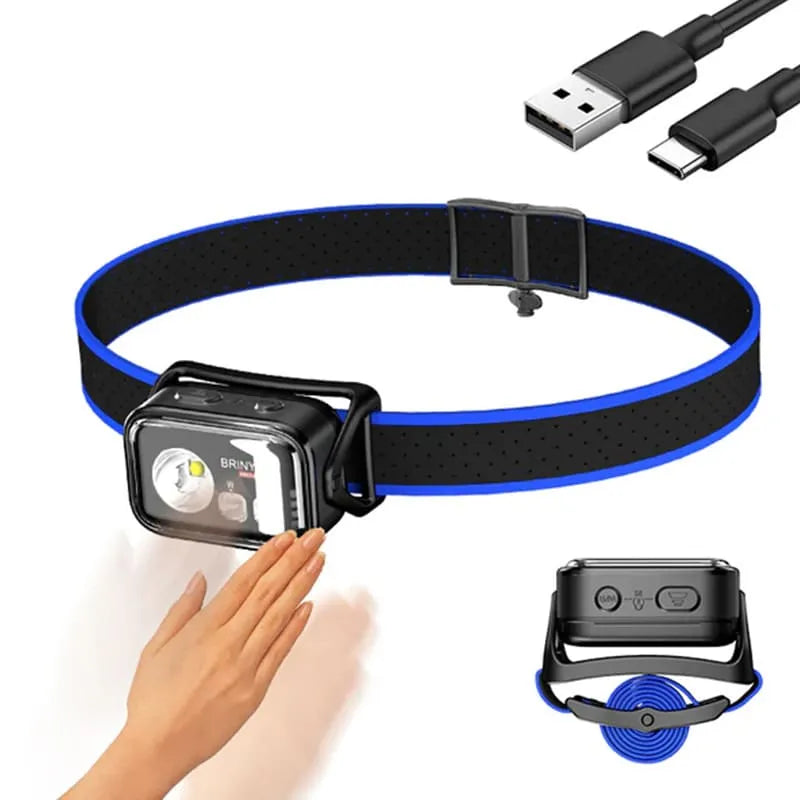


300 lumens → yes, bright enough for most home and urban use; 100m beam reach.
500 lumens → genuinely bright; ideal for camping and hiking; 130m reach.
800–1000 lumens → very bright; great for outdoor navigation and EDC; 200–220m reach.
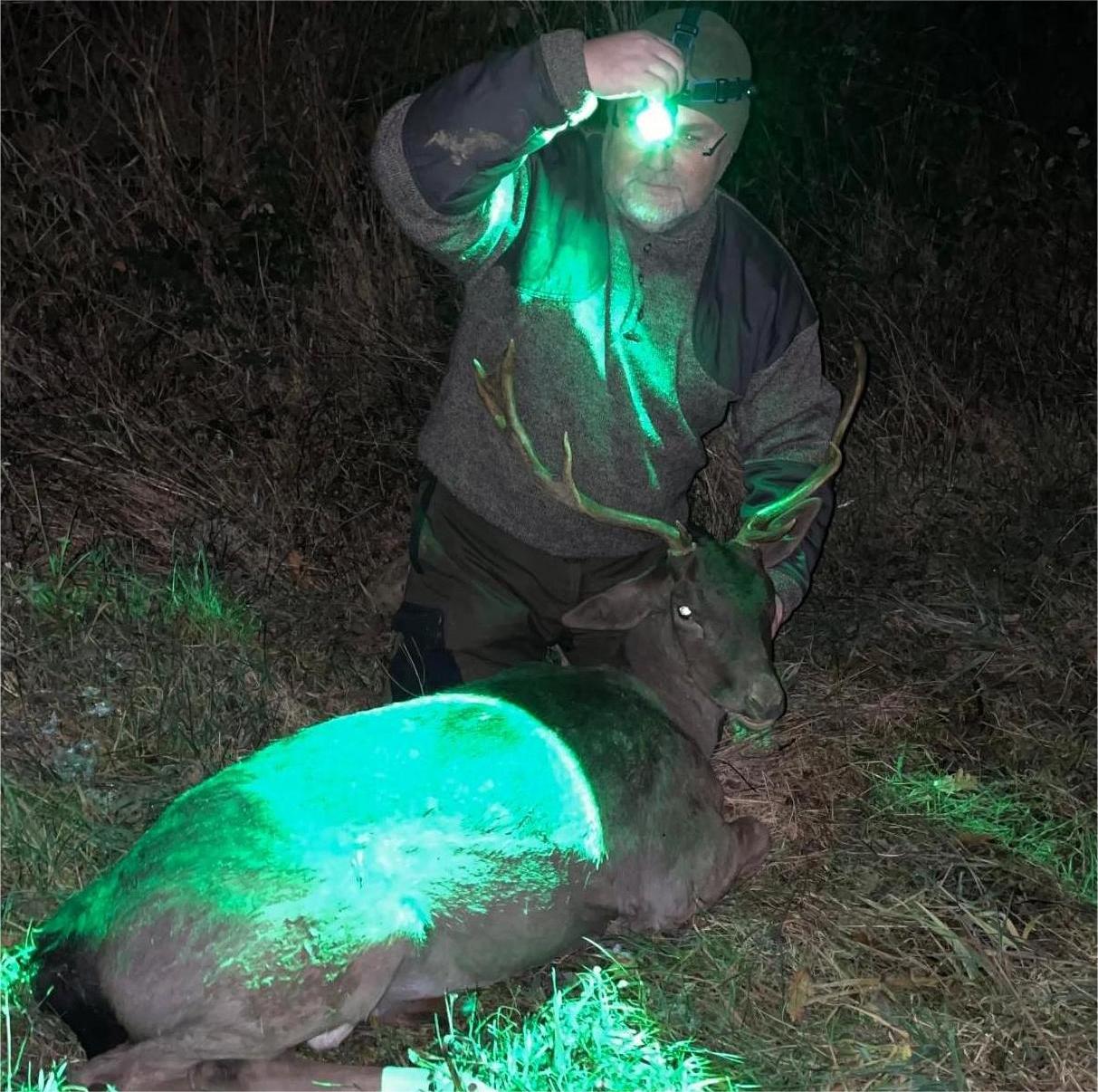
1500–3000 lumens → extremely bright; tactical, hunting, search & rescue; 350m+ reach.
👉 Rule of thumb: More lumens ≠ always better. Match brightness to your task — and check beam distance (candela), not just raw lumens.
✔ Buyers comparing 300 vs 500, 500 vs 1000, 800 vs 1500 lumens
✔ EDC, outdoor, tactical, hunting, and home defense users
✔ Shoppers tired of fake lumen ratings
1. What Does "Lumens" Mean on a Flashlight?
Lumens (lm) measure the total amount of visible light a flashlight emits in all directions. Think of it as the raw brightness score. The higher the lumens, the more light the flashlight produces — but that doesn't automatically mean it shines farther (that's candela). A 1000-lumen flood beam and a 1000-lumen spot beam have the same lumens, but the spot beam illuminates targets much farther away.
In practical terms, lumens answer "how much total light?", while candela answers "how far does it reach?" and beam distance (in meters) answers "how far can I see something clearly?" When shopping, look at all three — not just the lumen number on the box.
Historically, 100 lumens was considered a powerful flashlight. Today, most quality flashlights start at 500–1000 lumens, with tactical models reaching 3000+. This guide cuts through the inflation to tell you exactly what each lumen level actually feels like to use.
2. How Bright Is X Lumens? (Real-World Brightness Guide)
This is the section most people actually need. Below is our real-world breakdown of every major lumen level — what it feels like, where it works, and where it falls short.
3. Flashlight Lumens vs Beam Distance Chart
Many buyers focus on lumens but miss the equally important metric: beam distance (measured in meters, per ANSI FL1 standard). A 2000-lumen flood lantern might only illuminate 80 meters, while a 500-lumen thrower with high candela can reach 400+ meters. Here's what to expect from each lumen tier:
| Lumens | Typical Beam Distance | Best For | Brinyte Model |
|---|---|---|---|
| 50–100 lm | 30–70m | Indoor use, close tasks | — |
| 200–300 lm | 80–120m | Urban walks, camping, backup light | — |
| 500–800 lm | 120–200m | Camping, hiking, fishing, EDC | E18 (1200 lm, 220m) |
| 1000–1500 lm | 200–380m | Tactical, law enforcement, hunting | T28 (650 lm, 525m throw) |
| 1500–2000 lm | 350–500m | Night hunting, search operations | T40 (1650 lm, 490m) |
| 3000+ lm | 400–600m+ | Professional SAR, extreme environments | PT16A (3000 lm, 458m) |
Important: Beam distance numbers assume ANSI FL1 standard (0.25 lux at stated distance, roughly enough to see a large obstacle). Real-world useful visibility for detailed identification is typically 30–50% of the rated distance.
4. Lumen Comparisons: Which Is Right for You?
These head-to-head comparisons answer the most searched brightness questions directly.
50 lumens vs 100 lumens
300 lumens vs 500 lumens
500 lumens vs 800 lumens
800 lumens vs 1500 lumens
1000 lumens vs 2000+ lumens
At 1000+ lumens, the human eye begins to adapt rapidly to the brightness, making perceived differences smaller. A 2000-lumen flashlight doesn't feel twice as bright as 1000 lumens — it feels roughly 30–40% brighter in practice. The real advantage at 2000+ lm is longer beam throw and faster area illumination, not simply "brighter." Unless you're doing professional law enforcement, SAR, or night hunting, 1000 lm is almost always sufficient.
5. Flashlight Lumens Chart: Match Brightness to Your Activity

| Lumen Range | Is It Bright? | Best Activities | Key Trade-off |
|---|---|---|---|
| 10–100 lm | Dim to moderate | Reading, close-up tasks, kids' lights, night light | Very long battery life; limited range |
| 100–300 lm | ✅ Bright (indoor) | Urban walks, home emergencies, dog walking | Balanced brightness + runtime for everyday needs |
| 300–800 lm | ✅✅ Very bright | Camping, hiking, fishing, night running | Great outdoor range; watch battery drain on Turbo |
| 800–1500 lm | 🔥 Extremely bright | Tactical, law enforcement, hunting, EDC power users | Short runtime at max; generates heat on sustained use |
| 1500–3000+ lm | 🔥🔥 Professional | Search & rescue, extreme hunting, large-area illumination | High power draw; overkill for most civilian uses |
For home defense, 500–800 lumens with moderate candela (5,000–15,000 cd) is the practical sweet spot. 1000+ lumens can cause "wall bounce blinding" in small rooms with white walls — temporarily disorienting the user, not the threat. Brinyte PT16A includes a dedicated strobe function that maximizes disorientation regardless of lumen level.
🔦 Recommended Brinyte Flashlights by Lumen Range
- 100–1200 Lumens (EDC): Brinyte E18 Pheme — pocket-sized, 220m throw, USB-C rechargeable.
- 650–2000 Lumens (Hunting): Brinyte T28 — tri-color (Red/Green/White), 525m throw, zoomable.
- 1650 Lumens (Versatile): Brinyte T40 — zoomable 6°–70°, USB-C, 490m beam.
- 3000 Lumens (Tactical/Pro): Brinyte PT16A — dual tail switches, IP68, 458m throw, strobe.
6. Brightness vs Battery Life: The Trade-off You Need to Understand

Every extra lumen costs battery life — and the relationship is not linear. Running a flashlight at full 3000 lumens might give you 1–2 minutes of peak output before thermal protection steps down the brightness. Running the same light at 300 lumens might give you 8+ hours. The practical implication: always buy a flashlight with more lumens than you think you need, then run it at a lower mode.
For example, the Brinyte PT16A at 3000 lumens (Turbo) runs for ~1 minute before stepping down, but at 120 lumens (Mid) it runs for 3 hours 50 minutes. Having 3000 lumens available doesn't mean you use 3000 lumens constantly — it means you have the option when you need it.
USB-C rechargeable flashlights like the PT16A and T40 eliminate battery anxiety on extended trips. For missions where you can't charge, carry a spare 21700 cell — it adds 30 seconds of swap time and restores full brightness.
7. How to Spot Fake Lumen Claims (And Avoid Them)
The flashlight market is plagued with grossly inflated lumen claims. A $12 flashlight claiming "10,000 lumens" is almost certainly lying — or measuring for 0.1 seconds at full LED current before the driver steps down. Here's how to protect yourself:
- Look for ANSI/NEMA FL1 compliance. This standard requires lumen output measured at 30 seconds of runtime — not the theoretical peak. Reputable brands like Brinyte publish FL1 specs.
- Check candela alongside lumens. A legitimate 3000-lumen flashlight should show 30,000–70,000+ candela. If a "3000 lm" light shows only 5,000 cd, the lumens figure is inflated.
- Be skeptical of ultra-low prices with ultra-high lumens. A genuine 3000-lumen flashlight requires a high-grade LED (e.g., Luminus SFT70), a quality driver, and a large battery. These components have cost floors.
- Read third-party reviews from BudgetLightForum or ZeroAir. These communities test flashlights with calibrated integrating spheres and publish real measured outputs.
- Check for runtime specs. If a manufacturer only lists peak lumens with no runtime data, that's a red flag.
Summary: Flashlight Lumens Made Simple
- 300 lumens — bright enough for most everyday and outdoor tasks
- 500–800 lumens — the practical sweet spot for active outdoor use and EDC
- 1000–1500 lumens — genuinely tactical; useful for hunting, law enforcement, and search operations
- 3000+ lumens — professional grade; don't overpay for this unless you truly need it
- Always check candela + beam distance, not just lumens
- Buy from brands that publish ANSI FL1-compliant specs
❓ Frequently Asked Questions
What does lumens mean on a flashlight?
Lumens measure the total amount of visible light a flashlight produces. A higher lumen number means more total light output. However, lumens alone don't determine how far the beam reaches — that depends on candela (beam intensity) and the reflector/lens design. A 500-lumen spotlight can outreach a 2000-lumen flood beam because its light is more focused.
Is 300 lumens bright for a flashlight?
Yes — 300 lumens is genuinely bright for most everyday uses. It's bright enough to illuminate a room, comfortable for camping and hiking, and provides around 90–120 meters of beam distance. A decade ago, 300 lumens was considered a high-end flashlight. Today it's mid-range, but still very practical. If you're using it outdoors at night, 300 lumens is typically sufficient for safety and navigation.
Is 500 lumens bright for a flashlight?
Yes, 500 lumens is very bright and represents the practical sweet spot for most outdoor activities. It provides around 120–150 meters of beam distance, handles camping, fishing, and trail hiking comfortably, and isn't overly harsh indoors. Most quality EDC flashlights in the 500-lumen range offer good battery life. It's the "just right" output for people who use their flashlight regularly outdoors.
Is 1500 lumens bright for a flashlight?
1500 lumens is extremely bright — well beyond what most people need for casual use. At 1500 lumens, you get 300–380 meters of beam reach, serious disorienting capability (useful for self-defense), and enough output for night hunting and professional search operations. Indoors, it will cause painful glare from white walls. It's best used by hunters, tactical users, and outdoor professionals who genuinely need long-range illumination.
Is 1000 lumens good for a flashlight?
1000 lumens is an excellent output level — it's the threshold most experts consider "tactical grade." At 1000 lumens, you have enough brightness for law enforcement patrol, night hiking, and property security. A 1000-lumen beam can temporarily blind an attacker at close range. For most serious outdoor and tactical users, 1000 lumens provides a great balance between power and battery life. It's a strong recommendation for anyone who needs a dependable, high-performance flashlight.
What is the average flashlight lumens?
In 2026, the average quality flashlight produces 500–1000 lumens. Budget flashlights typically claim 200–500 lumens (with real output often lower). Mid-range models deliver 600–1200 lumens. Professional and tactical flashlights run 1500–3000+ lumens. Five years ago, the average was closer to 200–500 lumens — LED technology has dramatically increased output per dollar.
How many lumens is good for home defense?
For home defense, 500–800 lumens is the practical sweet spot. Higher outputs (1000+ lumens) can cause "wall-bounce blinding" in small rooms with white walls, temporarily disorienting you rather than the threat. More important than raw lumens is a strobe function — even a 500-lumen strobe is highly disorienting. Pair your flashlight with a candela figure of 5,000–15,000 cd for effective indoor identification.
What are lumens vs candela for tactical flashlights?
Lumens measure total light output (brightness in all directions). Candela measures the intensity of the brightest point of the beam (how focused and far-reaching). For tactical use, candela often matters more than lumens. A 1000-lumen, 60,000-cd thrower can identify targets at 490 meters, while a 3000-lumen, 10,000-cd flood light might only reach 200 meters. Always check both specs when choosing a tactical flashlight.
How many lumens do I need for camping?
300–800 lumens is the ideal range for camping. This gives you enough brightness for setting up tents, cooking, and navigating trails at night, without excessive battery drain. For inside the tent, use your flashlight's lowest mode (10–50 lumens) to avoid blinding your tentmates. For trail use and wildlife awareness, step up to 300–500 lumens. Look for a flashlight with multiple modes, a low setting for close tasks, and a high setting for trail navigation.
What does "lumens" mean on a flashlight — in plain English?
Lumens (lm) measure how much total visible light a flashlight produces every second. Think of it like water flow: lumens = gallons per minute from a hose. A higher number means more light coming out overall. 50 lm = dim nightlight; 300 lm = bright enough for camping; 1000 lm = tactical-grade; 3000 lm = professional search & rescue. Lumens don't tell you how far the beam reaches — that's candela. But for everyday comparisons, lumens are the fastest way to judge raw brightness.
How to avoid buying a flashlight with fake lumen claims?
Look for ANSI/NEMA FL1-compliant ratings (lumens measured at 30 seconds of use, not theoretical peak). Verify that the candela figure is proportional to the claimed lumens — a "3000-lumen" light should show 30,000–70,000+ cd. Be skeptical of any flashlight claiming 5000+ lumens for under $30. Read independent reviews from BudgetLightForum or ZeroAir, where reviewers test with calibrated equipment. Reputable brands publish full spec sheets including runtime at each mode.
Ready to Find Your Perfect Lumen Level?
Browse Brinyte's full lineup — every model includes verified lumens, candela, beam distance, and runtime specs.
Shop All Flashlights →About Brinyte
Brinyte was founded in 2009. Since then, we have specialized in tactical and outdoor lighting. Our products are developed with input from working professionals, field-tested in real conditions, and engineered for reliability. Brinyte holds 50+ patents and ISO9001 certification.
"Professional tools for responsible hunters and operators — Brinyte."
Founded 2009 · 50+ Patents · ISO9001 · ANSI FL1 Certified