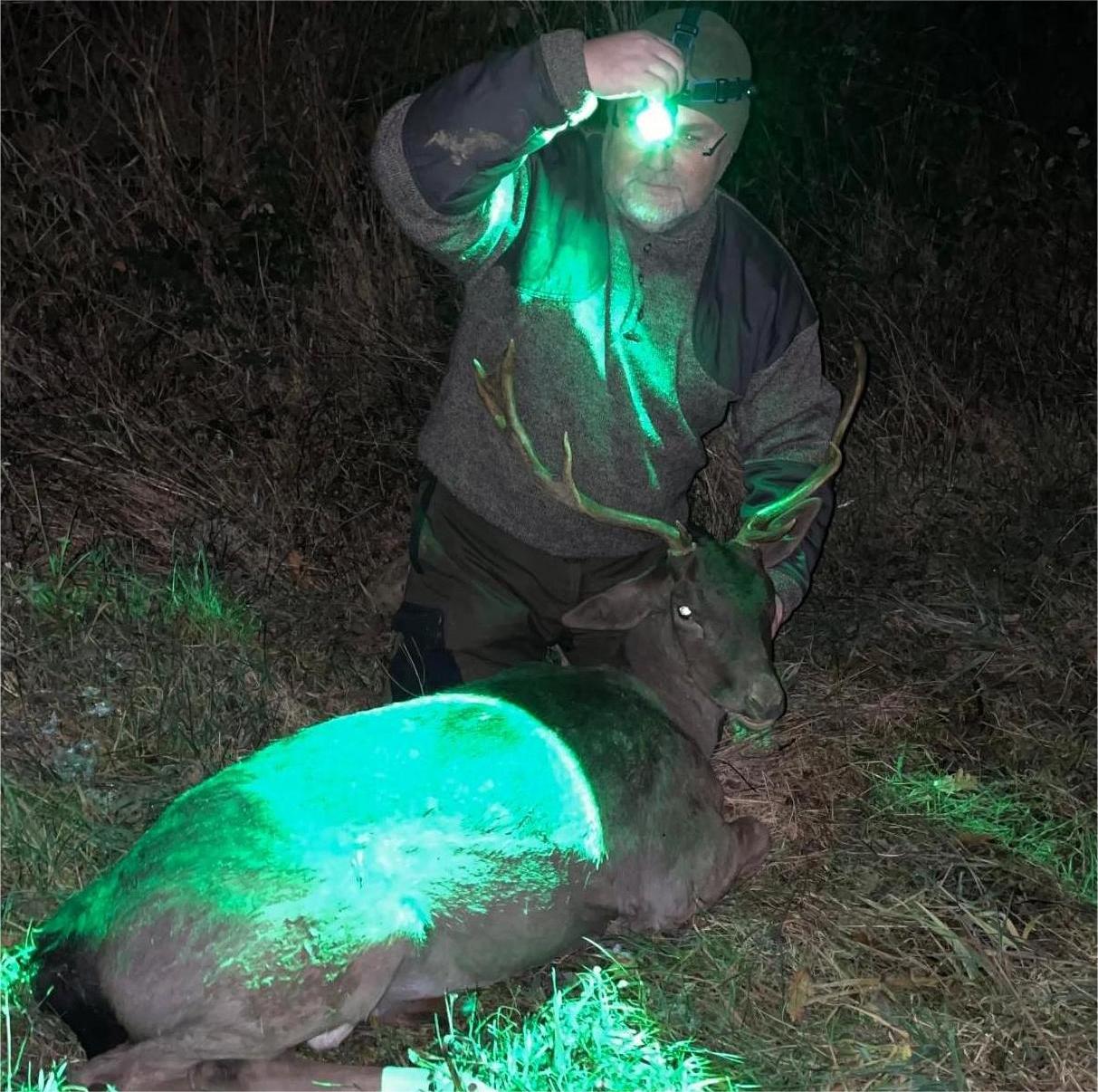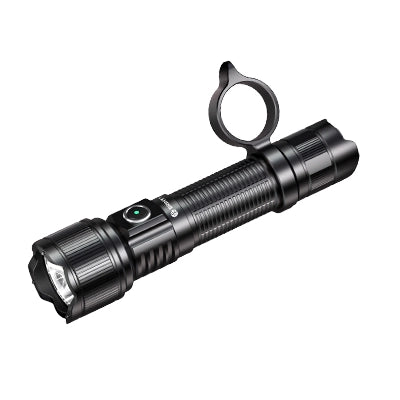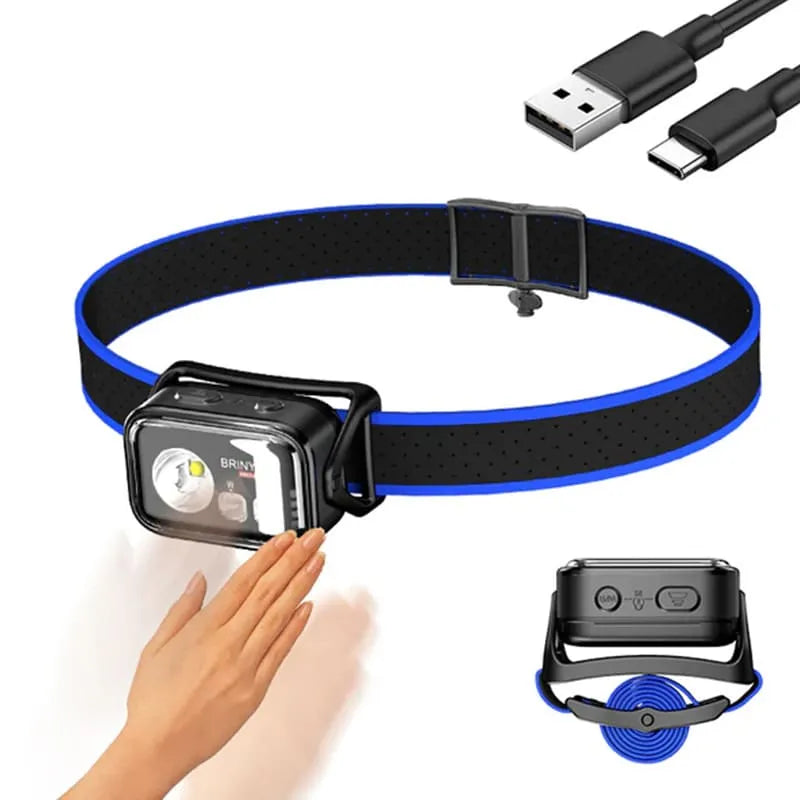


Red vs Green Hunting Light Guide: Best Color for Deer, Hogs & Coyotes (2026)
🟢 Green light is best for long-range scanning, hog hunting, and open terrain. The human eye peaks in sensitivity at 555nm (green), making green lights appear 2–3× brighter and throw significantly farther at identical wattage.
🎯 Pro 4-phase strategy: Navigate in red → Scan with green → Confirm with white → Track with UV or IR.
✔ Those targeting multiple species (deer, hog, coyote)
✔ Anyone building a complete night hunting light strategy
Introduction
You've been tracking a buck for hours. Finally, you spot movement — but the wrong light color catches his eye, and he's gone.
Ask any experienced hunter: lighting discipline separates consistently successful night hunters from those who go home empty-handed. With red, green, white, UV, and IR options available, knowing which color to deploy — and when — is a genuine tactical skill that directly affects your outcome.
This guide gives you the optical science behind each light color, clear species-specific recommendations backed by animal vision research, and a field-proven 4-phase sequence you can use tonight.

No single light color is optimal for all hunting scenarios. The correct choice depends on target species, terrain type, and phase of the hunt. A structured 4-phase light sequence — red navigation, green scanning, white confirmation, UV/IR recovery — consistently outperforms single-color approaches across mixed hunting conditions.
🔴 Red Hunting Light — Stealth Choice for Deer and Predators

How Animals Perceive Red Light
Most mammals — including deer, hogs, and coyotes — have dichromatic vision, roughly analogous to red-green color blindness in humans. Their cone cells respond primarily to short wavelengths (blue-violet range) with very weak response to long wavelengths above 600–620nm.
For deer specifically, the near-absence of red-sensitive cone cells means a red hunting light registers as dim, low-contrast gray — indistinguishable from ambient moonlight at moderate brightness. Hogs show similarly poor red-light detection and remain calm even at moderate output. Coyotes are slightly more visually acute but still perform worst in red wavelengths among common game species.
When to Use Red Light
- Walking to and from your stand — minimal disturbance to animals in the area
- Close-range deer approaches — within 100 yards where stealth is paramount
- Predator hunting approach phase — before switching to green for scanning
- Gear checks and map reading — any task requiring light without compromising night vision
- Dense woodland environments — where throw distance matters less than concealment
Red Light Limitations
- Shorter effective throw distance than green at equivalent wattage
- Reduced contrast on dark terrain — harder to read terrain features
- Not suited for open-field scanning beyond 150 yards
Red light (620–750nm) is the optimal stealth hunting light because game mammals lack the photoreceptor cone cells needed to detect long-wavelength light. According to the CIE photopic luminosity function (Vλ), the human eye's relative sensitivity at 650nm (red) is approximately 0.107 compared to 1.0 at 555nm — meaning red appears far dimmer to any observer, including game animals who are even less sensitive to red than humans. Red simultaneously preserves the hunter's dark adaptation, an advantage no other visible light color provides.
🟢 Green Hunting Light — Best for Hogs and Long-Range Scanning

Why Green Throws Farther
Green light's range advantage comes from human biology, not animal blindness. The human eye is most sensitive at approximately 555nm — the peak of green wavelength — as established by the CIE photopic luminosity function. At identical wattage, a green flashlight appears roughly 9–10× brighter to the human eye than red based on relative photopic efficiency values (Vλ = 1.0 at 555nm vs 0.107 at 650nm), which translates to significantly extended usable range: approximately 150 yards (red) versus 300–400+ yards (green) in open terrain.
How Game Species Respond to Green
- Wild Hogs: Extremely tolerant. Hogs have poor overall visual acuity and minimal color discrimination. Green light allows close scanning and sustained observation without triggering flight — making it the industry standard for hog hunting.
- Deer: More cautious than with red. Deer detect green wavelengths better than red, and bright green at close range can trigger alarm. Green is appropriate for deer scanning at distances beyond 100–150 yards or at very low output.
- Coyotes: Sensitive to green at close range. Best used only for long-distance scanning (200+ yards) at low-to-medium brightness.
Green light (520–560nm) is the optimal long-range scanning and hog hunting choice because peak human photopic sensitivity falls at 555nm (CIE Vλ = 1.0), compared to 0.107 for red at 650nm. This gives green a luminous efficiency advantage of roughly 9–10× over red at identical radiant power, which hunters perceive as significantly greater range and brightness. Wild boar's limited color discrimination means green produces no meaningful alarm response at any practical hunting distance.
⚪ White Hunting Light — Essential for Target ID and Final Confirmation

White light is full-spectrum illumination. Every game animal detects it clearly. Its role in night hunting is narrow but legally and ethically non-negotiable: final target identification before any shot.
When White Light Is Mandatory
- Final target confirmation — species, sex, and antler verification
- Dangerous game hunting — mountain lion and bear require positive white-light ID before any shot
- Blood tracking post-shot — combined with UV for comprehensive recovery
- Emergency navigation — any situation requiring maximum visibility
White light's role in night hunting is brief and specific: final target identification and blood recovery. The operative principle is minimum effective exposure — enough light to confirm species identity and safe shot placement, then immediately off. Extended white light use alerts all game animals in the area and destroys the hunter's dark adaptation.
🔦 UV Hunting Light — Blood Tracking Secret Weapon
Ultraviolet light (365–395nm) is a forensic tool applied to field hunting. When UV wavelengths strike hemoglobin in blood, they cause fluorescence — the blood glows visibly against dark backgrounds. This effect works on fresh blood, dried blood, blood diluted by rain or wet leaves, and blood that has absorbed into soil.
Why UV Outperforms White Light for Blood Tracking
- Blood fluoresces distinctly against non-biological material — berries, sap, and mud are easier to differentiate
- Effective on dark soil and dark leaf litter where white light produces inadequate contrast
- Viable on blood that has dried or been partially washed by rain
- Less damaging to the hunter's dark adaptation than white light during extended tracking
UV light at 365–395nm causes hemoglobin to fluoresce, making blood trails visible on terrain where white-light tracking would be difficult or impossible. UV tracking is most effective on dark soil and leaf litter and remains viable on dried blood. Field practitioners now consider UV illumination standard equipment for responsible post-shot game recovery.
🌙 IR Hunting Light — Invisible Illumination for Night Vision
Infrared illuminators emit at 850–940nm — beyond the visible range of the human eye. To the naked eye, an IR light appears completely dark (940nm) or produces a faint red glow barely visible at close range (850nm). To a night vision scope or digital NV camera, the scene is fully illuminated.
Game animals including deer, hogs, coyotes, and virtually all North American mammals cannot perceive IR wavelengths. Their photoreceptors physically cannot respond to wavelengths above approximately 700nm. IR hunting is therefore the only illumination method that provides full scene light with zero behavioral effect on game.
IR vs All Visible Light Colors
Every visible light color — including red at low output — can be detected by alert game animals under some conditions. IR is the only option that is genuinely undetectable to game, making it the top-tier choice for hunters requiring zero light signature while operating with compatible night vision equipment.
Infrared illumination (850–940nm) is physically invisible to all North American game mammals, whose photoreceptors cannot respond to wavelengths above approximately 700nm. Combined with compatible night vision equipment, IR provides full scene illumination with zero detectable signature to game — a capability no visible light color can match.
850nm vs 940nm IR: Which Should You Choose?
This is the most frequently misunderstood comparison in night hunting optics. The difference is not just range — it affects tactical signature, NV device compatibility, and situational applicability.
| Factor | 850nm IR | 940nm IR |
|---|---|---|
| Human Visibility | Faint red glow visible to humans at close range | Completely invisible to humans |
| Animal Visibility | Invisible to all game mammals | Invisible to all game mammals |
| Effective Range | Long — 200–400m+ depending on NV device | Shorter — typically 100–250m |
| NV Image Quality | Brighter, higher-contrast NV image | Dimmer image; requires Gen 2+ or digital NV |
| NV Compatibility | Works with Gen 1, 2, 3, and digital NV | Best with Gen 2+, digital NV; underperforms with Gen 1 |
| Tactical Signature | Faint red glow detectable by other humans | Zero visible signature — true covert operation |
| Best Use Case | Long-range NV observation, most hunting scenarios | Covert close-range, competitive hunting, shared land |
| Brinyte Model | T28-IR (850nm) | T28-IR (940nm) |
850nm IR delivers superior throw distance and NV image brightness at the cost of a faint red glow visible to humans at close range. 940nm IR is completely invisible to humans and animals alike, but requires more sensitive NV equipment and delivers shorter effective range. The selection criterion is NV device generation and whether human detection of your IR signature matters in your specific hunting context — not game animal detection, as neither wavelength is perceptible to any North American game species.
How Many Lumens Do You Need for a Hunting Flashlight?
Lumen output is frequently misunderstood in hunting contexts. More lumens is not always better — excessive brightness at close range alarms game regardless of color, and unnecessarily high output drains batteries faster.
| Scenario | Recommended Output | Color | Why |
|---|---|---|---|
| Walking to stand | 30–80 lumens | Red | Enough to navigate safely; minimal light footprint |
| Close-range stealth (under 75 yards) | 50–150 lumens | Red | Sufficient for observation; below alarm threshold for most species |
| Open-field scanning (100–300 yards) | 200–500 lumens | Green | Green's efficiency advantage maximizes range at this output |
| Long-range scanning (300+ yards) | 500–1000+ lumens | Green | Higher output compensates for atmospheric scatter at distance |
| Final target ID (brief burst) | 500–3000 lumens | White | Maximum clarity for species and antler confirmation; use briefly |
| Blood tracking | N/A (UV output) | UV 365–395nm | UV intensity matters more than lumen rating for fluorescence |
How Far Can Deer Detect Light at Night?
Understanding deer's actual visual range at night is critical for choosing both the right light color and the right lumen output. Deer have several visual adaptations that make them more sensitive to light at night than humans:
- Tapetum lucidum — a reflective layer behind the retina that effectively doubles the light available to photoreceptors (this is what causes "eye shine" when you catch them with a light)
- Higher rod density — deer have significantly more rod cells than humans, giving them superior motion detection in low light
- Wider field of view — approximately 310 degrees vs 180 degrees for humans
Practical Detection Distances by Light Color
| Light Color | Output Level | Estimated Deer Detection Range | Practical Impact |
|---|---|---|---|
| 🔴 Red (620–750nm) | Low (50–100 lumens) | Under 30 yards (dim awareness only) | Minimal — deer rarely spook |
| 🔴 Red (620–750nm) | High (300+ lumens) | 30–75 yards | May trigger cautious alertness at very close range |
| 🟢 Green (520–560nm) | Low (50–100 lumens) | 50–100 yards | Safe at distances beyond 100 yards |
| 🟢 Green (520–560nm) | High (300+ lumens) | 100–200+ yards | May trigger flight at close range; use only for distant scanning |
| ⚪ White (full spectrum) | Any | 200–400+ yards | Alerts all deer in the area — use only for final ID |
📊 Complete Hunting Light Comparison Chart
| Light Color | Wavelength | Best For | Animal Visibility | Effective Range | Ideal Terrain |
|---|---|---|---|---|---|
| 🔴 RED | 620–750nm | Stealth approach, night vision preservation | Very Low (deer, hogs, coyotes) | 50–150 yards | Dense woods, brush, tree stands |
| 🟢 GREEN | 520–560nm | Long-range scanning, hog hunting | Low (hogs) / Moderate (deer) | 200–400+ yards | Open fields, meadows, cropland |
| ⚪ WHITE | Full spectrum | Target ID, species confirmation | High — all species | Very Long | Final confirmation only — brief use |
| 🔦 UV | 365–395nm | Blood trail tracking, recovery | N/A (post-shot use) | 10–30 feet | Post-shot recovery, any terrain |
| 🌙 IR 850nm | 850nm | NV illumination, long-range | Zero to game; faint glow to humans | 200–400m+ (with NV) | Any terrain with NV gear |
| 🌙 IR 940nm | 940nm | Covert NV, zero human signature | Zero to humans and game | 100–250m (with NV) | Gen 2+ NV, shared land, covert ops |
🎯 60-Second Reference: Light Color by Game Animal
| Hunting Target | Best Light Color | Why | Brinyte Model |
|---|---|---|---|
| Whitetail Deer | 🔴 RED | Least likely to spook; deer lack red-sensitive cones | T28 Artemis / ZT40 |
| Mule Deer / Elk | 🔴 RED | Same visual biology as whitetail | T28 Artemis / ZT40 |
| Wild Hog / Boar | 🟢 GREEN | Superior throw in open terrain; hogs are effectively colorblind | T40 / ZT40 |
| Coyote / Fox | 🔴 RED (approach) / 🟢 GREEN (scan) | Red for stealth under 100 yards; green for 200+ yard scanning | T28 Artemis / T40 |
| Raccoon / Small Game | 🔴 RED | Minimal disturbance; preserves hunter night vision | T28 Artemis |
| Mountain Lion | 🔴 RED (approach) / ⚪ WHITE (ID) | Red for stealth; white mandatory for species confirmation | T28 Artemis / PT16A |
| Black / Brown Bear | 🔴 RED (approach) / ⚪ WHITE (ID) | White light confirmation non-negotiable for dangerous game | PT16A / T40 |
| Blood Tracking (any game) | 🔦 UV 365–395nm | Hemoglobin fluoresces under UV — reveals trails invisible to white light | SPECTRA T5X / T40 UV |
| Night Vision Hunting | 🌙 IR 850nm or 940nm | Invisible to all game; fully illuminates scene for NV devices | T28-IR |
| Final Target Confirmation | ⚪ WHITE (brief burst) | Full-color rendering for species, sex, antler verification | PT16A / T40 |
💡 The 4-Phase Pro Light Discipline Strategy

- Phase 1 — Navigate in Red: Use a red headlamp or flashlight at low output (50–80 lumens) to walk to your stand. Red preserves your dark adaptation and produces minimal disturbance to game in the vicinity. It also reduces your silhouette's visibility to other hunters on shared land.
- Phase 2 — Scan with Green: From your position, use a green hunting flashlight to sweep open terrain at distance. Green's 9–10× luminous efficiency advantage over red lets you detect movement at 200–400+ yards without alarming hogs or distant deer. Always use the lowest output that provides adequate range.
- Phase 3 — Confirm with White: Before any shot, use a brief low-to-high burst of white light to positively identify species, sex, and safe shot placement. This step is legally required in virtually all US jurisdictions and is non-negotiable for ethical hunting.
- Phase 4 — Track with UV or IR: After the shot, switch to UV (365nm) to follow blood trails on dark terrain. If operating with night vision gear, activate your IR illuminator to track while maintaining full NV capability.
Hunters who apply a structured 4-phase light sequence — red navigation, green scanning, white confirmation, UV/IR recovery — report significantly fewer animal disturbances during approach and higher game recovery rates post-shot compared to single-color approaches. The sequence adds no time to the hunt but requires multi-color capability in one light system or headlamp.
📋 Night Hunting Light Laws: What You Need to Know
Before using any artificial light for night hunting, you must verify your state's specific regulations. Laws vary significantly by state, species, and season.
General Regulatory Framework
- Deer: Most US states prohibit deer hunting at night or with artificial lights. Check your state's specific season and legal-hours rules.
- Wild Hogs: Many states (Texas, Florida, Georgia, Louisiana) permit night hog hunting with artificial lights on private land due to hog's invasive status. Some states require landowner permission or specific permits.
- Coyotes and Predators: Night hunting with lights is permitted in a wider range of states for predator species. IR and NV equipment is generally legal but verify per state.
- Raccoon: Traditionally permitted with lights in most states, but verify specific regulations.
👉 View our complete state-by-state night hunting regulations guide →
🔦 Best Flashlights for Night Hunting — Brinyte Recommendations
| Model | Light Modes | Best For | Key Feature | Shop |
|---|---|---|---|---|
| SPECTRA T5X | White + Red + Green + UV + dual-frequency strobe | Blood tracking, multi-terrain hunters | Most complete color set; dual-frequency tracking strobe | Shop Now |
| T28 Artemis | White + Red + Green | Deer hunting, woodland stealth, all-around field use | Silent rotary dimmer; tri-color rotating system | Shop Now |
| T28-IR | White + IR 850nm + IR 940nm | Night vision hunters — dual IR wavelength flexibility | Both IR wavelengths in one unit; choose per scenario | Shop Now |
| T40 | White / Red / Green / IR / UV (configurable) | Long-range hog hunting, weapon mounting | 490m beam distance; dual-fuel; weapon-mount ready | Shop Now |
| ZT40 | White / Red / Green / IR / UV (configurable) | Multi-terrain, adjustable beam width | Zoomable beam 6–70°; spot-to-flood in field | Shop Now |
| PT16A | White 3000 lumen + strobe | Final ID, dangerous game, tactical scenarios | Strike bezel; instant one-click strobe | Shop Now |
👉 Match your light to terrain type with our detailed specs comparison guide →
📥 Free Download: Red vs Green Light Cheat Sheet (PDF)
One-page printable field reference: color selection table, species quick guide, and 4-phase strategy sequence. Keep it in your hunting pack.
Ready to Choose Your Perfect Hunting Light?
Browse Brinyte's full range of multi-color hunting flashlights — engineered for every species and terrain.
Shop Hunting Lights →About Brinyte
Since 2009, Brinyte has specialized in hunting and tactical lighting. Our products are developed with input from experienced North American hunters, field-tested across diverse terrain, and backed by 50+ patents and ISO9001 certification. Every technical guide we publish is written or reviewed by founder Xuping Feng and the Brinyte engineering team.
"Professional tools for responsible hunters."
Founded 2009 · 50+ Patents · ISO9001
❓ Frequently Asked Questions
What is the best color light for deer hunting?
Red light (620–750nm) is the best choice for deer hunting. Deer lack the visual cone cells needed to detect long-wavelength red light — they perceive it as dim gray, similar to ambient moonlight. This allows hunters to move, scan, and operate without triggering a flight response.
Red also preserves the hunter's own dark-adapted night vision. After red light exposure, your eyes re-adapt in seconds; after white or green light, full dark adaptation takes 20–30 minutes. For deer hunting stealth at any range under 100 yards, red is the clear choice.
Is green or red better for hog hunting at night?
Green significantly outperforms red for hog hunting. Wild boar have poor color discrimination — green is no more alarming to them than red. The real advantage is human perception: based on the CIE photopic luminosity function, the human eye is roughly 9–10× more sensitive to green (555nm) than red (650nm). This gives green a decisive range advantage — approximately 150 yards (red) versus 300–400+ yards (green) in open terrain.
Can coyotes see red light?
Coyotes have dichromatic vision with minimal response to wavelengths above 600nm. They can faintly detect bright red light at very close range (under 50 yards at high lumen output), but their detection threshold is far weaker than humans'.
At low-to-medium output, red remains the safest approach color for coyote hunting. Practical field rule: use red to approach within shooting range (under 100 yards), switch to green only for long-distance scanning (150+ yards). Any color at high intensity close up can trigger alert behavior in predator species.
Why use UV light for blood tracking?
UV light (365–395nm) causes hemoglobin to fluoresce, making blood trails glow visibly in conditions where white light produces inadequate contrast — dark soil, leaf litter, wet terrain, and dried blood. 365nm produces stronger fluorescence than 395nm. Avoid UV lights above 405nm, which lose significant tracking effectiveness.
What is the difference between 850nm and 940nm IR hunting lights?
850nm IR: Produces a faint red glow visible to humans at close range. Delivers longer throw (200–400m+) and brighter NV images. Compatible with all NV generations including Gen 1. Best for most hunters running standard NV scopes.
940nm IR: Completely invisible to humans and all game animals. Shorter effective range (100–250m). Requires Gen 2+ or sensitive digital NV for usable images. Best for covert scenarios on shared land where human detection of your IR signature matters.
Neither wavelength is detectable by any North American game species — choose based on NV generation and tactical requirements, not animal behavior.
Can deer see green light? Does it spook them?
Deer can detect green light, but the response depends heavily on distance and brightness. At distances beyond 100–150 yards and at low output (under 100 lumens), green generally does not trigger flight. At close range (under 75 yards) or high brightness (200+ lumens), green may cause alarm or slow retreat.
For deer hunting, red is the default stealth choice. Reserve green for long-distance field scanning only, where distance provides a buffer against the deer's response. The key is understanding deer's spectral sensitivity curve — they are about 10× more sensitive to green than red.
How many lumens do I need for a hunting flashlight?
Lumen needs depend on the task and distance. For close-range stealth (under 100 yards), 50–150 lumens in red or green is sufficient. For open-field scanning at 100–300 yards, 200–500 lumens in green provides adequate range. For final white-light target ID, 500–3000 lumens in a brief burst ensures clear confirmation. The key principle: use the minimum output that accomplishes the task — excessive brightness triggers alarm in all species at close range.
Should I invest in a multi-color hunting flashlight?
Yes, if you hunt more than one species or terrain type. A single-color light forces a compromise — stealth or range, not both. Multi-color systems like the Brinyte T28 Artemis or T40 let you execute the full 4-phase sequence without switching equipment.
The switching mechanism matters: silent rotary or button switches are preferable to mode-cycling clicks that create noise at a critical moment. For dense woodland deer hunters, prioritize red capability. For open-field hog operations, prioritize green throw distance.
Can animals see infrared light?
No. IR light at 850–940nm is completely beyond the visual range of all North American game mammals — deer, hogs, coyotes, elk, bear, mountain lion. These animals' photoreceptors cannot respond to wavelengths above approximately 700nm. IR illumination is the only hunting light option that provides full scene illumination (for NV devices) while producing zero behavioral effect on game.
Is night hunting with artificial lights legal in my state?
Night hunting regulations vary significantly by state and species. Most states prohibit night deer hunting, but many permit night hog, coyote, and predator hunting with artificial lights. Some states require specific permits or restrict night hunting to private land only. Always verify current regulations through your state wildlife agency before hunting. See our state-by-state night hunting regulations guide for a starting reference point.