

Flashlight Lumens Guide: How Many Lumens Do You Really Need?
• 100–300 lumens: Indoor use, emergency kits, everyday household tasks — the sweet spot for most homes.
• 300–800 lumens: Camping, hiking, night walks, outdoor activities — bright enough for safety without excessive drain.
• 800–1500 lumens: Tactical use, law enforcement, search & rescue, home defense — high output with serious throw.
• 1500+ lumens: Professional rescue, extreme environments, long-range illumination — maximum brightness, shorter runtime.
👉 Core principle: More lumens isn't always better. Match the lumen output to your actual needs — not the marketing hype.
✔ Buyers wanting to match flashlight specs to specific activities
✔ EDC, outdoor, tactical, and home defense users
✔ Shoppers tired of overpaying for exaggerated lumen ratings
The right lumen count is determined by the specific task, environment, and runtime requirement — not by the highest available number. For household use, 100–300 lumens is sufficient. For outdoor activities like hiking and camping, 300–800 lumens provides safety and visibility. For tactical and professional applications, 800–1500+ lumens is necessary, but always prioritized alongside candela for throw distance and battery efficiency for sustained use.
1. What Are Lumens? Why Does It Matter?
Lumen (lm) measures the amount of light produced by a flashlight. For example, a 100-lumen light is much dimmer than a 1000-lumen one. But here's the catch: higher brightness consumes more power and usually results in a heavier, bulkier flashlight. Understanding lumens vs candela for tactical flashlights is essential — lumens tell you total output, but candela tells you how far that light reaches.
Why Is This Important?
If you buy a flashlight with brightness far beyond your needs, you'll drain batteries quickly, carry extra weight, and spend more money. Conversely, if the light is too dim, you won't see clearly, whether you're hiking at night or searching during a power outage.
Choosing the right flashlight lumens means finding a balance between brightness, battery life, size, and weight to fit your specific use case. For budget-friendly tactical flashlights under $100, look for models that prioritize lumens-per-dollar efficiency without sacrificing build quality.
2. Typical Lumen Ranges for Flashlights

Flashlight brightness varies greatly. Here are common flashlight lumen ranges:
- 50 to 300 lumens: Suitable for everyday household use such as reading, finding items, or emergency power outages. These flashlights are compact, affordable, and have good battery life.
- 300 to 1000 lumens: Ideal for camping, hiking, night running, and other outdoor activities—bright enough with decent runtime.
- Above 1000 lumens: Tactical or professional-grade flashlights used for law enforcement, search and rescue, or extreme enthusiasts. They feature powerful beams and long throw distances. For high-lumen rechargeable flashlights for patrol, the PT16A delivers 3000 lumens with IP68 durability.
Remember, higher flashlight lumens usually mean shorter battery life—don't just chase the biggest number. Best EDC flashlight lumens typically fall in the 100–300 lumen range for daily utility without bulk.
3. Flashlight Lumens Chart: Find Your Perfect Brightness
| Lumen Range | Suitable Use Cases | Key Points |
|---|---|---|
| 10–100 lumens | Close-up tasks, reading, kids' lights | Low power consumption, long battery life |
| 100–300 lumens | Indoor use, light outdoor activities | Balanced brightness, fits most household needs |
| 300–800 lumens | Camping, hiking, nighttime outdoor | Bright enough for safety and convenience |
| 800–1500 lumens | Tactical use, law enforcement, search & rescue | Very bright with long-range illumination |
| 1500+ lumens | Professional rescue, extreme environments | Extreme brightness, but high power draw and heavier |
🔦 Our Recommended Flashlights by Lumen Range
- 100-1200 Lumens (EDC): Brinyte E18 Pheme – Pocket-sized, 220m throw.
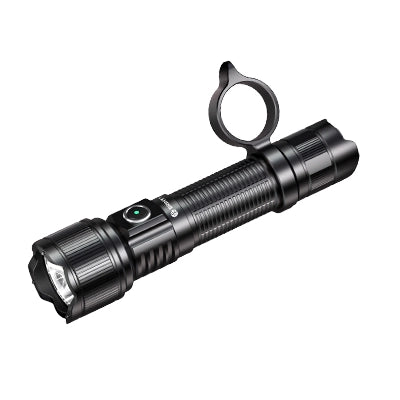
- 1000-2000 Lumens (Tactical): Brinyte PT16 – Strobe, USB-C, weapon mountable.
- 2000+ Lumens (Hunting/Search): Brinyte T28 Artemis – Tri-color (Red/Green/White), 350m throw.
This flashlight lumens chart can help you quickly match your needs to the appropriate brightness level. For example, if you just want a flashlight for home use or emergencies, 100–300 lumens is perfect. If you enjoy hiking or camping, 300–800 lumens gives you brightness and longer runtime. For how many lumens for home defense flashlight, experts recommend 500–800 lumens to avoid self-blinding wall bounce indoors.
4. How to Use the Lumen Chart to Buy the Right Flashlight
When buying a flashlight, follow these steps:
- Define your main use: Home, outdoor, or professional work?
- Balance brightness and runtime: Higher lumens drain batteries faster. Decide how long you need the light to last.
- Check durability: Waterproof ratings (like IPX6 or IPX7) and shock-resistant materials ensure reliability.
- Choose adjustable brightness if possible: Multiple modes help save battery power.
- Beware of "ultra-low price, ultra-high lumen" claims: These are often exaggerated. Always research carefully using trusted flashlight lumens reviews.
5. Brightness vs. Battery Life: Finding the Balance

We all want the brightest light, but higher brightness consumes more power and causes more heat. For everyday use, a medium flashlight lumen level combined with a large battery is ideal—bright and long-lasting. For emergency or tactical needs, prioritize maximum brightness but expect shorter runtime. Rechargeable tactical flashlights with USB-C like the PT16 and PT16A offer the best balance of output and convenience.
Rechargeable batteries are cost-effective and eco-friendly, but for extended outdoor use, carry spare batteries.
6. How to Use the Lumen Chart to Avoid Counterfeit Products
Many flashlights on the market exaggerate their lumen ratings. Before buying:
- Verify if the lumen number is reasonable. Ultra-high lumens at low prices and small sizes are suspicious.
- Check professional reviews and user feedback from trusted sources.
- Buy from reputable brands and authorized dealers for quality assurance and warranty.
- Inspect packaging and manuals—genuine products usually have clear, high-quality markings.
7. Recommended Lumens for Outdoor & Sports Flashlights
Different outdoor activities require different flashlight lumens:
- Hiking and camping: 300–800 lumens for bright and reliable light.
- Night running and cycling: 200–500 lumens, lightweight with good heat dissipation.
- Mountaineering and spelunking: Above 800 lumens, needing focused long-range and durability.
- Fishing: Around 300 lumens with soft light to avoid disturbing fish.
Also consider:
- Waterproof rating of at least IPX6
- Prefer rechargeable lithium batteries
- Lightweight and portable
- Multi-level dimming, SOS, and red light modes are pluses
Summary: Choose the Right Lumens for Your Needs
Don't just look at the lumen number when choosing a flashlight. Evaluate your needs carefully. The right flashlight lumens level balances brightness, battery life, weight, and cost, so you can find your ideal lighting companion.
Need help picking the right model? Browse our tactical flashlight collection — all models are tested for real-world performance and durability.
❓ Frequently Asked Questions
How many lumens is good for a flashlight?
It depends on your use case. For everyday household tasks, 100–300 lumens is sufficient. For outdoor activities like camping and hiking, 300–800 lumens provides a good balance. For tactical or professional use, 800–1500+ lumens is recommended. The key is matching lumens to your specific needs, not chasing the highest number.
Is 1000 lumens too bright for home defense?
In smaller rooms with white walls, 1000+ lumens can cause blinding wall bounce that disorients the user. For most home defense scenarios, 500–800 lumens with moderate candela (5,000–15,000 cd) is ideal — bright enough for positive target identification without self-blinding.
What are lumens vs candela for tactical flashlights?
Lumens measure total light output (brightness). Candela measures beam intensity (throw distance). For tactical use, high candela is often more important than high lumens — a 1000-lumen light with 50,000 cd can out-throw a 3000-lumen flood light. Both specs matter, but candela determines how far you can identify a target.
How many lumens do I need for camping?
300–800 lumens is ideal for camping. This range provides enough brightness for setting up tents, cooking, night hikes, and general campsite illumination without excessive battery drain. Look for flashlights with multiple modes, including a low setting for inside the tent and a high setting for trail use.
How can I avoid buying a flashlight with fake lumen claims?
Check for ANSI/NEMA FL1 standardized ratings, read independent reviews from trusted sources, and be skeptical of ultra-high lumen claims at extremely low prices. Reputable manufacturers provide candela, beam distance, and runtime specs alongside lumens. If a flashlight claims 5000+ lumens for $20, it's almost certainly exaggerated.
Ready to Find the Perfect Lumen Output for Your Needs?
Browse our complete tactical flashlight collection — with clear specs on lumens, candela, and runtime for every model.
Shop Tactical Flashlights →About Brinyte
Brinyte was founded in 2009. Since then, we have specialized in tactical and outdoor lighting. Our products are developed with input from working professionals, field-tested in real conditions, and engineered for reliability. Brinyte holds 30+ patents and ISO9001 certification.
👉 About Brinyte | Tactical Flashlights Collection | About the Author
"Professional tools for responsible hunters and operators — Brinyte."
Founded 2009 · 30+ Patents · ISO9001