

Introduction
Tactical flashlights are more than just illumination tools—they’re extensions of your situational awareness. Whether you are practicing home-defense movement, law-enforcement clearing, or professional outdoor patrol, the way you move with a flashlight directly determines your safety and effectiveness.
This guide covers advanced tactical movement, including angles, clearing techniques, body positioning, and when to apply momentary vs. constant-on light. The content is written for real-world use and inspired by practical defensive training.
Why Movement Technique Matters More Than Lumens
Many users believe that higher lumens = better performance. But in tactical environments, light discipline + movement discipline matters far more than raw output.
A trained operator with a 1000-lumen flashlight will outperform an untrained user holding 3000 lumens.
Good movement technique allows you to:
- Avoid exposing your position
- Control the angles and flow of a room
- Identify threats faster
- Maintain initiative in the dark
- Use your light only when you choose—not when it betrays you
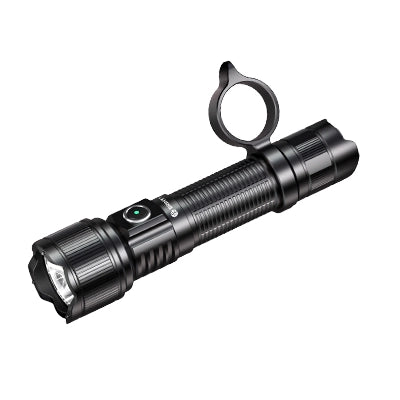
Flashlights like Brinyte PT28 and Brinyte PT16A offer momentary-on and high-output control, making them ideal for these techniques.

The Three Core Tactical Movement Concepts
Move in Darkness, Illuminate in Bursts
The golden rule:
- Stay in the dark → Illuminate briefly → Move again.
Short pulses from momentary mode prevent opponents from tracking your movement while giving you snapshots of the environment.
Best tool:
Brinyte PT28 (ideal momentary switch feel)
Never Stay Where You Last Used Light
After each flash of illumination, reposition immediately.
Why:
- Anyone seeing your light beam will attack your last known location
- Moving prevents silhouette exposure
- You maintain control over when and where you are visible
Avoid Shining Light Directly on Yourself
Keep the beam extending forward away from your body.
Recommended angle:
Holding the light slightly offset––either high or low––reduces your risk of being identified or targeted in a conflict situation.
Advanced Tactical Flashlight Movement Techniques
Technique 1: The “Flash and Glide” Method
A controlled movement where you:
- Burst light (0.2–0.5 sec)
- Absorb environmental info
- Move 2–3 steps in darkness
- Repeat
Useful for:
- Home defense
- Close quarters
- Hallway navigation
Best flashlight mode: Momentary high
Technique 2: Angled Illumination
Instead of illuminating straight ahead, angle the beam:
- Off-center left or right to avoid backlighting yourself
- Upward to catch silhouettes
- Downward to avoid blinding yourself with reflective surfaces
This gives you maximum scanning visibility with minimal self-exposure.
Flashlight recommendation: Brinyte PT16A (strong throw + balanced spill)
Technique 3: Corner Clearing With Flashlight Lead
When approaching corners:
- Hold the light slightly ahead of your body
- Burst momentary light into the unknown angle
- Pull back
- Re-angle
- Move into the cleared space
Corner clearing is one of the primary advantages of handheld tactical lights—you can expose the light but not your body.
Great for:
Self-defense, law enforcement, home security.
Technique 4: The “Strobe and Shift”
Strobe is not meant for constant use. Instead:
- Activate strobe briefly
- Move while the opponent is visually disrupted
- Use darkness to reposition
It’s safest, legal, and highly effective for disorientation and disengagement.
Best device: Brinyte XP22 PRO (instant-access strobe)
Technique 5: Using Cover With Light Discipline
When behind cover:
- Use light only to gather data, not for constant illumination
- Expose only your hand + light, not your head
- Vary your exposure angles every time
This keeps you undetectable and unpredictable.
Technique 6: Tactical Entry in Open Outdoor Environments
Outdoors, angles change. Recommended method:
- Keep beam low
- Avoid lighting your feet
- Use long-distance throw to read terrain
- Pulse the beam to check for movement rather than scanning continuously
Brinyte PT16A’s 3000-lumen output is particularly effective for long-range entry in outdoor defensive or patrol scenarios.

Common Mistakes That Reveal Your Position
- ❌ Keeping the light always on
- ❌ Walking directly into your own beam reflection
- ❌ Shining light while stationary
- ❌ Using turbo mode where medium is enough
- ❌ Standing after illuminating instead of shifting positions
- ❌ Clearing corners with your body before the beam
Correcting these mistakes yields a dramatic improvement in tactical safety.
Best Brinyte Models for Tactical Movement
Brinyte PT28 – The Professional Tactical Standard
- Smooth momentary mode
- Perfect flood/throw balance
- Ideal for movement, clearing, scanning
Brinyte PT16A – Long-Range Tactical Power
- Up to 3000 lumens
- Strong throw for outdoor movement
- Reliable for open-area identification
Brinyte XP22 PRO – The Ultimate Close-Range Weapon Light
- Instant strobe access
- Dual switches
- Designed for stress-response situations

Frequently Asked Questions
1. What is the best flashlight grip for moving and transitioning quickly?
Use a thumb-forward / cupped grip (index finger forward on the bezel or thumb over the tail switch) to enable fast momentary activation, immediate retention of the light, and quick transition between hands or to a weapon if needed.
2. How should I carry my light while moving to reduce visual signature?
Keep the light low and close to your body (chest or hip level) with the beam angled downward at about 30–45° to illuminate your path while avoiding casting a visible hotspot on the horizon.
3. When moving in a team, how do I use my flashlight without revealing teammates’ positions?
Coordinate movement: one person uses low-angle spill light for the group while others maintain blackout or red-light modes. Use prearranged signals (brief pulses) rather than continuous beams, and avoid shining toward teammates’ faces or reflective gear.
4. What’s the correct method to scan while on the move without overexposing my position?
Scan in short, purposeful sweeps: wide flood for immediate surroundings, then momentary narrow bursts for long-distance confirmation. Pause between bursts to observe animal/target reaction before moving.
5. How do I manage transitions between handheld and headlamp use during movement?
Practice a two-step transition:
(1) secure the handheld light in a holster or chest clip with bezel pointed down,
(2) bring headlamp to ready and activate low/red mode before releasing the handheld — this keeps illumination continuous without sudden bright flashes.
6. Is it better to move with the beam fixed or to use peripheral/edge lighting?
Use peripheral/edge lighting while moving. Keep the hotspot off-critical areas; rely on the beam’s edge to detect movement and shapes, reserving the hotspot for identification only when necessary.
7. How do I avoid reflective glare from wet ground, foliage, or equipment while moving?
Angle your beam downward, reduce output to low/medium, and avoid pointing at shiny surfaces. If reflections are unavoidable, use a warmer tint or red mode to minimize scatter and preserve night vision.
8. What safety practices should I follow when using tactical light movement techniques at night?
Always confirm your target and background before using high output; keep your finger indexed off the trigger when identifying; communicate light usage plans with team members beforehand; and practice all transitions and grips in training to ensure safe, automatic responses under stress.
Conclusion: Movement Turns Light Into an Advantage
A tactical flashlight is only as effective as the person using it.
When you master flash timing, angles, repositioning, and momentary control, you gain a powerful advantage in any low-light defensive situation.
Whether you’re training for home protection, patrol work, or professional tactical tasks, combining skillful movement with tools like Brinyte PT28, PT16A, and XP22 PRO will elevate your performance beyond raw lumens and into real capability.