

How to Choose the Best Hunting Flashlight: Color, Beam, Lumen Guide (2026)
✔ Experienced hunters refining color and beam strategy
✔ Anyone who wants to understand animal vision and light
1. Understanding How Different Animals See Light
Different animals perceive light in unique ways, which directly impacts how visible you are to them. Knowing their light sensitivity helps you stay undetected.
Deer and elk lack red-sensitive cone cells, making red light (620–750nm) nearly invisible to them. Wild boar have poor visual acuity but respond to high-contrast green light (520–540nm). Coyotes and foxes possess strong scotopic vision and detect white/blue wavelengths instantly. Matching your light color to the target species' visual gaps is the foundation of stealth hunting.
- Deer and Elk: Highly sensitive to blue and white light but struggle to detect red. Use red light hunting flashlights for stealth approaches.
- Wild Boar: Poor eyesight but responsive to green light — ideal for identifying them without alarming the sounder.
- Coyotes and Foxes: Strong night vision; they quickly detect white light. Use dim or filtered beams to stay hidden.
- Birds and Waterfowl: Some species perceive ultraviolet light; avoid unnecessary UV exposure during scouting.
2. Choosing the Right Beam Pattern: Floodlight vs. Throw Light

Beam pattern determines your effectiveness in different environments. Use throw beams for distance scanning and flood beams for close-range navigation.
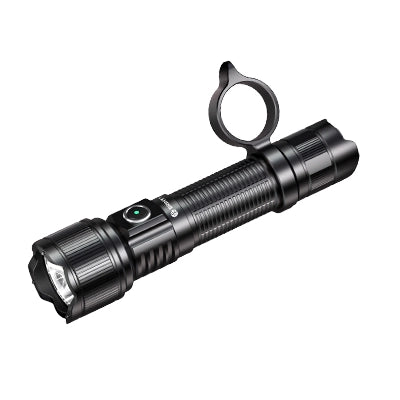
- Throw Light (Focused Beam): Perfect for spotting targets at long range or scanning open terrain. Recommended: Brinyte T28 Artemis with adjustable focus for precision tracking.
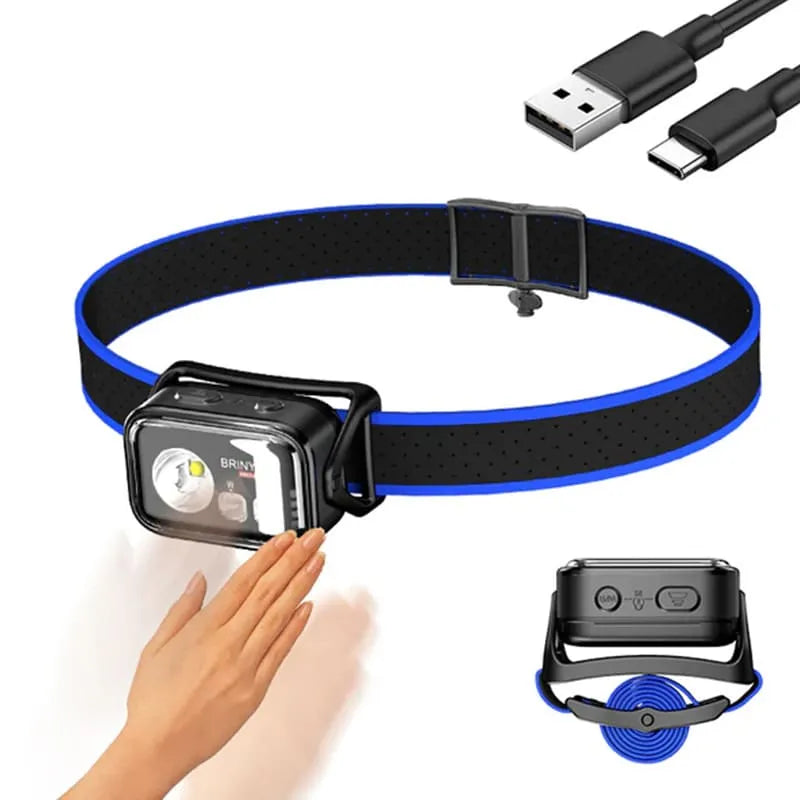
- Floodlight (Wide Beam): Best for close-range use, camp setups, or navigating dense woods. Recommended: Brinyte HL28 Explorer Headlamp for hands-free wide coverage.
In open terrain (>200m sightlines), throw-oriented lights with 50,000+ candela provide identifiable target resolution at 300+ meters. In forested or brushy areas (<100m sightlines), flood beams (60°–90° spread) reduce tunnel vision and improve peripheral awareness. The Brinyte T28 Artemis bridges both with adjustable focus from 6° spot to 70° flood.
3. Matching Brightness and Lumen Output to Hunting Scenarios
More lumens aren't always better. Match brightness to your specific task to avoid spooking game and wasting battery.
- Night Ambush / Stalking: 200–400 lumens — sufficient for close observation without alerting animals.
- Tracking and Navigation: 600–1000 lumens — provides clarity without excessive battery drain.
- Long-Distance Scanning: 1200+ lumens for quick bursts — don't overuse turbo mode.
Brinyte's PT28 Oathkeeper offers versatile output levels suited for both tactical and hunting situations.
For hunting, candela (beam intensity) matters more than total lumens. A 650-lumen light with 69,600 candela (T28 Artemis) reaches 525 meters; a 2000-lumen light with 20,000 candela washes out at 200 meters. Always prioritize candela specifications when comparing lights for long-range identification.
4. Recommended Flashlight Colors and Modes for Different Game Types
| Game Type | Best Light Color | Suggested Beam / Mode | Brinyte Recommendation |
|---|---|---|---|
| Deer Hunting | Red Light | Medium brightness, throw beam | T18 Artemis |
| Wild Boar | Green Light | Wide beam, tracking mode | T28 Artemis |
| Coyote / Predator | White or IR | High beam, short bursts | PT28 Oathkeeper |
| Bird / Waterfowl | White + UV | Flood beam, wide coverage | HL28 Explorer |
Each setup adapts to game behavior. Red light flashlights preserve stealth, green beams highlight movement in cover, and IR or UV light adds an edge for advanced observation.
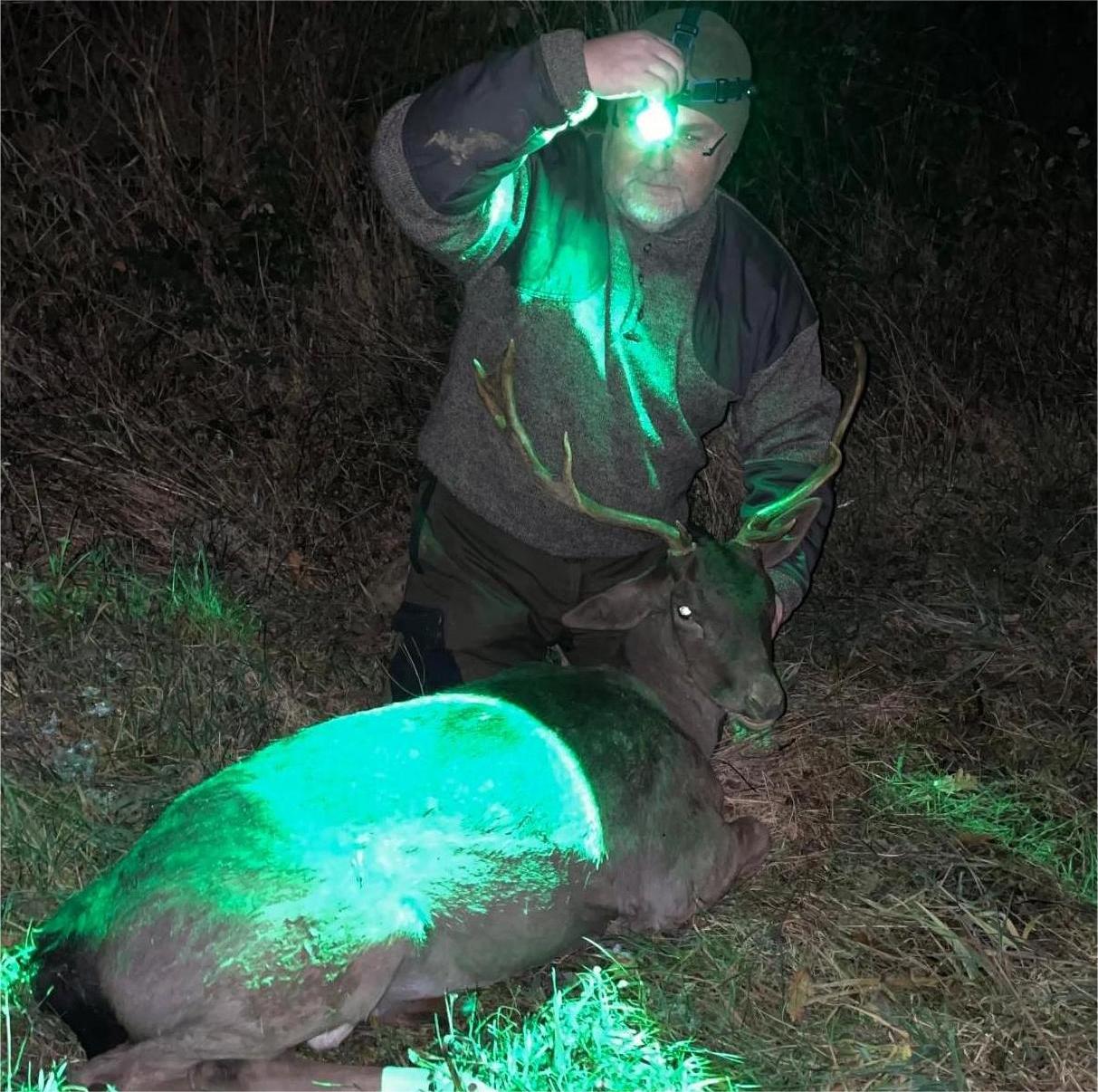
A tri-color flashlight (red/green/white) eliminates the need for multiple lights. Start with red for approach, switch to green for scanning, and use white only for final identification. This sequence reduces game disturbance by minimizing high-visibility wavelengths until the shot decision is made.
5. Battery, Durability, and Weather Resistance

- Battery Life: Choose flashlights with long runtime or replaceable 18650/21700 batteries for extended trips.
- Charging Convenience: USB-C fast charging and battery-level indicators prevent surprises in the wild.
- Weather Resistance: Look for IP66+ waterproof and cold-resistant flashlights rated to −20°C.
Brinyte's hunting lineup is designed for reliability under these exact conditions — built for rain, frost, and rugged use.
6. Pro Tips from Experienced Hunters

- Always test your flashlight before entering the field — switches, charging ports, and beam focus.
- Use low mode while walking, and switch to high beam only for spotting or shooting.
- Avoid pointing light directly at the animal's eyes — it breaks their natural calm.
- Carry a backup light in case your main beam fails.
Step-by-Step: How to Choose Your Hunting Flashlight
- Step 1 — Identify Your Target Game: Deer require red light for stealth. Boar respond to green. Coyotes need long-range white or IR. Match the light color to the species' visual sensitivity.
- Step 2 — Assess Your Terrain: Open fields require throw beams (50,000+ candela). Dense woods require flood beams for wide peripheral vision. Choose a light with adjustable focus for mixed terrain.
- Step 3 — Check Candela: Candela determines effective range. For open terrain, target 50,000+ candela. Don't be distracted by high lumen numbers that don't translate to usable throw distance.
- Step 4 — Verify Durability: Your light must be IP66+ waterproof and rated to operate at your region's lowest temperatures. USB-C rechargeable 21700 batteries provide all-night runtime without proprietary chargers.
❓ Frequently Asked Questions — Hunting Flashlights
What color light is best for deer hunting?
Red light is ideal because deer have limited sensitivity to red wavelengths (620–750nm), allowing hunters to move undetected during approach and setup.
Should I use red or green light for wild boar hunting?
Green light works better for wild boar since it enhances contrast in low light and provides clear visibility without alarming them. Red light is less effective for boar identification at distance.
What lumen range is best for hunting flashlights?
200–1000 lumens is optimal for most conditions; reserve turbo modes (1200+ lumens) for brief scanning or identification. Candela matters more than lumens for effective range.
Is white light bad for night hunting?
White light offers maximum visibility but easily exposes your position to game. Use it sparingly, only for final target identification after scanning with red or green light.
How far should a hunting flashlight throw?
A good hunting flashlight should reach at least 200–300 meters for open areas. Adjustable-focus models like the Brinyte T28 Artemis can exceed 500 meters with 69,600 candela.
Are rechargeable batteries reliable in cold weather?
Yes, if you use quality lithium-ion cells and keep them insulated. Brinyte flashlights are tested for reliable performance down to −20°C and use standard 21700 cells for easy field replacement.
Find Your Hunting Flashlight
Explore the Brinyte Artemis series and hunting collection — engineered from field experience for deer, boar, coyote, and predator hunters.
Shop Hunting LightsAbout Brinyte
Founded in 2009, Brinyte specializes in hunting and tactical lighting. Our products are developed with input from experienced hunters, field-tested in real conditions, and engineered for reliability. Brinyte holds 30+ patents and ISO9001 certification.
👉 About Brinyte | Hunting Lights Collection | About the Author
🔍 Fact-Checking Policy: All technical claims are based on published research in animal vision and optical science, combined with Brinyte field testing.
"Professional tools for responsible hunters."
Founded 2009 · 30+ Patents · ISO9001
• University of Georgia Warnell School of Forestry — Deer Vision Studies
• Texas A&M Wildlife & Fisheries Sciences — Feral Hog Vision Research
• Brinyte Product Specifications & ANSI/PLATO FL1-2019 Test Data