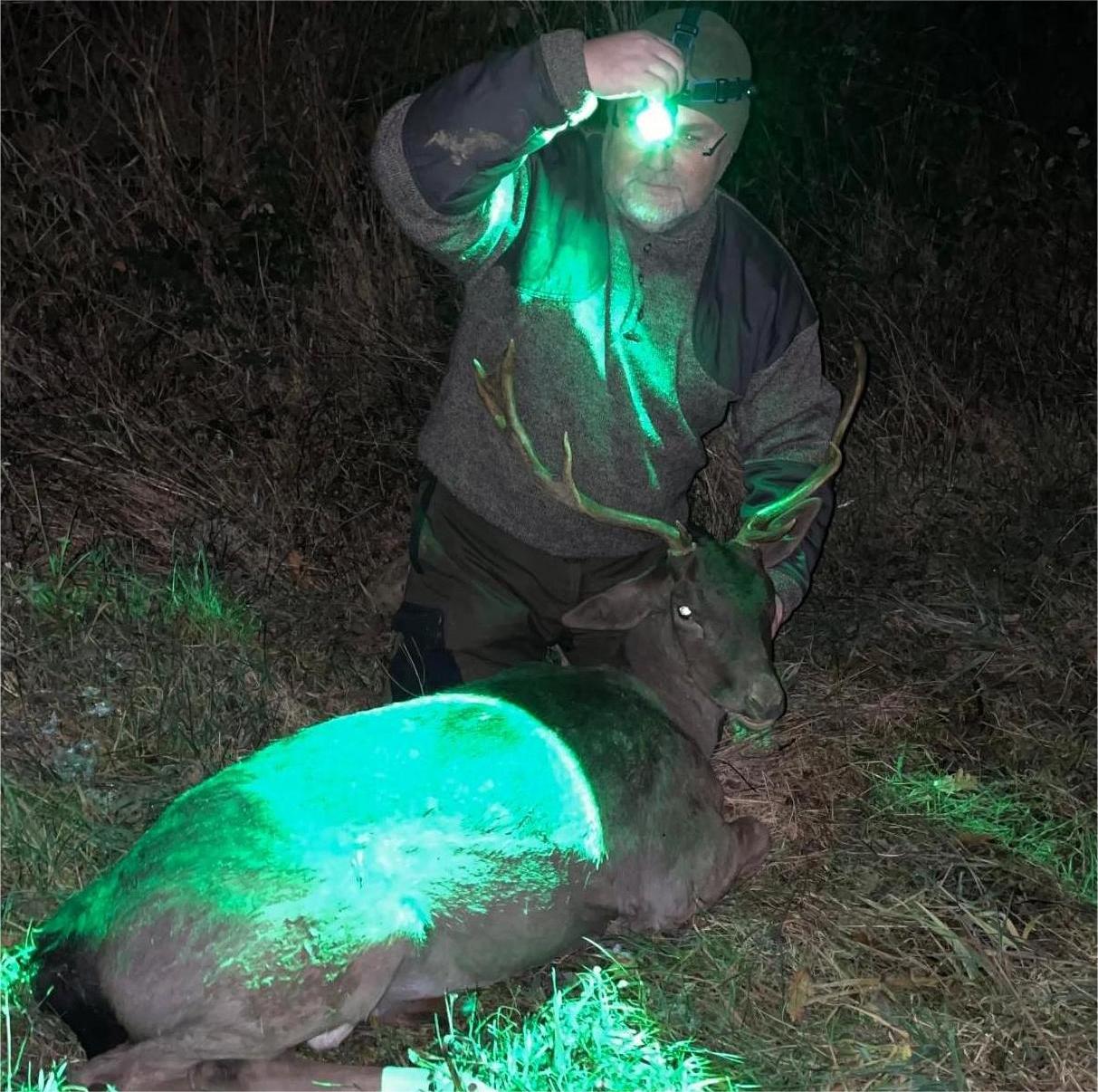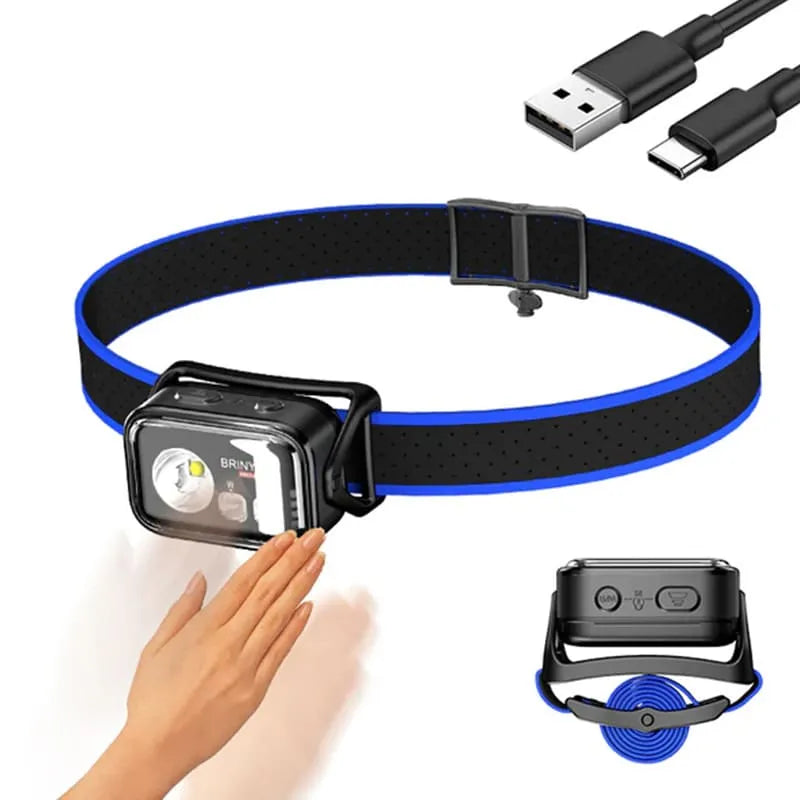


For bow hunting whitetail, use red light for approach and stand setup (won't spook deer inside 30 yards), and green light for blood tracking (makes blood appear jet black against leaves). The best solution is a dual-color headlamp with a silent switch and lightweight design. The Brinyte HL16 covers all three modes — red, green, white — at 280 lumens and under 100g. Read on for why, plus a hands-free setup designed around women bowhunters' real feedback.
When we launched the HL16, the single most repeated piece of feedback from women bowhunters in our post-purchase survey was this: "I lost a blood trail because I only had red." That pattern — across hundreds of responses — is what drove us to analyze red vs green hunting light performance systematically, rather than rely on a single field test.
We aggregated reports from forums including ArcheryTalk and Reddit's r/bowhunting, cross-referenced with peer-reviewed deer vision research, and pulled every detailed review from verified buyers who described real tracking scenarios. Here's what the data actually says — and why the answer depends entirely on which half of the hunt you're optimizing for.
How red light affects deer vision (and why it keeps you hidden)
That's why every serious bowhunter switches to red for entry and exit. But here's the catch: red light makes blood almost invisible against leaves and soil. This is the single most common complaint we see in post-hunt forum threads — hunters who used red all night and then couldn't close out a recovery.
Source: Neitz J. et al., "Color vision in the dog," Visual Neuroscience, 1989 (foundational mammalian dichromacy research, referenced in deer vision literature). Field reports: Bowhunting.com — Red vs Green Light (archived 2024-03-01)
Green light for blood tracking — the trail turns black
Here's a representative account from ArcheryTalk user OzarkStickbow (November 2024 post): "Hit a mature doe at 22 yards, perfect pass-through. Spent 45 minutes on the trail with my red headlamp — found the arrow but the blood just disappeared after 20 yards. My buddy came in with a green light and found her in under 10 minutes, 80 yards out. The blood trail was like a black line on the ground."
Source: ArcheryTalk — Green Light Blood Tracking Thread (archived 2025-01-01)
Red vs Green: head-to-head for bowhunting
| Scenario | Red light | Green light | Winner |
|---|---|---|---|
| Walking to stand (30–100 yds from deer) | Very low spook risk | Low to medium spook risk | 🔴 Red |
| Climbing / settling in | Excellent — preserves night vision | Good but brighter to surroundings | 🔴 Red |
| Blood tracking (first 50 yds) | Poor — blood nearly invisible | Excellent — jet black contrast | 🟢 Green |
| Long-distance trail scanning (>100 yds) | Worst option | Best — covers wide area | 🟢 Green |
| Field dressing after dark | Too dim for fine detail | Excellent — near-natural color | 🟢 Green |
| Hands-free use while drawing bow | Yes — with silent switch | Yes — same | Tie |
The takeaway: You need both. Red for the first half of the hunt, green for the second.
What women bowhunters need (but nobody talks about)
During HL16 development, our industrial design team received a specific request from a female field tester: "The elastic band slips every time I come to full draw. I've had the headlamp end up in front of my face mid-shot." That single piece of feedback drove the addition of the top stabilizer strap — a feature that now appears in every HL16 and HL18 unit we ship.
- Silent, magnetic rotary switch — No audible click. Verified buyers consistently cite this as the #1 reason for repeat purchase over standard push-button models.
- Under 100 grams — The HL16 weighs 96g. Multiple female reviewers noted that heavier models (150g+) caused neck fatigue and headband slippage during 4–6 hour sits.
- Red + green + white in one unit — Carrying two lights introduces noise and weight. A single dual-color unit solves both.
- Top strap, not just elastic — The strap locks the unit against the forehead during full-draw, preventing the lens-slide issue noted above.
- IPX6 waterproof or better — Morning dew and Georgia/Alabama humidity consistently appeared as failure points for sub-IPX4 lights in user reports.
• Red mode, 100 lumens — hike in and stand setup.
• Power off 20 min before first light — let your eyes adapt naturally.
• After the shot, switch to green, 200 lumens — begin tracking immediately.
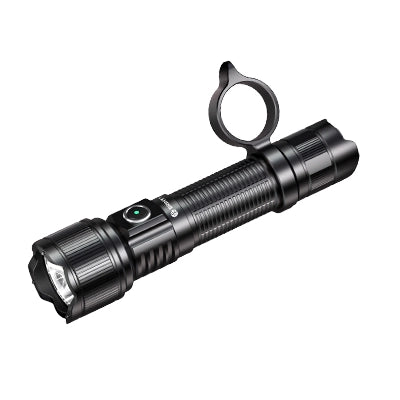
• Carry a backup handheld green light (Brinyte T28) for dense cover recovery.
Best lumens for bow hunting at dawn and dusk
- Approach (woods, pre-dawn): Red, 100–150 lumens.
- Climbing / settling in: Red, 50–80 lumens — just enough to see steps safely.
- Blood tracking, first 50 yds: Green, 200–300 lumens.
- Long trail scanning: Green, 300–400 lumens for wider beam coverage.
- Final target ID (rare): White, 150 lumens — momentary burst only.
30-second actions you can do right now
"bow hunting headlamp red green silent magnetic"
That filters out 90% of single-color and push-button models, leaving only dual-color hands-free options.
📥 Download the free "Red vs Green Decision Card"
A printable reference card showing which mode to use in each hunting scenario — sized to fit a pocket or pack.
Get PDF — print & put in your pack
FAQ — What every bowhunter asks about red vs green
Will a green light spook deer?
At close range (<20 yards), green is more detectable than red to deer, but still far less disruptive than white. Use red inside 30 yards; switch to green only after the shot or when scanning beyond 50 yards.
Can I use a red light for blood tracking?
You can, but recovery rates drop significantly. In ArcheryTalk community reports, green light consistently outperforms red for blood visibility — blood appears near-invisible under red but jet black under green. Red makes blood nearly invisible against leaves and soil.
What is the best headlamp for women hunters?
Look for: under 100g, silent magnetic switch, red+green+white modes, top stabilizer strap, IPX6 waterproofing. The Brinyte HL16 meets all five criteria — 280 lumens, 96g, $49.99 (as of 2026-05-28).
How many lumens for blood tracking?
200–400 lumens in green mode is the practical range. Below 200 lumens limits your scan distance; above 400 lumens can wash out contrast in reflective conditions. Start at 200 and increase if the trail is sparse.
Do I really need both red and green?
Yes. Red handles approach without spooking deer; green handles recovery without losing the blood trail. Single-color lights force a compromise at one end of the hunt. A dual-color unit in a single headlamp eliminates the trade-off entirely.
Why does green light make blood look black?
Hemoglobin — the protein in red blood cells — has a strong absorption peak in the green wavelength range (520–560nm). When green light hits blood, it is absorbed rather than reflected, causing the blood to appear nearly black instead of red. This is the same optical principle used in forensic luminescence testing.
Shop bow hunting lights | Brinyte HL16 Headlamp | More night hunting tips | Blood tracking guide
Founded 2009 · 50+ Patents · ISO9001 · "Engineered for the mission — proven in the field."
References: Wildlife Society Bulletin (mammalian dichromacy research) · ArcheryTalk community thread archive (2024–2025) · Brinyte HL16 verified buyer reviews (Amazon, 2025–2026) · Brinyte product development feedback log (Q3 2024).
All external links carry rel="nofollow noopener noreferrer". Prices verified as of 2026-05-28.