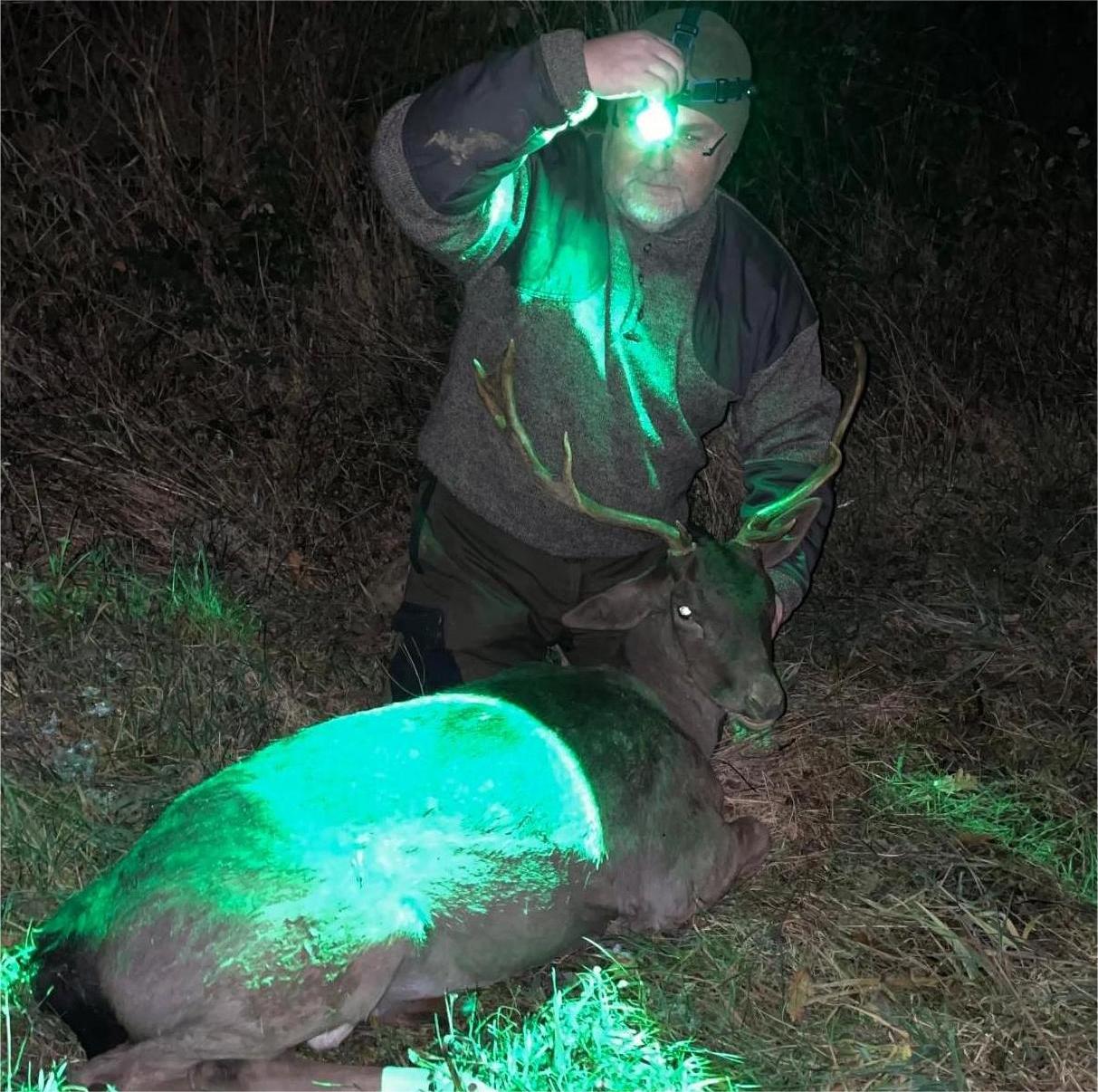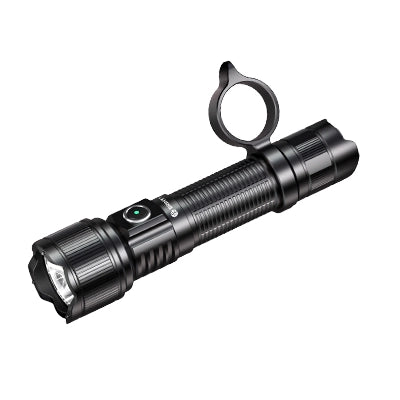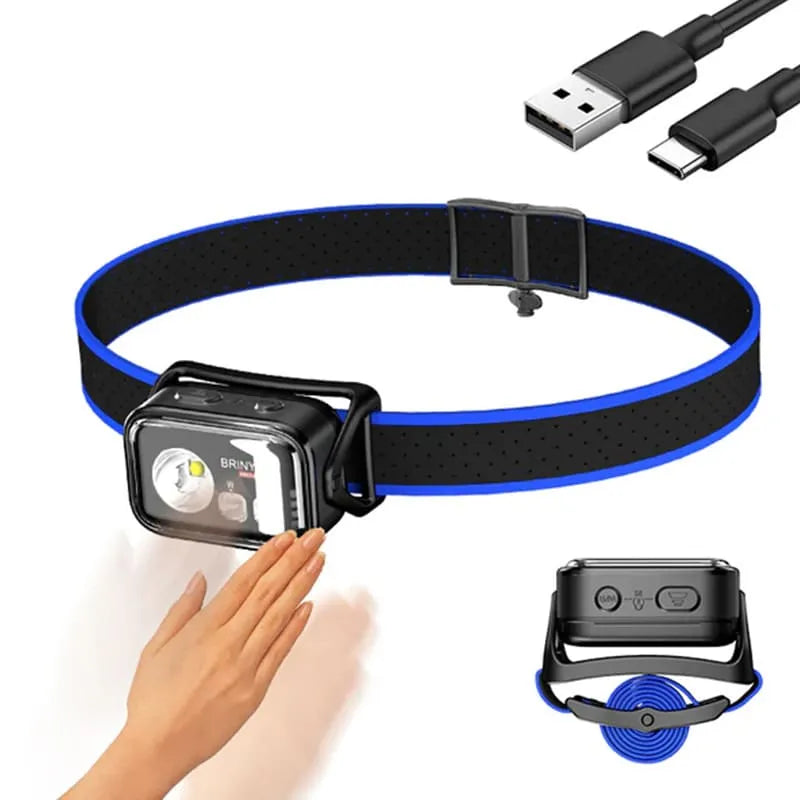


A single light is a liability. A Nordic hunter needs a layered lighting system: a primary headlamp for hands‑free navigation, a high‑candela thrower for long‑range spotting, and an ultralight backup light that shares a common battery platform and survives sub‑zero conditions.

✔ Anyone hunting in snow, heavy rain, or sub‑zero conditions
✔ Hunters upgrading from a single light to a layered lighting system
1. Introduction: Why One Light Isn't Enough for the Nordic Long Night
The Nordic wilderness rewards preparation and punishes complacency. With winter nights stretching 15 to 18 hours, hunters operate in near‑constant darkness punctuated by brief twilight. In these conditions, a single flashlight—no matter how bright—is a liability.
Why? Because no single light can fulfill all three roles a Nordic hunter needs: hands‑free navigation through uneven terrain, long‑range target identification across frozen clearings, and a failsafe backup when equipment fails in the cold. The solution is a layered lighting system—three purpose‑built tools that cover each other's weaknesses and share a common battery platform.
In sub‑zero conditions, every piece of equipment is one failure away from uselessness. A layered lighting system is not about having more light — it's about ensuring that when one component freezes, drains, or breaks, you are never left in the dark.
2. Layer 1: The Primary Headlamp — Brinyte HL28 Artemis
Every Nordic hunter's kit begins with a headlamp. It frees your hands for rifle carry, trekking pole navigation, and glassing—while keeping the beam aligned with your line of sight so you never have to choose between seeing and doing.

🔦 Brinyte HL28 Artemis — The Nordic Headlamp Standard
- Tri‑color output (white/red/green) covers every hunting phase: white for trail navigation and camp setup, red for pre‑dawn approach without spooking game, green for tracking blood against snow and vegetation.
- Zoomable flood‑to‑spot beam lets you transition from wide‑area camp illumination to focused trail spotting without switching lights.
- Long runtime on common cells ensures you can operate through the full darkness window without battery swaps.
3. Layer 2: The Long‑Range Thrower — Brinyte T40
When you need to spot game across a frozen clearing or identify a target at distance, a headlamp's flood beam won't suffice. The second layer is a high‑candela handheld thrower—a light purpose‑built for long‑range scanning.

🔦 Brinyte T40 — Long‑Range Spotting Across Frozen Terrain
- 490m max beam throw for spotting eyeshine across frozen clearings, valleys, and open tundra.
- High candela output cuts through snow glare and mist—critical when game is silhouetted against snow at 300+ meters.
- 21700 high‑capacity battery delivers full‑night runtime even in sub‑zero conditions. Shares battery platform with the HC01 backup light.
- IPX8 submersible rating — fully sealed against snow, ice, and accidental immersion.
4. Layer 3: The Ultralight Backup — Brinyte HC01
The third layer is often overlooked—until it's needed. A backup light must be light enough to carry without burden, reliable enough to work after days in a frozen pack, and compatible with your primary battery platform.

🔦 Brinyte HC01 — Dual‑Fuel Backup Headlamp
- Dual‑fuel capability: accepts both 21700 rechargeable cells and CR123A disposable batteries—critical when charging is unavailable for days.
- White/red light modes for navigation and preserving night vision.
- Adjustable beam angle perfect for map reading, navigating uneven terrain, or short‑distance treks.
- Compact and lightweight — clip it to your pack strap or store in an inside pocket to keep the battery warm.
5. Complete Nordic Lighting System — Side‑by‑Side
| Feature | HL28 Artemis (Layer 1) | T40 (Layer 2) | HC01 (Layer 3) |
|---|---|---|---|
| Role | Hands‑free navigation | Long‑range spotting | Emergency backup |
| Light Colors | White / Red / Green | White (high candela) | White / Red |
| Beam Type | Zoomable flood‑to‑spot | Throw‑optimized spot | Adjustable angle flood |
| Max Throw | 200m+ | 490m | 80m |
| Battery | 18650 / CR123A | 21700 (USB‑C) | 21700 / CR123A |
| Waterproof | IP66 | IPX8 | IP66 |
| Weight | ~180g | ~200g | ~110g |
6. Headlamp Selection Checklist for Cold‑Weather Hunting
When selecting a headlamp for Nordic hunting conditions, use this checklist to evaluate any model against the demands of sub‑zero darkness:

| Feature | Minimum Requirement | Why It Matters |
|---|---|---|
| Brightness | At least 1000 lumens | Long‑range capability for spotting game across frozen clearings |
| Light Modes | Multi‑color (white + red/green) | White for navigation; red preserves night vision; green for blood tracking |
| Beam Type | Zoomable flood‑to‑spot | Flood for camp and trail walking; spot for identifying targets at distance |
| Battery Life | Full‑night runtime on medium | Rechargeable USB‑C preferred; spare battery compatibility essential |
| Waterproof Rating | Minimum IP66 | Must withstand snow, freezing rain, and accidental submersion |
| Cold Resistance | Operational below -10°C | Battery contacts and switch mechanisms must not freeze |
| Comfort & Fit | Adjustable straps, <200g | Extended wear during multi‑hour hunts without fatigue |
7. Light Discipline: Common Mistakes That Cost Hunts
Most hunters prepare their rifles, camouflage, and calls with precision—but overlook one critical element: light discipline. In low‑light Nordic forests, a single lighting mistake can spook game, drain your battery, expose your position, or leave you helpless when it matters most.
Mistake #1 — Wrong Beam Pattern at the Wrong Time
| Situation | Best Beam Type | Why It Matters |
|---|---|---|
| Walking through dense forest | Floodlight (wide beam) | Illuminates surroundings without tunnel vision |
| Scanning a far treeline or valley | Throw light (narrow beam) | Focused beam to detect eye shine without lighting up the entire area |
| Sitting in ambush | Minimal flood, low output | Keeps you aware without alerting wildlife |
Mistake #2 — Running Turbo Mode Too Early
Turbo is a tactical burst mode, ideal for short scanning or confirming a shot zone—not for constant walking. It drains battery fast, especially in cold conditions, generates heat causing sudden lumen drop (thermal step‑down), and in freezing weather, batteries lose voltage faster, so high‑drain modes fail sooner.
Mistake #3 — Ignoring Light Color Strategy
| Light Color | Best Use Case | Wildlife Reaction |
|---|---|---|
| Red Light | Map reading, quiet movement, checking gear | Least disturbing to deer, boar, and fox |
| Green Light | Long‑range scanning without spooking | Enhances contrast on animal eyes |
| White Light | Shot confirmation, navigation in danger zones | Used sparingly when approaching final shooting distance |
Light discipline is the difference between seeing game and being seen by game. A hunter who masters beam selection, brightness control, and color strategy owns the darkness. The light becomes an invisible tool — not a warning flare.
8. Sub‑Zero Battery Management: Keep Your Lights Alive
Long hunting trips in the Nordic wilderness often mean freezing temperatures, extended tracking sessions, and limited access to charging resources. In these conditions, managing battery life becomes a survival skill—not just a convenience.
Understanding Cold Weather Battery Drain
In Nordic regions where temperatures can drop below -10°C, battery performance can decrease by up to 40%, especially with lithium‑ion 18650 or 21700 cells. Cold climate causes electrochemical resistance inside the battery, resulting in voltage drop, shortened runtime even if the battery shows 70–80% charge indoors, and auto shut‑off protection in smart flashlights to prevent damage.
| Battery Type | Best For | Cold Weather Behavior |
|---|---|---|
| 18650 Lithium‑Ion | Long‑distance throw lights & tactical use | Runtime decreases ~20–30% in sub‑zero |
| 21700 High‑Capacity | Heavy‑duty hunting flashlights (T40/T18) | Better cold resistance than 18650 |
| CR123A Disposable | Emergency backup use | Stable voltage output; works well in low temperatures but costly |
| AA/AAA Alkaline | Low‑power backup lights | Loses capacity quickly in cold weather |
Field‑Proven Cold Survival Techniques
- Store spare batteries close to your body (inside jacket pocket) instead of a backpack. Body heat slows down cold‑induced power loss significantly.
- Use insulated battery cases or wrap in microfiber cloth.
- Avoid leaving flashlights directly exposed on gun rail when not in use—keep them under the jacket until ready.
- Cycle light output—don't run Turbo mode continuously. Alternate between medium and brief Turbo bursts.
- Carry a compact USB‑C power bank (at least 10,000mAh) for mid‑hunt quick charging.
- Label batteries by charge level or cycle count—prevents confusion during quick swaps in the dark.
Your body is the best battery warmer you own. A spare cell stored against your chest at 37°C delivers nearly full runtime when inserted into a frozen flashlight. The difference between an inside pocket and an external pack strap is the difference between a working light and a dead one.
❓ Nordic Winter Hunting Lighting FAQ
What lighting gear do I need for a Nordic winter hunt?
A layered system is essential: (1) a primary headlamp with tri‑color output for hands‑free navigation, (2) a high‑candela handheld thrower for long‑range spotting, and (3) an ultralight backup light that shares the same battery platform. All three must be rated for sub‑zero operation.
Why does my flashlight battery die so fast in cold weather?
Cold temperatures cause electrochemical resistance inside lithium‑ion batteries, resulting in voltage drop and shortened runtime. At -10°C, battery performance can decrease by up to 40%. Always store spare batteries close to your body (inside jacket pocket) to slow cold‑induced power loss, and avoid running Turbo mode continuously in freezing conditions.
Red light vs green light — which is better for Nordic hunting?
Both serve different purposes. Red light is least disturbing to deer, boar, and fox—ideal for quiet movement, map reading, and preserving night vision. Green light enhances contrast on animal eyes and is better for long‑range scanning without spooking game. A tri‑color headlamp like the HL28 Artemis gives you both options plus white light for navigation.
What's the difference between flood and throw beams?
Flood beams create wide, uniform illumination ideal for walking through dense forest, setting up camp, and close‑range tasks. Throw beams are narrowly focused for long‑distance spotting—detecting eyeshine across frozen clearings without lighting up your entire position. A zoomable headlamp like the HL28 Artemis lets you switch between both without carrying multiple lights.
How many spare batteries should I carry for a multi‑day Nordic hunt?
At minimum, carry one fully charged spare battery per light, plus an additional universal spare that fits all lights in your kit. Store spares in thermal‑protected cases inside your jacket pocket—body heat significantly extends cold‑weather runtime. For expeditions longer than 3 days without charging access, add a compact USB‑C power bank (10,000mAh+).
Build Your Nordic Winter Lighting System
Shop Brinyte headlamps, long‑range throwers, and backup lights — purpose‑built for the Nordic long night.
Shop Nordic Hunting LightsAbout This Arctic Field Guide
Founded in 2009 — 50+ patents, ISO9001 certified. All gear recommendations and battery performance data are based on Brinyte field testing in Nordic winter conditions. Product specifications measured per ANSI/NEMA FL1 standard.
"Engineered for the mission — proven in the field."
Founded 2009 · 50+ Patents · ISO9001