

🦆 The Hunt That Taught Me Everything About Light Discipline
Two seasons ago, I was setting decoys on a frozen Wisconsin backwater. 4:30 AM, pitch black, frost on my gloves. I reached for my "tactical" light — 2,000 lumens of pure white flood. Click. The entire marsh lit up like a Walmart parking lot. My buddy hissed, "Turn that off!" But the damage was done. For the next three hours, not a single mallard worked the spread. We packed up empty. That morning, I swore I'd never bring a blinding white torch into the blind again. That's when I started designing lights specifically for how waterfowl actually see, and how frozen hands actually operate switches.
— Xuping Feng, Founder & lifelong hunter
The ideal duck hunting flashlight must balance a high-candela white beam (500m+ throw) for boat navigation with a dedicated red or green stealth mode (under 150 lumens) for setting decoys without spooking birds. It requires an IP66 or higher waterproof rating to survive marsh drops, and a freeze‑resistant tail switch you can operate with thick gloves.
✔ Anyone who's dropped a light in the marsh and watched it die
✔ Hunters who need one light for navigation, decoy setup, and blind work
1. The Brutal Reality: Why Big Box Store Lights Fail
Every seasoned waterfowl hunter has witnessed it. You're wading through a frozen pothole at 4:30 AM, breaking thin ice, when someone turns on a generic 5,000‑lumen "mega‑flood" flashlight. The intense white backscatter bounces off the fog, blinds the entire blind, ruins your dark adaptation, and sends roosting mallards flaring miles down the flyway.
When searching for a dedicated duck hunting flashlight, you aren't buying an EDC tool. You're buying marine‑grade hardware built for thick mud, sub‑zero temperatures, and strict light discipline. Standard flashlights fail here because they lack sub‑zero battery protection, get choked by salt‑water corrosion, or feature tiny side buttons impossible to locate with frozen, gloved hands.
A duck hunting flashlight is not an EDC tool — it's marine‑grade hardware that must survive salt marsh drops, sub‑zero temperatures, and strict light discipline. Generic high‑lumen flood lights fail because their white backscatter reflects off fog and water, blinding the hunter and spooking waterfowl from miles away.
2. The Waterfowl Lighting Matrix: Lumens vs. Color Wavelengths

To avoid ruining your hunt, your lighting strategy must shift depending on the phase:
| Hunting Phase | Optimum Spectrum | Target Spec | Tactical Reason |
|---|---|---|---|
| Boat Navigation | High-Candela White | 500m+ throw / 60,000+ cd | Cut through fog, spot half‑submerged logs. |
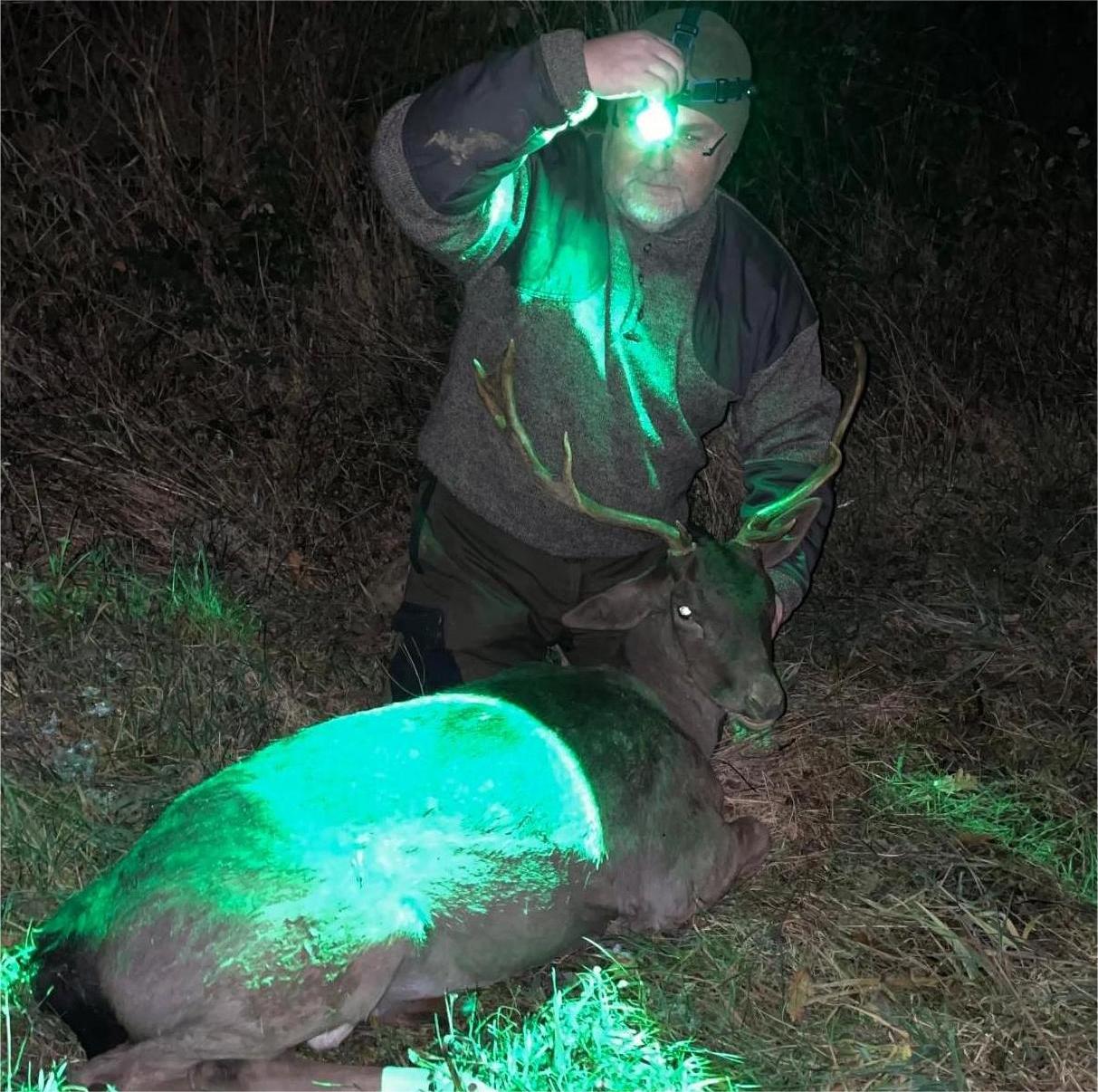
| Setting Decoys | True Green LED (~520nm) | 100–150 Lumens | Maximizes human contrast in muddy water; less visible to descending birds. |
| Inside the Blind | Deep Red LED (~630nm) | 30–50 Lumens | Preserves night vision; invisible to dogs and less disruptive to birds. |
3. The Marsh Tool That Works: Brinyte T28 Artemis

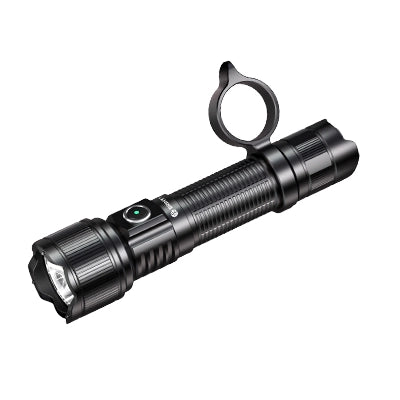
Instead of carrying three separate flashlights into the marsh or fumbling with plastic colored filters that freeze and crack, elite waterfowlers consolidate into a tri‑color system. That's exactly what the Brinyte T28 Artemis delivers.
🔦 Brinyte T28 Artemis — Tri‑Color Rotary Light
1. Patented Tri‑Color Rotary Switch
No digital programming. A physical internal rotary lets you switch between high‑candela White, high‑contrast Green, and stealth Red LEDs instantly. The green mode gives you ~130 lumens — perfect for sorting tangled decoy lines in freezing dark without spooking birds.
2. IP66 Submersion‑Ready Armor
A6061‑T6 aluminum with Type III hard anodizing. It resists salt water, mud clogging, and accidental drops into the marsh. IP66 means dust‑tight and protected against powerful water jets — plenty for rain, splashes, and brief immersion. (If you need full submersion IP68, check the ZT40 below.)
525m beam throw, 69,600 candela, and a 21700 5000mAh USB‑C rechargeable battery. One light handles boat navigation, decoy setup, and blind work.
Shop T28 Artemis →The T28 Artemis consolidates three flashlights into one marsh‑ready system. High‑candela white for fog‑cutting navigation, true green for decoy setup, and red for inside the blind — all via a silent rotary that works with frozen, gloved hands.
4. T28 Artemis vs ZT40: Which One Should You Buy?
Both lights are excellent for waterfowl, but they serve slightly different needs. Here's the honest breakdown:
| Feature | T28 Artemis | ZT40 (Zoomable) |
|---|---|---|
| Best for | All‑in‑one tri‑color, no filters to lose | Longest throw + zoom flexibility |
| Colors | White / Red / Green (built‑in) | Available in White, Red, Green, IR, UV (one color per unit) |
| Max throw / candela | 525m / 69,600 cd | 490m / 60,000 cd (white version) |
| Waterproof rating | IP66 (rain, splash, brief immersion) | IPX8 (submersible beyond 1.5m) |
| Charging | USB‑C on battery | Hidden USB‑C port on body |
| Price | ~$90 | ~$90 |
• Pick T28 Artemis if you want one light that does everything (white, red, green) without carrying extra bodies or filters.
• Pick ZT40 if you need IPX8 full submersion (e.g., you often drop lights into deep water) or you want a dedicated color (like pure green or IR for night vision). For most waterfowlers, the T28's tri‑color convenience wins.
5. ⚠️ The Swamp Checklist: What to Look For Before Launch

- Tailcap over side‑buttons: When your fingers are numb at 25°F, finding a flush side‑button is impossible. Insist on a raised tactical tail‑switch that clicks confidently through heavy neoprene gloves.
- Regulated runtimes: Cheap lights step down lumens after 3 minutes due to poor thermal regulation. Look for constant‑current circuitry that holds steady beam throw for long boat rides.
- Anti‑roll bezel: A round flashlight rolls off a boat console into the water. Ensure the housing has an anti‑roll tactical ring or geometric flats.
📥 Free PDF: Duck Hunting Light Quick Reference
One‑page printable: color wavelengths, recommended lumens per phase, and waterproof ratings. Laminate it for your blind bag.
❓ Frequently Asked Questions
Why is green light preferred for waterfowl?
Green light (~520nm) offers 9‑10x better contrast for human eyes in muddy water and reeds than red light. It lets you see decoy lines and hazards clearly while producing less visible flare to waterfowl compared to white light.
What waterproof rating is necessary for duck hunting?
IP66 minimum. IP66 handles rain, splashes, and brief immersion. If you regularly hunt deep water or drop lights overboard, get IP68 (like the ZT40).
Will high‑lumen flashlights scare ducks?
Yes. Ducks have excellent vision and can detect unnatural white glares from miles away. Blasting a high‑lumen white light across a pond during pre‑dawn setup will scatter feeding birds. Use red/green stealth modes instead.
Own the Pre‑Dawn Flyway
Don't risk your hunt with fragile plastic lights or blinding beams. Equip your blind bag with tri‑color illumination built by engineers who hunt.
Shop Brinyte Professional Hunting LightsAbout Brinyte
Founded in 2009 — 50+ patents, ISO9001 certified. Brinyte builds professional lighting tools for waterfowl hunters, law enforcement, and search & rescue teams. All specifications measured to ANSI/NEMA FL1 standards.
"Engineered for the mission — proven in the field."
Founded 2009 · 50+ Patents · ISO9001