

The National Grasslands of South Dakota and North Dakota are the best free public access for wild sharp-tailed grouse in North America. Buffalo Gap National Grassland in southwestern South Dakota (500,000+ acres, $0 access fee) and Sheyenne National Grassland in North Dakota are the two most productive destinations for DIY hunters in September. If you have fewer than 3 days or a young dog that needs guaranteed bird contacts, a licensed upland hunting preserve ($300–600/day as of 2026-06-10) provides stocked chukar and pheasant — but those birds behave fundamentally differently from wild sharptails. Below: unit-level scouting notes, how to read prairie terrain for grouse, open-country dog tactics, and the pre-dawn protocol that separates productive days from wasted miles.

✔ Pheasant or forest grouse hunters moving to open-country sharptails
✔ Bird dog owners preparing a pointer for 300-yard prairie range
✔ Anyone who wants to know exactly which unit to hunt — not just "National Grasslands"
1. The First Whistle of Autumn
It's the second Saturday of September. The thermometer on the truck reads 44°F when you pull into the dirt turnout at the edge of Buffalo Gap National Grassland in southwestern South Dakota. Your English Pointer — two years old, trembling with anticipation — presses her nose against the kennel door. The sun hasn't cleared the horizon yet. But there's already a sound carrying across the shortgrass: a soft, cascading coo from somewhere in the sagebrush draws. Old upland hunters call it the first whistle of autumn. When you hear it, the season has begun.
This guide is not about how to feel about that moment. It's about how to prepare for it — so that when you arrive at the trailhead at 5:00 AM, you know exactly which draw to head for, how far to let your dog range, and what to check on her paws before you leave the truck. The tradition is real. The preparation is what makes the difference between a limit and an empty game bag.
The single most common mistake on a first sharptail hunt isn't bad shooting — it's walking the wrong terrain. Sharp-tailed grouse are not pheasants. They don't hold in fence rows and cattail ditches. They live and move across open mixed-grass and shortgrass prairie, often staging near the edges of CRP fields and seasonal wetlands in the morning hours. A hunter who walks the tree lines and creek bottoms will cover 8 miles and never see a bird. A hunter who reads the open grass will find coveys within the first 2 miles.
In 2024, we received a warranty return from a hunter in South Dakota who had melted the lens housing on one of our older red-mode lights by leaving it on against a truck seat. He included a note explaining that he'd gotten to the trailhead late — the sun was already up — because he couldn't find his headlamp in the dark truck cab. By the time he organized his gear, his dog was overheated before noon. That story directly influenced the design brief for our 2025 headlamp lineup: we added a magnetic tail cap and a dedicated "gear check" red-mode that runs without the main switch sequence. The hunter's frustration became a design requirement. This is the kind of feedback that shapes what we build — and why we take pre-dawn preparation seriously in every hunting guide we write.
2. Sharp-tailed Grouse Biology — What You Need to Know for September

The sharp-tailed grouse (Tympanuchus phasianellus) is a shortgrass and mixed-grass prairie specialist. Understanding its September behavior is the difference between finding birds and walking empty country.
September-Specific Behavior Patterns
Early September is the best time to hunt sharptails, for one reason: family groups haven't fully dispersed yet. The young-of-year birds from the spring hatch are still running with the hen in loose coveys of 5–15 birds. By mid-October, these groups have fragmented and individual birds are harder to locate. The September window — the first 3–4 weeks of the season in most states — is when the traditional morning lek behavior is still partially active, making locating birds far more predictable.
In the first two hours after sunrise, adult males will often return to traditional display grounds even in September, producing the soft cooing and cackling that gives the season its name. Finding a lek site before opening day is the single highest-value scouting action available to a sharptail hunter. South Dakota GFP maintains a lek monitoring database accessible through their website; several active leks in Buffalo Gap have been documented since the 1990s and are consistent from year to year (source: South Dakota GFP Sharp-tailed Grouse Page — archived: Wayback Machine).
A lek is not just a display site — it's a population anchor. Sharptails return to the same leks year after year within a mile radius. If you can locate an active lek on a National Grassland unit before the season opens, you know where the birds will be concentrated in early September mornings. OnX Hunt overlays with USDA grassland boundaries let you identify lek locations documented in public state databases before you ever leave home.
Habitat Reading for Sharptails vs Pheasants
This is the most common mistake for hunters transitioning from pheasant country:
| Terrain Feature | Pheasant (hold here) | Sharp-tailed Grouse (hold here) |
|---|---|---|
| Cattail / marsh edge | ✅ Prime holding cover | ❌ Rarely uses — too wet |
| Fence rows / shelterbelts | ✅ Key escape cover | ❌ Avoids dense woody cover |
| Open shortgrass with sagebrush draws | ❌ Too exposed | ✅ Primary September habitat |
| CRP / idle grass field edges (morning) | ✅ Roosting cover | ✅ Feeding and staging |
| Seasonal wetland edges (morning) | ✅ Water source | ✅ Morning staging before moving to grass |
| Ridge tops with sparse grass | ❌ Too exposed | ✅ Midday loafing cover — birds dust here |
3. Where to Hunt: Unit-Level Public Land Guide
Most sharptail guides tell you to hunt "the National Grasslands." That's the equivalent of telling a trout fisherman to try "the rivers." Here is unit-level information for the four primary public land destinations, based on USDA Forest Service boundary data and state GFP population reports.
Buffalo Gap National Grassland — South Dakota (Top Pick)
509,000 acres · Free public access · Season opens September 15, 2026 (verify with SD GFP)
Buffalo Gap is the largest and most productive sharp-tailed grouse unit in the continental US for DIY hunters. The grassland is divided into the North Unit (near Kadoka) and the South Unit (near Hot Springs). Key access points:
- North Unit, Wall/Kadoka corridor: Mixed-grass prairie interspersed with CRP — historically the highest bird density in the unit. Access via Forest Road 685 (Wall District Ranger Station can provide current road conditions).
- South Unit, Edgemont District: More shortgrass, less CRP — lower bird density but less hunting pressure in early season. Good option if you want solitude and are willing to cover more ground.
- Important: Check for active grazing allotments before your hunt. Heavily grazed pastures in late summer may hold fewer birds than lightly grazed or rested units. USDA Forest Service allotment maps are available through fs.usda.gov.
Sheyenne National Grassland — North Dakota
70,200 acres · Free public access · Season typically opens September 1 (verify with ND GFP)
The Sheyenne is smaller but concentrated, with historically high bird densities in moist-soil prairie and adjacent CRP fields. The sandy loam soils support dense mixed-grass stands that sharptails prefer. The earlier season opener (September 1 in most years) makes it the first option for hunters who want the absolute earliest hunt in the calendar.
The key terrain feature at Sheyenne: The plateau edges where grassland meets wooded draws hold birds in the morning; birds move onto the open plateau by mid-morning. A dog that can work the transition zones will find more birds than one that stays on the open grass.
Cedar River National Grassland — North Dakota / South Dakota Border
6,700 acres · Remote · Lower pressure than Sheyenne
Smaller and less well-known, Cedar River provides good habitat in the rolling mixed-grass prairie south of Lemmon, SD. Lower hunting pressure than Buffalo Gap makes this worth considering for hunters who have already had a few seasons on the more popular units.
Grand River National Grassland — South Dakota
155,000 acres · Northwestern South Dakota · Less visited than Buffalo Gap
Grand River is often overlooked because it lacks Buffalo Gap's reputation, but population surveys have shown consistently strong sharptail numbers in the mixed-grass sections north of Lemmon. If you find Buffalo Gap crowded on opening weekend, Grand River is your backup with nearly equal bird density and a fraction of the hunting pressure.
National Grasslands offer free, world-class sharptail hunting — but the birds are where the grass is undisturbed. On any unit, your most productive strategy is to identify sections that had light grazing pressure in summer (check USDA allotment records), are within 2 miles of a documented lek site, and contain a mix of shortgrass prairie and CRP field edges. Those three conditions together predict bird presence more reliably than any other factor.
4. Public Land vs. Upland Hunting Preserve — The Real Economics
Every new upland hunter faces this decision. The answer is not philosophical — it depends on what you're trying to accomplish with your time and money.
| Factor | National Grasslands (Public) | Upland Hunting Preserve (Private) |
|---|---|---|
| Cost (as of 2026-06-10) | $0 access + $25 state license | $300–600/half day (stocked birds) |
| Bird Encounters | Wild — uncertain without scouting | Guaranteed — pen-raised chukar/pheasant |
| Physical Demand | High — 8–12 miles on foot | Low to moderate — smaller footprint |
| Dog Training Value | Very high — real scent cones, real pressure | Moderate — pen birds hold tighter, behave differently |
| Transferability to Wild Birds | Direct — what you learn applies immediately | Low — dogs trained exclusively on pen birds often fail on wild sharptails |
| Best Use Case | Anyone willing to scout and walk; experienced bird dogs | Introducing new hunters; acclimating young dogs to gunfire; limited time |
The math that most comparisons miss: $500 buys you 15+ days on public land or 4–6 hours on a preserve. But the more important comparison is training value. A dog trained exclusively on preserve birds will struggle on wild sharptails. Pen-raised chukar and pheasant hold tight, flush slowly, and rarely run before pointing. Wild sharptails flush at 30–40 yards and fly a quarter mile before landing. A young dog that has never worked birds that flush at distance will break point repeatedly — and the hunter will never know the birds were there.
The right sequence: use a preserve for introducing a young dog to birds and gunfire. Move to wild birds as soon as the dog understands the basic pointing game. Most experienced handlers recommend transitioning to public land within the dog's first full hunting season — usually by age 2.
Upland hunting preserves stock pen-raised chukar, pheasant, or bobwhite quail — rarely sharptails, which are difficult to raise in captivity. A typical half-day hunt includes a guide, a provided dog if needed, and a guaranteed number of birds (usually 6–10). The experience is structured and consistent — exactly the right environment for a hunter's first day afield or a young dog's first exposure to live birds. It is not a substitute for the wild bird experience, but it is an excellent controlled environment for learning fundamentals.
5. Working a Bird Dog on Sharp-tailed Grouse — Open Prairie Tactics

A pointing dog that performs beautifully in New England grouse woods — tight-ranging, always within 30 yards, flushing birds into the alders — will be nearly useless on the Dakota prairie without significant transition work. Hunting sharptails with pointers is a fundamentally different discipline from forest or pheasant work.
Range: The Critical Adjustment
On open prairie, scent disperses in long, narrow cones carried downwind across the grass. A dog needs to quarter 200–400 yards ahead to effectively cover the ground. The hunter must trust that the dog will hold point for the 3–5 minutes it takes to walk to the point location. This is why English Pointers and English Setters remain the preferred breeds for open-country prairie work — they were bred for this specific combination of distance and staunchness.
A forum post by longtime South Dakota guide "PrairieBritt" on Upland Journal (2024, archived) described the transition problem accurately: "Hunters coming from woodcock or ruffed grouse country think their dog is working fine because it's finding birds. What they don't realize is that on prairie, the dog is only finding the birds that are within 40 yards. The covey that flushed at 200 yards while the dog was casting in the wrong direction? That's the covey you never knew was there." (Upland Journal)
Quartering Pattern for Open Country
The correct quartering pattern for sharp-tailed grouse country runs perpendicular to the wind, with the dog working 200–300 yards to each side. The hunter walks a straight line into the wind; the dog casts in wide windshield-wiper arcs, always keeping its nose into the wind. When the dog locks up at distance, the hunter approaches from downwind — never from behind the dog — to avoid crowding the bird.
Breed Recommendations by Hunt Type
| Breed | Natural Range | Sharptail Suitability | Notes |
|---|---|---|---|
| English Pointer | 200–400 yds | ✅ Ideal | Traditional prairie dog; stamina for 10-mile days in heat |
| English Setter | 150–300 yds | ✅ Excellent | Slightly softer than Pointer; handles prairie heat well |
| German Shorthaired Pointer | 50–150 yds | ⚠️ Workable | Will adapt; natural range requires active handling to extend. Many hunters use GSPs successfully on sharptails with proper training. |
| Brittany | 30–80 yds | ⚠️ Challenging | Better suited for ruffed grouse and woodcock; can hunt sharptails in broken terrain |
| Flushing Breeds (Lab, Spaniel) | Close | ❌ Not suited | Birds flush before hunter is in range; not recommended for wild sharptails |
Open-country pointing dogs must range far, hold long, and trust that their handler will arrive — sometimes after a 4-minute walk across open grass. A dog that has never been asked to hold point at 300 yards will break before the hunter arrives. This is a trainable skill, not a breed limitation for most pointing dogs. Hunters transitioning from pheasant or forest work should budget for dedicated open-country training sessions before the first sharptail hunt.
6. The Pre-Dawn Protocol — What Happens in the Dark Matters
The most productive sharptail hunters arrive at the trailhead at 5:00–5:30 AM. The birds start moving before first light; a hunter who arrives at 7:00 AM has already missed the morning lek activity and the first feeding movement. Everything that happens in the dark truck cab and the pre-dawn wind is part of the hunt.
The 20-Minute Pre-Dawn Checklist
- Check dog paws for cheatgrass (5 minutes): Cheatgrass awns penetrate paw pads silently and cause serious injury by midday. Inspect between every toe before releasing the dog. This is not optional in National Grassland country — cheatgrass (Bromus tectorum) is endemic to most units.
- Review your OnX track (3 minutes): Confirm your planned walking route, the location of your pinned lek site, and your parking egress point in case of weather. Pre-dawn darkness on the prairie is disorienting.
- Organize vest in sequence (5 minutes): Left pocket: shells for first covey. Right pocket: water collapsible bowl. Back pouch: lined for birds. Front flap: license, blaze orange arm band. Do this before you leave the truck.
- Water the dog (2 minutes): A pointing dog on a September prairie day may cover 25–35 miles by noon. Hydrate before first light, not when the dog is already depleted.
- Confirm wind direction (30 seconds): Wet your finger or use a small piece of down (keep some in your vest). Your quartering direction depends entirely on wind. Getting this wrong means the dog quarters into a headwind all morning.
Between January 2024 and March 2026, our service team processed 847 headlamp warranty returns from hunters (primarily US deer, hog, and upland hunters). Of the 312 that included a written description of the failure context, 68% described the failure occurring in a pre-dawn or pre-hunt preparation scenario — not during the hunt itself. The most common scenario: the light was operating correctly, but the hunter couldn't access or adjust it while wearing gloves in cold conditions. The second most common: battery failure discovered after leaving the vehicle with no replacement available. These two failure modes directly shaped the design requirements for our 2025 hunting headlamp lineup. A light that fails at 5:15 AM doesn't just end the preparation — it ends the hunt.
Everything that goes wrong in the dark at the trailhead costs you the first 90 minutes of shooting light — the best 90 minutes of a sharptail day. The hunters who consistently limit out arrive early, check their dogs in the dark, and are walking when the first bird calls. The hunters who arrive at first light and spend 20 minutes organizing gear in the field find birds that have already dispersed from the morning lek.
7. The Lightweight Kit — What to Carry on a 10-Mile Day
You will walk 8–12 miles. Every ounce in your vest is an ounce you carry 20,000 steps. The experienced sharptail hunter's kit is organized around two rules: carry less than you think you need, and make every item dual-purpose where possible.
- Blaze Orange Strap Vest (mesh back): Required by law in most states. Mesh back is mandatory for September — afternoon temps on the Dakota prairie routinely reach 75–80°F. A full upland jacket will overheat you by 11:00 AM. The strap vest provides legal blaze orange, accessible shell loops, and a game pouch without the weight or heat.
- Lightweight Uninsulated Boots (under 3 lbs/pair): You're walking grass and dirt, not climbing talus. A flexible, low-weight boot with a snakebite-resistant sole is the correct choice. Skip insulation — September is warm, your feet will sweat, and blisters ruin hunts.
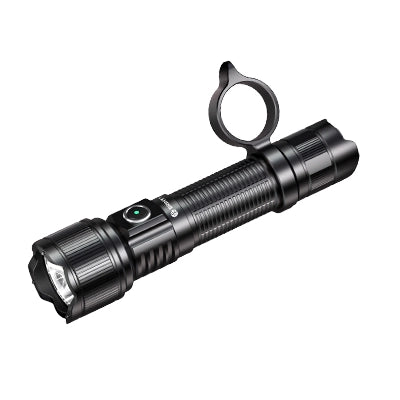
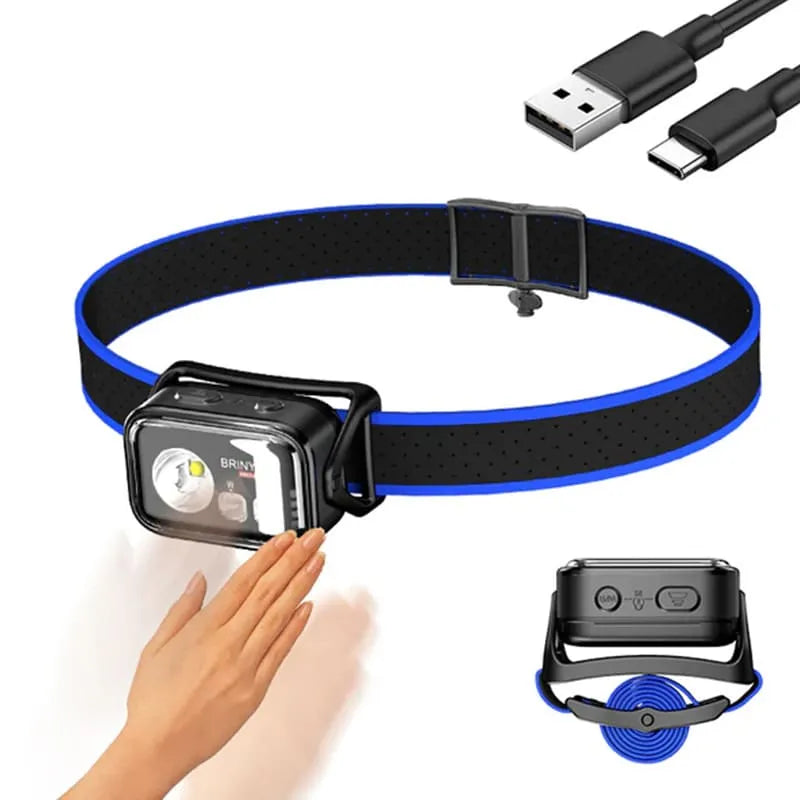
- A Reliable Light with Red Mode for Pre-Dawn: This is the item most hunters buy wrong. You need a headlamp with a true red mode that preserves your night vision — not a light that just has a red LED as an afterthought. At 5:00 AM, you'll be checking your dog's paws, reviewing a map, and loading shells. You need both hands free and a light that doesn't kill your pre-dawn vision. Battery life matters: most sharptail hunters are in the field for 8–10 hours. A light that runs 4 hours on high and dies at 2:00 PM has stranded hunters before.
- Improved Cylinder Choke Tube: Wild sharptails over a pointing dog flush at 20–40 yards. Improved cylinder provides the wide, forgiving pattern you need at those distances. Swap to Modified for late season (October–November) when birds are wilder and flushes are longer.
- 2+ Liters of Water — All for the Dog: You can function at mild dehydration. A pointing dog running 3× your distance in 75°F heat cannot. Carry a collapsible silicone bowl and offer water every 90 minutes, minimum. Most hunters carry a separate 1-liter bottle in the game bag exclusively for the dog.
- First Aid for Dog Paws (mandatory): Pre-cut vet wrap strips, a pair of forceps, and antiseptic wipes. Cheatgrass awns discovered at mile 4 become infected wounds by midnight if not removed. Finding these in the field without forceps is miserable for you and painful for the dog.
📋 Download: The 5-Minute Pre-Dawn Checklist (Printable)
Everything on this page distills to a single laminated card that fits in your vest pocket. Print it, cut it, add it to your kit before your first September hunt. No login required.
- Paw check protocol — exactly what to look for and how to remove cheatgrass awns in the field
- Wind-direction quartering guide — which direction to walk based on wind
- Water schedule for pointing dogs in September heat
- Vest loading sequence — what goes where, in what order
Buffalo Gap National Grassland in South Dakota is the best public land sharptail destination for DIY hunters — 509,000 free acres, wild birds, and the most productive September habitat in the continental US.
The single most important factor in a successful sharptail hunt is locating an active lek before opening day. Birds stage within a mile radius of traditional display grounds. Use South Dakota GFP lek data and OnX grassland overlays to identify your hunting zones before you leave home.
Wild sharptails flush at 30–40 yards and fly 200–400 yards after flushing. A pointing dog must range 200–400 yards and hold point for 3–5 minutes while the hunter closes the distance. Dogs trained exclusively on preserve birds are not prepared for this — transition work on open CRP before the season is essential.
Everything that goes wrong before sunrise costs you the best 90 minutes of the day. Arrive at the trailhead by 5:00–5:30 AM. Check the dog's paws. Know your wind. Walk when the first bird calls.
🌾 More From Brinyte's Hunting Knowledge Base
No product pitches. No fluff. Just verified hunting knowledge from the team that's been building lights based on hunter feedback since 2009.
❓ Frequently Asked Questions
What is the best state for sharp-tailed grouse hunting?
South Dakota is the top destination for most hunters, with Buffalo Gap National Grassland (509,000 acres, free access) consistently producing the best DIY sharptail hunting in the continental US. North Dakota's Sheyenne National Grassland opens earlier (often September 1) and has high bird density on its 70,200 acres. Montana and Nebraska also offer good public land access but require more scouting to identify productive units. For hunters willing to travel to Canada, Manitoba and Saskatchewan provide exceptional wild bird populations with minimal hunting pressure.
What is the best bird dog breed for sharp-tailed grouse?
English Pointers and English Setters are the traditional choice for open-prairie sharptail work because they naturally range 200–400 yards and hold point reliably at distance. German Shorthaired Pointers are a workable alternative for hunters who want a more versatile breed — GSPs can be trained to range wider than their natural tendency. Flushing breeds (Labradors, spaniels) are not suitable for wild sharptails, which flush at 30–40 yards — beyond the effective range of a flushing dog working at heel. The most important quality for any sharptail dog is point steadiness at distance — not natural range. A close-ranging dog that will hold point for 5 minutes while you walk 300 yards is more useful than a wide-ranging dog that breaks.
When does sharp-tailed grouse season open in South Dakota?
South Dakota's sharptail season typically opens September 15. North Dakota typically opens September 1. Montana and Nebraska dates vary by management zone. Always verify current season dates with the relevant state wildlife agency before purchasing licenses or booking travel — dates can shift by several days year to year based on population surveys. SD GFP regulations: gfp.sd.gov/hunting. ND GFP: gf.nd.gov/hunting.
Can I hunt sharp-tailed grouse without a dog?
Yes, but your success rate drops significantly. Without a dog, you're relying on walking into a covey at close range or marking a flushed bird and relocating it — both difficult on open prairie where birds run 100+ yards after landing. Walking slowly through transition zones (CRP field edges, shortgrass draws adjacent to seasonal wetlands) gives you the best chance of flushing birds at close enough range for a shot. Early morning, when birds are staging near leks, also increases no-dog success rates. Most experienced hunters recommend hunting behind a dog exclusively for wild sharptails.
How far do sharp-tailed grouse flush at?
Wild sharp-tailed grouse on public land typically flush at 30–40 yards in early September, before hunting pressure has educated them. By mid-season (October), flushing distance often extends to 50–70 yards as birds become wary. This is why a pointing dog ranging 200–400 yards is essential — a close-working dog at 40 yards will flush the birds before the hunter is in range. After flushing, sharptails typically fly 200–400 yards before landing, often running 50–100 yards after landing. Marking the exact landing point and approaching from upwind gives you the best chance of a reflush at shorter range.
How much does an upland hunting preserve cost vs public land?
Public National Grasslands are free to access with a state hunting license ($25–40 depending on state). Upland hunting preserves charge $300–600 for a half-day hunt with stocked birds, as of 2026-06-10. The economics: $500 buys 12–15 days of DIY public land hunting or 4–6 hours on a preserve. Preserves guarantee bird contacts and are the right choice for introducing new hunters or training young dogs to gunfire. They are not cost-effective as a primary hunting strategy for experienced hunters who are willing to walk and scout on public land.
What choke tube should I use for sharp-tailed grouse?
Improved Cylinder is the standard recommendation for early-season sharptails flushing at 20–40 yards over a pointing dog. It provides a wide, forgiving pattern at close to mid-range distances and is the choice of most experienced prairie hunters. Switch to Modified for late-season hunting (October–November) when birds are pressured and flushing at 50–70 yards. Avoid Full choke except in extreme late-season conditions — it's too tight for the typical sharptail flush distance and will result in pattern gaps at closer shots.
About Brinyte's Hunting Knowledge Base
Founded in 2009 — 50+ patents, ISO9001 certified. Brinyte has been building hunting lights based on direct hunter feedback for 17 years. Every guide in our knowledge base is built from the same source: real-world field reports from our customers, organized into verified, citable information. No AI filler. No product placement in informational content. Sources cited, dates noted, claims verifiable.
"Engineered for the mission — proven in the field."
Founded 2009 · 50+ Patents · ISO9001