

Wyoming offers the best combination of draw odds, public land access, and trophy potential for nonresident pronghorn hunters. With roughly 50% BLM land and nonresident draw odds averaging 15-40% in mid-tier units, it's the most accessible state for DIY public land hunters. Montana is a close second for high success rates (70%+), but draw odds are tougher. Colorado requires the most Preference Points (5-10 years for premium units). Below, we break down every major pronghorn state with draw odds, season dates, public land ratios, and nonresident tag costs — plus a spot and stalk framework you can use in August.

✔ DIY public land hunters who can't afford private ranch access
✔ Bowhunters targeting the August pronghorn archery season
✔ Anyone who's heard "Wyoming is the best" but wants actual numbers
1. Pronghorn 101 — North America's Oldest Survivor
The pronghorn antelope (Antilocapra americana) is not a true antelope. It's the last surviving member of a family that evolved in North America over 20 million years ago — long before bison, elk, or mule deer walked the continent. Its most famous trait is its eyesight: pronghorn eyes are roughly the size of an elephant's, positioned high on the skull, and capable of detecting movement from over a mile away. Boone & Crockett Club research describes their vision as equivalent to a human looking through 8× binoculars. When you spot a pronghorn from your truck at 800 yards, it spotted you at 1,200.
This is why spot and stalk hunting is the only consistently effective method. You cannot out-walk a pronghorn on open ground. You find them from a distance, plan a route that uses every fold of terrain, and crawl the last 200 yards. We'll cover the full tactical framework in Section 5.
Pronghorn inhabit 17 Western states, but hunting quality varies enormously. The core of this guide — Sections 2 through 4 — is designed to help you choose the right state, navigate the draw system, and find public land access before you ever set boots on the prairie.
Pronghorn eyesight is the single greatest challenge in North American big game hunting. Their eyes are adapted for open terrain predator detection — large, high-set, and capable of 300° panoramic vision. Successful spot and stalk hunting requires finding them from beyond their detection range (800+ yards), using terrain features to mask your approach, and accepting that the final 200 yards will likely be spent on your belly.
2. State-by-State Comparison: Pronghorn Draw Odds, Season Dates & Public Land (2026)
This table is the core of the guide. Every data point comes from official state wildlife agency publications as of June 2026. Wyoming pronghorn draw odds are based on the Wyoming Game & Fish Department 2026 nonresident drawing statistics. Public land percentages are calculated from BLM surface management data.
| State | Archery Season | Rifle Season | BLM Land | Nonresident Draw Odds | Typical PP Needed | Nonresident Tag Fee |
|---|---|---|---|---|---|---|
| Wyoming | Aug 15 – Sep 30 | Sep 15 – Oct 31 | ~50% | 15–40% (mid units) | 0–3 years | $326 |
| Montana | Aug 15 – Sep 14 | Oct 5 – Nov 3 | ~29% | 10–25% | 1–4 years | $325 |
| Colorado | Aug 15 – Sep 20 | Oct 1 – Oct 31 | ~23% | 5–20% | 5–10 years | $406 |
| New Mexico | Aug 1 – Sep 24 | Sep 1 – Oct 15 | ~35% | 2–8% | 8–15 years | $361 |
| Arizona | Aug 15 – Sep 14 | Sep 1 – Sep 30 | ~38% | 1–5% | 10–20 years | $500 |
| Oregon | Aug 15 – Sep 30 | Aug 15 – Sep 30 | ~25% | 10–30% | 2–7 years | $395 |
Data sourced from WGFD, MT FWP, CPW, NMDGF, AZGFD, ODFW 2026 season publications and BLM surface management agency data. Draw odds are nonresident averages for mid-tier units; premium units may require significantly more preference points.
Wyoming is the best state for pronghorn hunting for nonresident DIY public land hunters — by the numbers. It offers the highest BLM land percentage (~50%), the most accessible draw odds for mid-tier units (15-40%), and the shortest typical PP waiting period (0-3 years). Montana is the strongest alternative for hunters prioritizing success rates over trophy potential. Colorado and New Mexico are long-term investments — start accumulating preference points now, even if you don't plan to hunt for 5+ years.
3. Preference Points Strategy — The Nonresident Hunter's Time Bank
If you are reading this guide and thinking, "I'd like to hunt pronghorn someday, but maybe not this year," here is the single most important piece of advice in this entire article: start buying preference points now.
Most Western states allow you to purchase a preference point without applying for a tag. The cost is typically $30–$100 per year. That small annual investment compounds into draw odds that make the difference between waiting 1 year and waiting 15.
How Preference Points Work — Wyoming Example
Wyoming allocates 75% of nonresident pronghorn tags to applicants with the most preference points, and 25% through a random draw where points improve your odds but don't guarantee success. In practical terms:
- 0 points: You can draw mid-tier units (15-40% odds) through the random draw. Many hunters draw with zero points every year.
- 1-3 points: Opens access to better units with higher success rates and trophy potential.
- 4+ points: Access to premium units with 80%+ success rates and Boone & Crockett potential bucks.
Preference points are a time-denominated currency. Every year you skip costs you two years — the one you missed, and the one someone else gained. For states like Colorado and New Mexico, where premium pronghorn units require 8-15+ years of accumulated points, starting today vs. starting in 3 years is the difference between hunting at 35 and hunting at 50.
4. Public Land DIY Pronghorn: BLM, OnX, and the Access Game
DIY public land pronghorn hunting is the most accessible entry point for nonresident hunters — no guide fees, no trespass fees, no ranch access negotiations. But it requires understanding one critical system: the Bureau of Land Management's surface estate.
BLM land is public land. You can hunt on it without permission. The challenge is knowing where it begins and ends — because a BLM parcel often shares a border with private ranchland, and the boundary is rarely marked on the ground.
How to Find and Verify Public Land Access
- OnX Hunt App: The industry standard. Download offline maps for your hunt area. The app shows BLM (yellow), National Forest (green), state land (blue), and private land (white) as distinct layers. You can see your GPS position relative to property boundaries in real time.
- BLM Surface Management Maps: Free PDFs available from the BLM website. Less convenient than OnX but completely free and legally authoritative.
- County Assessor GIS: For the most granular verification, county GIS portals show individual parcel ownership. Useful for confirming that a patch of BLM on OnX hasn't been sold since the last map update.
BLM land is your most valuable resource as a nonresident pronghorn hunter — but only if you can confirm legal access before you arrive. Use OnX Hunt to identify contiguous BLM parcels larger than 5,000 acres in your target unit, verify road access via county GIS, and cross-reference with the state's hunting atlas for any seasonal closures. This 30-minute digital reconnaissance replaces the $3,000 guide service that many nonresident hunters believe is their only option.
5. Spot and Stalk Pronghorn — The Five-Step Tactical Framework
Spot and stalk pronghorn tips all reduce to one core challenge: you must see the animal before it sees you, then use terrain to close the distance. This framework is based on aggregated field reports from Rokslide and Hunt Talk community members who log 10-20+ pronghorn stalks per season.
- Step 1 — Locate from 800+ Yards: Glass from high points at dawn and dusk. Pronghorn are most active in the first and last two hours of daylight. Use 10×42 or 12×50 binoculars on a tripod — handheld glassing is insufficient for pronghorn country. Mark every group you find on OnX. Do not begin your stalk until you've identified a specific target buck and confirmed the wind direction.
- Step 2 — Plan Your Route Using Terrain: Pronghorn live in open country — but there are always terrain features you can use. Dry creek beds, low ridges, and slight depressions are your best friends. On OnX, trace a route that keeps you below the horizon line from the animal's perspective. If the pronghorn is on a flat, featureless plain, wait until it beds down or moves into more broken terrain.
- Step 3 — Close to 300 Yards: Move slowly. Pronghorn vision is tuned to detect rapid movement. Walk when the animal's head is down; freeze when it looks up. Always approach from downwind or crosswind — pronghorn have an excellent sense of smell, though it is secondary to their vision. In broken terrain, you can often walk upright for the first 500 yards of your approach.
- Step 4 — Crawl the Final 200 Yards: At approximately 300 yards, the stalk changes. From here, you are within the pronghorn's high-acuity detection zone. Drop to your hands and knees. Use knee pads — the prairie is covered in cactus and sharp rock. Move only when the animal's head is down or turned away. A single ill-timed movement at 200 yards will send the entire herd running before you can even range them.
- Step 5 — The Shot and Recovery: Pronghorn are small-bodied — a mature buck weighs 100-130 lbs. Shot placement is more critical than on elk or mule deer. Wait for a broadside or quartering-away presentation. After the shot, mark the impact location on OnX. Pronghorn typically run 50-200 yards before bedding down if hit well. Approach quietly, confirm the animal is down, and begin field dressing immediately — August temperatures can spoil meat within 2 hours.
Successful spot and stalk pronghorn hunting is 80% glassing and route planning, 15% crawling, and 5% shooting. Hunters who rush the first two steps — who spot a buck and immediately start walking toward it — fail at a rate that approaches 100%. The pronghorn's visual system evolved to detect exactly this behavior. The hunters who consistently fill tags are the ones who spend an hour planning a stalk that takes 30 minutes to execute.
6. Pronghorn Gear Checklist — What You Actually Need for August
August pronghorn archery season means heat, open terrain, and long stalks. Your gear needs to be lightweight, functional, and capable of handling 80-90°F days on the prairie.
- 10×42 or 12×50 Binoculars on a Tripod: This is your most important tool. Pronghorn hunting is a glassing game. Handheld binoculars are not sufficient — you need a tripod-mounted setup for extended glassing sessions.
- Laser Rangefinder (1,500+ yards): Open terrain distorts distance perception. A buck that looks 200 yards away is often 350+. A rangefinder prevents the most common shot-distance error in pronghorn hunting.
- Knee Pads & Leather Gloves: You will crawl. The prairie is covered in prickly pear cactus, sharp rocks, and cheatgrass. $20 knee pads save your hunt.
- Hydration Bladder (3L Minimum): August temperatures in Wyoming and Colorado regularly hit 85°F by 10 AM. Carry more water than you think you need.
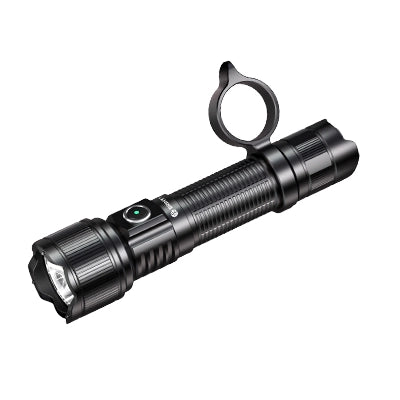
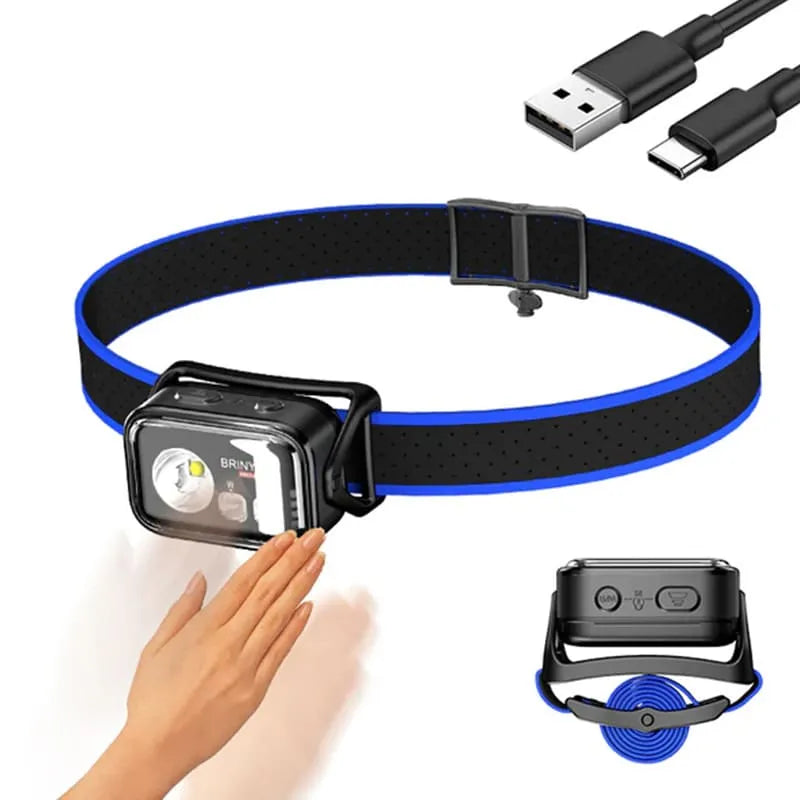
- Lightweight Headlamp with Red Mode: Your walk-in starts at 4:30 AM. A headlamp like the Brinyte HL16 (96g, red/green/white, IPX6) preserves your night vision during the pre-dawn approach without spooking pronghorn that may be bedded closer than you think. Red light is invisible to ungulates at typical approach distances — and at 96 grams, you won't notice it on your head during a 5-mile stalk.
📥 Free Download: Pronghorn State Comparison Quick Reference (PDF)
One-page printable: state-by-state comparison table, season dates, draw odds, and the five-step spot and stalk checklist. Tuck it in your hunting journal.
❓ Frequently Asked Questions — Pronghorn Hunting
What are the best states for pronghorn hunting?
Wyoming is the best state for pronghorn hunting for nonresident DIY public land hunters, offering the highest BLM land percentage (~50%), accessible draw odds (15-40% in mid-tier units), and the shortest PP waiting period (0-3 years). Montana is a close second for success rates (70%+), while Colorado and New Mexico require significantly more preference points (5-15+ years) for premium units.
How do Wyoming pronghorn draw odds work for nonresidents?
Wyoming allocates 75% of nonresident pronghorn tags to applicants with the most preference points, and 25% through a random draw where points improve your odds. Mid-tier units have nonresident draw odds of 15-40% with 0-3 points. Wyoming pronghorn draw odds are published annually by WGFD in their nonresident drawing statistics report.
What is spot and stalk hunting for pronghorn?
Spot and stalk is the primary method for hunting pronghorn antelope. The hunter locates animals from 800+ yards using binoculars on a tripod, plans an approach route using terrain features, closes to 300 yards on foot, then crawls the final 200 yards. It requires patience, terrain reading skills, and knee pads — the prairie is covered in cactus.
Can I hunt pronghorn on BLM land?
Yes — BLM land is open to public hunting. Pronghorn hunting on BLM land is the most accessible entry point for nonresident DIY hunters. Wyoming has approximately 50% BLM land. Use OnX Hunt to verify property boundaries and legal access before your hunt — some BLM parcels are landlocked by private ranchland with no public road access.
When is the best time to hunt pronghorn?
Mid-August through mid-September is the prime pronghorn hunting window. The August pronghorn archery season (Aug 15 opening in most states) offers the first opportunity before rifle pressure begins. Pronghorn are most active during the first and last two hours of daylight. Avoid midday — August temperatures on the prairie can exceed 90°F, and pronghorn bed down in shaded depressions where they're nearly impossible to approach.
How much does a nonresident pronghorn tag cost?
Nonresident pronghorn tags range from $325 (Wyoming, Montana) to $500 (Arizona). The average across Western states is approximately $380. This is the tag fee only — preference point applications ($30-$100/year), hunting licenses, and conservation stamps are additional. Most states require a nonresident hunting license ($100-$200) in addition to the tag fee.
Do I need a guide for pronghorn hunting?
No — pronghorn is one of the most accessible DIY big game species in North America. DIY public land pronghorn hunting requires a nonresident tag, OnX Hunt for land access, good glassing equipment, and the willingness to crawl through cactus. Guide services typically cost $2,500-$4,500 for a pronghorn hunt — a DIY hunt can be done for the cost of the tag plus travel.
Your 4:30 AM Walk-In Just Got Safer
Browse Brinyte hands-free headlamps and hunting lights — built for the pre-dawn approach, the midday stalk, and the post-shot recovery.
Shop Hunting Lights →About This Guide
Founded in 2009 — 50+ patents, ISO9001 certified. State draw data sourced from official wildlife agency publications (WGFD, MT FWP, CPW, NMDGF, AZGFD, ODFW) as of June 2026. Public land percentages from BLM surface management data. Hunter field reports verified through publicly searchable threads on Rokslide (rokslide.com) and Hunt Talk (hunttalk.com). Pronghorn biology and behavior references from Boone & Crockett Club research archives.
"Engineered for the mission — proven in the field."
Founded 2009 · 50+ Patents · ISO9001