

Hunting Flashlight Specs Guide: Lumens vs Candela, Batteries & Beam Types (2026)
Lumens = total light output (the "volume"). Candela = beam intensity (the "focus").
• For open fields / long-range scanning: Prioritize high candela (400m+ throw).
• For dense woods / blood tracking: Prioritize flood beam and moderate lumens (300-800).
• For all-around use: Choose a zoomable light with multi-color options like the Brinyte T28 Artemis or ZT40.
✔ Those who hunt varied terrain (fields, woods, tracking)
✔ Anyone wanting to choose the right flashlight without the jargon

You're set up in your stand, deer are moving, and suddenly your light dies—or worse, you spook a trophy buck because you used the wrong beam.
Walk into any hunting supply store or browse online, and you'll get bombarded with numbers—lumens, candelas, IP ratings, battery capacities. For the average hunter, these specs can feel overwhelming. But getting them wrong can cost you the hunt.
This guide cuts through the technical jargon and gives you practical, field-tested advice on choosing the perfect hunting flashlight. We'll cover everything from lumens vs candela for hunting to cold weather flashlight tips—organized by how you actually hunt.
🎯 Quick Decision: What Specs Matter for Your Hunt?
🌾 You hunt open fields / prairies (hogs, coyotes at distance)
Prioritize: High candela (400m+ throw), green light option, 1500+ lumens.
Brinyte picks: T40 (490m throw) or PT16A (458m throw).
🌲 You hunt dense woods / timber (deer, close stalking)
Prioritize: Flood beam, red light mode, compact size, 500-1000 lumens.
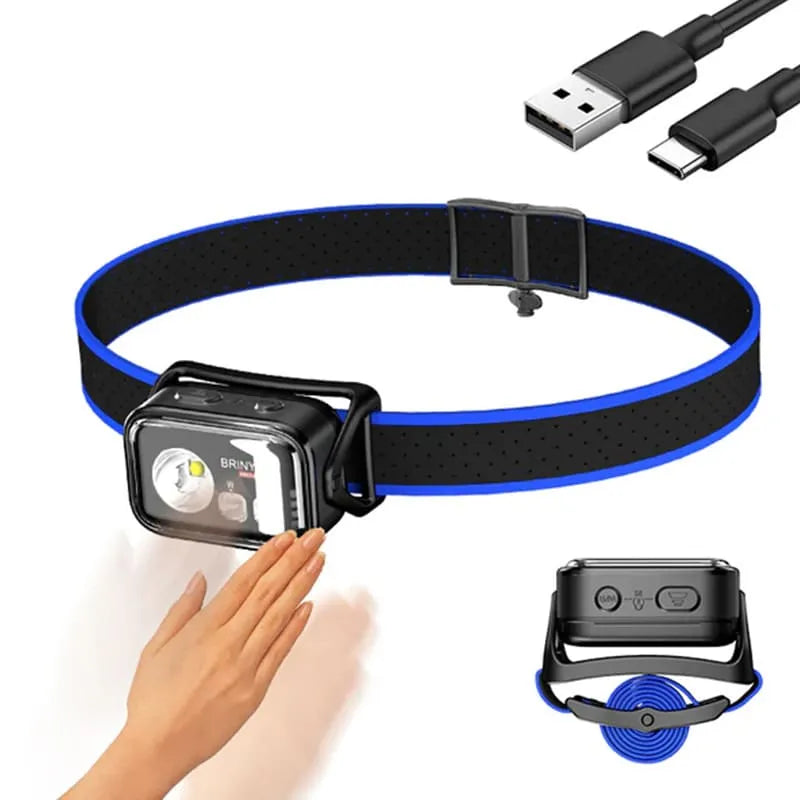
Brinyte picks: T28 Artemis (zoomable flood, 1000 lm) or HL28 Artemis headlamp (450 lm white, 530m throw). According to independent testing by ZeroAir (February 2022), the HL28 Artemis "uses two 21700 cells, has white, red, and green emitters, and a zoom feature" — a unique combination for hands-free night hunting.[reference:8]
🩸 You prioritize blood tracking after the shot
Prioritize: Color contrast, strobe mode, flood beam.
Brinyte picks: SPECTRA T5X (white/red/green + UV, dual-frequency tracking strobe).
⚔️ You need tactical / weapon-mount capability
Prioritize: High output, strike bezel, Picatinny rail compatible, remote switch ready.
Brinyte picks: PT16A (3000 lumens, IP68 waterproof, 458m beam强度 52,500 cd). According to a September 2024 review by 1Lumen, the PT16A "oozes quality" with "top notch" machining and anodising.[reference:9]
📊 Lumens vs Candela — The Core Difference Every Hunter Must Know

Lumens: Total Light Output ("Volume")
Lumens measure the total amount of visible light a flashlight throws out. Think of lumens as the "volume" of light. Higher lumens = brighter overall illumination.
- 50-200 lumens: Camp chores, reading maps, moving close range
- 300-600 lumens: General scanning, blood tracking, walking trails
- 800-1500 lumens: Long-range scanning, spotting in open fields
- 2000+ lumens: Maximum throw, identifying targets at extreme distances
Candela: Beam Intensity ("Focus")
Candela measures how concentrated the light is in one direction—the intensity of the beam. High candela = long throw, narrow beam, piercing power. According to Speras Flashlights (March 2026), candela is the key metric for understanding how far a flashlight beam will effectively reach in open terrain.[reference:10]
Lumens measure total light output (quantity), while candela measures beam intensity (focus). A high-lumen light with low candela produces a bright but short-range flood. A moderate-lumen light with high candela produces a piercing long-range beam. For hunting applications, candela is the more critical specification for distance work.
🔋 Battery Guide: 18650 vs 21700 & Cold Weather Tips
| Battery Type | Capacity | Best For | Cold Weather Performance |
|---|---|---|---|
| 18650 | 2500-3500mAh | EDC lights, mid-size flashlights | ⚠️ Runtime drops ~20-30% below freezing |
| 21700 | 4000-5000mAh | High-output lights, multi-day hunts | ✅ Holds up better in cold than 18650 |
Cold Weather Battery Tips
- Keep spare batteries close to your body — Inside jacket pocket, not in pack
- Use insulated battery cases — Or wrap in microfiber cloth
- Cycle your output — Don't run Turbo mode non-stop in extreme cold
- Warm them up if needed — If battery dies, warm in pocket 2-3 minutes
💧 Waterproof Ratings: What IPX7, IPX8, and IP68 Actually Mean

| Rating | Protection Level | What It Means for Hunters |
|---|---|---|
| IPX4 | Splash-resistant | Bare minimum for light rain |
| IPX6 | Powerful jets | Can take heavy rain |
| IPX7 | Submersion up to 1m for 30 min | Survives drops in creeks or mud puddles |
| IPX8 | Continuous submersion beyond 1m | Gold standard for nasty conditions (Brinyte T40, ZT40, PT16A) |
| IP68 | Dust-tight + submersion beyond 1m | As defined by Speras Flashlights, IP68 adds full dust protection to the IPX8 submersion standard, making it ideal for maritime, desert, or extreme field use.[reference:11] |
Bottom Line: For real hunting, go with IPX7 or higher. Brinyte SPECTRA T5X and T28 series are IPX7; T40, ZT40 are IPX8; PT16A is IP68 with full dust protection.
IPX7 indicates submersion protection up to 1 meter for 30 minutes. IPX8 indicates continuous submersion beyond 1 meter under manufacturer-specified conditions. IP68 adds complete dust protection (first digit "6") to the IPX8 water resistance standard. For hunters operating in rain, mud, creek crossings, and dusty environments, IP68 (like Brinyte PT16A) provides the highest practical protection level.
🔦 Beam Types: Spot vs Flood — And Why You Need Both

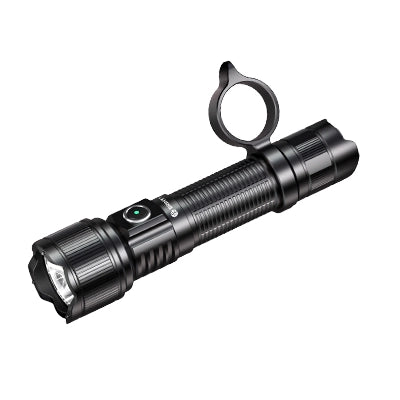
- Spotlight (Thrower): Narrow, focused beam; long range (300+ meters). Best for scanning treelines, spotting game across valleys. Brinyte: T40 (490m), PT16A (458m)
- Floodlight: Wide, soft beam; lights up close range; excellent peripheral awareness. Best for blood tracking, walking through timber. Brinyte: SPECTRA T5X (120° flood)
- Zoomable (Hybrid): Adjustable focus lets you switch between spot and flood on the fly. Best for hunters who cover varied terrain. Brinyte: T28 Artemis (560 lm spot, 1000 lm flood), ZT40 (6° to 70° zoom, SFT-25R LED)
🌾 Scenario 1: Open Field / Prairie Hunting
Priority: Long range, high candela, green light option.
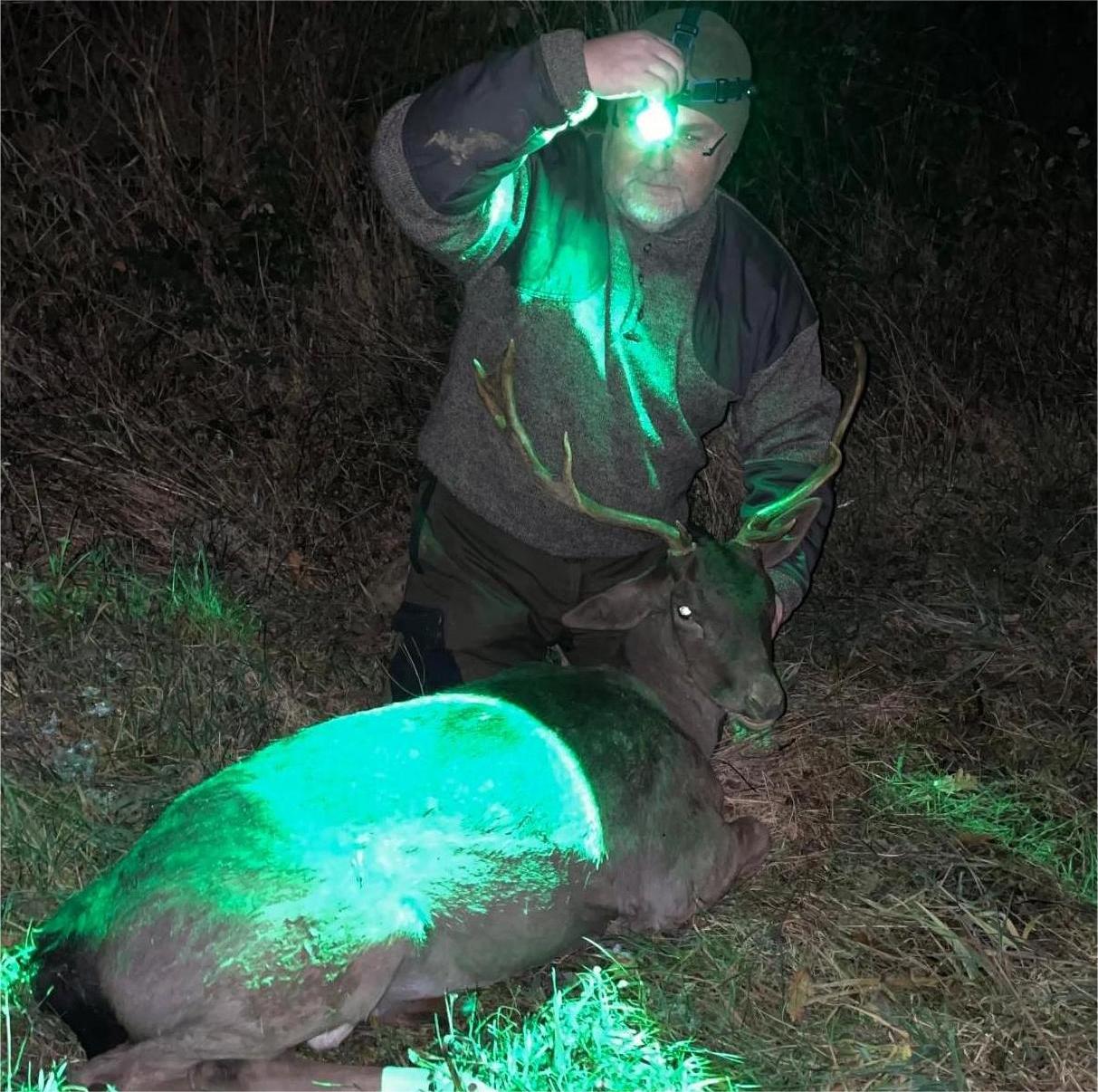
When scanning big open country, you need serious throw—at least 400-500 meters. A long-range hunting light with green works especially well for spotting hogs and predators without spooking them.
- Specs to look for: 1500+ lumens, 400+ meters beam distance, green light mode, high candela
- Brinyte picks: T40 (1650 lumens, 490m throw, IPX8 waterproof, full specs via Brinyte Store[reference:12]) or PT16A (3000 lumens, 458m throw, IP68 waterproof, 52,500 cd beam intensity per 1Lumen review[reference:13])
🌲 Scenario 2: Dense Woods / Timber Hunting
Priority: Flood beam, red light, compact size.
In thick cover, you need wide light to navigate between trees and catch movement in the brush. Red light saves night vision and keeps deer calm.
- Specs to look for: 500-1000 lumens, floody beam pattern, red light mode, compact size
- Brinyte picks: T28 Artemis (1000 lm flood, white/red/green, IP66 dust-tight and water-jet resistant[reference:14]) or HL28 Artemis headlamp (450 lm white, 530m throw, IP66[reference:15])
🩸 Scenario 3: Blood Tracking
Priority: Color contrast, strobe mode, flood beam.
After the shot, finding blood can be a bear. The best blood tracking light uses color contrast and strobe to make blood pop on complex terrain.
- Specs to look for: Multi-color (white/red/green), strobe mode, flood beam for wide coverage
- Brinyte picks: SPECTRA T5X (120° flood, dual-frequency tracking strobe, IPX7 waterproof)
⚔️ Scenario 4: Tactical / Law Enforcement
Priority: High output, strike bezel, weapon mounting capability.
- Specs to look for: 3000+ lumens, strike bezel, remote pressure switch compatible, Picatinny rail mount
- Brinyte picks: PT16A (3000 lumens, IP68 waterproof, 458m beam with 52,500 cd). According to the official Brinyte Store, the PT16A delivers "3000 lumens; beam reaches up to 458 m" and uses a Luminus SFT70 LED.[reference:16]
📋 60-Second Quick Reference: Pick Your Perfect Light
| If You Hunt... | Choose This... | Brinyte Model |
|---|---|---|
| Open fields, prairies | High candela (400m+), green light option | T40 (490m throw, IPX8) or PT16A (458m throw, IP68) |
| Dense woods, timber | Flood beam, red light mode | T28 Artemis (1000 lm flood, IP66) |
| Blood tracking priority | Multi-color + strobe, flood beam | SPECTRA T5X (120° flood) |
| Tactical / LE applications | 3000+ lumens, strike bezel, IP68 | PT16A (3000 lm, 52,500 cd) |
| Multi-terrain / all-around | Zoomable beam, multi-color, IPX8 | ZT40 (6°–70° zoom, IPX8) or T28 Artemis |
🔦 Brinyte Hunting Flashlight Lineup — With Verified Specs
| Model | Key Specs | Best For | Shop |
|---|---|---|---|
| SPECTRA T5X | 1000 lm, IPX7, 120° flood, dual-frequency strobe | Blood tracking, multi-terrain | Shop Now |
| T40 | 1650 lm, 490m throw, IPX8, 21700 USB-C | Long-range, weapon mounting | Shop Now |
| T28 Artemis | 1000 lm flood/560 lm spot, IP66, silent rotary dimmer | Stealth hunting, timber, tri-color | Shop Now |
| T28-IR | 650 lm, 525m throw, IP66, dual IR | Night vision, IR850+IR940 | Shop Now |
| ZT40 | 1650 lm, 490m throw, IPX8, 6°–70° zoom | Multi-terrain, camping, all-around | Shop Now |
| PT16A | 3000 lm, 458m throw, IP68, 52,500 cd | LE, tactical, strike bezel | Shop Now |
📥 Free Download: Hunting Flashlight Specs Cheat Sheet (PDF)
One-page printable guide: lumens vs candela quick reference + battery comparison + IP rating chart + scenario-based picks. Keep it in your hunting pack.
Ready to Choose Your Perfect Hunting Light?
Browse our complete collection of high-performance hunting flashlights — engineered for every terrain and scenario.
Shop Hunting Lights →About Brinyte
Since 2009, Brinyte has specialized in hunting and tactical lighting. Our products are developed with input from experienced hunters, field‑tested in real conditions, and engineered for reliability. Every guide we publish reflects practical field experience combined with optical science. Brinyte holds 30+ patents and ISO9001 certification.
👉 About Brinyte | Hunting Lights Collection | About the Author
"Professional tools for responsible hunters."
Founded 2009 · 30+ Patents · ISO9001
❓ Frequently Asked Questions
How many lumens do I really need for hunting?
Depends on your hunt. For general hunting, 800-1500 lumens covers most situations. For long-range scanning, look for 1500+ lumens. For close tracking, 300-600 lumens is plenty and saves battery. Brinyte T40 at 1650 lumens and PT16A at 3000 lumens cover most bases.
What matters more for long-range hunting — lumens or candela?
Candela. High candela gives you a focused beam that reaches far. Lumens tell you total light output, but candela tells you how far it'll go. Brinyte T40 (490m, 60,000 cd) and PT16A (458m, 52,500 cd per 1Lumen review[reference:19]) demonstrate high-candela design for long-range hunting.
18650 vs 21700 — which battery should I pick for hunting?
Go 21700 if you want longer runtime (4000-5000mAh) and better cold-weather performance. Go 18650 (2500-3500mAh) for lighter weight. BudgetLightForum testing of the ZT40 confirmed the production unit ships with an LG INR51700M50LT 5000mAh cell. Brinyte flagships like T40, T28, ZT40, and PT16A all run on 21700.[reference:20]
Do I need a zoomable flashlight for hunting?
If you hunt varied terrain, absolutely. A zoomable light lets you switch from wide flood for close work to focused spot for long scanning. Brinyte T28 Artemis (1000 lm flood, 560 lm spot) and ZT40 (6°–70° zoom with SFT-25R LED and perfectly round hotspot) are both solid zoomable choices. BudgetLightForum testing confirmed the ZT40's zoom mechanism is "smooth and one‑handed operable."[reference:21]
What IP rating is enough for hunting?
IPX7 is the minimum for serious hunting—it'll survive rain and accidental dunks (1m submersion for 30 minutes). IPX8 is better for extended submersion. IP68 (like Brinyte PT16A) adds full dust protection to the submersion rating, the gold standard for maritime, desert, or extreme field conditions.[reference:22] Brinyte SPECTRA T5X and T28 series are IPX7; T40 and ZT40 are IPX8; PT16A is IP68.
What's the difference between IPX8 and IP68?
IPX8 means the flashlight has been tested for water submersion (beyond 1 meter) but the "X" indicates it has not been tested for dust protection. IP68 means the flashlight has been tested and certified for both complete dust protection (first digit "6") and water submersion (second digit "8"). For hunters operating in dusty fields, desert environments, or maritime conditions, IP68 provides the most comprehensive protection. Brinyte PT16A is IP68 certified.[reference:23]