

✔ Tech‑forward sportsmen building an integrated gear system
✔ Anyone curious about the future of hunting technology
✔ Brinyte users interested in our product philosophy
1. The Digital Wave: Hunting in 2026 Looks Different

Walk into a hunting camp today, and you'll see a scene unimaginable a decade ago. Phones are loaded with onX Hunt, HuntStand, and HuntWise — apps that overlay private land boundaries, GMU lines, and satellite imagery in real time. Cellular trail cameras transmit photos directly to hunters' phones, eliminating weeks of guesswork. Thermal scopes see heat signatures through total darkness. AI‑enabled optics can identify species and estimate range with a glance.
The hunting equipment sector is undergoing a transformative shift as advanced technologies like AI‑enabled optics and sensor‑based devices redefine traditional product functionalities. The digital hunting movement isn't a niche anymore — it's mainstream. And it's changing what hunters expect from every piece of gear they carry.
Hunters no longer think in terms of standalone tools. They think in systems. A cellular camera informs stand placement. A mapping app guides the approach. A smart rangefinder confirms the shot. In this ecosystem, every device must earn its place — including the humble flashlight.
2. The Hunting Tech Ecosystem Today
Before we talk about flashlights, let's map the modern hunting technology stack. Today's digital hunter builds a system across four layers:
📡 Scouting & Monitoring
Cellular trail cameras (GardePro X66 Pro, Stealth Cam Fusion MAX 2.0) with GPS tracking, movement alerts, and live view. AI filtering to reduce false triggers.
🗺 Planning & Navigation
GPS mapping apps (onX Hunt, HuntStand, HuntWise) with land ownership data, offline maps, 3D terrain, and waypoint sharing.
🎯 Optics & Targeting
Thermal scopes (HIKMICRO HABROK 4K 2.0), smart laser rangefinders, and AI‑powered ballistic calculators integrated into digital devices.
💡 Field Execution
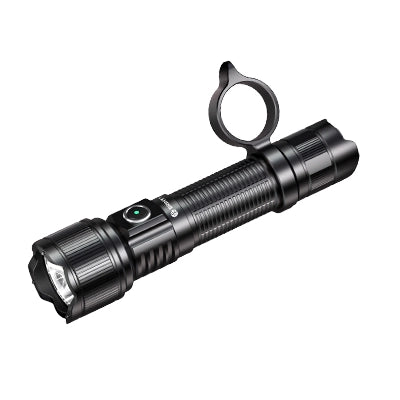
Multi‑color flashlights, IR illuminators for night vision, and wireless remote lighting systems — this is where Brinyte operates.
Integration is the emerging theme. onX Hunt now partners with Moultrie to overlay trail camera images directly on mapping interfaces, creating a complete view of property and deer movement patterns. Muddy's Matrix 2.0 integrates with HuntStand and DeerCast for real‑time deer movement forecasts. The boundaries between scouting, planning, and execution are dissolving.
Standalone devices are being replaced by connected systems. The question for hunters is no longer "which trail camera?" but "which ecosystem?" The value is in interoperability — how well your gear works together.
3. Where Do Flashlights Fit in a Digital World?
In a world of cellular cameras and thermal scopes, a flashlight can feel almost analog. But that's precisely its strength. The flashlight is the field execution layer — the tool you use when the scouting is done and the hunt is underway.
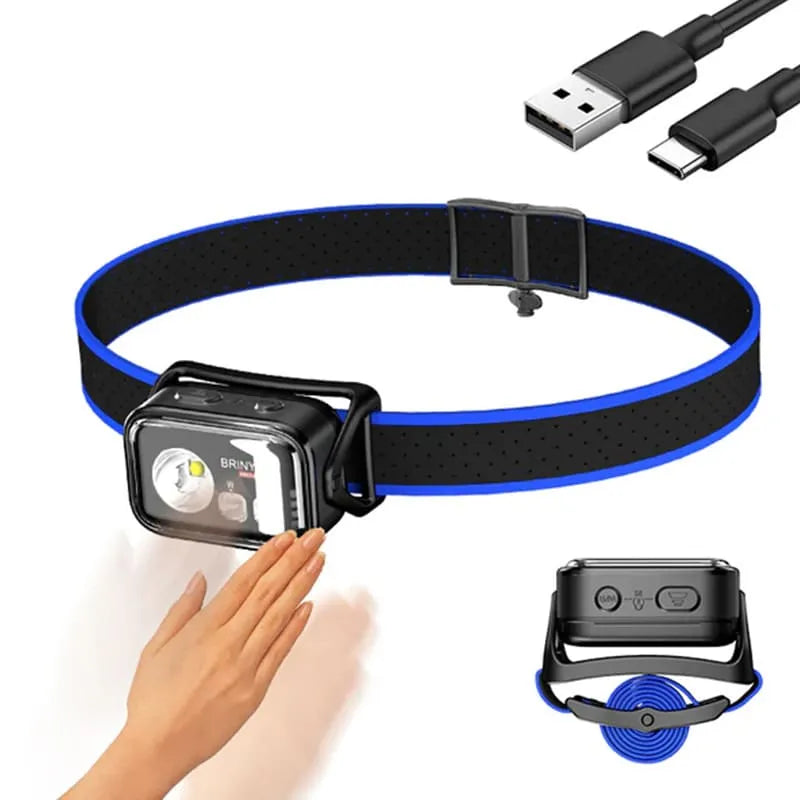
Low‑mode red or green light preserves night vision while walking to your stand — complementing GPS mapping apps.
Green light for scanning open fields, red for stealth approach, white for final confirmation — each serves a distinct role in the digital hunter's sequence.
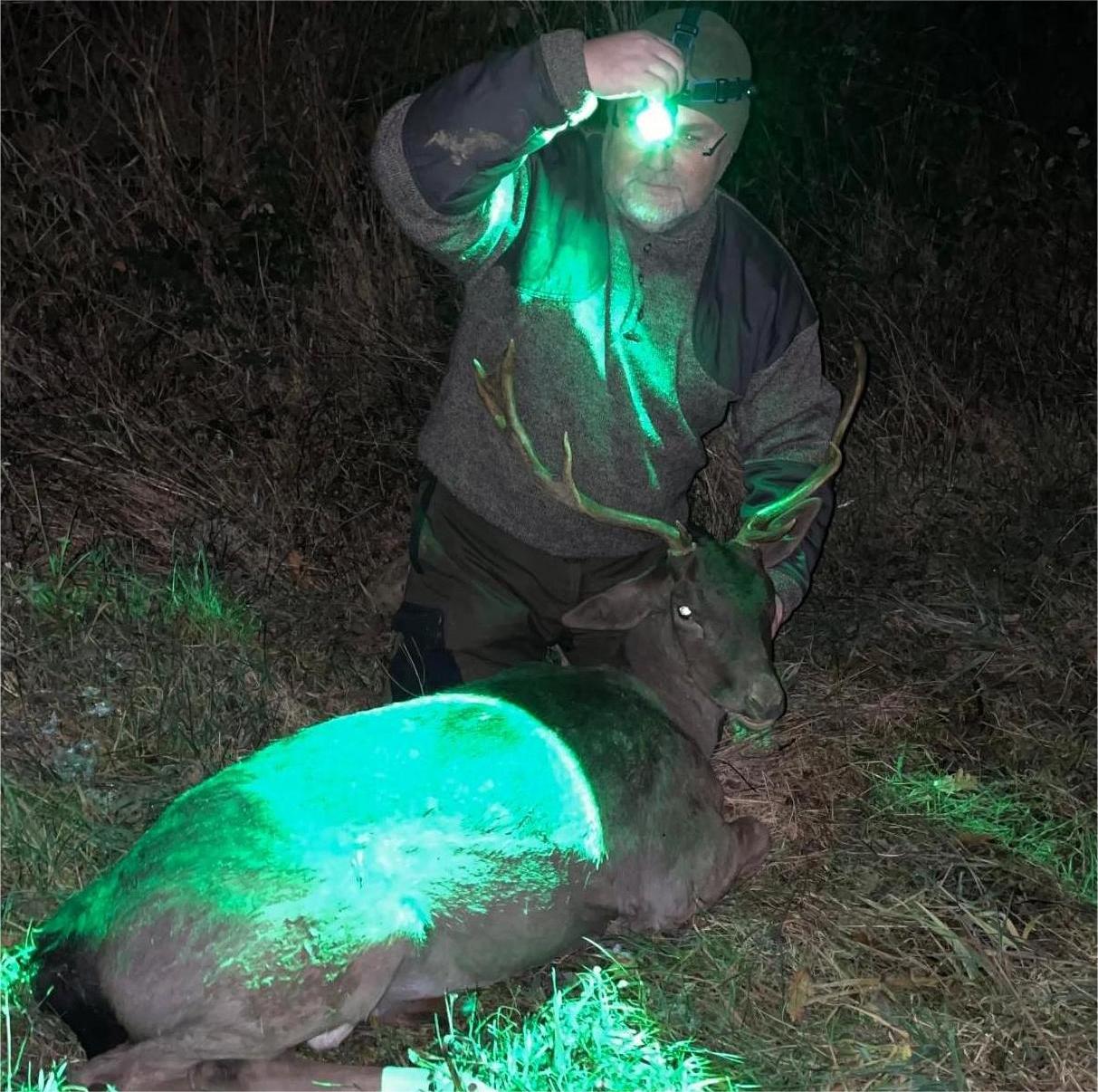
UV light reveals blood trails invisible to white light — a critical recovery tool that no app can replace.
IR modes (850nm/940nm) pair with night vision scopes and digital optics for covert observation.
The flashlight doesn't compete with digital tools — it complements them. A thermal scope finds a heat signature at 400 yards, but a green hunting light helps you close the distance without spooking the animal. A mapping app guides you to the stand, but a red headlamp lets you navigate the last 100 yards in stealth. The flashlight is the bridge between digital preparation and analog execution.
Digital tools excel at scouting, planning, and long‑range detection. Lighting tools excel at the actual hunt: navigation, approach, identification, and recovery. The most effective digital hunters understand this distinction and equip themselves accordingly.
4. Brinyte's Product Philosophy: Tools for the Mission
At Brinyte, our design philosophy has always been "engineered for the mission". We build lighting tools that solve real problems in the field — not gadgets that look impressive on a spec sheet. As digital hunting evolves, our core principles remain consistent:
| Principle | How It Applies to Digital Hunting |
|---|---|
| Reliability First | In an integrated ecosystem, every link matters. If your flashlight fails, no app can help. IP66–IPX8 waterproofing, impact resistance, and aircraft‑grade aluminum are non‑negotiable. |
| Adaptability by Design | Digital hunting spans multiple terrains and conditions. Zoomable beams (6°–70°) and interchangeable color modules (white, red, green, IR, UV) let one light cover every scenario. |
| Silent Operation | Stepless dimming and silent rotary controls don't announce your position — critical when you're close to game after hours of digital scouting. |
| Interoperability | Our lights work with Picatinny rail mounts, remote pressure switches, and night vision gear. The T18's wireless remote (5–10m range) lets you control illumination from a hide — no different from controlling a cellular camera from your phone. |
Technology should serve the hunter, not distract from the hunt. Brinyte builds lighting tools that disappear when you don't need them and perform exactly as expected when you do. In an era of digital complexity, that reliability is more valuable than ever.
5. Looking Ahead: Lighting as a System Node

What comes next? We see lighting becoming a more active node in the digital hunting ecosystem. Consider these possibilities:
- Location‑aware brightness: A flashlight that adjusts output based on GPS proximity to waypoints — dimming as you approach a marked stand location.
- Shot‑recording integration: A light that triggers a timestamp and GPS coordinate when activated in white mode, logging shot events to your hunting app.
- Battery telemetry: Real‑time battery status sent to your phone, so you never head into a hunt with a nearly‑dead light.
- Color recommendation based on terrain: A light that suggests the optimal beam color based on mapped vegetation and elevation data.
These features aren't on our immediate roadmap — but they represent the direction we're watching. At Brinyte, we believe the best technology is invisible. It works when you need it, adapts without thinking, and gets out of the way. The future of hunting lighting will be smarter, but it will never forget its fundamental job: illuminating the path, identifying the target, and bringing you home safely.
In the evolving digital hunting ecosystem, the flashlight transitions from an independent illumination tool to an interoperable node in a connected gear system. Its core functions — navigation light, identification beam, blood tracking UV, and IR illuminator — remain irreplaceable by apps or sensors. Its future value lies in how seamlessly it integrates with GPS mapping, night vision optics, and remote control systems, enabling the hunter to move fluidly between digital preparation and physical execution.
Ready to Build Your Digital Hunting System?
Explore Brinyte's lineup of multi‑color, IR, and wireless remote hunting lights — designed to complement your digital toolkit.
🔎 Shop Hunting Lights →❓ Frequently Asked Questions
What is digital hunting?
Digital hunting refers to the integration of technology — GPS mapping, cellular trail cameras, mobile apps, and smart optics — into traditional hunting practices. It transforms how hunters scout, plan, and execute hunts, making the process more data‑driven and efficient.
How do Brinyte flashlights fit into a digital hunting ecosystem?
Brinyte flashlights serve as the field execution layer — the tool you use to navigate, identify game, and track after the shot. Our multi‑color and IR models are designed to integrate seamlessly with GPS mapping apps and night vision systems, complementing the broader digital hunting toolkit.
What is the hunting tech ecosystem?
The hunting tech ecosystem includes connected trail cameras (cellular, AI‑enabled), GPS mapping apps (onX Hunt, HuntStand), digital optics (thermal scopes, smart rangefinders), and communication devices. These tools work together to provide real‑time data, scouting intelligence, and field execution capabilities.
Are Brinyte flashlights compatible with night vision gear?
Yes. Several Brinyte models offer IR850 and IR940 modules specifically designed for use with night vision scopes and digital optics. The T18 kit includes interchangeable IR modules, and the T28‑IR series offers dual‑wavelength IR options.
What makes Brinyte different from other hunting light brands?
Brinyte focuses on mission‑specific engineering rather than generic specs. Our lights feature silent stepless dimming, patented tri‑color rotary switches, wireless remote control (T18), and interchangeable LED modules — all built for real field conditions, not just marketing claims.
About Brinyte
Brinyte was founded in 2009. Since then, we have specialized in hunting and tactical lighting for professionals who demand reliability when it matters most. Our products are field‑tested by hunters, law enforcement, and outdoor professionals across North America. Brinyte holds 50+ patents and ISO9001 certification. We don't chase trends — we build tools that work in the real world.
👉 About Brinyte | Hunting Lights | About the Author | All Hunting Guides
"Engineered for the mission — proven in the field."
Founded 2009 · 50+ Patents · ISO9001