

Hunting Light Color Science: How Deer, Hogs & Coyotes See Red, Green, UV & IR (2026 Guide)
Deer: Dichromatic – see blue/green well, red appears dim gray → red light is stealthiest.
Hogs: Tolerate green light; red also dim but green preferred for scanning.
Coyotes: Excellent night vision; red is least visible, green visible but acceptable at distance.
UV/Blue: Highly visible to all three – avoid for stealth, use UV only for blood tracking.
IR (850–940nm): Completely invisible to all game – absolute stealth with night vision.
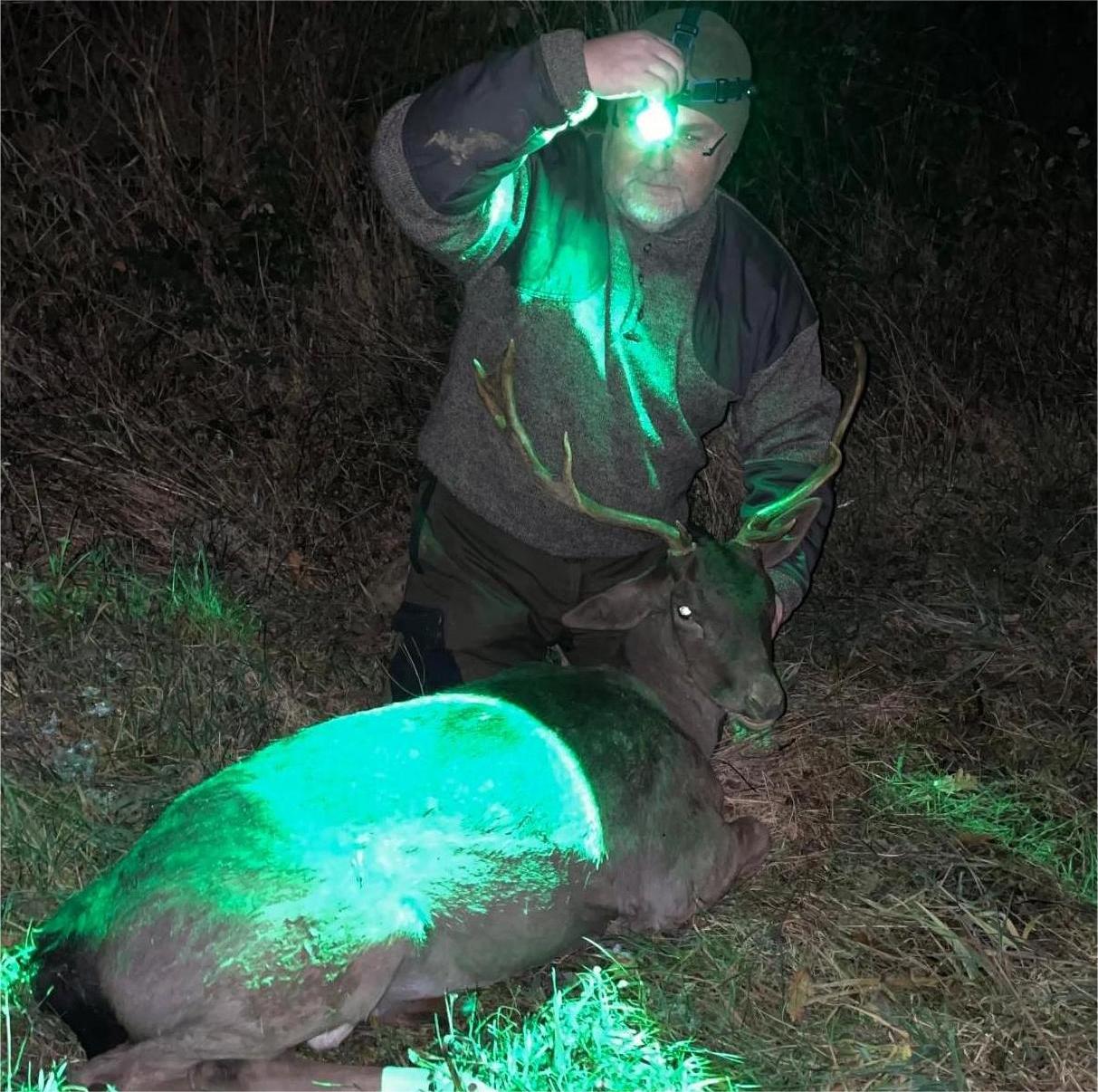
Golden Rule: Red for approach, green for scanning, white for ID, UV for tracking.
Hunters who want to understand why light colors work
Those targeting deer, hogs, or coyotes at night
Anyone who wants to choose lights based on biology, not guesswork
Table of Contents

Introduction
You've likely heard that "deer can't see red" or "hogs don't mind green." But is that really true?
Understanding how your target species perceives color and light is one of the most powerful tools in a hunter's arsenal. It's not just about tradition—it's about biology.
In this guide, we'll break down the visual systems of whitetail deer, wild hogs, coyotes, and other predators.
You'll learn exactly how they see red, green, white, UV, and IR light—and how to use that knowledge to stay hidden while maximizing your success.
Related: For practical light discipline tactics, see our Night Hunting Light Tactics: Step-by-Step Field Guide. For blood tracking techniques, check our Blood Tracking at Night guide.
1. How Animal Vision Differs from Human Vision

Humans are trichromatic—we have three types of cone cells sensitive to red, green, and blue light. That gives us rich color vision, especially in daylight.
Most game animals are dichromatic—they have only two types of cones. Their color spectrum is shifted, and they are much less sensitive to longer wavelengths (reds and oranges).
They also have a higher density of rod cells, which makes their night vision superior to ours.
- Animals see movement better than detail, especially in low light.
- They are highly sensitive to UV and blue light—the colors we often overlook.
- Red light appears dim or gray to most mammals, making it an excellent stealth tool.
Source: Comparative retinal anatomy in mammals – National Institutes of Health (NIH)
2. Whitetail Deer Vision – The "Red Blind" Advantage

How Deer See Color
Deer have a dichromatic vision system. Their cones are sensitive to short wavelengths (blue) and medium wavelengths (green), but they have very limited sensitivity to long wavelengths (red/orange).
According to research from the University of Georgia's Warnell School of Forestry, deer retinas contain roughly 20 times more rod cells than cones, making them exceptionally sensitive to movement but color-blind in the red spectrum.
- Blue light appears bright and highly visible.
- Green and yellow appear muted but detectable.
- Red appears as a dim, grayish blur—almost indistinguishable from dark shadows.

Implications for Hunters
- Red light is your best friend when moving through the woods or entering a stand. Deer simply don't react strongly to it.
- Avoid white or blue light when stealth is critical—they are the most noticeable.
- UV brighteners in clothing or gear can make you glow like a beacon to deer. Use UV‑free or treated hunting apparel.
3. Wild Hog Vision – Built for Detection but Tolerant of Green

How Hogs See Color
Wild hogs (feral swine) are also dichromatic, with cones sensitive to blue and green. Their visual acuity is lower than deer, but they have an excellent sense of smell and hearing.
According to a study published by Texas A&M University's Department of Wildlife and Fisheries Sciences, feral hogs rely more heavily on olfactory cues than vision, but their dichromatic system still influences how they react to light.
- Blue and UV are very visible to hogs.
- Green is visible but not alarming—they perceive it as a medium brightness without strong threat response.
- Red is perceived as very dim; however, some studies suggest hogs can detect red better than deer, but still poorly.

4. Coyote & Predator Vision – Sharp Eyes for Night Stalking

How Coyotes See
Coyotes are crepuscular (active at dawn/dusk) and have adapted for low-light hunting. Their retina is rod‑dominant, giving them excellent night vision, but they have fewer cones than humans.
Research from the USDA National Wildlife Research Center indicates that canids like coyotes have a reflective layer called the tapetum lucidum, which amplifies available light by up to 50%—giving them superior night vision compared to humans.
- They can distinguish blue and green fairly well.
- Red light is harder for them to see, but they can detect it faintly—especially if it's bright or moving.
- UV light is very visible to coyotes; many fabrics reflect UV, making hunters stand out.

5. Expert Insights: Field Experience Meets Science
"I've guided over 500 night hunts across Texas and the Midwest. The science backs up what we see in the field: deer freeze under white light but barely flick an ear at red. Hogs will walk right under a green light if you keep it steady. The biggest mistake I see hunters make is using the wrong color for the wrong phase—green for walking in, white for scanning. That's why I recommend a multi-color system like the Brinyte T5X. One light, four colors, zero mistakes."
— Mark Harrison, Licensed Hunting Guide (TX #4029), Contributor to Pope and Young Club
6. How Other Game Animals React to Light

| Animal | Best Light Color | Why |
|---|---|---|
| Mule Deer / Elk | Red | Similar to whitetail; red is least visible. |
| Black Bear | Red (approach) / White (brief ID) | Bears have good eyesight; use red for stealth, but always confirm with white. |
| Mountain Lion | Red (scan) / White (final ID) | Red minimizes detection; white for safety. |
| Raccoon / Small Game | Red | Red light reduces disturbance, making them less likely to flee. |
7. Quick Reference: Animal Visual Sensitivity to Light Colors

| Light Color | Wavelength | Deer | Hogs | Coyotes | Best Use |
|---|---|---|---|---|---|
| Red | 620–750nm | Very low | Low | Low | Approach, close stalking |
| Green | 520–560nm | Moderate | Moderate | Moderate–High | Long‑range scanning, hog hunting |
| White | Full spectrum | High | High | High | Final ID, blood tracking (brief) |
| UV | 365–395nm | Very high | Very high | Very high | Blood tracking only |
| IR | 850–940nm | None | None | None | Night vision gear only |

8. Frequently Asked Questions
Can deer see red light?
Yes, but very poorly. Red light appears as a dim gray, so it rarely spooks them—especially when used at low intensity. Quality Deer Management Association confirms this is why hunters have successfully used red lights for decades.
Do hogs see green light?
Yes, but they are not alarmed by it. Green is widely considered the best color for hog hunting because it provides excellent visibility without causing panic.
Can coyotes see UV light?
Yes, coyotes are highly sensitive to UV. Avoid using UV light for anything other than blood tracking, and wear UV‑free hunting clothing.
Why do deer spook at blue or white light?
Deer have a high sensitivity to short wavelengths (blue/UV). White light contains blue, so it appears bright and triggers an immediate alert response.
Does infrared (IR) light bother animals?
No. IR light (850–940nm) is completely invisible to deer, hogs, and coyotes. It is the only light that offers absolute stealth—provided you are using a night vision device.
9. Putting Science into Practice
| Hunting Phase | Light Color | Scientific Rationale |
|---|---|---|
| Approach & Setup | Red | Deer/hogs/coyotes see red poorly → minimal detection |
| Scanning Fields | Green | Hogs tolerate green; humans see green best for distance |
| Final Identification | White (brief) | True color rendering for safety |
| Blood Tracking | UV | Blood fluoresces; animals see UV but tracking is post-shot |
Ready to execute this science in the field? See our step-by-step Night Hunting Light Tactics Guide for the complete 4-phase sequence.
10. Gear That Matches Your Game

| Animal | Recommended Mode | Why It Works |
|---|---|---|
| Whitetail Deer | Red | Deer's low red sensitivity keeps you hidden |
| Wild Hog | Green | Hogs tolerate green; excellent scanning range |
| Coyote | Red (approach) / Green (scan) | Red for stealth; green for distance |
| Blood Tracking | UV + Dual‑Frequency Strobe | UV makes blood fluoresce; strobe enhances contrast |
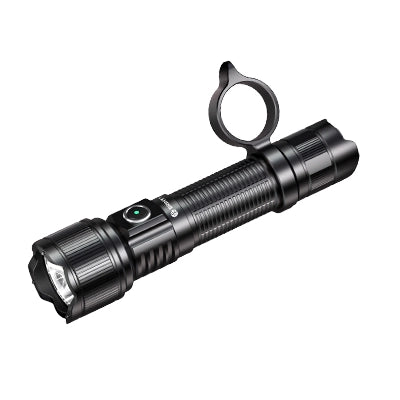
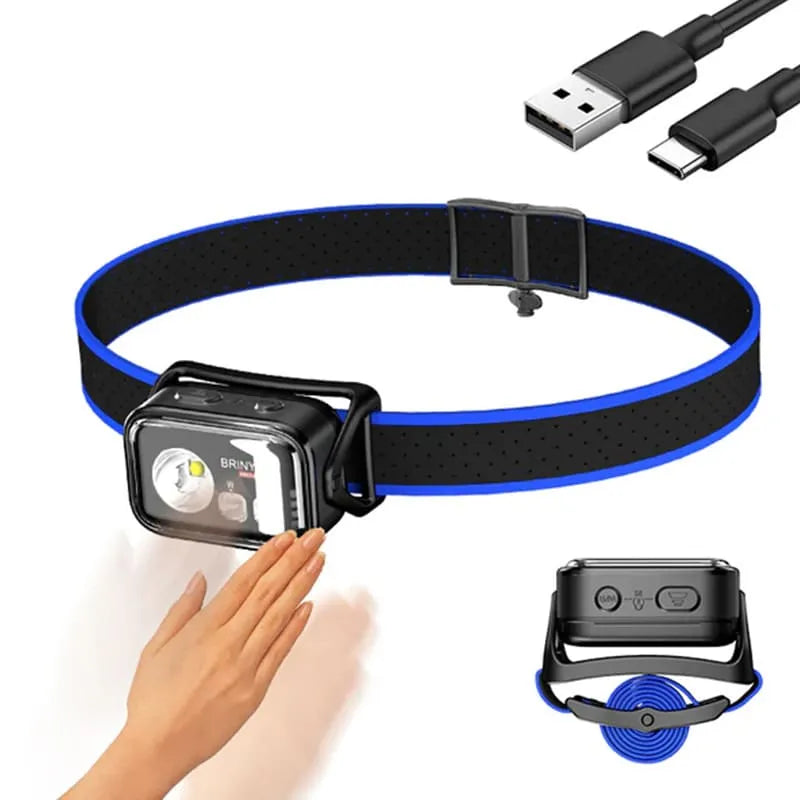
Why Choose Brinyte T5X for Your Hunt: Its multi-color system means you can use red for stealthy deer approaches, switch to green for scanning hogs at distance, activate UV for blood tracking, and rely on white for final identification—all in one light.
Browse the Brinyte SPECTRA T5X for your next hunt.
Send My Free Field Card: Animal Vision Cheat Sheet (Fits in Your Pack)
One-page printable guide: deer/hog/coyote vision summary + light color sensitivity table + science-based hunting phase strategy. Keep it in your hunting pack.
Check state‑by‑state night hunting laws before your next hunt. See the 4-phase light tactics guide.
About Brinyte
Since 2009, Brinyte has specialized in hunting and tactical lighting. Our products are developed with input from experienced hunters, field‑tested in real conditions, and engineered for reliability. Every guide we publish reflects practical field experience combined with optical science.
Learn more: About Brinyte | Hunting Lights Collection
"Professional tools for responsible hunters — Brinyte."
Comparative retinal anatomy in mammals – NIH
University of Georgia Warnell School of Forestry – Deer Vision Studies
Texas A&M Wildlife & Fisheries Sciences – Feral Hog Research
USDA APHIS Wildlife Services – Coyote Behavior Research
Quality Deer Management Association
Pope and Young Club – Ethical Hunting Resources