

When AI Knows You Better: Why Offline Tools Are the Ultimate Privacy

A tactical flashlight like the Brinyte PT16 or ZT40 is the last physical insurance policy in a world of AI surveillance and digital fragility. No firmware. No Bluetooth. No cloud connection. When your smartphone is dead, tracked, or compromised — a dedicated flashlight still works with one button press. It cannot be hacked, cannot be remotely disabled, and cannot leak your location data. In an era where your digital footprint is bought, sold, and analyzed by algorithms you never agreed to, an offline tool is not a regression — it is a deliberate, radical assertion of control.
✔ EDC enthusiasts seeking tools that refuse to connect to the cloud
✔ Anyone who has ever been creeped out by a targeted ad for something they only spoke about aloud
✔ Hunters, preppers, and analog-tool advocates who understand that the best backup is offline
1. The Digital Privacy Paradox — You Were the Product All Along
Here is a fact that should disturb you more than it does: in 2026, an AI model trained on public data can predict your voting preference, your approximate income, your relationship status, and your likelihood of responding to a specific emotional trigger — all from your Reddit comments, your Instagram likes, and the time of day you usually post. This is not science fiction. It is the documented capability of commercially available machine learning tools as of early 2026, and it is being deployed at scale during this year's midterm elections.
The U.S. midterm elections have become a testing ground for AI-driven micro-targeting. Political campaigns deploy models fine-tuned on voter databases, while civil liberties organizations issue warnings about electronic device searches at borders and airports. The Electronic Frontier Foundation's Border Search resources (EFF, 2026) specifically document how digital devices can be searched without a warrant in border zones — a risk that has escalated significantly in the past two years. The message is clear: your data is not yours, and the device in your pocket is not your ally.
Digital fragility is the vulnerability of digital systems to remote compromise, surveillance, data breaches, or infrastructure failure. A smartphone's flashlight requires a functioning battery, operating system, and — in some cases — cloud authentication to work. A dedicated flashlight requires only a battery and a switch. The more layers of digital dependency a tool has, the more fragile it becomes — and the more control you cede to systems you cannot audit.
2. When the Cloud Betrays You — The Digital Dependency Loop
There is a quiet, creeping realization spreading through privacy-conscious communities in 2026. It goes something like this: every device you own that connects to the internet is, by design, a surveillance device that also happens to perform other functions. Your phone is a tracking beacon that also makes calls. Your smart speaker is a listening device that also plays music. Your fitness tracker is a biometric data collector that also counts steps. None of these devices were designed to protect you. They were designed to extract data from you — and they do it brilliantly.
This is not paranoia. It is the documented business model of the largest technology companies on Earth. And it has a physical consequence that most people overlook: when every device you own requires an internet connection, a functioning cloud server, an up-to-date operating system, and a charged battery — you are one infrastructure failure away from being completely in the dark. Literally.
The r/EDC community on Reddit has documented this shift extensively. A widely-cited thread from early 2026, "Why I switched back to a dumb flashlight" (r/EDC, 2026), gathered over 2,300 upvotes and hundreds of comments from users describing their reasons for moving away from app-connected carry tools. The consensus: reliability and privacy, in that order.

Q: Can a dedicated flashlight be tracked like a smartphone?
A: No. A flashlight with no firmware, no Bluetooth, and no internet connection cannot be remotely tracked, accessed, or disabled. It is a completely air-gapped tool — the physical equivalent of a paper notebook in a world of cloud-synced note apps.
Every connected device in your life is a potential point of failure, surveillance, or control. An offline tool like a dedicated tactical flashlight is immune to all three. It cannot be hacked because it has no network interface. It cannot be tracked because it emits no signal. It cannot be remotely disabled because it answers to no server. In 2026, this is not a limitation — it is the entire value proposition.
3. From Pixels to Steel — Why Physical Tools Are Making a Comeback
There is a word for what is happening right now, and the word is backlash. The same year that AI-powered surveillance reaches its most sophisticated form is also the year that the analog tools movement — mechanical watches, film cameras, paper notebooks, and non-connected flashlights — experiences its strongest cultural resurgence since the early 2000s.

This is not nostalgia. It is a rational response to digital fragility. When every "smart" device in your home can be remotely deactivated by a company you have never spoken to, a physical tool that works the same way it worked twenty years ago stops looking outdated and starts looking reliable. A flashlight that turns on when you press the button — no firmware update, no terms of service, no location tracking — is not a compromise. It is a carefully chosen rejection of an ecosystem that does not serve you.
The Brinyte PT16 and ZT40 are products of this philosophy. They are not smart. They do not connect to Wi-Fi. They do not run an app. They are machined aluminum, a regulated driver, a high-output LED, and a switch. That is the entire feature list. And in 2026, that feature list reads as a declaration of independence from the same infrastructure that tracks your location, sells your habits to data brokers, and pushes notifications designed to keep you anxious and engaged.
A tool that cannot be updated remotely is a tool that cannot be remotely compromised. Offline EDC gear — flashlights, knives, mechanical watches, compasses — represents a deliberate rejection of the dependency loop that defines modern digital life. The best backup for a fragile digital ecosystem is a physical tool that refuses to participate in it.
4. The Hardcore Player's Last Line: PT16 & ZT40
When digital privacy advocates talk about "threat modeling," they usually mean encryption, VPNs, and air-gapped computers. But there is a physical layer to threat modeling that is almost never discussed: what happens when the digital threat becomes a physical one?
Consider this scenario: your phone is dead. The car battery has failed. It is 2 a.m. on a rural highway. Your location cannot be shared because there is no signal. At this moment, every layer of digital protection you have built — encrypted messaging, two-factor authentication, blockchain-verified identity — is irrelevant. The only tool that matters is the one that produces light when you press a button.
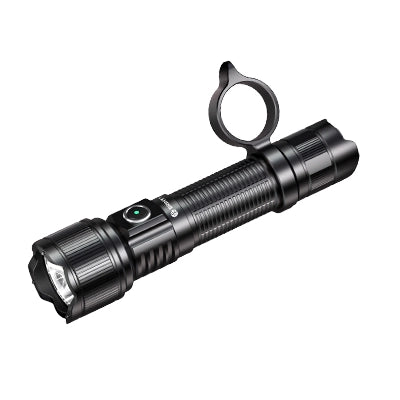
🔦 Brinyte PT16
2000 lumens (ANSI FL1), 600m throw (ANSI FL1), IP68. Simple dual-switch interface — tailcap for on/off, side switch for brightness. USB-C rechargeable. Fits in a pocket or glove box. No firmware. No Bluetooth. No tracking. Just light you can bet your safety on.
Shop PT16🔦 Brinyte ZT40
1650 lumens (ANSI FL1), 6°–70° zoomable, 490m throw (ANSI FL1), IPX8. Removable 21700 battery with hidden USB-C. Zoom from wide-area flood to pinpoint spot in one twist. The ultimate glove-box insurance policy — adaptable to any emergency, independent of any network.
Shop ZT40When every digital defense fails — dead battery, no signal, compromised device — the only tool that still works is the one that was never connected in the first place. A tactical flashlight is not a replacement for digital privacy tools. It is the final backup for when those tools become inaccessible. And in 2026, that scenario is no longer hypothetical.
5. Share Your Kit — The #DigitalDetoxEDC Challenge

The offline tools movement is not something Brinyte invented. It is something millions of people are already doing — curating their daily carry, choosing tools that do not spy on them, and sharing their setups with a growing community of like-minded individuals.
We want to see your kit. Share a photo of your EDC loadout — flashlight, knife, notebook, watch, compass, whatever you carry — on Instagram or Twitter with the hashtag #DigitalDetoxEDC. Tag @BrinyteOfficial. Once a month, we will feature our favorite community setups on the Brinyte blog, along with a brief story about why you chose each piece.
This is not a contest. It is a conversation. The offline tools movement grows one shared photo at a time — and every post normalizes the idea that you do not need to be connected to be prepared.
Every EDC photo shared online is a small act of cultural pushback. It says: I choose my tools. I decide what I carry. I am not dependent on an ecosystem I cannot audit. The #DigitalDetoxEDC community is not anti-technology — it is pro-sovereignty.
Step-by-Step: Build Your Offline EDC Kit
- Audit your current carry for digital dependencies: Does any tool in your current EDC require internet, firmware updates, or cloud authentication to function? If your primary light source is your phone, you have a single point of failure: dead battery equals no light. Typical smartphone torch output is 40–80 lumens (manufacturer spec, 2024) — a fraction of a dedicated flashlight's output.
- Add one offline tool at a time: Start with a dedicated flashlight (PT16 or ZT40). Add a mechanical watch. Carry a paper notebook and pen. Each addition removes one more dependency on fragile digital infrastructure.
- Share your setup and normalize offline carry: Post your EDC loadout with #DigitalDetoxEDC. Every photo shared makes offline tools more visible — and more normal — for the next person building their kit.
Carry Your Own Light — Offline, Off-Grid, Unstoppable
No firmware. No Bluetooth. No tracking. Just light you can count on when everything else goes dark.
Shop Flashlights →About Brinyte
Founded in 2009, Brinyte builds tools for people who understand that the best backup is offline. All core models use standard removable batteries with onboard USB-C charging — no cloud, no firmware, no subscriptions. 50+ patents. ISO9001 certification. No companion app required. Never.
"Engineered for the mission — proven in the field."
Founded 2009 · 50+ Patents · ISO9001
6. Frequently Asked Questions
Can a tactical flashlight protect my digital privacy?
Indirectly, yes. A dedicated flashlight with no firmware, Bluetooth, or internet connection cannot be tracked, hacked, or remotely disabled. It is a completely air-gapped tool. When your smartphone flashlight requires an OS update or your smart home lights depend on cloud servers, a tactical flashlight works with one button press — no data collected, no signal emitted, no privacy compromised.
What is the analog tools movement?
The analog tools movement is a growing cultural preference for tools that are simple, repairable, and independent of the internet. It includes mechanical watches, film cameras, paper notebooks, and non-connected flashlights. It is a reaction to digital fragility — the realization that connected devices are dependent on infrastructure that can fail, be compromised, or be used to track you.
Why should I carry a dedicated flashlight instead of using my phone?
Three reasons: reliability, privacy, and performance. Your phone flashlight drains the battery you need for emergency calls. It requires a functioning OS and — on some devices — cloud authentication. And it emits a weak 40–80 lumen beam (manufacturer spec average, 2024). A dedicated flashlight like the Brinyte PT16 produces 2000 lumens (ANSI FL1) with zero digital dependencies. It works when your phone is dead, tracked, or compromised.
How do I join the #DigitalDetoxEDC community?
Share a photo of your EDC loadout on Instagram or Twitter with the hashtag #DigitalDetoxEDC and tag @BrinyteOfficial. Include a brief note about why you chose each tool. We feature community setups on the Brinyte blog every month — not as a contest, but as a way to normalize offline carry and connect with other privacy-conscious EDC enthusiasts. By participating, you agree to our photo use terms (see the submission notice above).
Can AI track my flashlight?
No. A dedicated flashlight with no firmware, no Bluetooth, and no internet connection emits no signal that any AI or surveillance system can detect. It is a completely passive, air-gapped tool. This is precisely its value: in an era of pervasive digital tracking, a non-connected physical tool is the one thing that leaves no digital footprint.
What flashlight is best for a car emergency kit?
The Brinyte ZT40 is ideal for car emergency kits. Its 6°–70° zoomable beam adapts from wide-area flood to pinpoint spot at 490 meters (ANSI FL1), and its removable 21700 battery with hidden USB-C means you can charge it from any power source without removing it from the glove box. No app. No firmware. No tracking.