

Blood Tracking at Night: How to Choose & Use Hunting Lights for Deer, Hogs & Predators
✔️ Hunters tracking wounded deer, hogs, or coyotes at night
✔️ Those confused about green vs red vs white light
✔️ Anyone wanting to recover game faster and more ethically
📖 Table of Contents (Jump to Section)

1. Why Specialized Blood Tracking Lights Outperform Regular Flashlights
You've made a clean shot, but the buck disappears into the thick brush. As darkness falls, the blood trail becomes harder to see—and every minute counts. For every responsible hunter, successfully tracking wounded game is not just a matter of skill—it's an ethical obligation. When the sun sets and light grows dim, with blood trails potentially hidden under leaves, soil, or grass, the right hunting light often determines whether you return home with game or leave with regret.
Different light colors serve different purposes in the field. A red hunting light preserves your night vision and keeps you hidden. Green hunting light cuts through fog and lets you scan fields without spooking game. White delivers maximum clarity for target identification. Blood tracking UV light reveals trails invisible to the naked eye. IR works with night vision for covert operations.
2. Green vs Red vs White Light: Which One Should You Choose?

🟢 Green Light: Best for Vegetation Backgrounds
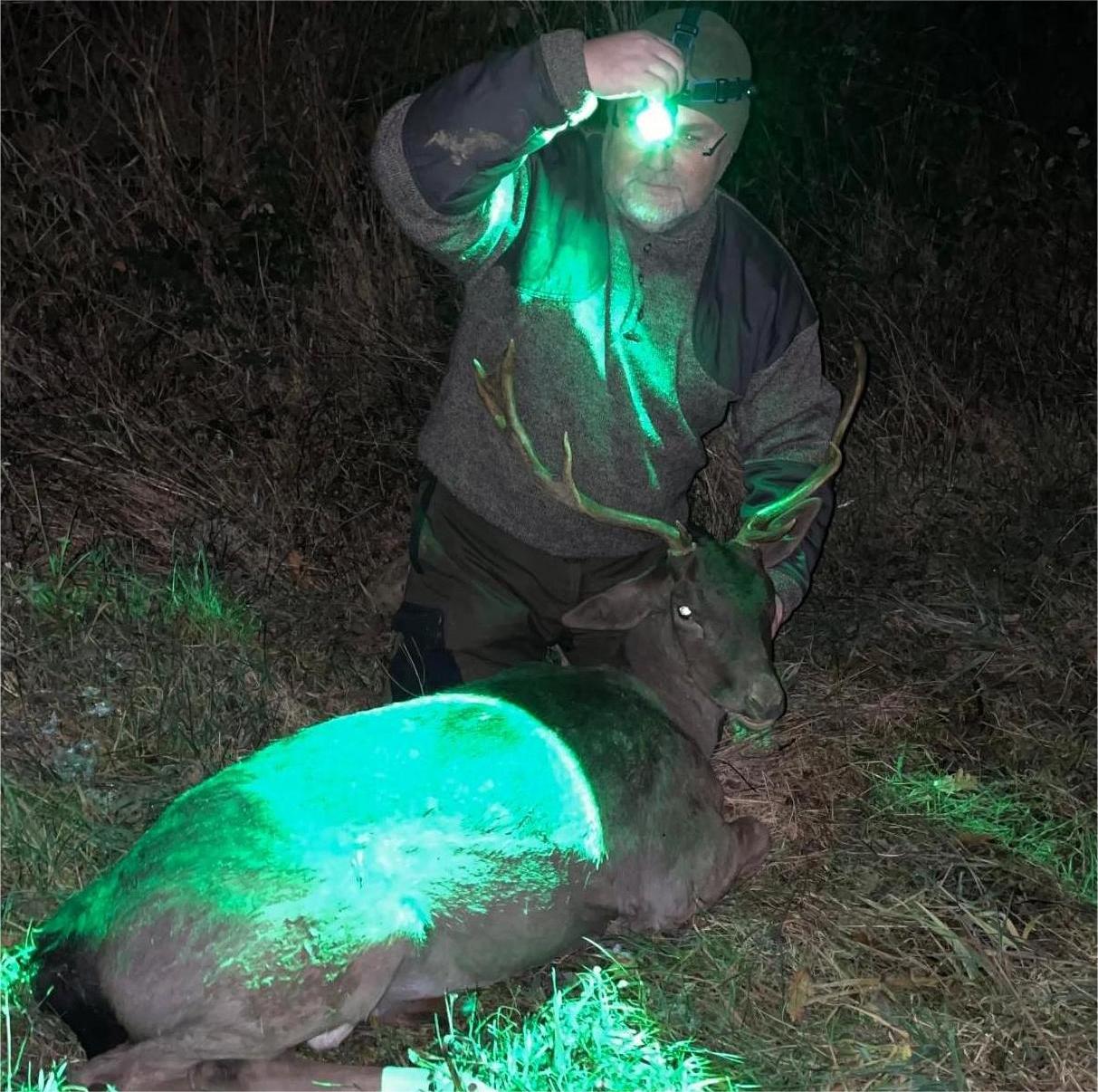
The human eye is most sensitive to green wavelengths. In dense vegetation, green light enhances contrast between blood and green leaves, making red droplets stand out against foliage. Best for grasslands, shrublands, and hog hunting in brush country.
🔴 Red Light: Stealth & Night Vision Protection
Red light has longer wavelengths, causing minimal disturbance to animals while preserving your night vision. When you turn off red light, your eyes adapt to darkness much faster. Best for coyote hunting and situations requiring stealthy approach.
⚪ White Light: Scanning & Navigation
While white light can flatten colors and spook game, it remains essential for long-distance terrain scanning, searching large areas, and general navigation. Professional approach: White for positioning, colored light for tracking.
📊 Light Color Comparison Chart
| Color | Advantages | Disadvantages | Best For |
|---|---|---|---|
| 🟢 GREEN | High vegetation contrast, visually sensitive | Poor fog penetration | Grasslands, shrublands, hog hunting |
| 🔴 RED | Night vision protection, minimal game disturbance | Lower detail recognition | Stealth approach, coyote hunting |
| ⚪ WHITE | High brightness, long range, natural color | Color flattening, easily spooks game | Long-distance scanning, navigation |
| 🔦 STROBE | Triggers motion detection, makes blood "pop" | Can be disorienting | Complex terrain, tiny droplets |
3. Multi-Color Systems & Dual-Frequency Strobe Technology
Terrain, vegetation, and blood appearance change constantly during tracking. Fixed single-color lights cannot adapt to all situations. Multi-color hunting lights allow hunters to adjust based on real-time conditions—green for open fields, red for wooded areas, strobe for challenging blood detection.
4. Spot vs Flood Beam: What's Best for Tracking?

- Spot Beam: Concentrated light for long-distance scanning. Ideal for open fields and locating distant game.
- Flood Beam: Even illumination covering wide areas. Essential for scanning ground during blood tracking.
- Zoomable (Best Choice): Adjustable beam angle (6° to 70°) adapts to any terrain.
5. Headlamp vs Handheld Flashlight
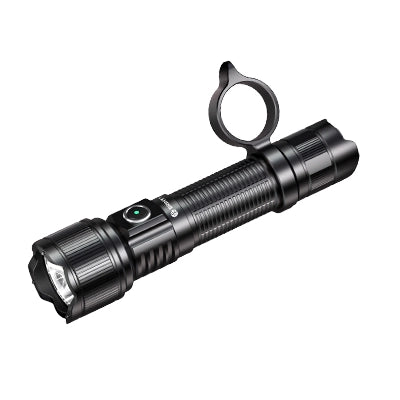
- Handheld: Better beam control, ideal low-angle illumination technique, typically higher brightness and more features.
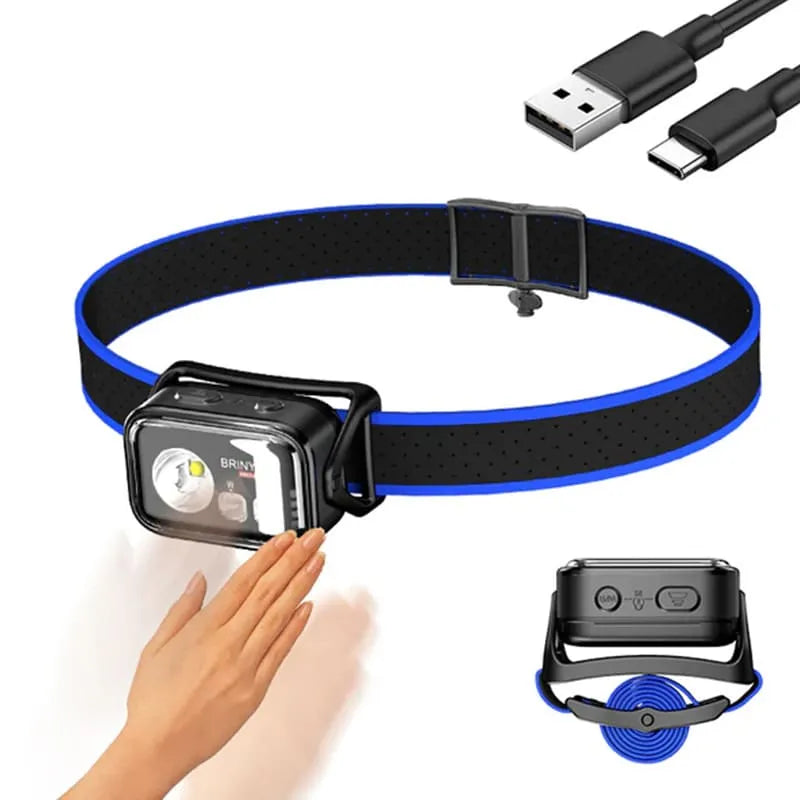
- Headlamp: Hands-free operation, perfect for marking trails, moving through terrain, and processing game.
Professional strategy: Carry both. Headlamp for continuous illumination and marking, handheld for detailed scanning.
6. Choosing Hunting Lights Based on Game Type
- 🦌 Deer Tracking: Multi-color system + strobe mode. Deer blood blends with forest floor—need adaptability.
- 🐗 Hog Hunting: Green light for vegetation contrast + sufficient brightness (1000+ lumens) + waterproof durability.
- 🐺 Coyote Hunting: Red light for stealth + long-range capability + remote pressure switch for rifle mounting.
7. Technical Parameters: Lumens, Candela & Waterproof Ratings
- Lumens (Brightness): For blood tracking, 300-700 lumens on medium is ideal. Turbo mode (1000+) only for scanning.
- Candela (Beam Intensity): Higher candela = longer range. Low candela = flood beam for close tracking.
- Waterproof Ratings: IPX7 (submersible 1m) or IPX8 (extended submersion) recommended for rainy conditions.
8. Batteries & Runtime: Rechargeable vs Disposable

- 21700 Battery: New standard, 4000-5000mAh capacity, longer runtime.
- 18650 Battery: Classic choice, 2500-3500mAh, widely available.
- USB-C Charging: Convenient—charge with phone charger, power bank, or car charger.
9. Field Techniques & Common Mistakes

Common Mistakes to Avoid:
- Moving too fast—missing tiny droplets
- Always using maximum brightness—creates glare, reduces contrast
- Not adjusting light color when terrain changes
- Staring only straight ahead instead of sweeping in a fan pattern
- Wrong light angle (vertical downward illumination)
📋 60-Second Quick Reference: Pick Your Blood Tracking Light
| If You're Tracking... | Your Best Bet | Why | Brinyte Model |
|---|---|---|---|
| Deer in dense woods | 🔴 RED + Flood beam | Red minimizes spooking, flood covers ground | T28 Artemis / T5X |
| Hog in brush/fields | 🟢 GREEN + Spot/zoom | Green enhances contrast, spot for scanning | T40 / ZT40 / T5X |
| Blood on leaves/soil | 🔦 Strobe mode | Strobe makes blood "glow" against complex backgrounds | SPECTRA T5X |
| Any game in open terrain | ⚪ WHITE + Long throw | Natural color, max distance | ZT40 / T40 / PT16A |
| Hands-free tracking | Headlamp with red/UV | Free hands for marking trails | HL28 Artemis |
🔦 Product Recommendations by Need
| Model | Key Features | Best For | Target Game | Light Modes |
|---|---|---|---|---|
| SPECTRA T5X | 1000 lm, dual-frequency strobe, 120° flood | Blood tracking, dense woods | Deer, Hog | White/Red/Green + Strobe |
| T40 | 1650 lm, 490m throw, Picatinny mount | Long-range scanning, open fields | Hog, Coyote | White + Red/Green/IR/UV |
| T28 Artemis | 650 lm, 525m throw, silent rotary dimmer | Stealth hunting, woodland | Deer, Coyote | White/Red/Green |
| ZT40 | 1650 lm, zoomable (6-70°), dual-fuel | Multi-terrain, all-around | All game | White + Red/Green/IR/UV |
| HL28 Artemis | Tri-color headlamp, hands-free | Close-range tracking, marking | Deer, Raccoon | White/Red/Green/UV |
📥 Free Download: Blood Tracking Cheat Sheet (PDF)
One-page printable guide: light color selection table + low-angle illumination diagram + quick reference for deer/hog/coyote. Keep it in your hunting pack.
❓ Frequently Asked Questions
What is the best light color for blood tracking?
No single color suits all situations. Green light typically enhances contrast with grass and leaves, while red light reduces glare and eye fatigue. Multi-color systems offer maximum flexibility.
Do blood tracking lights really work better than regular flashlights?
In most tracking scenarios, yes. Regular flashlights focus on brightness and distance, while blood tracking lights emphasize contrast and ground visibility—especially noticeable on dark soil, damp leaves, or uneven forest ground.
Is brighter always better for night tracking?
Not necessarily. Excessively high brightness can blur color differences, making small blood droplets harder to detect. Controlled output and appropriate contrast are usually more effective than maximum lumen values.
Are flashing modes useful for blood tracking?
Yes. Strobe or pulse modes trigger the eye's motion and contrast detection, making blood stand out against complex backgrounds. The Brinyte SPECTRA T5X dual-frequency strobe is specifically engineered for this purpose.
What's the best angle for blood tracking with a flashlight?
Hold your light at knee height and sweep it sideways across the ground. This low-angle illumination creates shadows that make tiny droplets and smears stand out. Never shine directly down on the blood.
How long does blood stay visible under UV light?
Fresh blood (less than 6 hours) fluoresces brightest under UV light. As blood dries, the fluorescence diminishes but can still be visible for 12-24 hours depending on temperature and surface conditions.
About Brinyte
Since 2009, Brinyte has specialized in hunting and tactical lighting. Our products are developed with input from experienced hunters, field‑tested in real conditions, and engineered for reliability. Every guide we publish reflects practical field experience combined with optical science.
👉 Always check your state's night hunting regulations before heading out.
👉 Learn more: About Brinyte | Blood Tracking Lights Collection
"Professional tools for responsible hunters — Brinyte."
🗣️ Still have questions about blood tracking? Drop us a comment below—we're happy to help you choose the right light for your specific hunt.