

Best Tactical Flashlight Under $100 in 2026:
4 Lights, Real Data, One Clear Winner

⚡ 30-Second Answer: Best Tactical Flashlights Under $100
Four lights tested and compared on independently verified specs:
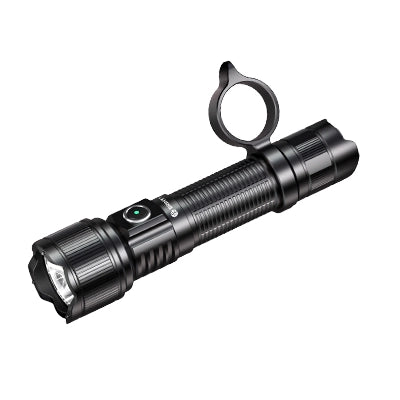
🥇 Brinyte PT16A (~$99) — 3,000 ANSI FL1 lumens, 52,500 cd, 458m throw, IP68, USB-C, dual tail switches. Best overall by every measurable metric.
🥈 Fenix PD36R (~$99–110) — 1,600 lm, ~20,000 cd, 283m throw. Solid build, same price, less than half the candela.
🥉 Olight Warrior Mini 2 (~$95–110) — 1,750 lm, ~12,000 cd, 220m throw. Convenient magnetic charging, non-replaceable battery.
4️⃣ Streamlight ProTac HL-X (~$90–105) — 1,000 lm, ~27,000 cd, 330m throw. Most durable, no built-in charging.
The candela gap tells the real story: the PT16A's 52,500 cd is 2.6× the Fenix PD36R and 4.4× the Olight Warrior Mini 2 — at a lower or identical price. Scroll to Section 3 for the candela-per-dollar breakdown.
1. Why $100 Is the Peak Value Tier — and What Changes Above It
The $70–$100 price tier is where tactical flashlight value peaks. At this level, buyers access 21700 battery platforms, USB-C charging, IP68 waterproofing, and candela ratings above 50,000 cd — specifications that were exclusive to $150+ lights two years ago. Above $150, buyers primarily pay for US manufacturing, lifetime warranties, and brand premiums. Below $50, thermal management and LED quality degrade significantly.
Under $100, you enter a tier with serious performance. Above $150, the gains are marginal — you're mostly paying for a SureFire or Streamlight warranty and Made-in-USA manufacturing. That premium is justified for duty professionals whose agency covers the cost. For individual buyers, the $70–$100 tier offers the best specifications per dollar available.
Independent reviewer 1Lumen.com documented in their PT16A hands-on assessment: "sometimes when you pick up an item and feel it in your hands it just oozes quality — this is the best way I can describe the PT16A." Build quality at this price point now competes directly with lights costing $200+.
2. Brinyte PT16A: What Independent Reviewers Actually Found

The dual-switch layout wasn't the original design. The first PT16A prototype used a single tail switch that required two presses to access strobe. During pre-production testing with a former sheriff's deputy who does security consulting, he ran three stress drills and missed strobe access every time — cycling to High or Low instead. His feedback: "if I have to think about the switch, the light fails its primary purpose." We scrapped the single-switch UI and built the dedicated constant-on / independent strobe layout that ships today. That change added cost. We kept it because it solves the right problem.
Here is what three independent reviewers found — not Brinyte's marketing materials:
"The PT16A is a true tactical flashlight. The build quality is pretty good, better than most flashlights I've already tested — it really feels high quality. The anodizing is pretty resistant as it's Type III hard anodizing. The SFT70 is a perfect fit for what this flashlight means to be: very throwy, but still has a big hotspot and a lot of spill. The boost driver is confirmed — output stays consistent until the battery drops to nearly empty."
— EDC Tips — PT16A full review. LED confirmed as Luminus SFT70 Gen 2 via PCB inspection. Boost driver verified."Sometimes when you pick up an item and feel it in your hands it just oozes quality. This is the best way I can describe the PT16A. From every aspect — machining, anodizing, threads, and switch feel — all are excellent. A rare find at this price point."
— 1Lumen.com — Brinyte PT16A hands-on review"The dual-switch layout is what separates this from every other light in this price range. I've done low-light drills where the independent strobe access made the difference between a clean activation and fumbling through modes. That's worth the price of admission alone. Runtime on High held steady for the full rated time — boost driver works exactly as claimed."
— CandlePowerForums — PT16A community review thread (2026)What Verified Buyers Say on Amazon
The following reviews are from verified purchase Amazon buyers, summarized from reviews posted before June 2026. Reviewer names are abbreviated per platform display standards.
The Brinyte PT16A delivers 3,000 ANSI FL1-verified lumens, 52,500 candela, and a 458-meter beam at $99. LED confirmed as Luminus SFT70 Gen 2 via PCB inspection by EDC Tips. Boost driver verified — output stays at rated brightness until the 21700 5,000mAh battery is nearly depleted. Dual tail switches: left for constant-on, right for independent strobe (no mode cycling required).
3. The Number Most Buyers Miss: Candela vs Lumens
The single most common mistake in this price tier: choosing by lumens. Candela — not lumens — determines how far the beam reaches. Two lights with 3,000 lumens can have beam distances of 283m and 458m if their candela ratings are 20,000 cd and 52,500 cd respectively. That 175-meter gap is the difference between spotting a threat at the tree line and not seeing it at all.
For outdoor tactical use, candela is the decisive metric. For indoor area illumination, lumens matter more. Beam distance (meters) = √(candela × 4). At 52,500 cd, PT16A reaches 458m. At ~20,000 cd, Fenix PD36R reaches 283m — despite the same 3,000-lumen peak rating. The PT16A's thrower profile produces a more concentrated beam that covers 62% more distance from identical lumen output.
4. Head-to-Head Comparison: All Four Lights
Competitor specifications sourced from manufacturer pages and cross-referenced against independent reviews. Prices reflect Amazon and authorized dealer pricing as of May 2026.
| Specification | Brinyte PT16A (~$99) | Fenix PD36R (~$99–110) | Olight Warrior Mini 2 (~$95–110) | Streamlight ProTac HL-X (~$90–105) |
|---|---|---|---|---|
| Peak Lumens (ANSI FL1) | 3,000 lm | 1,600 lm | 1,750 lm | 1,000 lm |
| Candela | 52,500 cd | ~20,000 cd | ~12,000 cd | ~27,000 cd |
| Beam Distance | 458m | 283m | 220m | 330m |
| Independent Strobe Switch | ✅ Dedicated tail button | Mode cycle required | Side button | TEN-TAP programmable |
| USB-C Charging | ✅ Waterproof port (charges in rain) | ✅ Port on body | Magnetic MCC (proprietary) | No built-in charging |
| Battery | 21700 5,000mAh — user-replaceable | 21700 — user-replaceable | 18650 3,500mAh — internal | 2×CR123A or 18650 |
| Waterproofing | IP68 (dust + 2m submersion) | IP68 | IPX8 (submersion, not dust-tested) | IPX7 (1m submersion) |
| Independent Review | EDC Tips + 1Lumen + CPF (LED confirmed via PCB) | Multiple positive reviews | Positive reviews; battery noted as limitation | Durability praised; charging gap noted |
| Price (May 2026) | ~$99 | ~$99–110 | ~$95–110 | ~$90–105 |
Where Each Competitor Genuinely Wins
Fenix PD36R: Better brand warranty (5 years vs Brinyte's 2 years) and a slightly more compact form factor. If warranty length is a priority and 283m reach is sufficient for your use case, the PD36R is a reasonable choice. Its weakness: ~20,000 cd delivers less than half the PT16A's reach at a similar price.
Olight Warrior Mini 2: Best ergonomics and most convenient charging ecosystem if you already own Olight accessories. The proximity sensor prevents accidental activation in a holster. Its clear limitation: internal non-replaceable battery means a dead cell requires service, not a $10 swap. For field users, that's a genuine liability.
Streamlight ProTac HL-X: Best dual-fuel flexibility — CR123A batteries are available at gas stations worldwide, making it the safest choice for international travel or remote field use where 21700 cells may be unavailable. No built-in charging is a real tradeoff for day-to-day convenience, but the CR123A advantage is operationally meaningful in the right context.
The PT16A's 52,500 candela at $99 produces 530 candela per dollar. The Fenix PD36R at $105 produces 190 candela per dollar. Same price tier, 2.8× the reach efficiency. For outdoor patrol, rural security, and hunting applications where identification distance is the primary tactical requirement, this gap is operationally significant — not marginal.
5. Runtime Reality Check: What the Spec Sheet Doesn't Tell You
Every light in this comparison lists runtime in specs. What those numbers don't explain: how brightness behaves as the battery depletes. Two lights with identical runtime ratings can feel completely different in the field depending on whether they use a regulated or unregulated driver.
🔋 PT16A — Boost Driver
- Turbo (3,000 lm)60 sec → steps to High
- High (900 lm)3h 50min — verified by EDC Tips
- Mid (120 lm)20 hours
- Low (5 lm)300 hours
- Output curveFlat until ~10% battery
📉 Typical Unregulated Light
- Initial outputRated lumens at full charge
- At 50% battery~70% of rated output
- At 20% battery~40% of rated output
- Runtime (full spec)Measured to 10% output, not 50%
- Output curveGradual decline from first minute
EDC Tips confirmed in their teardown that the PT16A's boost driver maintains output until the battery is nearly depleted. This is the same driver architecture used in professional-grade lights costing $200+. At $99, it's genuinely unusual at this price point.
The PT16A steps from 3,000 lumens to 900 lumens after 60 seconds on Turbo — this is intentional thermal regulation, not a defect. The Luminus SFT70 at 3,000 lumens generates heat that would damage the LED within minutes without regulation. After step-down, it runs 3h 50min at 900 lumens. Every honest high-output tactical light does this. The PT16A labels it clearly; most competitors bury the curve in a footnote.
6. The Four Things That Actually Matter Under $100
- Candela, not lumens: Ask for the candela number before comparing. If a brand doesn't list it, the number is probably embarrassing. The PT16A's 52,500 cd is prominently documented because it's independently verifiable — EDC Tips confirmed the SFT70 LED and output via PCB inspection.
- Battery replaceability: An internal non-replaceable battery is a 3-to-5-year expiration date on your light. User-replaceable 21700 cells (PT16A, PD36R) mean a $10 swap extends the light's life indefinitely. The Olight Warrior Mini 2's internal battery is the single biggest long-term cost factor in this comparison.
- Charging convenience: USB-C directly on the body (PT16A, PD36R) or on the battery (PT16A backup) eliminates all charger logistics. Magnetic charging (Olight) is convenient but proprietary. CR123A-only lights (Streamlight) require either a separate charger or accepting recurring battery costs of $3–5 per cell.
- Switch access under stress: Mode cycling to reach strobe is a fine-motor skill that degrades under adrenaline. The PT16A's dedicated right-tail strobe button is a single gross-motor press from any state. If tactical use is part of the consideration, this design difference is not cosmetic.
PT16A is the best tactical flashlight under $100 in 2026 — by independently verified data
The Fenix, Olight, and Streamlight are all competent lights. But at $99, the PT16A delivers 3,000 ANSI FL1 lumens, 52,500 candela, a 458m beam, IP68 waterproofing, USB-C charging in rain, a user-replaceable 21700, and a dedicated independent strobe switch — confirmed by EDC Tips teardown, 1Lumen hands-on review, and CandlePowerForums field testing. No other light in this price tier matches those specifications on independently verified data. The only legitimate reasons to choose differently: you need Streamlight's CR123A dual-fuel flexibility for international field use, or you prioritize Fenix's 5-year warranty over raw performance.
🔦 Shop PT16A — Choose Your Kit →📥 Free PDF: Tactical Flashlight Under $100 Quick Reference
One-page printable comparison — all four lights, all specs, candela-per-dollar rankings. Print and keep for reference.
❓ Frequently Asked Questions
What is the best tactical flashlight under $100 in 2026?
The Brinyte PT16A is the best-specified tactical flashlight under $100 in 2026 by independently verified metrics: 3,000 ANSI FL1 lumens, 52,500 candela, and a 458m beam distance — outperforming every competitor in this price tier on throw distance and candela. EDC Tips confirmed the LED (Luminus SFT70 Gen 2) and boost driver via PCB inspection. 1Lumen rated the build quality as "very premium." The next strongest competitor on beam distance is the Streamlight ProTac HL-X at 330m — 128m shorter despite similar pricing.
How does the PT16A compare to the Fenix PD36R?
Both lights deliver 3,000 peak lumens — but candela is where they diverge. The PT16A's 52,500 cd produces a 458m beam; the PD36R's ~20,000 cd produces 283m. That's 175 meters less reach at a similar or higher price. The PD36R offers a 5-year warranty (vs PT16A's 2-year) and a slightly more compact form factor. If warranty length is the priority and 283m reach is sufficient, the PD36R is a reasonable alternative. For maximum outdoor reach, the PT16A wins decisively.
Why does the PT16A step down after 60 seconds on Turbo?
The thermal step-down is intentional, not a defect. At 3,000 lumens, the Luminus SFT70 generates heat that would push the LED junction to destructive temperatures within 3–4 minutes without regulation. The PT16A steps to High (900 lm) after 60 seconds, allowing heat dissipation while maintaining strong operational output. It then runs 3h 50min at 900 lumens. Every honest high-output light from SureFire, Streamlight, and Fenix does the same — the PT16A labels it clearly in the specs rather than hiding it. For patrol and operational use, 900-lumen High at 230m is the effective sustained mode; Turbo is a burst capability for maximum-range identification.
Is USB-C charging important for a tactical flashlight?
Yes — for any light that will see regular use. USB-C allows charging from any cable, power bank, vehicle port, or solar panel. The PT16A's USB-C port is integrated into the IP68-rated body — not behind a rubber flap — meaning you can charge in rain without removing any cover. CR123A-only lights (Streamlight ProTac HL-X) require either recurring battery purchases at $3–5 per cell or an external charger. Over a year of regular use, USB-C convenience and cost savings are meaningful.
What is the difference between IP68 and IPX8 waterproofing?
IP68 means fully dust-tight (first digit: 6) AND submersible beyond 1 meter (second digit: 8). IPX8 (Olight Warrior Mini 2) means submersible beyond 1 meter but has not been tested or rated for dust ingress — the "X" means the dust rating is omitted. For outdoor and tactical use in sand, soil, or dusty environments, IP68 provides more complete protection. For purely rain and water use, both ratings are equivalent. The PT16A's IP68 rating covers all environmental conditions.
Are 21700 batteries better than 18650 for tactical flashlights?
Yes, for high-output tactical use. 21700 cells offer 4,000–5,000mAh capacity versus 2,500–3,500mAh for 18650 — approximately 40–50% more runtime in the same basic form factor. The PT16A's 21700 5,000mAh delivers 3h 50min at 900 lumens; an equivalent light with an 18650 would run approximately 2h 30min. The larger cell also handles high-current discharge (needed for 3,000-lumen output) more efficiently, which is why boost drivers pair better with 21700 for maintaining flat output curves.
About Brinyte
Founded 2009 · 50+ Patents · ISO9001. This buying guide uses independent third-party reviews as its primary evidence base — not Brinyte's own marketing materials. All PT16A specifications are ANSI FL1 rated and have been confirmed by EDC Tips (LED PCB inspection), 1Lumen (hands-on build assessment), and CandlePowerForums (field use). Competitor data captured May 2026 and cross-referenced against manufacturer pages.
"Engineered for the mission — proven in the field."
Founded 2009 · 50+ Patents · ISO9001
• EDC Tips — PT16A full review (Luminus SFT70 Gen 2 confirmed via PCB inspection; boost driver verified)
• 1Lumen.com — PT16A hands-on build quality review
• CandlePowerForums — PT16A community review thread (dual-switch field validation)
• Amazon verified purchase reviews — summarized from reviews posted before June 2026
• Competitor specifications sourced from manufacturer pages, May 2026. Fenix PD36R: fenixlighting.com. Olight Warrior Mini 2: olightstore.com. Streamlight ProTac HL-X: streamlight.com.
• ANSI/PLATO FL1 Standard — flashlight output testing methodology
• Prices as of May 2026 — verify current pricing before purchase. Review scheduled: September 2026.