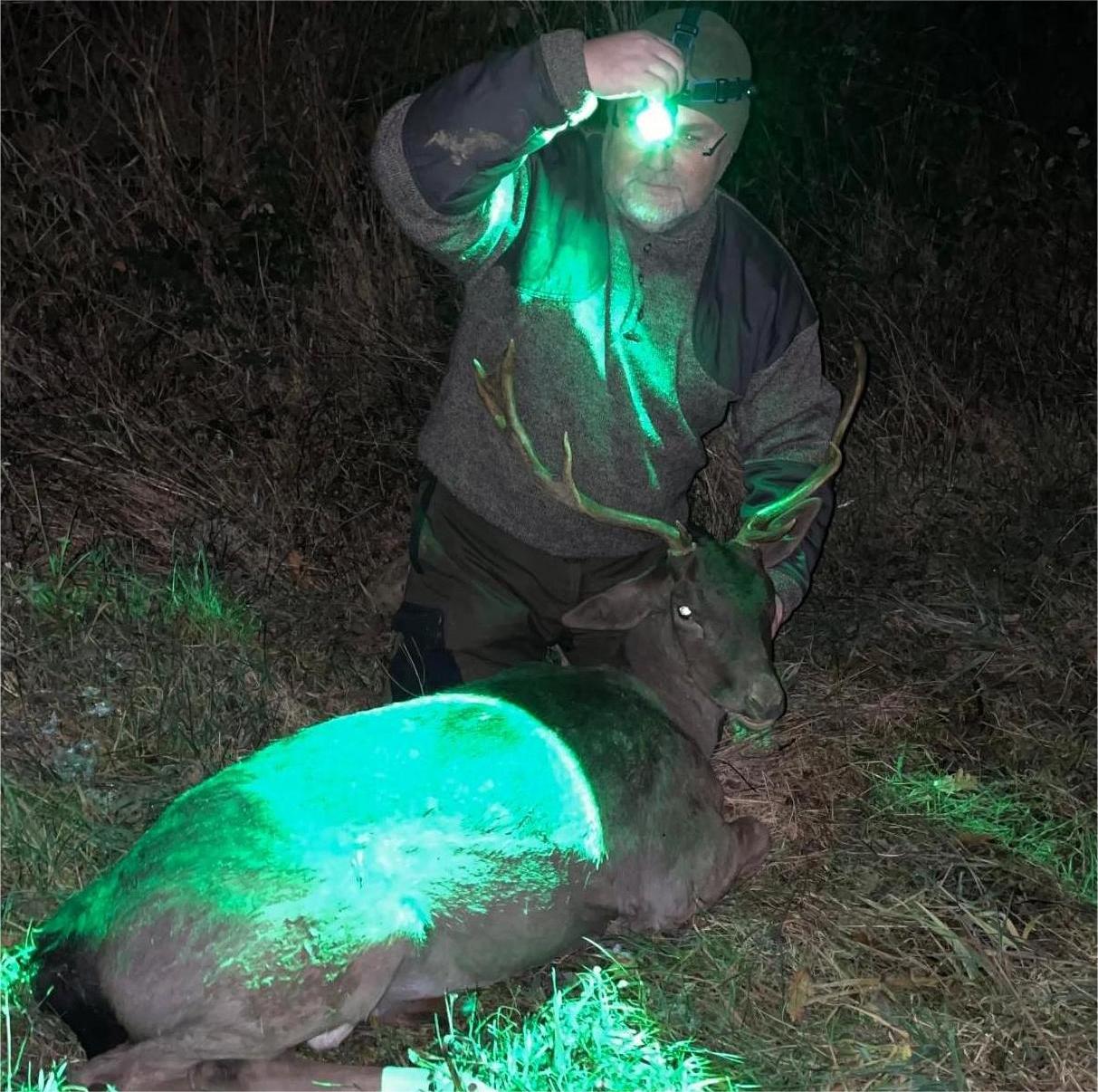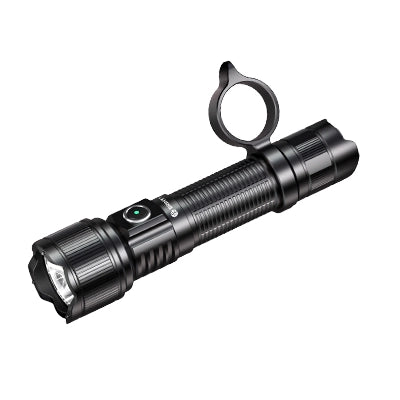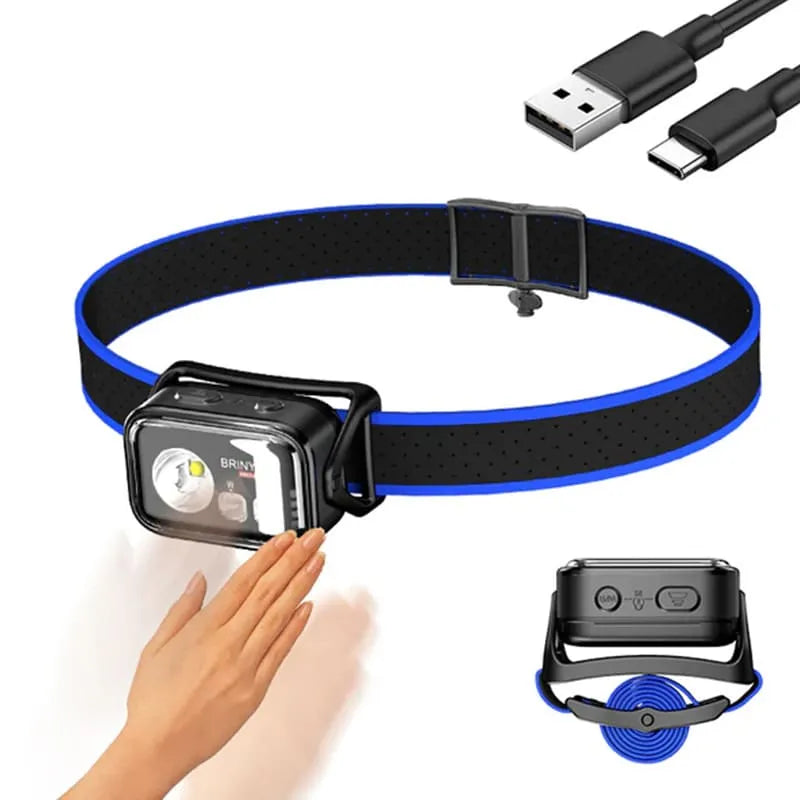


If you're a long-range bolt-action hunter who demands perfect zero retention when switching colors, the Wicked Lights A67iC is your light. Its Center Axis Rotational design keeps every LED dead-center in your scope's crosshair — no shift, no re-zeroing[reference:0].
If you're an AR-platform hunter who needs silent operation, lightweight gear, and extreme candela, the Brinyte T28 Artemis is the smarter choice. At 222g vs A67iC's ~750g kit weight, T28 is a third the weight[reference:1]. Its TIR optic delivers 125,000 cd / 700m+ throw — enough to spot eyeshine across any pasture[reference:2][reference:3].
Bottom line: Wicked wins on zero retention and USA warranty. Brinyte wins on weight, candela, battery capacity, and price. Your hunt style determines the winner.
✔ Hunters who care about beam quality, zero retention, and recoil resistance
✔ Anyone who's ever lost a shot because their light shifted when changing colors
1. The Real Question: Lumens Are Bait — Candela and Control Are What Kill

In the Texas panhandle, Georgia river bottoms, and Canadian prairies, veteran coyote and hog hunters have a saying: "Lumens are bait. Candela and control are what kill."
When you're 300 yards from a sounder at 2 a.m., you don't need a light that lights up the whole county. You need a beam that reaches across the pasture, stays exactly where you aim it, and doesn't spook the animals before you get a shot. That's the difference between a hunting light and a flashlight.
Two lights dominate the premium 3-in-1 hunting light category in 2026: the Wicked Lights A67iC (American-made, $270+, legendary zero retention) and the Brinyte T28 Artemis (global newcomer, ~$120, TIR optic, 125,000 cd). Both are excellent. Both serve different hunters. Here's the real breakdown.
Lumens measure total light output. Candela measures beam intensity — how far the light throws and how clearly you can identify a target at distance[reference:4]. For predator hunting at 200+ yards, candela matters far more than lumens. A 1,000-lumen flood light won't reach across a pasture. A 560-lumen spot with 125,000 cd will.
2. Specs at a Glance — The Numbers That Actually Matter
| Specification | Wicked Lights A67iC | Brinyte T28 Artemis |
|---|---|---|
| White Spot Performance | 400 yards visibility[reference:5] | 560 lm / 125,000 cd / 700+m[reference:6][reference:7] |
| White Flood Output | — | 1,000 lm[reference:8] |
| Green Spot Throw | 400 yards visibility | 350+m[reference:9] |
| Red Spot Throw | 400 yards visibility | 280+m[reference:10] |
| Optical System | Aspherical convex lens (zoom focus)[reference:11] | TIR Optic (6°–70° zoom)[reference:12][reference:13] |
| Bezel Diameter | 67mm | 54mm[reference:14] |
| Body Diameter | 1 inch (25.4mm) | 1 inch (25.4mm)[reference:15] |
| Weight (without battery) | ~320g | 222g[reference:16] |
| Battery | 18650[reference:17] | 21700 5000mAh[reference:18] |
| Onboard Charging | ❌ External charger only[reference:19] | ✅ Hidden USB-C[reference:20] |
| Waterproof Rating | Weather-resistant | IP66[reference:21] |
| Remote Switch | ✅ Intensity control tail cap[reference:22] | ✅ Remote pressure switch included[reference:23] |
| Warranty | Lifetime (USA)[reference:24][reference:25] | 2 years (+3 free after registration) |
| Price | ~$270–280[reference:26][reference:27] | ~$90–110 |
3. Optics: Aspherical Convex Lens vs TIR Optic — The Beam Quality Battle
American hunters are picky about beam quality. At 200 yards, any spill light or dark ring in your beam can distort what you see through your scope. This is where the two lights take completely different approaches.
Wicked A67iC — The Old-School Big-Bore Approach
The A67iC uses a large 67mm aspherical convex lens with zoom focus[reference:28]. It's a proven design — big lens, big light, 400 yards of visibility[reference:29]. But there's a catch: convex lenses, when zoomed to spot mode, create optical loss and chromatic aberration — colored fringing around the beam edge. In a scope, that fringing can make it hard to distinguish the exact edge of your target[reference:30].
Experienced hunters have noted that convex lens designs can create beam artifacts — distortions that affect your field of view when looking through a scope[reference:31]. The A67iC's massive 67mm bezel compensates by gathering more light, but it comes at a cost: weight and bulk.
Brinyte T28 — Modern TIR Optic, Zero Optical Loss
The T28 uses a TIR (Total Internal Reflection) optic — a modern lens system that captures and directs nearly 100% of LED light into a clean, uniform beam[reference:32][reference:33]. Unlike convex lenses, TIR optics eliminate optical loss — what the LED produces, the beam delivers.
The T28 zooms from 6° spot to 70° flood[reference:34]. At spot, the SFT-25R white LED delivers 125,000 cd and 700+ meters of throw[reference:35][reference:36]. At flood, it delivers 1,000 lumens of wide illumination[reference:37]. The beam is round and uniform — no dark spots, no ugly square patterns, no chromatic fringing. What you see through your scope is exactly what's there.
TIR optics capture and direct nearly 100% of LED output. Convex lenses lose light at the edges and create spill and artifacts. For hunters who need a clean sight picture at 200+ yards, TIR is the superior technology. The T28's 125,000 cd beam intensity means you can spot eyeshine detection at extreme distances[reference:38] — a critical advantage when scanning open terrain.
4. Color Switching: Center Axis Rotation vs Stepless Dimmer
This is the most critical difference between these two lights — and it's where each has a legitimate engineering advantage.
Wicked A67iC — Center Axis Rotational System (The Zero-Keeper)
The A67iC's Patent Pending Center Axis Rotational System is the core reason it commands a $270+ price tag[reference:39]. Here's how it works: three LEDs (red, green, white) sit on a rotating disc[reference:40]. When you twist the selector, the disc rotates, but each LED locks into the exact center of the optical axis — the geometric center of the lens[reference:41].
Why this matters: In multi-LED lights that don't use center-axis design, different LEDs sit off-center. When you switch colors, the beam shifts — sometimes by several inches at 100 yards, which translates to feet at 300 yards[reference:42]. For a bolt-action hunter taking a 300-yard shot, that shift means you miss. The A67iC's LED Position Detent Lock ensures each LED locks in the same physical position every time[reference:43]. No shift. No re-zeroing. Your crosshair stays on target when you change colors[reference:44][reference:45].
Brinyte T28 — Stepless Dimmer & Silent Switch (The Stealth Operator)
The T28 takes a different approach. Instead of moving LEDs, it uses a rotary color switch that selects between three fixed LEDs on the same axis[reference:46]. The LEDs are already centered — no shift when switching colors.
But the T28's real killer feature is the stepless dimmer — a tail rotary switch that provides continuous brightness control from 2% to 100%[reference:47]. No preset steps. No sudden brightness jumps. You start at 2% and slowly dial it up. The hogs don't spook because they never see a sudden light change[reference:48].
And the switch is silent. No "click." No mechanical noise. In a quiet field at 2 a.m., a single click can travel 150 yards and spook a sounder. The T28's silent rotary design eliminates that risk.
Hogs and coyotes have excellent hearing. A mechanical switch click at 2 a.m. can alert a sounder before you even raise your rifle. The T28's stepless dimmer and silent rotary switch let you adjust brightness without making a sound — a critical advantage for spot and stalk hunters who need to approach quietly[reference:49]. The silent remote switch and momentary activation design prevent accidental spooking from switch noise.
5. Recoil Resistance: Who Survives the Shot?
A hunting light mounted to a rifle has to survive the shot — not just once, but hundreds of times. The .308 Winchester and 12-gauge shotgun generate thousands of Gs of instantaneous shock. Both the A67iC and T28 are designed for this, but they take very different engineering paths.
Brinyte T28 — Dual Gold-Plated Springs
The T28 uses front and rear dual gold-plated springs in the battery compartment. When your rifle fires, the battery tries to slam forward under recoil. The dual-spring system keeps it centered, maintaining contact at both ends. No momentary power loss. No flicker. No shutdown during the shot[reference:50].
The T28's lightweight 222g body also helps — less mass means less inertia to absorb[reference:51]. Combined with IP66 waterproofing and 1m impact resistance, it's built for hard field use[reference:52].
Wicked A67iC — Epoxy Potting & Physical Locking
The A67iC uses epoxy potting — electronic components are embedded in epoxy resin, protecting them from shock and vibration[reference:53]. The Center Axis LED Position Detent Lock physically locks the color selector in place, preventing the color disc from rotating under recoil[reference:54].
This is a heavy-duty approach — the A67iC is built like a tank, and at ~320g (plus mount and batteries), it feels like one[reference:55]. American hunters who run hard-recoiling rifles (12-gauge, .308, 6.5 Creedmoor) appreciate this level of over-engineering.
Wicked uses epoxy potting and physical locking to survive recoil — heavy, bombproof, proven. Brinyte uses dual gold-plated springs and lightweight design to absorb shock — lighter, more agile, field-tested. Both survive the shot. The difference is how they do it — and whether you're carrying the weight for a mile-long stalk.
6. Battery & Logistics: 18650 vs 21700 — Winter Nights Don't Forgive Weak Batteries
When the temperature drops below freezing, battery performance matters. A light that dies at 3 a.m. in a Texas winter is a liability. Here's how the two compare.
Wicked A67iC — 18650, No Onboard Charging
The A67iC uses a standard 18650 battery (2 included in the kit) with an external charger[reference:56][reference:57]. In the field, you swap batteries. It works. But there's no onboard charging — if you forgot to charge your spares, you're done. In extreme cold, 18650 cells lose capacity faster than larger cells, and you have to carry extra batteries and a charger.
The A67iC's kit includes two Li-Ion rechargeable batteries and a 2-position smart charger[reference:58], but you can't recharge in your truck without pulling the batteries out.
Brinyte T28 — 21700, Hidden USB-C Onboard
The T28 uses a 21700 5000mAh battery — significantly larger capacity than 18650[reference:59]. More capacity means longer runtime in cold weather — white light runs 160 minutes, red and green run up to 5+ hours[reference:60].
The hidden USB-C port (under the tailcap) lets you recharge without removing the battery[reference:61]. In the field, you can plug into your truck, a power bank, or a solar panel. The design is IP66 waterproof — the port stays sealed when not in use[reference:62].
7. Final Verdict: Which 3-in-1 Hunting Light Fits Your Hunt?
There's no single "best" light here — there's the right light for your hunting style.
🎯 Buy the Wicked Lights A67iC If:
- You shoot bolt-action rifles at 300+ yards and you absolutely cannot tolerate any shift when changing colors[reference:63]
- You're willing to pay $270+ for premium USA design and service[reference:64]
- You value a lifetime USA warranty and don't mind the weight[reference:65][reference:66]
- You prefer the proven reliability of 18650 batteries and don't mind external charging[reference:67]
- You hunt with hard-recoiling rifles where epoxy potting and physical locking give you confidence[reference:68]
🔦 Buy the Brinyte T28 Artemis If:
- You hunt with an AR-platform rifle and need a lightweight (222g) light[reference:69]
- You want extreme candela — 125,000 cd / 700m throw — for long-range identification[reference:70]
- You need silent operation — stepless dimmer and no click when adjusting brightness[reference:71]
- You want modern logistics — 21700 5000mAh battery with hidden USB-C charging[reference:72]
- You're on a ~$120 budget but still want premium performance
- You hunt spot-and-stalk and need to scan wide fields and track blood trails with the same light[reference:73]
Ready to Upgrade Your Night Hunting Setup?
Shop the Brinyte T28 Artemis — the lightweight, high-candela 3-in-1 hunting light.
Shop T28 Artemis →8. Frequently Asked Questions
Does the Brinyte T28 shift zero when changing colors?
Yes, the Brinyte T28 (and the Wicked Lights A67iC) both keep their LEDs centered when switching colors. The T28 uses a fixed tri-LED design with all three emitters aligned on the same optical axis, so there's no beam shift when you rotate the color selector[reference:74]. The A67iC's Center Axis Rotational system physically moves each LED into the exact center of the lens when you select a color[reference:75]. Either way, your crosshair stays on target when you change colors.
What's the real beam distance of the Brinyte T28?
The Brinyte T28's white spot mode delivers 125,000 candela and 700+ meters of ANSI-rated throw — enough to identify targets across canyons, CRP fields, and open pasture[reference:76][reference:77]. At 300 yards, the beam is tight enough to pick out a boar's shoulder behind mesquite. Green spot reaches 350+ meters, red spot reaches 280+ meters[reference:78].
Which is better for coyote hunting: red or green light?
It depends on the phase of your hunt. Green is best for scanning and tracking — it maximizes human visual range (555nm peak sensitivity) and makes blood show up black against leaves. Red is best for stealth approach — coyotes can't perceive red wavelengths at all, and it preserves your night vision. A 3-in-1 light like the T28 or A67iC lets you do both with one tool[reference:79].
Can the Brinyte T28 survive .308 recoil?
Yes. The T28 uses dual gold-plated springs in the battery compartment to prevent power loss under recoil[reference:80]. It's built with 6061-T6 aircraft-grade aluminum and IP66 waterproofing, rated for 1m impact resistance[reference:81]. Hunters have tested it on .308, 6.5 Creedmoor, and 12-gauge platforms without failure.
Is the Wicked Lights A67iC worth the price premium?
If you're a bolt-action long-range hunter who absolutely cannot tolerate zero shift when switching colors, and you value USA design, service, and lifetime warranty, yes[reference:82][reference:83]. The A67iC's Center Axis Rotational system is the gold standard for zero retention[reference:84]. If you're an AR-platform hunter who values light weight, extreme candela, and silent operation, the T28 offers comparable or better performance at ~$120[reference:85].
What's the difference between TIR optic and convex lens?
A TIR (Total Internal Reflection) optic captures and directs nearly 100% of LED output into a clean, uniform beam[reference:86]. It produces no optical loss, no dark rings, no chromatic fringing. A convex aspherical lens (used in the A67iC) focuses light by refraction — it works, but creates spill light and edge artifacts at the beam perimeter[reference:87]. For clean scope images at 200+ yards, TIR is the superior technology.
About Brinyte
Xuping Feng founded Brinyte in 2009. He's spent 15+ years testing lights in the field — not just on a bench. Every product in this guide has been run through Texas mud, Georgia humidity, and real night hunts. 50+ patents · ISO9001.
"Engineered for the mission — proven in the field."
Founded 2009 · 50+ Patents · ISO9001