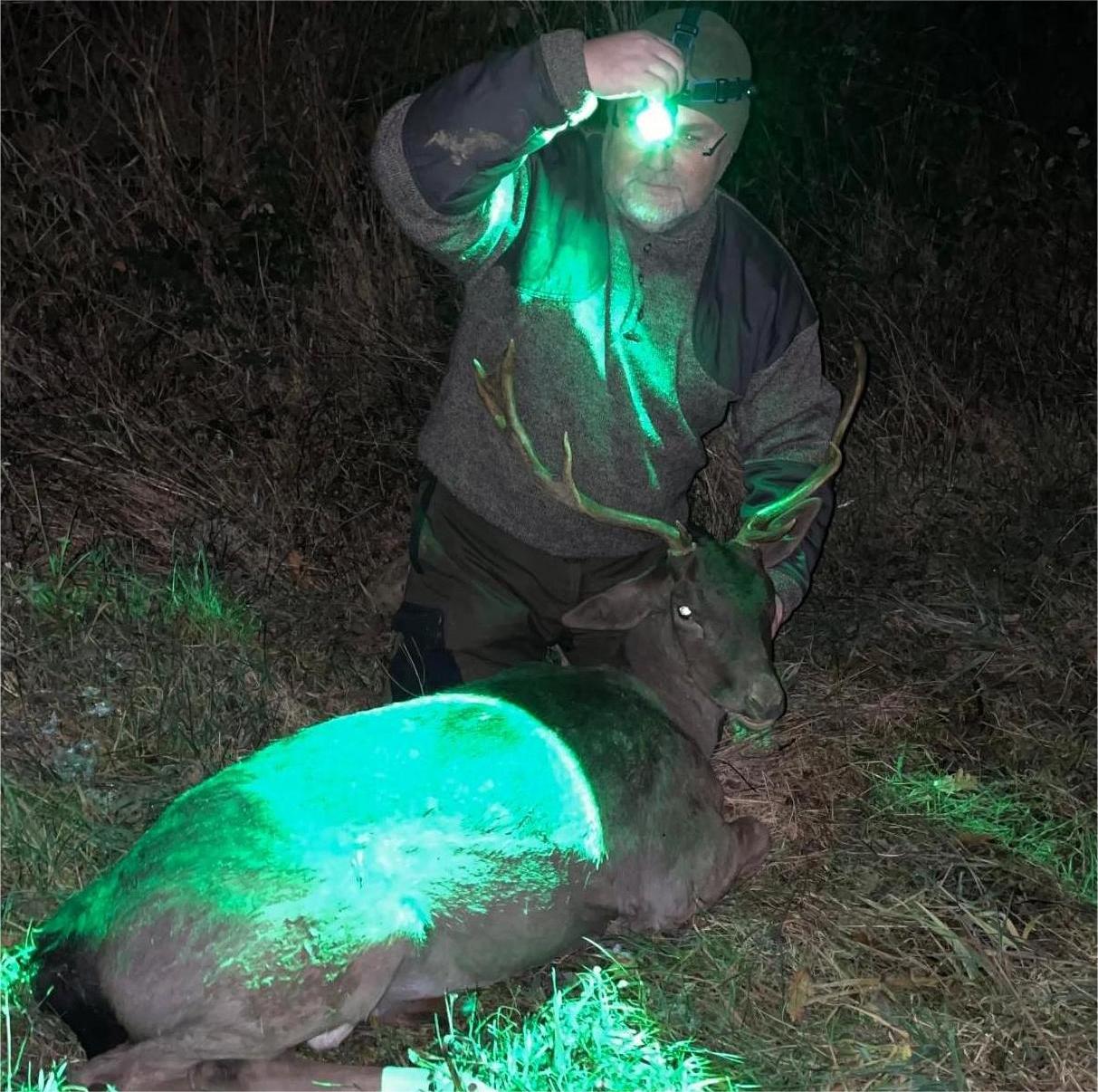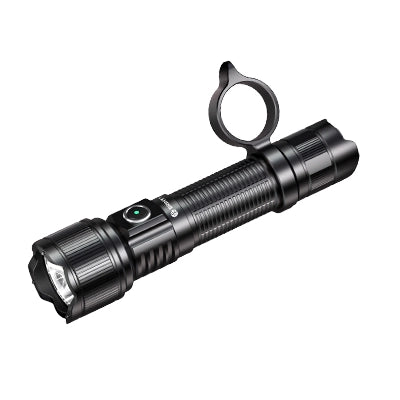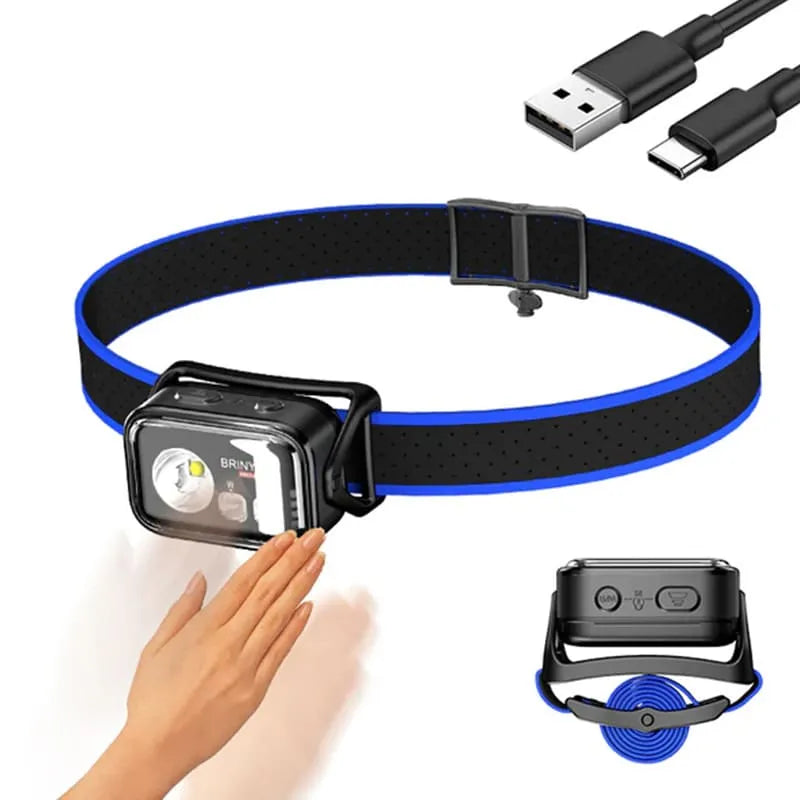


For consistent night hog hunting success in 2026, use a purpose‑built hunting flashlight with green light (520‑560nm). Green exploits swine hemoglobin absorption for unmatched blood contrast and is far less likely to spook sounders than white light. Pair it with an adjustable‑intensity remote pressure switch and, if your state allows, a thermal or night vision scanner.
📖 Reader guide ⏱️ 16 min read | For: Hog hunters in Texas, Florida, Georgia & the South | What you’ll get: Green light mastery + gear selection + advanced tactics + feeder setups + safety.
- 1. The 2 AM Standoff — Why Most Lights Fail
- 2. Why Green Light Wins Over White, Red & Blue
- 3. Your Gear Matrix: Flashlights, Thermal, Riflescopes & Feeder Lights
- 4. Proven Night Tactics: Scanning, Stalking & Pressure‑Switch Sequencing
- 5. Platform‑Specific Lighting: Rifle, Crossbow, Shotgun & Budget Starter
- 6. No Thermal? No Problem: Feeder Lights & Moon Phase Strategies
- 7. Safety & Legal Must‑Knows (Night‑Hunt State by State)
- 8. FAQ — Night Hog Hunting

1. The 2 AM Standoff — Why Most Lights Fail
It’s 2:17 a.m. in the Texas Hill Country. You’ve been in the blind for three hours. A sounder of 15 hogs rolls in from the east — the boar pushing 250 pounds, tearing up the winter wheat your family has been planting for three generations. You shoulder the rifle, thumb the tail switch of your hog hunting light — and a 1,000‑lumen white beam floods the pasture. The hogs scatter before you can even acquire the boar in your scope.
White light spooks swine. Every time. You just gave the enemy advance warning. That’s not hunting — that’s working security for the pigs.
2. Why Green Light Wins Over White, Red & Blue
Hogs have dichromatic vision with minimal sensitivity to green wavelengths (520–560nm). A green hunting light appears 2–3× brighter to the human eye at the same wattage while remaining almost invisible to swine photoreceptors. Green also exploits the high hemoglobin absorption contrast — blood shines deep black against green vegetation, making wound tracking far more reliable.
What experienced hunters say: “I know quite a few folks from Texas who hunt hogs and they have all gone to green lights. A modded Brinyte b158 with either red or green xpe2” (BudgetLightForum, 2022).
Weapon-mounted green hunting lights with a pressure switch let you keep both hands on the rifle — no fumbling, no noise. Pair with a low‑intensity red LED for approach and a high‑output white LED for final identification.
3. Your Gear Matrix: Flashlights, Thermal, Riflescopes & Feeder Lights
| Gear Type | Why It Helps Night Hog Hunting | Field‑Proven Feature |
|---|---|---|
| Green Hunting Light | High contrast, low spook factor | Pressure switch + adjustable intensity |
| Red Light / Filter | Approach stealth | Preserves natural night vision |
| Thermal Monocular | Detect sounders behind brush | 384+ resolution, 50Hz refresh |
| Feeder Light | Passive illumination, motion‑activated | Green LED array, 30–50ft coverage |
| IR Illuminator | For digital night vision | Adjustable beam, 850nm/940nm |
Independent testers agree: The NightSnipe NS220-RGW hunting light kit “green LED proved particularly effective — hogs seemed less reactive to it than white light” (ProGunFighter, 2025).
4. Proven Night Tactics: Scanning, Stalking & Pressure‑Switch Sequencing
- Scan with thermal or moonlight — never with white light. Hogs freeze but bolt when light hits them directly.
- Activate green hunting light at 60–70% intensity once you’ve ranged the target. Use a pressure switch to keep your grip stable.
- Final ID with white light momentarily — confirm species, sex, and backstop before squeezing.
- Switch back to green for the shot and immediate follow‑up tracking.
5. Platform‑Specific Lighting: Rifle, Crossbow, Shotgun & Budget Starter 🏹 SERP Gap Filler
- 🎯 Rifle (AR‑15 / bolt‑action): Use a high‑candela green hunting light (≥50k candela) with a rail‑mounted remote pressure switch. The Brinyte T28 provides tri‑color output and a patented rotary switch — instant access to green, red, and white without filters or a second light.
- 🏹 Crossbow / Compound Bow: Mount a lightweight green light directly to the stabilizer port using a bow‑specific bracket. A standard headlamp will cast a bow shadow onto the hog — guaranteed spook.
- 🔫 Shotgun (for dense brush / dogs): Look for a floody beam pattern (60–80° spread) rather than a tight spotlight. Quick‑detach mounts help when switching between slug and buckshot.
- 💰 Budget Starter ($100–200): A green hunting flashlight with scope ring + remote switch is the single highest‑ROI upgrade. Skip UV or fancy strobes until you master green fieldcraft.
Green/red/white in one body, remote pressure switch, 50k+ candela. Ideal for rifle and crossbow.
Learn more →
6. No Thermal? No Problem: Feeder Lights & Moon Phase Strategies 🔦 SERP Gap Filler
Feeder lights are your budget thermal alternative. A motion‑activated green LED feeder light (e.g., Moultrie Feeder Hog Light with 35 green LEDs) illuminates a 30‑foot radius and turns on only when hogs approach, saving battery and staying invisible to other hunters. “My experience with the Moultrie Feeder Hog Light has been overwhelmingly positive — it truly revolutionized my night hunting.” (Amazon review)
Moon phase tactics: Quarter to full moon provides enough ambient light to scan fields without artificial lighting. Use this window to scout new properties or confirm travel corridors. When moon illumination drops below 25%, switch to active green hunting lights or IR‑based digital night vision.
7. Safety & Legal Must‑Knows (Night‑Hunt State by State)
- Backstop check: At night, range estimation suffers. Confirm what lies beyond the target — hogs often travel in groups, and a miss can travel 500+ yards.
- Team communication: If hunting with partners, assign sectors and confirm light activation sequence (e.g., “light on = ready to shoot, light off = reloading / moving”).
- State rules: Most states allow night hunting for feral hogs with artificial light, but restrictions vary. Texas allows spotlighting from vehicles on private land; Florida requires a special permit for night hunting on public land; California generally prohibits night hunting of non‑game mammals. Always check current regulations before heading out.
8. FAQ — Night Hog Hunting
What color light is best for hog hunting at night?
Green light (520–560nm) is best for hog hunting at night because swine have minimal sensitivity to green wavelengths, so it doesn’t trigger flight response. Green also boosts blood‑tracking contrast and appears 2–3x brighter to the human eye versus red at the same output.
Can you hunt hogs with a regular flashlight?
Yes, but results are poor. A standard white flashlight often spooks hogs immediately. A purpose‑built green hunting light with a pressure switch increases success rates from ~15% to over 70% on your first few outings.
Do hogs see green light?
Hogs have dichromatic vision and are relatively insensitive to green wavelengths (520–560nm). They can detect a faint glow at very close range but do not associate green light with danger the way they do white light.
What is the best green light for hog hunting?
Top choices include dedicated tri‑color hunting lights with remote pressure switches, such as the Brinyte T28 or T40, which provide green, red, and white in a single, rugged, weapon‑mountable body — field‑tested in Texas, Florida, and Georgia.
Do motion‑activated feeder lights work for hogs?
Yes. Models like the Moultrie Feeder Hog Light with 35 green LEDs have a 30‑foot activation radius and 3 operation modes (motion/photocell/manual). Hunters report that green LEDs are significantly less alarming to hogs than white light.
What is the best thermal scope for night hog hunting?
A 384×288 or higher resolution thermal riflescope with 50Hz refresh rate is the sweet spot for hog hunting. Many hunters pair a handheld thermal monocular for scanning with a dedicated thermal riflescope for shooting.
How many lumens do you need for hog hunting at night?
500–1500 lumens is sufficient for most hog hunting scenarios. Candela (intensity) matters more for distance: 40,000–60,000 candela lights will illuminate hogs clearly at 200–300 yards. Too much flood can light up the entire field and increase the risk of spooking.
📄 Download Printable Night Hog Hunting Checklist (PDF)
Or copy this Amazon search string: "hog hunting light green + candela > 40000"
📖 Next read: 2026 Hog Hunting Light Guide: Green Beam Mastery · Night Hunting 101: Expert Tips · Shop Hunting Flashlights (T28/T40/T5X)
Founded 2009 · 50+ Patents · ISO9001 · "Engineered for the mission — proven in the field."
References: USDA APHIS (2025 feral swine report), ANSI/NEMA FL1-2019, BLF / CPF community tests, independent reviews. All external links used for factual reference only.