
Introduction
Tracking injured prey after sunset is one of the most challenging moments in hunting. Success or failure often depends not on the brightness of the light, but on the understanding of the interaction between light and blood, terrain and human eyes.
This article explains how blood tracking lights work, and why they perform differently from ordinary flashlights in real hunting conditions.
Blood Tracking Is About Contrast, Not Brightness
Many hunters assume that a brighter flashlight will automatically make blood easier to find. In practice, the opposite is often true.
Human vision largely depends on contrast detection - that is, the ability to distinguish different surfaces - especially in low light conditions. When the light is too strong, reflective surfaces such as wet leaves, grass or soil can produce glare, thereby masking fine bloodstains.
Blood tracking lights are designed to:
- Reduce unnecessary glare
- Emphasize surface contrast
- Highlight differences in texture and reflectivity
This is why controlled output and beam quality matter more than maximum lumen numbers.

How Light Wavelength Affects Blood Visibility
Light color plays a critical role in how blood appears on the ground.
From a physics standpoint, different materials absorb and reflect different wavelengths of light. Blood absorbs certain wavelengths more strongly than surrounding vegetation or soil when it getting dry.
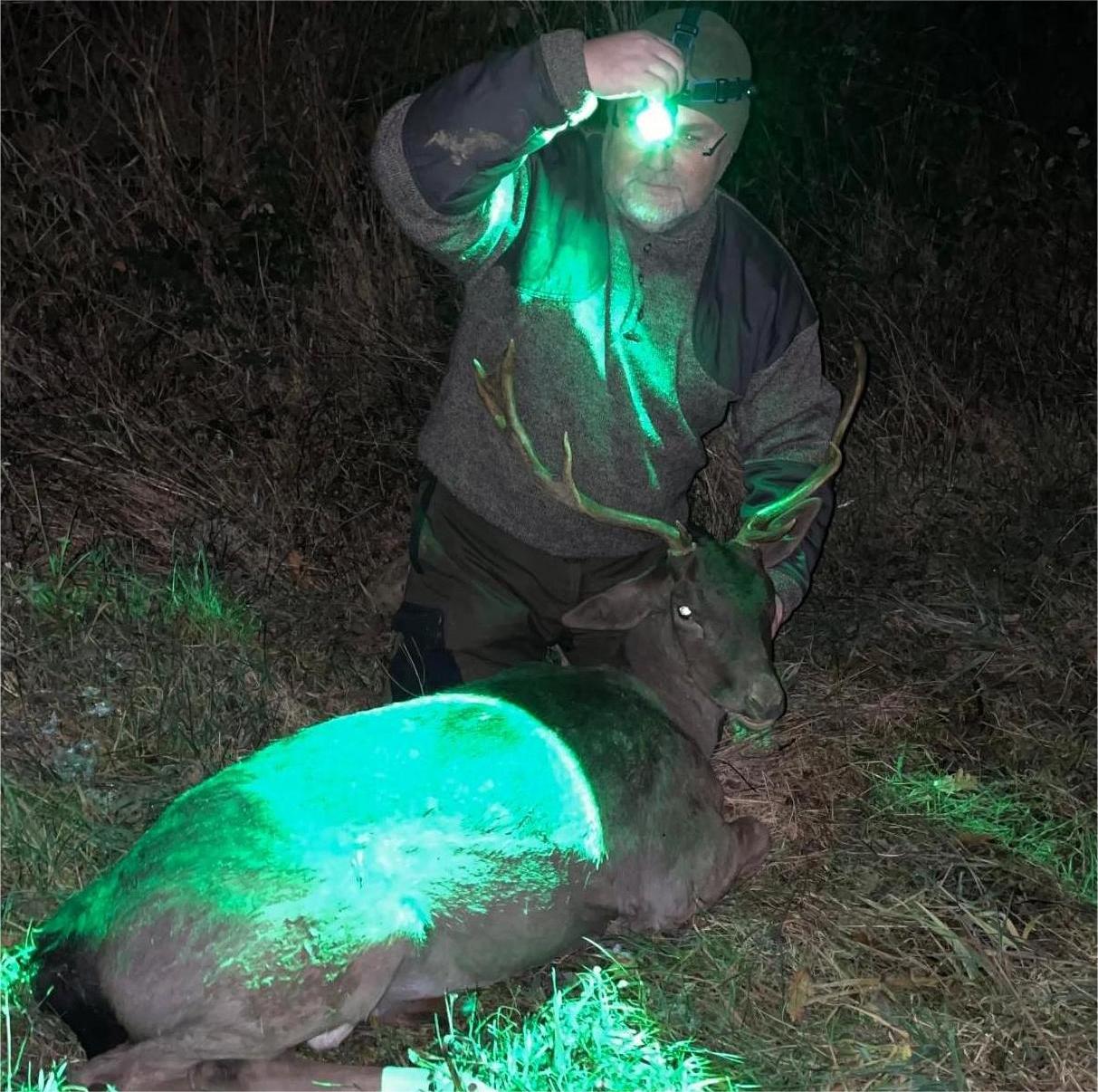
Which means blood will appear darker against grass or leaves because green wavelengths are absorbed more by dark organic materials.
The reflection mode of red wavelengths is similar to that of blood itself, which can reduce strong contrast while maintaining night vision and alleviating eye fatigue.
This interaction between wavelength and surface reflectance explains why the choice of color can significantly change what we see even when brightness remains constant.

Blood Condition Over Time
During the tracking process, the appearance of the blood does not remain constant all the time.
Fresh blood usually bright in color, but when it becomes dry or partially absorbed, it will be darken and its outline will no longer as clear as it fresh. As blood oxidizes and seeps into the soil or vegetation, its visual characteristics will change, and affecting its interaction with light of different wavelengths.
For this reason, colors that work well at the starting point of the tracking path may become ineffective after a few hours.
So hunters while hunting and tracking blood, it is very important and necessary to use adjustable light colors for illumination rather than a single fixed color.
Why the Human Eye Responds Differently at Night
Humans' eye operates in low-light (scotopic and mesopic) vision modes at night, which means our sensitivity will shift away from color accuracy toward brightness and contrast.
Vision science shows that:
- The Eye is more sensitive to green wavelengths under low-light conditions.
- Rod cells, which dominate night vision, respond better to contrast than fine detail.
- Red light minimally disrupts dark adaptation, helping maintain night vision over long periods.
Blood tracking lights are designed around these biological limits, helping hunters work with human vision rather than against it.
Beam Pattern Matters More Than Distance
Unlike general-purpose flashlights, blood tracking lights are not meant for long-range illumination.
Instead, they use:
- Wide, even beam patterns
- Soft edge transitions
- Consistent output across the field of view
This design reduces hotspot glare and allows the eye to scan the ground naturally, increasing the chance of spotting small blood drops, disturbed vegetation, or directional signs.
Environmental Conditions and Surface Moisture
Environmental factors also play a significant role in the visibility of bloodstains.
Rain, dew or snow water can increase surface reflectivity, especially on leaves and grass. In this case, overly bright or poorly focused beams may cause glare, thereby masking fine bloodstains.
Blood tracking lights are designed to manage these reflective surfaces by providing controlled output and even illumination, helping the eye separate blood from wet backgrounds more effectively.
Why Multi-Color Blood Tracking Lights Are More Effective
No single light color works perfectly in every environment. Terrain, vegetation density, moisture, and blood condition all influence visibility.
Multi-color blood tracking lights allow hunters to:
- Switch wavelengths as terrain changes
- Compare contrast differences instantly
- Reduce false negatives caused by surface similarity
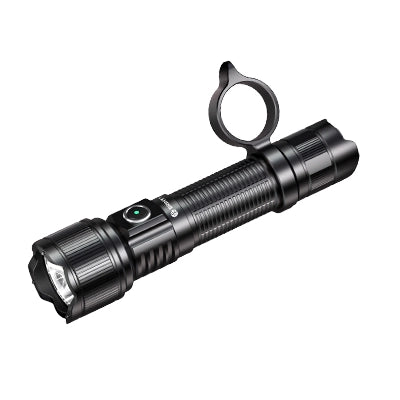
This adaptability is why modern systems—such as Brinyte SPECTRA T5X—focus on offering multiple color options rather than relying on a single “best” setting.
How Blood Tracking Lights Differ From Regular Flashlights
While a standard hunting flashlight is designed for general illumination, blood tracking lights prioritize detection efficiency.
Key differences include:
- Contrast-focused color output
- Reduced glare beam design
- Optimized brightness levels for ground scanning
These features make blood tracking lights more effective for recovery work, even if they appear less powerful on paper.
Illumination Angle and Visual Scanning
The Angle at which light shines can significantly affect human perception.
Low-angle lighting usually shows texture, depth and surface blemishes more clearly than direct top light. The shadows produced by shallow-angle lighting help to spot footprints, disturbed vegetation and tiny blood drops, details that might otherwise be overlooked.
Blood tracking flashlight supports this technology. It can provide a stable beam and maintain a stable lighting effect even when moving slowly close to the ground.

The Role of Technique Alongside Equipment
Even the best blood tracking light cannot replace proper tracking technique.
Successful tracking still depends on:
- Slow, methodical scanning
- Low-angle illumination
- Frequent color switching when visibility changes
Blood tracking lights enhance these techniques—they don’t replace them.
Why Understanding the Science Improves Tracking Success
Knowing how blood tracking lights work helps hunters make better decisions in the field. Instead of relying on trial and error, understanding contrast, wavelength behavior, and human vision allows for faster adaptation and fewer missed signs.
In real recovery situations, this knowledge can make the difference between losing a trail and completing an ethical harvest.
Frequently Asked Questions
How do blood tracking lights work differently from regular flashlights?
The design concept of blood tracking flashlight is to enhance contrast rather than pursue maximum brightness.
They employ specific light colors, controllable output power and wide beam modes, making blood more prominent on natural surfaces such as grass, leaves and soil.
Why is color important in blood tracking lights?
Different colors of light interact with blood and terrain vary in different ways.
- Green light usually enhances the contrast between the illuminated object and vegetation.
- Red light helps protect night vision and reduce eye fatigue.
Does brightness matter when tracking blood at night?
Brightness is important, but it's not he higher the better.
Excessive brightness can cause glare and make subtle bloodstain signs blurred. Controlling the brightness and combining it with appropriate colors is usually more effective for tracking bloodstains at night.
How does human night vision affect blood tracking?
At night, the human eye relies more on rod cells, which detect contrast better than fine detail.
Blood tracking lights are designed to work within these visual limits by emphasizing contrast and reducing glare.
Are multi-color blood tracking lights more effective?
In most real-world tracking situations, yes.
Terrain, moisture, and blood condition can change quickly, and multi-color blood tracking lights allow hunters to adapt instead of relying on a single fixed color.