

Introduction: Brightness Matters More Than Most Hunters Think
When hunters talk about flashlights, the conversation often focuses on color—red, green, or white. But in real hunting scenarios, light intensity is just as important, if not more.
The wrong brightness level can freeze an animal in place—or send it running instantly. Too much light can trigger panic, while too little light can lead to poor identification and unsafe shots. Understanding how animals react to low, medium, and high light intensity allows hunters to control encounters rather than react to them.
This guide explains how different animals respond to brightness, and how to use flashlight output intelligently during night hunts.

How Animals Perceive Light Intensity at Night
Most nocturnal and crepuscular animals have eyes adapted for low-light environments. Compared to humans, they rely more on contrast, movement, and sudden brightness changes rather than color detail.
Key perception traits:
- Sudden brightness spikes feel threatening
- Gradual light increases are less alarming
- Direct, intense beams trigger flight responses
- Peripheral or reflected light causes less stress
This means how bright your light is—and how fast you activate it—often determines whether the animal stays or escapes.
Low Intensity Light: Observation Without Alarm
Low-output modes (typically 5–50 lumens) are ideal for:
- Initial scanning
- Reading terrain
- Observing animals at a distance
- Preserving night vision
At low intensity, animals are less likely to associate light with danger, especially if the beam is indirect or diffused.
Best use cases:
- Early detection of movement
- Watching animals feed or pause
- Navigating quietly without alerting game
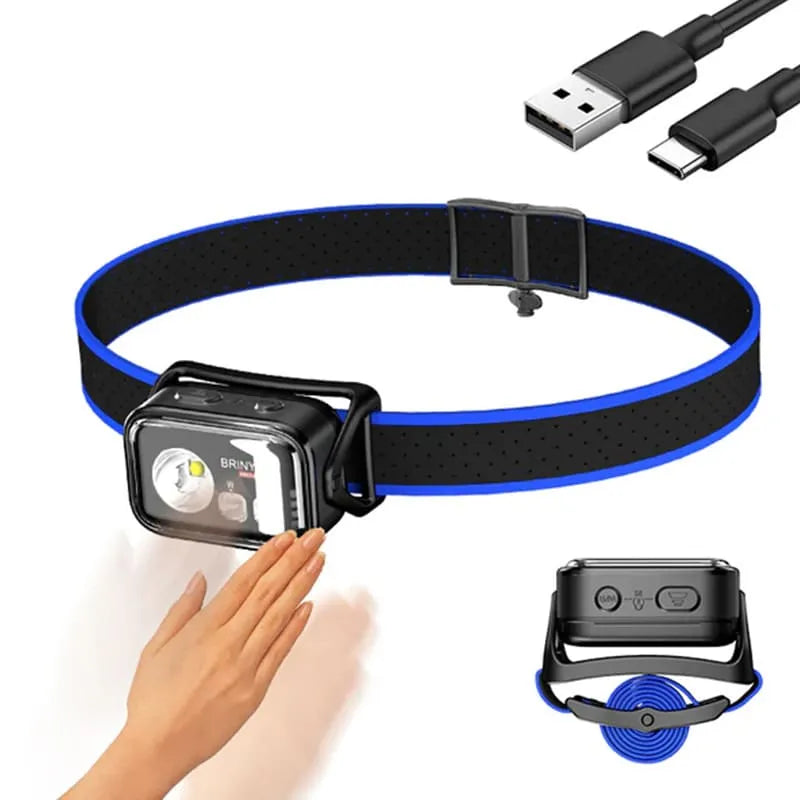
Headlamps like Brinyte HL28, with adjustable brightness and wide flood modes, are especially useful here because they provide controlled illumination without harsh hotspots.
Medium Intensity Light: Identification and Control
Medium brightness (100–300 lumens) is the most versatile range for night hunting.
At this level:
- Animals often pause instead of fleeing
- Eye shine becomes visible
- Body outlines are clearer
- Hunters can identify species and posture
This is the “decision zone” where correct brightness helps you evaluate the situation without forcing an immediate reaction.
A hunting flashlight with stable mid-output levels and a balanced beam pattern, allows hunters to maintain visual control while minimizing disturbance.

High Intensity Light: Shock, Freeze, or Flight
High-output modes (600 lumens and above) dramatically change animal behavior.
Common reactions include:
- Immediate freezing (especially in deer or predators)
- Sudden flight
- Erratic movement due to disorientation
High intensity is best reserved for:
- Final identification before a shot
- Confirming distance and background
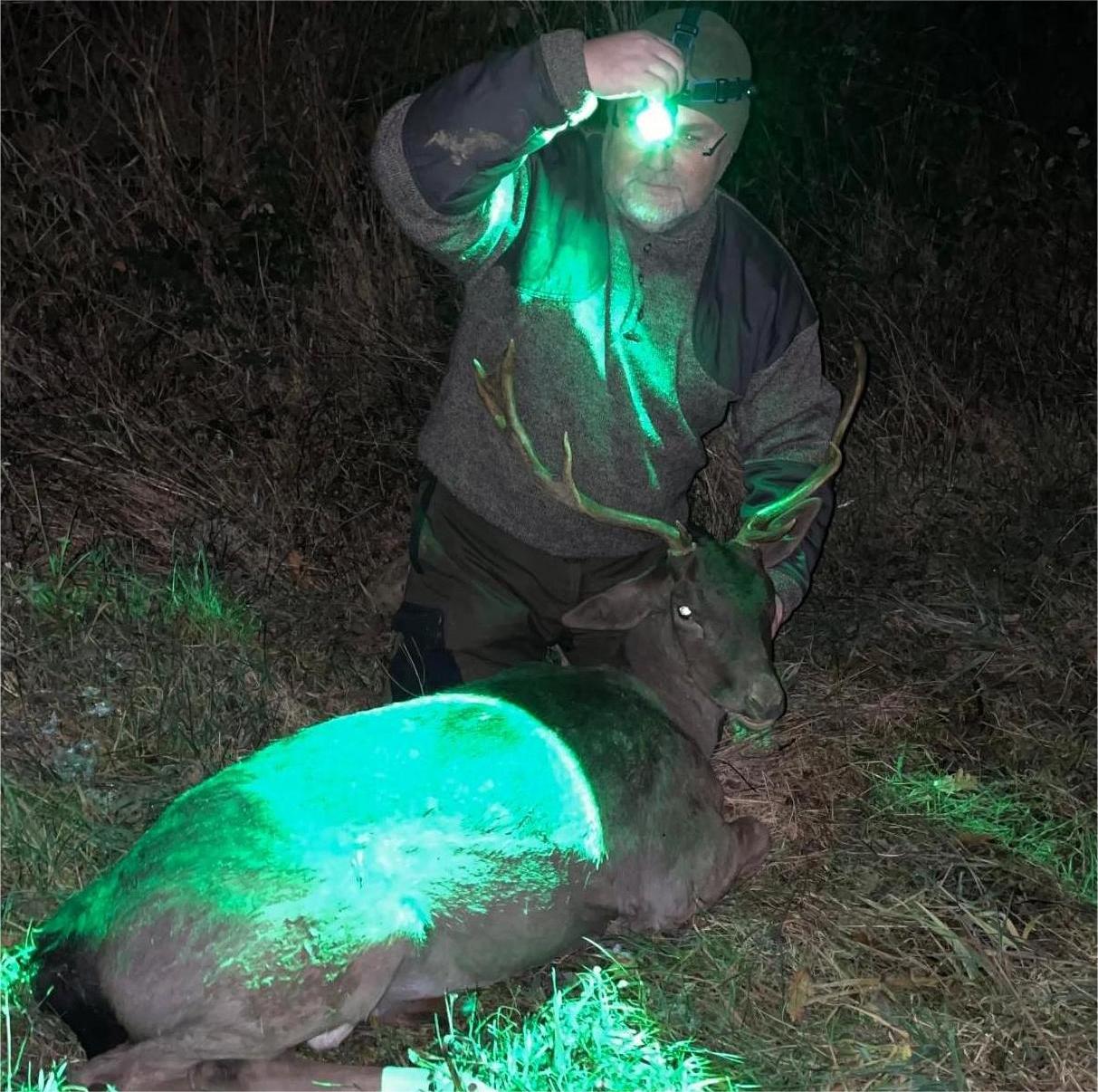
- Tracking wounded animals
- Emergency visibility
The mistake many hunters make is activating maximum brightness too early. Once an animal associates strong light with danger, the opportunity is often lost.
How Different Animals Respond to Brightness
Deer
- Sensitive to sudden brightness changes
- Often freeze briefly under moderate light
- Likely to flee under strong, direct beams
Predators (coyote, fox)
- Curious under low-to-medium light
- High brightness causes rapid withdrawal
- Controlled brightness improves shot windows
Wild boar
- Less light-sensitive initially
- Strong beams may trigger aggressive movement
- Gradual intensity increase is safer
Understanding these differences allows hunters to adjust brightness dynamically rather than relying on a single mode.
Practical Brightness Control Strategies in the Field
Experienced hunters rarely hunt at maximum output.
Instead, they:
- Start low and increase gradually
- Use indirect beams or ground reflection
- Switch to high output only when needed
- Avoid repeated on/off flashing
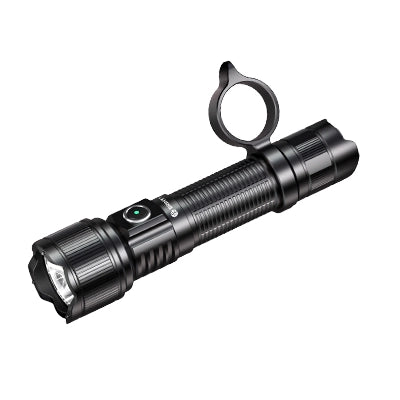
Flashlights designed for hunting, such as Brinyte PT28, prioritize mode spacing and stable output levels, making brightness management intuitive even with gloves or cold hands.
Matching Light Intensity to Hunting Scenarios
| Scenario | Recommended Intensity |
| Navigating trails | Low |
| Scanning fields | Low → Medium |
| Identifying animals | Medium |
| Final confirmation | Medium → High |
| Tracking wounded game | High |
Brightness control is not about power—it’s about timing.

Frequently Asked Questions
1. Do animals react differently to low and high flashlight brightness?
Yes. Most animals tolerate low-intensity light longer, while sudden high brightness often triggers alert or flight responses.
2. What flashlight brightness is best for spotting animals at night?
Medium brightness is usually best for initial detection, while higher output should be reserved for brief identification moments.
3. Can high-lumen flashlights scare animals away?
Yes. Prolonged or sudden high-intensity light can startle animals and disrupt natural behavior, especially during close-range encounters.
4. Should I keep my flashlight on high mode while moving at night?
No. Lower brightness helps maintain stealth and reduces the chance of spooking animals during approach.
5. How does distance affect how animals perceive light intensity?
Light intensity feels much stronger at close range. What seems moderate at long distance can become overwhelming up close.
6. Is adjustable brightness important for hunting flashlights?
Absolutely. Adjustable output allows hunters to adapt lighting to distance, terrain, and animal sensitivity in real time.
7. Are headlamps or handheld flashlights better for controlling brightness?
Both work well when brightness levels are adjustable. Many hunters combine a handheld light for scanning with a headlamp for low-output movement.
Conclusion: Control the Light, Control the Outcome
Animals do not simply react to light—they react to how that light is used. By understanding brightness levels and adjusting intensity deliberately, hunters gain a critical advantage.
Instead of overpowering the night, smart hunters shape it—using low light for awareness, medium light for control, and high light only when it truly matters. With hunting-focused tools like Brinyte’s PT28 flashlight and HL28 headlamp, brightness becomes a precision instrument rather than a blunt force.
Master the intensity, and the night works with you—not against you.
You May Also Like
-
Compare brightness control with color selection in
Hunting Flashlight Colors: Red vs Green vs White — Which One Should You Use? -
Apply animal reaction knowledge to stealth movement in
Stealth Approaches for Night Hunting: Lighting Techniques That Don’t Spook Game -
See real-world beam usage examples in
Field-Tested Beam Techniques for Predator Hunters -
Avoid brightness-related hunting mistakes in
Mistakes Hunters Make with Flashlights (and How to Avoid Them)