
Introduction
Choosing between green and red light is one of the most common questions hunters ask when tracking blood at night. Both colors are widely used in blood tracking lights, yet they behave very differently depending on terrain, vegetation, and lighting conditions.
Instead of asking which color is “better,” the more useful question is which color works better in a specific tracking scenario. Understanding how green and red light interact with blood and natural surfaces can make night recovery faster and far less frustrating.
Understanding how color affects visibility is only one part of effective night recovery.
A complete overview of how blood tracking lights work and how to choose the right flashlight can help hunters avoid common mistakes during night tracking.
Why Light Color Matters in Blood Tracking
Blood tracking is not about illumination alone—it’s about contrast perception.
From a scientific perspective, human vision is most sensitive to changes in brightness and contrast rather than absolute color accuracy.
According to widely accepted visual science principles, the human eye detects green wavelengths more efficiently under low-light conditions because they fall near the peak sensitivity of photopic and mesopic vision.
This is why green light is commonly used in outdoor navigation, search operations, and contrast-based detection tasks—it enhances visual separation without relying on extreme brightness.
Also, This is why changing the color of the light can sometimes make bloodstains that were invisible in white light just a few seconds ago appear.
This principle is widely recognized in outdoor search, forensics, and night navigation, where contrast-based lighting is preferred over raw brightness.

How Green Light Performs in Blood Tracking
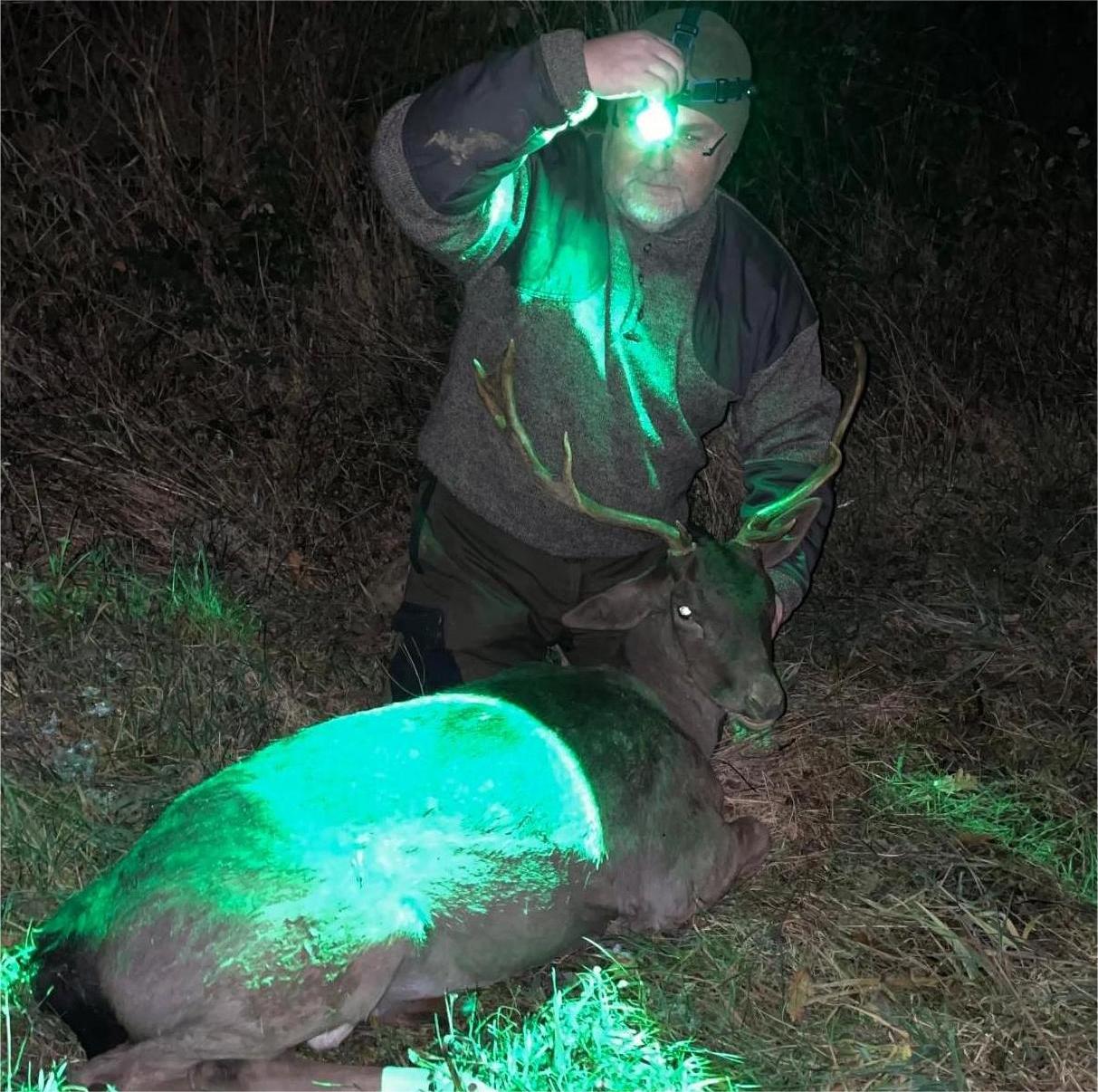
Green light is one of the most popular choices for blood tracking, especially in wooded environments.
Advantages of Green Light
- Enhances contrast on grass, leaves, and vegetation
- Makes dark red blood appear almost black against lighter backgrounds
- Reduces the “washed out” effect common with white light
In visual detection studies, darker organic materials—such as dried blood—tend to absorb more light in the green wavelength range, appearing significantly darker against reflective backgrounds like grass or leaves.
This contrast effect explains why green light often makes blood appear nearly black in vegetated environments, even when the blood itself is no longer bright red.
Therefore, in forests, fields, and areas with dense ground cover, green light often makes blood stand out more clearly than other colors.
Limitations of Green Light
- Can lose effectiveness on dark soil or muddy terrain
- Less comfortable for prolonged close-range inspection for some users
Green light works best when blood is on vegetation rather than bare ground.

How Red Light Performs in Blood Tracking
Red light serves a different purpose and is often misunderstood.
Advantages of Red Light
- Reduces glare and eye fatigue during long tracking sessions
- Preserves night-adapted vision better than brighter colors
- Works well for slow, close-range scanning
Red light is often used in astronomy, military navigation, and night observation because it minimally disrupts dark adaptation.
Vision research shows that red wavelengths have less impact on rod cells, which are responsible for low-light vision. This is why red light feels less harsh and helps reduce eye fatigue during extended night tracking sessions.
Red light is less about contrast enhancement and more about visual comfort and control, especially when tracking requires patience rather than speed.
Limitations of Red Light
- May reduce contrast between blood and dark ground
- Less effective on grass compared to green light
Red light is often preferred during careful confirmation rather than initial wide-area scanning.
Green vs Red Light: A Practical Comparison
Rather than choosing a winner, it’s more useful to understand when each color performs best.
| Tracking Condition | Green Light | Red Light |
|---|---|---|
| Grass & vegetation | ✅ Excellent | ⚠️ Moderate |
| Forest floor with leaves | ✅ Very good | ⚠️ Fair |
| Dark soil or mud | ⚠️ Moderate | ⚠️ Moderate |
| Long tracking sessions | ⚠️ Eye fatigue possible | ✅ Comfortable |
| Wide-area scanning | ✅ Effective | ⚠️ Limited |
| Close inspection | ⚠️ Acceptable | ✅ Preferred |
This is why many experienced hunters avoid single-color tools altogether.
Color choice alone doesn’t solve every tracking challenge.
Factors like beam pattern, contrast control, and output stability also play a major role, which are covered in more detail in our blood tracking light selection guide.

Why Multi-Color Blood Tracking Lights Make Sense
Terrain rarely stays consistent during a real recovery. A trail that starts in open grass can quickly move into woods, mud, or leaf-covered ground.
Multi-color blood tracking lights allow hunters to:
- Switch colors when contrast drops
- Reduce eye strain during long sessions
- Adapt without stopping the search
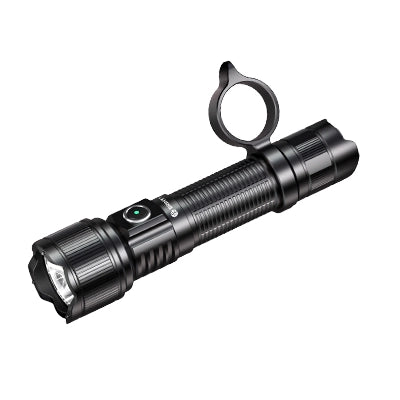
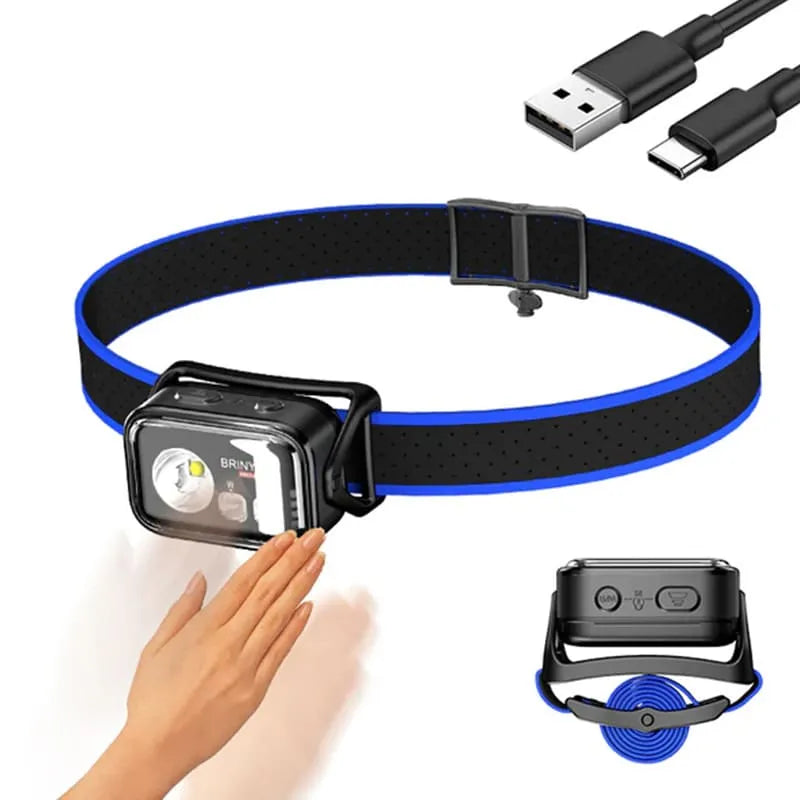
Some hunters prefer multi-color systems like Brinyte SPECTRA T5X because they don’t force a single-color compromise. Being able to switch between green and red light in seconds often reveals details that would otherwise be missed.
Should You Use Green or Red Light First?
A practical approach used by many hunters is:
- Start with green light for wide-area scanning
- Switch to red light for closer inspection or confirmation
- Adjust brightness rather than increasing it automatically
This flexible method aligns with how human vision responds to contrast and fatigue during extended night tracking.
Common Mistakes When Using Colored Lights for Blood Tracking
- Assuming one color works everywhere
- Staying on maximum brightness at all times
- Ignoring terrain changes during the track
- Failing to rescan areas with a different color
Color choice is a tool, not a rule. Switching colors is often more effective than searching longer with the wrong one.
Final Thoughts: Green or Red Light—Which Should You Choose?
Green and red lights serve different roles in blood tracking. Green excels at revealing contrast in vegetation, while red offers comfort and control during slow, careful work.
Rather than choosing between them, many hunters find that having both options available leads to better results, especially in unpredictable night conditions. Understanding when—and why—to switch colors is often more important than the light itself.
For a broader overview of how blood tracking lights work and what features matter most, you can refer back to our complete guide on choosing a blood tracking light for night hunting.
Frequently Asked Questions
Is green or red light better for blood tracking?
Neither of the two colors has an absolute superiority or inferiority.
Green light usually enhances the contrast of grassland and vegetation, while red light is more friendly to the eyes and is more suitable for slow and close-range tracking. The most effective choice depends on the terrain and tracking conditions.
Can red light make blood harder to see?
In some environments, yes.
On dark soil or muddy ground, red light may reduce contrast between blood and the surface. This is why many hunters switch colors when terrain changes instead of relying on one light.
Should I use green or red light first when tracking blood?
Many experienced hunters start with green light for wide-area scanning, then switch to red light for careful confirmation.
This approach balances contrast detection with visual comfort during extended night tracking.
Are multi-color blood tracking lights better than single-color lights?
For most actual tracking scenarios, the answer is yes.
The terrain, vegetation and lighting conditions change frequently. Multi-color lights enable hunters to adapt quickly instead of being forced to use a single color.
Is color more important than brightness for blood tracking?
In many cases, the answer is affirmative.
Excessive brightness can reduce contrast, while appropriate color and beam patterns can make tiny bloodstains easier to detect. Well-controlled light output usually performs better than simply pursuing high lumen brightness.
Is color more important than the flashlight itself?
Color helps, but it’s only part of the equation. Beam pattern, light control, and usability often matter just as much. For a full breakdown, see our guide to choosing a blood tracking light for night hunting.