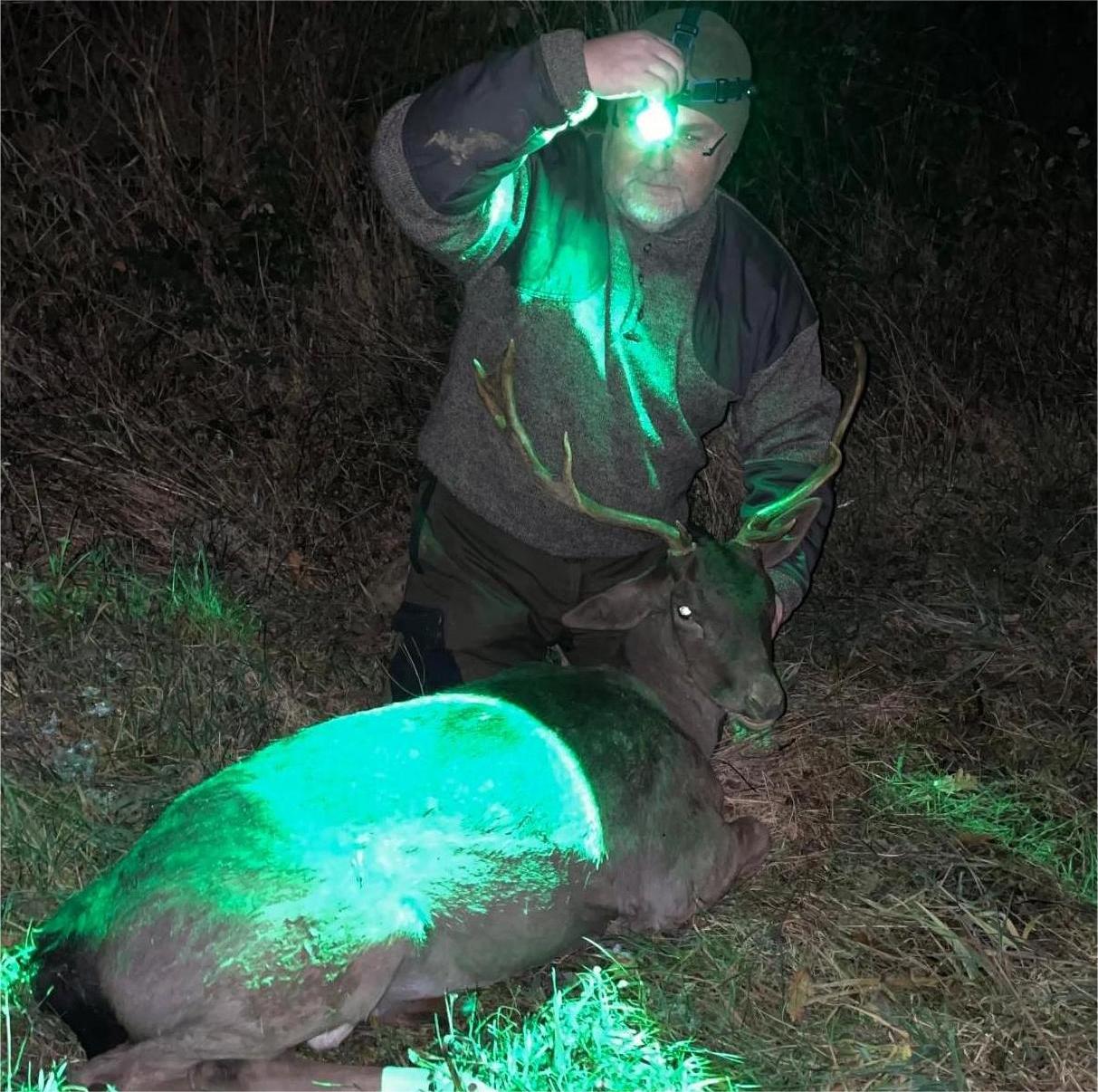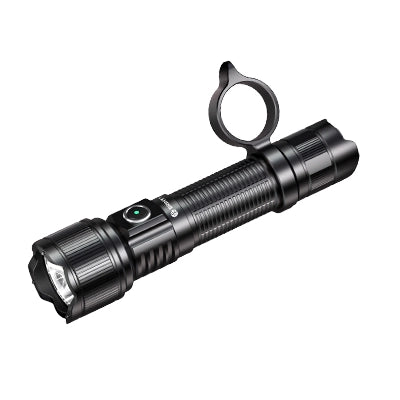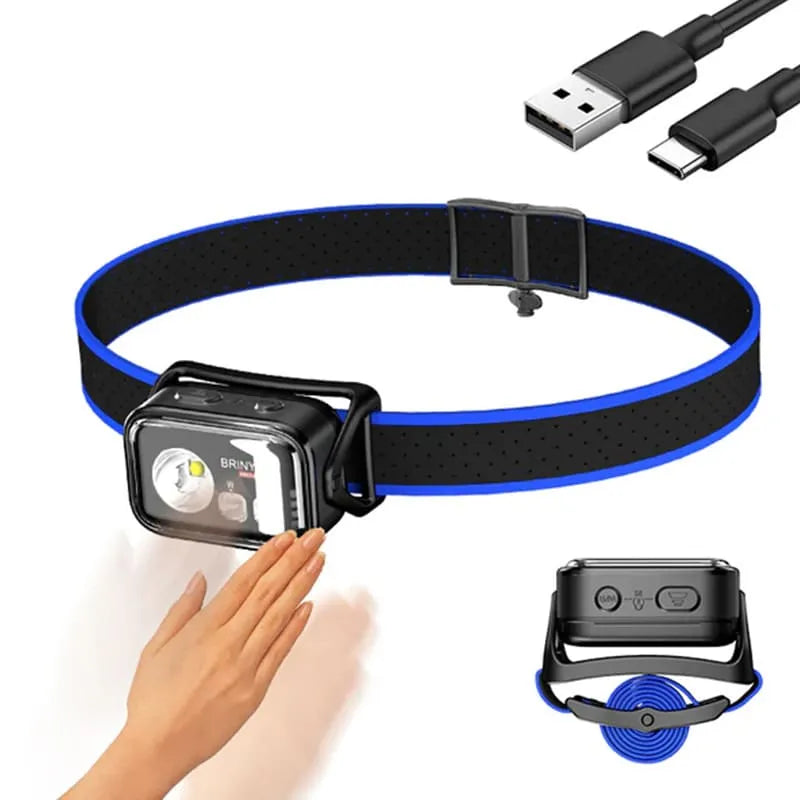


Rain: Balanced beam (between flood and throw), angle slightly downward. Use IP68 waterproof lights.
Snow: Lower brightness, use warm white or red light to reduce glare. Keep spare batteries warm.
Cold: Keep 18650/21700 batteries close to body; avoid extended turbo mode; removable battery + USB-C charging recommended.
✔ Anyone confused about beam patterns and light colors in bad weather
✔ Hunters wanting to maximize battery life in cold conditions
✔ People who want to understand why weather affects their light — not just how to fix it
1. Introduction: Why Weather Matters More Than You Think
Every hunter knows the power of good optics and steady aim — but lighting is the most underestimated factor in the field. Weather can completely change how your flashlight performs. Fog, rain, and snow do not just limit visibility; they distort your beam, drain your battery, and can even expose your position.
Understanding how weather affects your hunting flashlight performance is not just about brightness — it is about control, adaptation, and safety. A light set up for a clear night will fail you in fog. A battery that lasted three hours in September will struggle in December. This guide explains why — and what to do about it.
2. The Science: How Weather Affects Your Beam at the Photon Level
To use your light effectively, you must understand what is happening when your beam meets the atmosphere:

🌫️ Fog or Mist
Tiny water droplets — typically 1–20 microns in diameter — act as millions of microscopic reflectors suspended in the air. When your beam hits them, a significant fraction of the light is scattered directly back at you. This is the “white wall effect”: the brighter your light, the thicker the wall. In fog, less brightness often means more visibility — a counterintuitive reality that separates experienced hunters from novices.
🌧️ Rain
Raindrops are larger than fog droplets (0.5–5mm), so they scatter light differently — more forward-directed, less backscatter. But the cumulative effect of thousands of drops along the beam path reduces effective throw distance by absorbing and redirecting photons. The denser the rainfall, the shorter your usable range becomes. A narrow throw beam penetrates rain better than a wide flood, because fewer total photons intersect with raindrops.
❄️ Snow
Snow is the most complex medium. Fresh snow on the ground can reflect 80–90% of incident light — far more than grass (~25%) or bare soil (~10%). This creates intense glare from below, washing out contrast and causing eye strain. Wet snow is particularly challenging because it combines the reflective properties of snow with the scattering properties of water droplets. Warm white (~4000K) or red light significantly reduces this glare compared to cool white (~6500K) emitters.
Weather does not block light — it redirects it. Fog scatters light backward into your eyes; rain absorbs and redirects it along the beam path; snow reflects it upward from the ground. Each condition demands a different beam strategy. The hunter who treats all weather the same is the hunter who cannot see when the conditions change.
3. Choosing the Right Beam Pattern and Light Color for Each Condition
Different weather calls for different beam control — and different color temperatures:
| Condition | Recommended Beam | Recommended Color | Why |
|---|---|---|---|
| Fog / Mist | Wide flood (avoid narrow throw) | Red or green; warm white if white is necessary | Flood minimizes backscatter; red/green wavelengths scatter less in water droplets |
| Rain | Balanced (between flood and throw) | White, angled slightly downward | Balanced beam provides both penetration and peripheral awareness; downward angle reduces glare from raindrops |
| Snow | Flood, low brightness | Warm white (~4000K) or red | Lower brightness reduces snow glare; warm tones maintain natural contrast without washing out |
| Clear / Cold | Spot or balanced (your choice) | White (any temperature) | No atmospheric scattering — use any beam; focus on battery management instead |
Color also matters for specific hunting applications:
- Red light preserves scotopic (dark-adapted) vision and is minimally detectable by most game mammals. In thick fog, red also produces less backscatter than white.
- Green light sits at the peak of human photopic sensitivity (~555nm), offering the best detail recognition for the user at moderate brightness. Hogs are effectively colorblind to green.
- White light remains the most versatile, but in reflective conditions (snow, fog), dial brightness down to the minimum needed for the task. High-lumen turbo modes in fog or snow are self-defeating.
4. Battery and Runtime in Cold & Wet Conditions
Cold is the silent battery killer. At the chemical level, lithium-ion electrolyte thickens as temperature drops — at -10°C (14°F), it reaches the consistency of honey; at -20°C (-4°F), it approaches molasses. Lithium ions physically cannot move through the thickened medium as quickly, so the battery's internal resistance spikes and its usable capacity can drop by 30–50%. This is not permanent damage — it is a temporary, reversible physical constraint. The energy is still there; it is just chemically inaccessible until the cell warms up.

Practical strategies to counter cold-weather battery drain:
- Keep spare batteries inside your jacket pocket. Body heat keeps the backup cell at operational temperature. When the light dims, swap the warm cell in. Place the cold cell in your pocket — it will recover capacity as it warms. This simple rotation doubles your effective runtime in sub-zero conditions.
- Choose lights with removable batteries and USB-C charging. Models like the Brinyte PT16A and T28 Artemis use standard 21700 cells that you can swap in seconds and recharge from a power bank via USB-C — the same cable that charges your phone.
- Avoid running turbo mode continuously. Turbo generates heat that the cold air strips away faster than the cooling fins designed for room-temperature use. The result is fast battery drain with no thermal benefit. Use the lowest mode that accomplishes the task.
- Ensure your flashlight is rated IP68 waterproof. Snow melts. Rain seeps. A light without submersion-rated waterproofing can accumulate internal condensation during freeze-thaw cycles, corroding contacts over weeks of use.
5. Recommended Flashlights for Adverse Weather
Not all lights are built for bad weather. Below are Brinyte models with the specific features that matter when conditions turn hostile:
| Weather Condition | Recommended Model | Key Features |
|---|---|---|
| Fog / Mist | Brinyte T28 Artemis | Tri-color (White/Red/Green) with silent rotary dimmer — switch to red for fog without cycling through white modes. IP68 waterproof. Removable 21700 battery with USB-C. |
| Rain / Heavy Downpour | Brinyte PT16A | 3000 lumens, IP68 submersible to 2m, double O-ring seals. Dual-switch interface operable with wet or gloved hands. Regulated driver maintains steady output as battery voltage sags in the cold. |
| Snow / Glare-Prone Conditions | Brinyte ZT40 | 6°–70° zoomable beam for real-time adaptation to changing visibility. White LED delivers 490m throw on Low mode. Also available in Red and Green for dedicated snow/fog use. |
These lights share a common design philosophy: removable standard-format batteries (no sealed landfill), IP68 or IPX8 waterproofing (rated for submersion, not just spray), and USB-C fast charging (charges from the same cable and power bank as your phone). In foul weather, these are not convenience features — they are the difference between a light that works and one that fails when you need it most.
6. Field Tips: How to Improve Lighting Efficiency in Bad Weather
- Use two light sources strategically: A headlamp for hands-free navigation + a handheld light for scanning and signaling. In fog, keep the handheld in flood mode and let the headlamp handle close-range tasks.
- Adjust brightness to the minimum necessary: In fog, start at the lowest mode and increase only if visibility does not improve. In snow, keep brightness moderate — excessive output reflecting off snow degrades contrast, not improves it.
- Clean your lens frequently: Fog and rain leave a film of water and debris on the lens surface. Even a thin layer scatters light unpredictably. A microfiber cloth in a sealed pocket is part of your lighting kit.
- Angle the beam slightly downward in rain and fog: This reduces the number of water droplets directly in the beam path between your eyes and the target. An angle of 10–15° below horizontal is typically optimal.
- Pre-hunt weather check: Verify all O-rings are greased, the USB-C port cover is sealed (or hidden, as on the ZT40), and your spare battery is fully charged and stored in an inside pocket — not your pack.
Lighting discipline in bad weather is not about having the brightest beam. It is about having the right beam for the conditions, the discipline to use the lowest effective brightness, and the equipment reliability to function after hours of exposure to moisture and cold. A 3000-lumen turbo mode is useless if it blinds you in fog and drains your battery in 45 minutes. A 500-lumen flood mode with a warm cell that runs for five hours gets you home.
Step-by-Step: Adapt Your Hunting Light to Any Weather in 60 Seconds
- Assess the primary weather obstruction: Is it fog (backscatter risk), rain (range reduction), or snow (glare from below)? Each demands a different beam strategy. Mist is fog; sleet is rain + cold — treat it as rain for beam purposes and cold for battery purposes.
- Set beam width and brightness: Fog → wide flood, low brightness. Rain → balanced beam, medium brightness, angled 10–15° downward. Snow → flood, low-to-medium brightness, warm white or red if available. Clear/cold → any beam; focus on battery warmth instead.
- Select color if available: Red for fog and snow (minimal backscatter, preserves night vision). Green for fog with hogs in the field. White only when you need maximum detail and the atmosphere is clear enough to support it without backscatter.
- Manage battery for the temperature: If below -5°C (23°F), move your spare cell to an inside pocket now — do not wait for the light to dim. If using a removable-battery light, swap cells proactively every 30–45 minutes to keep a warm battery in the light at all times.
Ready for Any Weather the Hunt Throws at You?
Brinyte hunting flashlights are built around removable 21700 batteries, IP68 waterproofing, and USB-C fast charging — engineered for the field, not the spec sheet.
Shop Hunting Lights →About Brinyte
Founded in 2009, Brinyte designs hunting and tactical lighting for professionals who depend on their gear in real conditions. All core hunting models use standard removable 21700 batteries with onboard USB-C charging — no sealed landfill, no proprietary chargers. IP68 waterproof. FL1-tested specs. 50+ patents. ISO9001 certification. This weather guide is based on field testing across North American and Nordic hunting seasons.
“Engineered for the field — adapted for the weather.”
Founded 2009 · 50+ Patents · ISO9001
7. Frequently Asked Questions
What flashlight works best in foggy conditions?
Use a flashlight with a wide flood beam and lower brightness settings. Narrow throw beams produce intense backscatter in fog, creating a blinding white wall. The Brinyte T28 Artemis with its red light mode and adjustable brightness is ideal — red wavelengths scatter less in water droplets, and lower brightness reduces the total light available to reflect back at you.
Does cold weather drain flashlight batteries faster?
Yes, but it is a temporary physical effect, not permanent damage. Lithium-ion electrolyte thickens at low temperatures, reducing usable capacity by 30–50%. Warming the cell — in an inside jacket pocket or in your hand — restores both voltage and capacity. Keep spare batteries warm and swap them proactively.
Can waterproof flashlights be used in heavy rain?
Yes — as long as they meet a minimum of IPX7 or IP68 waterproof rating. IP66 is only rated for powerful water jets, not continuous rain exposure or accidental submersion. The Brinyte PT16A is IP68-rated (submersible to 2 meters) and uses double O-ring seals specifically designed to prevent water ingress during extended rain exposure.
What light color is best for hunting in snow?
Warm white (~4000K) or red light reduces glare from reflective snow surfaces. Cool white (~6500K) reflects off snow and creates eye strain with prolonged use. The Brinyte T28 Artemis provides both red and warm tint options, and the ZT40 is available in a dedicated Red LED version for snow and fog conditions.
How do I maintain my flashlight in wet or freezing weather?
Clean the lens regularly with a microfiber cloth — water film on the lens surface scatters light unpredictably. Inspect O-rings for cracks and apply a thin coat of silicone grease before each season. After each trip, remove the battery, dry the threads and contacts, and store the light with desiccant packs to prevent internal condensation during freeze-thaw cycles.
Should I use turbo mode during bad weather?
Avoid extended turbo use in fog or snow — high brightness creates intense backscatter in fog and excessive glare on snow, reducing visibility rather than improving it. In rain, turbo can be useful for momentary distance identification but should not be used continuously. In any cold weather, turbo drains the battery faster and the cold ambient air accelerates heat loss, eliminating any thermal benefit from the higher output.