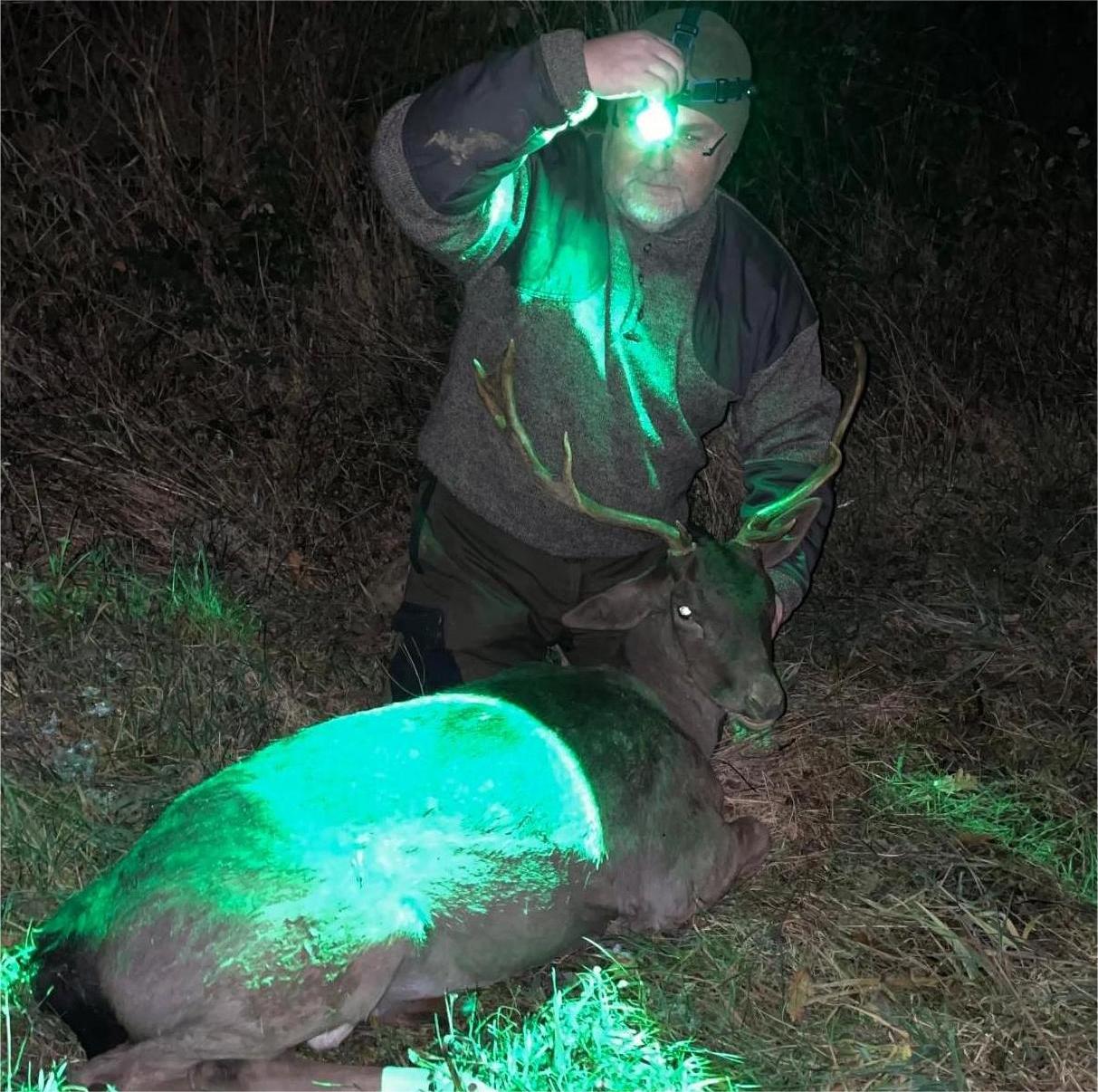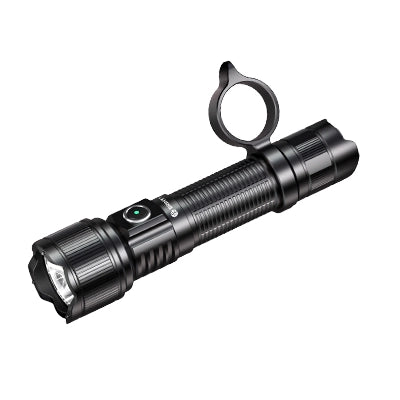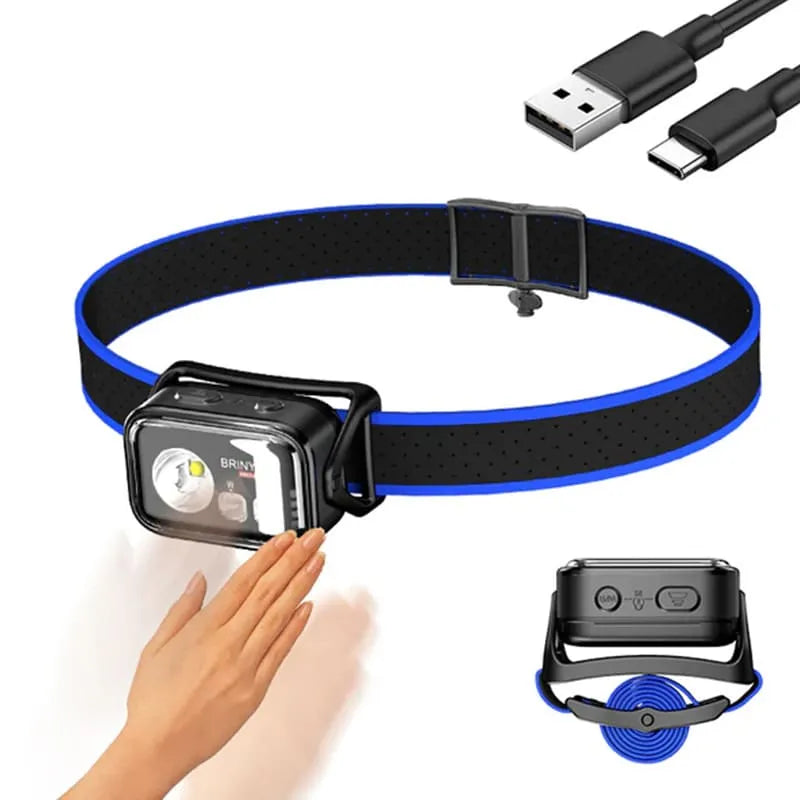


Stop. Wait 20–30 minutes. Pushing a wounded hog immediately after the shot triggers an adrenaline-fueled run that can carry it 400+ yards. Then, find the first impact site with a wide flood beam. Switch to a dual-frequency strobe light (10Hz makes blood fluoresce against dark leaves) and work the trail in a grid pattern. The Brinyte T5X SPECTRA — with 10Hz hemoglobin strobe and 120° flood — is purpose-built for exactly this job.

✔ Landowners dealing with feral hog damage who need to recover every animal they shoot
✔ Anyone who's watched a 200-pound boar vanish into thick brush and wants to know how to find it
1. Why Finding a Shot Hog in the Dark Is a Nightmare
You pulled the trigger. The sounder scattered. The big boar — the one that's been tearing up your bottomland for three weeks — stumbled, righted itself, and crashed into the treeline. You heard him go down. Or you think you did. By the time you climb out of your stand and walk to where he was standing, it's been 15 minutes. Your white flashlight shows grass, mud, and shadows. No blood. Nothing.
This is not bad luck. This is feral hog anatomy working against you.
Wild boars carry a layer of dense, cartilage-like shield plate over their vitals — especially mature boars during breeding season. When a bullet passes through this shield, the thick hide and fat layer can temporarily seal the entry wound. The hog bleeds internally for the first 30–50 yards of its run, leaving almost no external sign. By the time blood does reach the ground, it's often a single drop on the underside of a leaf — invisible to a standard flashlight.
Their coloration works against you too. A hog's dark, coarse hair absorbs light. A drop of blood on a dark hog's flank, on dark soil, under a dark canopy — this is the lowest-contrast recovery scenario in North American hunting. And unlike deer, hogs don't follow predictable terrain. A wounded boar will go wherever the thickest cover is — creek bottoms, briar patches, standing cane.
Feral hog anatomy — thick shield plate, fat-sealed wounds, dark coloration — makes them the hardest large game animal in North America to blood-trail at night. Standard white flashlights are nearly useless on dark soil and leaf litter. What you need is a light that exploits hemoglobin fluorescence — a dedicated blood tracking strobe that makes blood glow against the forest floor.
2. Red Light vs. White Light vs. UV vs. Strobe: Which Actually Finds Blood?
Not all light is equal when you're looking for blood. Here's what actually works — and what makes things worse.
| Light Type | Blood Visibility | Problem |
|---|---|---|
| White Light | ⭐ (Poor) | Creates strong ground reflection and leaf glare. Red blood on dark soil and dead leaves appears identical — both look dark. You'll walk past blood you're standing on. |
| Red Light | ❌ (Invisible) | Red light makes red blood vanish completely against green vegetation. The color shift turns blood into camouflage. Useful for approaching your stand — useless for tracking. |
| Green Light | ⭐⭐ (Moderate) | Enhances contrast between blood and green vegetation — an underrated tracking advantage. But on dark soil and dry leaves, green light performs only slightly better than white. |
| UV (365–395nm) | ⭐⭐⭐ (Good) | Causes hemoglobin to fluoresce. Blood glows visibly against non-biological surfaces. Effective on fresh and dried blood. However, UV alone has a narrow beam — you'll miss drops outside its tight cone. |
| Dual-Frequency Strobe (5Hz/10Hz) | ⭐⭐⭐⭐⭐ (Best) | The 10Hz strobe exploits peak human temporal contrast sensitivity. Hemoglobin absorbs and re-emits the pulsed light at a rate the eye detects as a visible brightness difference. Blood "pops" against dirt, leaves, and grass — even in conditions where all other light types fail. |
A dedicated dual-frequency strobe outperforms every other light type for blood detection on dark terrain. UV fluorescence works but has a narrow beam. White light is the worst — ground reflection and leaf scatter actively hide blood from your eyes. If you track more than one wounded hog per season, a purpose-built blood tracking strobe is not a luxury. It's the tool that determines whether you recover the animal or leave it in the woods.
3. Step-by-Step Night Tracking Tactics
Step 1: Wait 20–30 Minutes
The single most common mistake is tracking too soon. A wounded hog flooded with adrenaline will run farther and harder if it hears you coming. Wait at least 20 minutes before leaving your position. Use the time to mark the exact spot where the hog was standing when you took the shot — note a distinctive tree, a fence post, anything you can find in the dark. This is your first impact site reference point.
Step 2: Find the First Impact Site
Walk directly to the spot the hog was standing. Use a wide flood beam — 120° or more — to sweep the area without missing anything. Look for:
- Hair and tissue: Bullet impact often leaves a patch of cut hair or small tissue fragments at the point of impact. These are easier to find than blood and confirm you're in the right place.
- Scuffed ground: A hit hog often kicks or stumbles at impact. Look for fresh dirt, broken twigs, and hoof gouges.
- First blood: Even with a fat-sealed wound, the very first blood drops often fall within 5 feet of the impact point. This is where the strobe becomes critical.
Step 3: Grid-Search With a Blood Tracking Strobe
Once you've found initial sign, switch to a dual-frequency blood tracking strobe. Use the 10Hz strobe mode. The rapid pulse makes hemoglobin fluoresce — blood spots become bright pinpoints against dark leaves and soil. Work in a systematic grid pattern radiating outward from the first impact site. With a 120° flood beam, you cover maximum ground with each sweep.
Step 4: Mark Every Drop
Flag each blood drop you find — surveyor's tape, glow sticks, even torn pieces of a white plastic bag work. The trail will reveal the hog's direction of travel, and marking it prevents you from circling back over ground you've already searched. If the trail goes cold, return to the last marked drop and expand your search radius from there.
4. The Best Hog Blood Tracking Light: Brinyte T5X SPECTRA

The best light for blood tracking is not the brightest. It's the one that makes blood visible when every other light shows you nothing. The Brinyte T5X SPECTRA was engineered specifically for this mission.
🩸 Brinyte T5X SPECTRA — Blood Tracking & Recovery Light
The T5X SPECTRA's 10Hz dual-frequency strobe mode is the defining feature for blood tracking. At 10 flashes per second — within the human visual system's peak temporal contrast sensitivity range — hemoglobin absorbs and re-emits the pulsed light at a rate that makes blood visually pop against dark leaves, soil, and mud. This is not a brighter white light. This is a fundamentally different detection method.
The 120° ultra-wide flood beam is the second critical piece. Traditional tracking lights with tight beams force you to "paint" the ground in narrow strips — and miss the single drop that fell outside your cone. The T5X's flood covers a broad swath with each sweep, reducing search time and increasing recovery probability.
When you're not tracking, the T5X serves as a capable multi-color hunting light with white, red, green, and UV modes — a complete post-shot recovery system in one light.
Shop T5X SPECTRA →"After a marginal shot on a boar at last light, I couldn't find any blood with my white light. Switched the T5X to the 10Hz strobe and immediately saw a speck of blood on a dead leaf 15 feet away. Tracked that hog 400 yards through creek bottom and never lost the trail." — Based on field reports from Texas and Florida night hunters.
Don't Leave Your Hog in the Woods
You made the shot. Now recover the animal. The Brinyte T5X SPECTRA is purpose-built for the hardest tracking job in North America — the wounded hog that vanishes after dark.
Shop T5X SPECTRA →About Brinyte
Founded in 2009 — 50+ patents, ISO9001 certified. Brinyte builds hunting lights for the recovery phase that matters most. Every product is field-tested by working hunters and validated by licensed hog removal specialists. This blood tracking guide is based on real-world recoveries across Texas, Florida, and Georgia.
"Engineered for the mission — proven in the field."
Founded 2009 · 50+ Patents · ISO9001
❓ Frequently Asked Questions — Night Blood Tracking
How long should I wait before tracking a wounded hog?
Wait 20–30 minutes minimum. A wounded hog flooded with adrenaline will run farther if pursued immediately. Waiting allows the animal to bed down and expire closer to the impact site. Use the time to mark the exact spot where the hog was standing when you took the shot.
What is the best light for tracking wounded hogs at night?
The best light for tracking wounded hogs at night is a dedicated dual-frequency blood tracking strobe like the Brinyte T5X SPECTRA. Its 10Hz strobe mode makes hemoglobin fluoresce against dark leaves and dirt — something white light completely fails to do. The 120° ultra-wide flood beam covers maximum search area with each sweep.
Why is white light bad for blood tracking?
White light creates strong ground reflection and leaf glare. On dark soil and dead leaves, red blood and dark organic material appear identical — both look dark. White light also washes out the subtle color difference between blood and the forest floor. A strobe or UV light exploits hemoglobin fluorescence instead, making blood actively stand out.
Can you use UV light to track wounded hogs?
Yes. UV light at 365–395nm causes hemoglobin to fluoresce, making blood trails visible in conditions where white light is useless. However, UV alone has a narrow beam — you may miss drops outside its cone. The T5X SPECTRA combines UV with a 10Hz strobe mode and 120° flood beam for maximum coverage.
Why do wounded hogs not leave much blood?
Mature boars have a thick cartilage shield over their vitals and dense fat layers that can temporarily seal bullet entry wounds. This causes the hog to bleed internally for the first 30–50 yards of its run, leaving almost no external blood sign. When blood does appear, it's often a single drop — which is why a specialized strobe tracking light is critical.
What is the first impact site and why does it matter?
The first impact site is where the hog was standing when your shot struck. It's the most productive place to search for initial blood sign — hair, tissue fragments, and the very first drops of blood. Mark this location immediately after the shot. Even if the blood trail seems to disappear later, you can always return to this known starting point.