

✔ Electronics buyers who care about longevity and environmental impact
✔ Anyone who has been frustrated by a device that died because the battery could not be replaced
✔ Engineers and product designers thinking about the tradeoffs in battery architecture
1. The War You Never Noticed: r/flashlight’s 200,000-User Battery Schism
Most people do not think about flashlight batteries. They buy a flashlight. It works. Eventually it stops working. They throw it away and buy another one. This cycle is so unremarkable that it barely registers as a decision.
But on r/flashlight — a subreddit with over 200,000 subscribers — the battery architecture of a flashlight is not a footnote. It is the single most contested design decision in the entire product category. The debate has produced thousands of comments, hundreds of threads, and a schism that mirrors larger arguments happening across consumer electronics: is a device that cannot be repaired still a tool, or is it just pre-organized landfill?
This is not a niche hobbyist squabble. The community includes working electricians, search-and-rescue volunteers, law enforcement officers, and engineers from the very companies whose products are being debated. When they argue about batteries, they are arguing about something deeper: who gets to decide when a tool’s life is over — the user, or the manufacturer?
The removable battery debate is not really about batteries. It is about control. A tool with a sealed battery transfers control of the device’s lifespan from the owner to the manufacturer. A tool with a removable battery keeps that control with the person who bought it. Everything else — convenience, waterproofing, form factor — is a negotiation around that central question.
2. The Two Camps: Planned Obsolescence vs. Practical Convenience
Camp 1: The Repairability Absolutists
Position: “A sealed battery flashlight is future e-waste.”
The argument, stripped to its core: lithium-ion batteries degrade. Every charge cycle — typically 300 to 500 for a full-depth discharge — reduces the cell’s capacity by a fraction of a percent. After two or three years of regular use, a battery that once held 5000mAh might hold 3500mAh. After five years, it might hold 2000mAh. At some point, the runtime becomes unacceptably short.
In a device with a removable battery, this is a $15 problem. Buy a new 18650 or 21700 cell. Insert it. The light is functionally new again. The old battery goes to a recycling center — not a landfill, but also not back into the flashlight.
In a device with a sealed battery, this is the end of the product. The battery is glued, soldered, or compressed behind a non-serviceable housing. The user cannot remove it without destroying the light. The manufacturer may offer a replacement program — or may not. In the most common outcome, the entire device is thrown away and replaced, even though the LED, the driver, the reflector, and every other component are still perfectly functional.
This is the argument that earned sealed-battery lights the label “planned obsolescence flashlights” in dozens of Reddit threads. The label is not entirely fair — but it is not entirely wrong, either.

Camp 2: The Practical Usability Advocates
Position: “Normal people will never carry spare batteries. USB-C is what they actually need.”
The counter-argument is equally coherent, and it starts with a reality check: most flashlight buyers are not flashlight hobbyists. They do not own an external battery charger. They do not know the difference between a protected and unprotected 18650 cell. They do not want to remove a battery, carry it separately, and insert it into a charger. They want to plug the light into the same cable that charges their phone, and they want it to work.
From this perspective, a sealed battery with integrated USB-C charging is not planned obsolescence. It is the only design that the mass market will actually use correctly. The argument is not that sealed batteries are better engineering. It is that they are better adoption: a light that is simpler to charge is a light that is more likely to be charged — and a light with a dead battery buried in a drawer is more wasteful than any sealed-cell design could ever be.
The data supports this. Shangpu Consulting’s 2026 portable lighting report notes that USB-C direct-charging flashlights now outsell charger-dependent lights approximately 4:1 in consumer channels. The market has spoken. It wants the cable.
At a Glance: Two Design Philosophies
| Factor | Sealed Battery (Integrated USB-C) | Removable Battery (External Charger) | Removable + USB-C (Hybrid) |
|---|---|---|---|
| Battery replacement | Impossible — entire device replaced | Easy — $15 cell swap | Easy — $15 cell swap |
| Charging convenience | Excellent — any USB-C cable | Requires external charger | Excellent — any USB-C cable |
| Field swappability | None — must recharge | Excellent — carry spare cells | Excellent — carry spare cells |
| Long-term lifespan | Limited to battery degradation cycle | Unlimited — replace battery indefinitely | Unlimited — replace battery indefinitely |
| Environmental impact | Entire device becomes e-waste | Only battery recycled; light persists | Only battery recycled; light persists |
| Example | Most consumer sealed lights | Traditional hobbyist lights | Brinyte PT16A, T28, ZT40 |
The Reddit debate frames the choice as a binary: sealed vs removable. The engineering reality is that this binary has been obsolete since USB-C charging circuits became compact and efficient enough to integrate into a removable-battery device. You do not have to choose between convenience and longevity. The hybrid architecture — removable battery with onboard USB-C — delivers both, and the debate is largely about manufacturers who have not yet adopted it.
3. The Engineering Answer: Why “Both” Is Not a Compromise — It’s an Upgrade
The hybrid approach — removable battery + onboard USB-C charging — is not a compromise between two camps. It is a design that outperforms both. Here is what it actually means in practice.
A user who adopts a Brinyte PT16A plugs the USB-C cable into the light and charges it exactly like a sealed-battery device. No external charger. No removed battery. No learning curve. The convenience camp gets exactly what it asked for.
Two years later, when the battery’s capacity has degraded from 5000mAh to 3500mAh — a process that is chemically inevitable in all lithium-ion cells, sealed or not — the user notices the runtime is shorter. In a sealed light, this is the moment the device becomes e-waste. In the PT16A, the user unscrews the tailcap, removes the 21700 cell, buys a replacement for the cost of a lunch, inserts it, and tightens the tailcap. The light is functionally new. The old cell is recycled. The LED, the driver, the reflector, and the machined aluminum body continue their service life — potentially for decades.

This is not a niche enthusiast workflow. It is the same battery replacement model used by power tools, electric vehicles, and every other lithium-ion application where the device costs more than the battery. The only reason consumer electronics abandoned it is that sealed batteries create a replacement cycle — and a replacement cycle creates recurring revenue. The flashlight community knows this. That is what they are angry about.
A battery is a consumable component. Designing a device in which a consumable component cannot be consumed and replaced without destroying the device is not a design choice that favors the user. It is a design choice that favors the manufacturer’s replacement cycle. The hybrid approach — removable battery with onboard USB-C — is the only architecture that serves both the user who wants convenience and the user who wants longevity. It is also the only architecture that serves the same user at different points in the product’s life.
4. How Brinyte Engineered Both Into One Platform
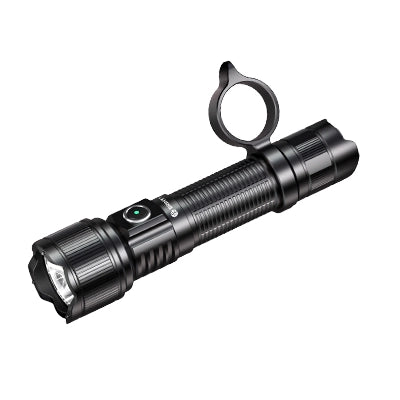
Brinyte made this design decision before the Reddit debate brought it into the mainstream. The PT16A, the T28 Artemis, and the ZT40 — three lights built for entirely different missions — all share the same battery philosophy: removable standard-format cells with onboard USB-C fast charging.
| Model | Mission | Battery Format | Can the user replace it? | Can it charge via USB-C? |
|---|---|---|---|---|
| PT16A | Tactical / Duty / EDC | 1 × 21700 | Yes — unscrew tailcap, swap cell | Yes — onboard USB-C |
| T28 Artemis | Multi-Color Hunting | 1 × 21700 | Yes — unscrew tailcap, swap cell | Yes — onboard USB-C |
| ZT40 | Zoomable Multi-Terrain | 1 × 21700 | Yes — unscrew tailcap, swap cell | Yes — onboard USB-C |
All three lights use standard 21700 cells — the same format used by electric vehicles, power tools, and high-drain portable electronics. This is not a proprietary battery ecosystem designed to lock you in. It is an open standard. When the battery eventually degrades, you are not dependent on Brinyte to sell you a replacement. Any quality 21700 cell from any reputable manufacturer will work. The light does not know the difference, and neither will you.
The USB-C charging circuit is built into the light — not the battery. This means you get the same plug-and-charge convenience as a sealed device, but the electronics that enable it are not thrown away when the battery reaches end of life. They stay in the light, serving the next battery, and the one after that. This is the engineering detail that turns a “hybrid” from a marketing claim into a genuine sustainability advantage.
5. The Wider Lesson: What the Battery Debate Tells Us About Consumer Electronics
The r/flashlight battery war is not happening in isolation. The same argument is playing out — or has already played out — across every category of portable electronics. Smartphones went sealed-battery over a decade ago; only the European Union’s right-to-repair legislation is now forcing the industry back toward user-replaceable designs. Laptops followed. Wireless earbuds are the logical endpoint of the curve: devices so aggressively sealed that the entire product is considered disposable when the battery dies, typically within two to three years.
Flashlights are, in a sense, the test case for whether a product category can resist this trajectory. The forces pushing toward sealed batteries are real — thinner designs, simpler waterproofing, lower manufacturing cost — and so is the community pushing back. The hybrid approach adopted by Brinyte is the first viable resolution of that tension: a design that does not ask the user to sacrifice either convenience or longevity, and that is honest about what a battery actually is.
A battery is a fuel tank. Fuel tanks are consumable. Designing a vehicle in which the fuel tank cannot be replaced does not make it more convenient. It makes it a $30,000 disposable cigarette lighter. The 200,000 people on r/flashlight understand this. The question is whether the rest of the consumer electronics industry will catch up before regulation forces it to.
A battery is not a permanent component. It is a wear item, chemically destined to degrade from its first charge cycle. Designing a product that acknowledges this — by making the wear item replaceable — is not a niche enthusiast feature. It is the minimum viable definition of a durable good. Every flashlight that cannot swap its battery is, by design, a temporary resident of its owner’s life.
Looking for a Light Built for the Long Haul?
Brinyte flashlights use standard removable batteries with onboard USB-C charging. No sealed landfill. No external charger required.
Browse Flashlights →About Brinyte
Founded in 2009, Brinyte makes lighting tools for people who need them to work — for a long time. Every light in our core product line uses standard, user-replaceable batteries with onboard USB-C charging. We engineer for service life measured in decades, not charge cycles. 50+ patents. ISO9001 certification. No sealed landfill.
“Engineered for the mission — built to outlast the battery.”
Founded 2009 · 50+ Patents · ISO9001
❓ Frequently Asked Questions
Why are removable batteries important in flashlights?
Lithium-ion batteries degrade with every charge cycle — typically losing 20–40% of their capacity after 300–500 full cycles. In a sealed flashlight, this degradation means the entire device must be replaced when the battery dies, turning the light into electronic waste. In a flashlight with a removable battery — like the Brinyte PT16A, T28, and ZT40 — the user replaces only the $15–$25 cell, and the light continues functioning indefinitely.
What is the Reddit r/flashlight battery debate about?
With over 200,000 subscribers, r/flashlight has become the center of a heated debate about whether flashlights should use sealed, non-replaceable batteries with integrated USB-C charging — or removable standard cells that require an external charger. One side calls sealed lights "future e-waste"; the other argues that USB-C convenience is what mainstream users actually need. The debate mirrors larger right-to-repair and sustainability arguments across the consumer electronics industry.
Can a flashlight have both a removable battery and USB-C charging?
Yes. The hybrid architecture — removable standard-format battery plus onboard USB-C fast charging — is the engineering approach used by the Brinyte PT16A, T28 Artemis, and ZT40. These lights use standard 21700 cells that the user can unscrew and replace in seconds, while also supporting plug-and-charge via any USB-C cable. This combines the convenience of sealed-battery devices with the longevity and sustainability of a replaceable cell.
Are sealed battery flashlights planned obsolescence?
The flashlight community is divided. Critics argue that a sealed battery guarantees the entire device becomes waste when the battery degrades — typically within 2–5 years of regular use — making it a form of planned obsolescence by design. Defenders note that sealed lights with USB-C charging are more likely to actually be charged and used regularly by mainstream consumers, and that a light sitting unused in a drawer with a dead removable battery is no better for the environment. The hybrid approach — removable battery + USB-C — resolves both concerns.
What kind of battery does the Brinyte PT16A use?
The Brinyte PT16A uses a standard 21700 lithium-ion cell — the same format used by electric vehicles and power tools. The battery is user-replaceable: unscrew the tailcap, remove the old cell, insert a new one, and the light is functionally restored. The PT16A also includes onboard USB-C fast charging, so you never need an external charger unless you want to use one. A full charge takes approximately 2.5 hours.
How long do flashlight batteries last before needing replacement?
Lithium-ion cells — including the 21700 batteries used in the Brinyte PT16A, T28, and ZT40 — typically retain 70–80% of their original capacity after 300–500 full charge cycles. For a light charged once a week, this means noticeable capacity reduction after approximately 3–5 years. In a light with a removable battery, this is a $15–$25 replacement. In a sealed light, it is the end of the product.