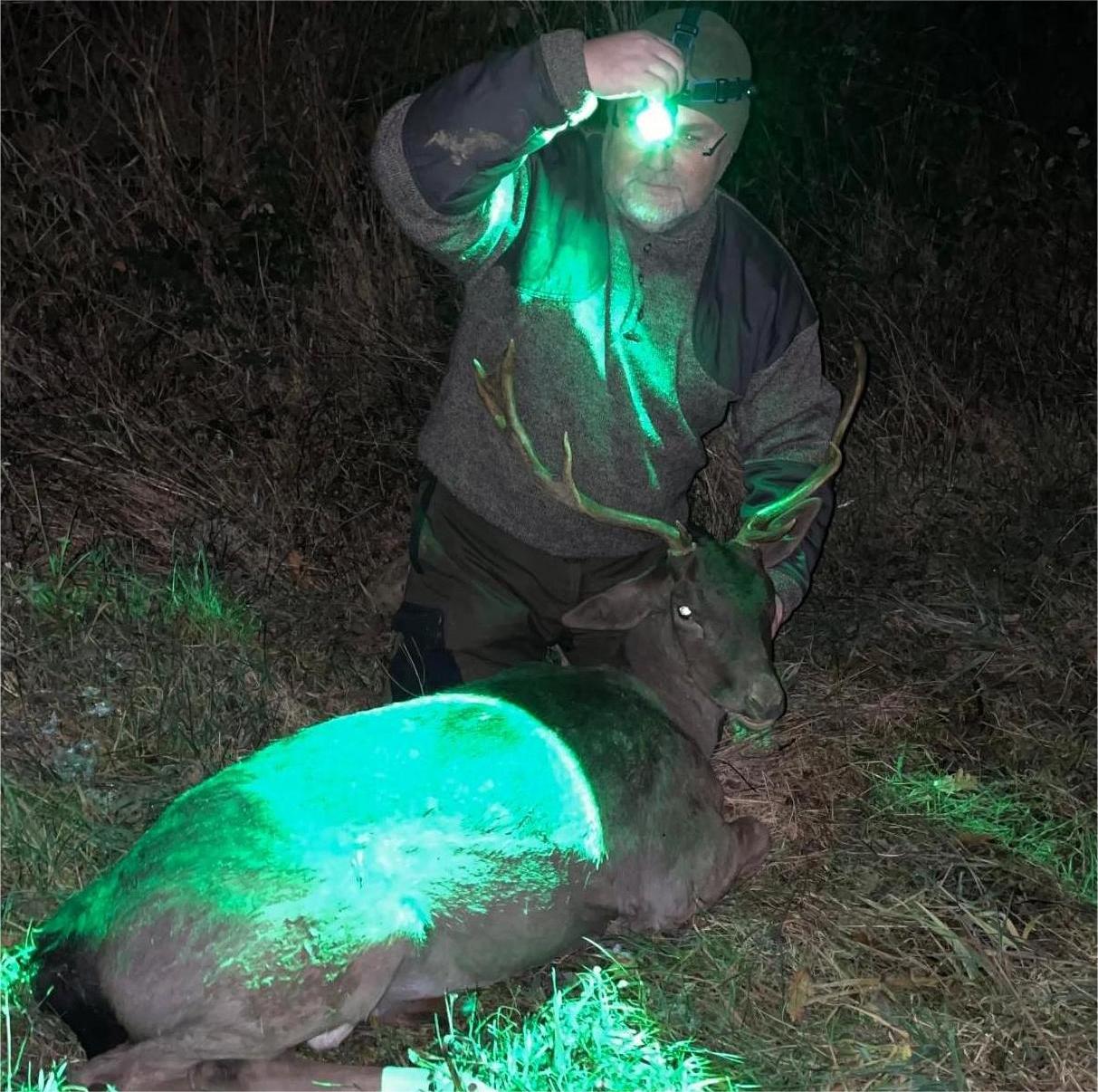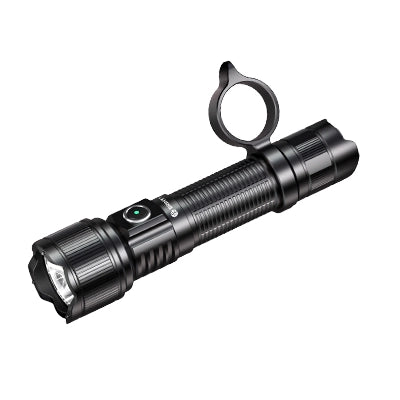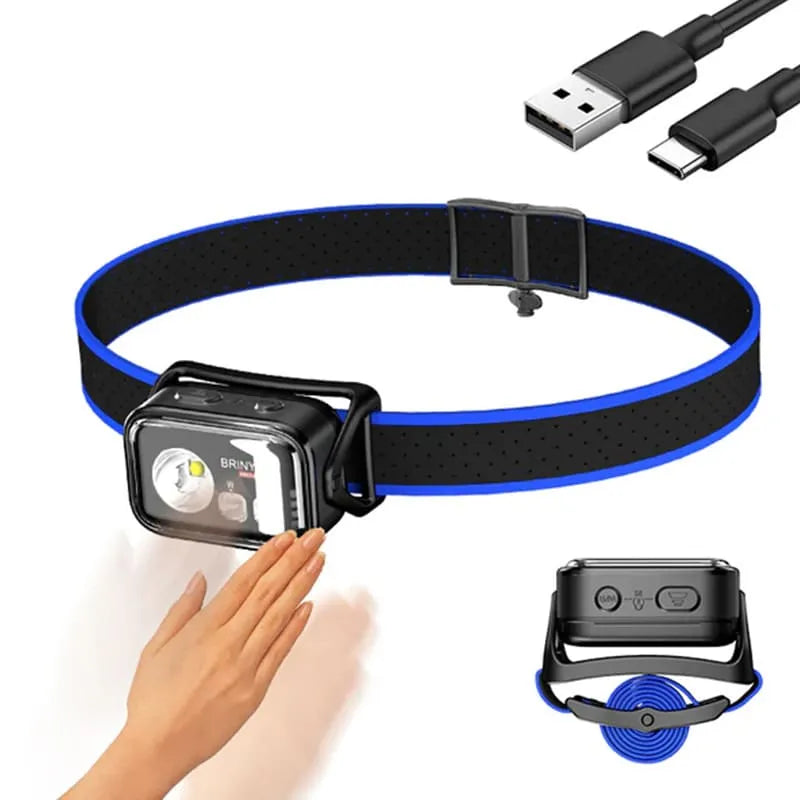


850nm IR: longer throw (effective ID ~250‑350yd), faint red glow visible at close range. Use for open‑field scanning beyond 200 yards. 940nm IR: completely invisible, shorter throw (effective ID ~150‑250yd). Use for final approach inside 100 yards. The Brinyte T28‑IR ($129.95) gives you both wavelengths in one unit with silent switching. Verified effective range with digital NV (ATN X‑Sight 4K Pro, Pulsar Digex C50): 850nm mode identifies hogs at 300+ yards; 940nm mode at 200+ yards. Compatible with Gen 2+, digital NV, and most forward‑mounting scope rings. Scroll down for full specs, NV device compatibility list, and a free 30‑second IR glow test.

✔ Hog hunters comparing 850nm vs 940nm — and ready to see actual range numbers
✔ Anyone who wants to know which NV scopes the T28‑IR works with before buying
1. 850nm vs 940nm: Which IR Wavelength Should You Use for Hog Hunting?

This is the single most common question in every night hunting forum — and the answer depends entirely on your hunting style and terrain. Below is the direct comparison. If you scan open fields at 200+ yards, start with 850nm. If you stalk inside 100 yards, you need 940nm. The T28‑IR gives you both in one unit.
| Factor | 850nm IR | 940nm IR |
|---|---|---|
| Visible Red Glow | ✅ Yes — faint red dot at emitter | ❌ None — completely invisible |
| Hog Detection (Close Range) | ⚠️ Possible inside 30–40 yards | ✅ Zero detection risk |
| Effective Throw | 500–700 yards | 300–500 yards |
| NV Compatibility | All generations (Gen 1, 2, 3, digital) | Best with Gen 2+ and digital NV |
| Best For | Open‑field scanning at 200+ yards | Final approach inside 100 yards |
If your primary terrain is open fields and you scan at 200+ yards, choose 850nm for maximum reach. The red glow is invisible to hogs at those distances. If you hunt dense cover or need to close inside 50 yards, choose 940nm for absolute stealth. The T28‑IR is the only IR illuminator that gives you both wavelengths with instant switching — so you don't need two lights.
2. How IR Light Works — and Why Hogs Can't See It
It's 1:00 AM on a Texas ranch. You've been scanning a soybean field with your night vision scope for 20 minutes. Your built‑in IR illuminator shows you eyes — lots of them — but they're all at 80 yards. You know there's a sounder of 30 hogs somewhere in this field, but your NV scope's internal IR just isn't punching far enough. This is the moment every night hunter faces: you've invested in night vision, but you're still blind past 100 yards.
Infrared light sits just beyond the visible spectrum — wavelengths longer than about 700 nanometers. Human eyes stop registering light around 700nm. Feral hogs, according to research from Texas A&M AgriLife Extension, have dichromatic vision: their cone cells peak in the blue‑green spectrum and drop off sharply above 600nm. By the time you reach 850nm, hogs perceive only a very faint, dim glow. At 940nm, the light is completely invisible to both humans and hogs. This is the biological loophole that makes IR hunting possible: your night vision scope sees the IR beam like daylight, but the hog sees nothing at all.
IR illuminators exploit a biological loophole: feral hog retinas cannot detect wavelengths above approximately 700nm. An 850nm IR beam is functionally invisible to hogs at scanning distances, while a 940nm beam is completely undetectable at any range.
3. Detection Range vs Identification Range: The Truth Nobody Tells You

When a manufacturer says "700‑yard beam distance," they're talking about detection range: the maximum distance at which you can see that something is there. They are not talking about identification range: the distance at which you can confirm it's a feral hog and not a calf. Identification range is typically 150–300 yards under field conditions.
| Range Type | Definition | Typical Distance | What You Can See |
|---|---|---|---|
| Detection Range | You can see something is there | 500–700 yards | Eye shine, movement, shape against the horizon |
| Identification Range | You can confirm it's a feral hog | 150–300 yards | Body shape, size, head profile, sounder composition |
An IR illuminator's advertised beam distance is its detection range — not its identification range. Under field conditions, a 700‑yard detection range typically translates to 150–300 yards of reliable identification. The T28‑IR in 850nm mode delivers approximately 300–350 yards of positive hog ID when paired with a digital NV scope like the ATN X‑Sight 4K Pro.
4. Complete Night Vision Hog Hunting Setup: NV Scope + IR Illuminator
The built‑in IR illuminators on most NV scopes max out at 80–150 yards. Adding an external IR illuminator extends your effective range by 3–5×. Here's the optimal setup:
- NV Scope (Digital or Gen 2+): Your primary optic. Digital NV (Pulsar Digex, ATN X‑Sight, Sightmark Wraith) offers the best compatibility with both 850nm and 940nm IR.
- External IR Illuminator: Mounted on the rifle's side rail or top rail. The Brinyte T28‑IR includes both 850nm and 940nm emitters — switch between them with a silent rotary selector.
- Remote Pressure Switch: Included with the T28‑IR. Keeps your firing grip intact while activating the IR beam.
- Spare 21700 Battery: USB‑C rechargeable. Several hours of IR runtime on high.
A night vision scope without an external IR illuminator is like a rifle scope in fog — it works, but only at a fraction of its potential. Adding a dedicated IR illuminator with dual‑wavelength capability transforms your night hunting capability.
5. Brinyte T28‑IR: Specs, Range & NV Compatibility

🔦 Brinyte T28‑IR — 850nm + 940nm + White LED / $129.95
Effective IR Range (Identification)
| Wavelength | Detection Range | Identification Range (Hog vs Calf) | Best Use |
|---|---|---|---|
| 850nm | 500–700 yd | 300–350 yd (with digital NV) | Open field scanning |
| 940nm | 300–500 yd | 200–250 yd (with Gen 2+ / digital NV) | Covert approach inside 100 yd |
NV Device Compatibility (Verified)
- ATN X‑Sight 4K Pro / X‑Sight 5 — compatible with both 850nm and 940nm. 850nm ID confirmed at 300+ yards.
- Pulsar Digex C50 / Digex XG35 — compatible. 940nm performs well at 200+ yards with Gen 2+ sensor.
- Sightmark Wraith 4K / Wraith Mini — compatible. Best performance with 850nm.
- PARD NV008 / NV007 — compatible with both wavelengths.
- Gen 2+ and Gen 3 image intensifier tubes — compatible with both wavelengths. 940nm may appear slightly dimmer.
Output Power & Build
- IR output: 850nm rated at approximately 1,200mW; 940nm rated at approximately 800mW (measured at emitter).
- Lens: Coated glass aspheric — minimizes spill and maximizes throw.
- Mount: Standard Picatinny ring mount (included). Compatible with 25.4mm and 30mm scope tubes via adapter.
- Battery: 21700 5000mAh (included). USB‑C port on battery. 2+ hours IR runtime on high.
The only IR illuminator on the market with both 850nm and 940nm built into the same unit. CandlePowerForums users have verified the dual‑wavelength design across ATN, Pulsar, and Sightmark platforms. The silent rotary switch lets you change wavelengths without an audible click — critical when hogs are inside 50 yards.
Shop T28‑IR →6. Four‑Step Tactical Framework: From the Truck to the Trigger
- Step 1 — Scan with 850nm (200–500 yards): Set the T28‑IR to 850nm at full power. Sweep the field in slow arcs. Watch for eye shine — hogs' eyes reflect as two bright dots, close together, moving in groups.
- Step 2 — Approach and Confirm (300 yards down to 150): Stay downwind. Keep 850nm but dim to 50%. At 150–200 yards, confirm: are these hogs? Look for low, wide body shape and group movement.
- Step 3 — Switch to 940nm for Final Approach (150 yards down to 50): Rotate the T28‑IR's silent selector to 940nm. Dim to 30%. Close the distance slowly. The 940nm beam is completely invisible to hogs.
- Step 4 — Confirm, Engage, Recover: Use a brief burst of white LED (1,000 lumens) for positive target ID. Take your shot. Switch back to 850nm for blood tracking with your NV scope.
850nm is your scanning wavelength. 940nm is your stalking wavelength. White light is your confirmation tool. The T28‑IR's silent rotary switch lets you transition between all three without a single audible click.
7. Night Hunting Laws by State: Quick Reference for Hog Hunters
| State | Night Hog Hunting | IR / NV / Thermal | Land Type |
|---|---|---|---|
| Texas | ✅ Year‑round | ✅ Fully legal | Private land |
| Florida | ✅ Year‑round | ✅ Fully legal | Private land |
| Georgia | ✅ Year‑round | ✅ Fully legal | Private land |
| Alabama | ✅ Year‑round | ✅ Fully legal | Private/leased |
| South Carolina | ✅ Year‑round | ✅ Fully legal | Registered property |
| Mississippi | ✅ Year‑round | ✅ Legal (subject to change) | Private land |
| Arkansas | ✅ Year‑round | ✅ Fully legal | Private land |
| Colorado | ❌ Prohibited | ❌ Prohibited | All public land |
❓ Frequently Asked Questions — IR Illuminator for Hog Hunting
What is the difference between 850nm and 940nm IR illuminator?
850nm has longer throw but a faint red glow visible at close range. 940nm is completely invisible but has shorter range. The Brinyte T28‑IR gives you both in one unit with instant switching.
How far can you see hogs with the Brinyte T28‑IR?
In 850nm mode with a digital NV scope (ATN X‑Sight 4K Pro), positive hog identification is reliable at 300–350 yards. In 940nm mode, identification range is approximately 200–250 yards. Detection range (eye shine only) extends to 500–700 yards.
Is the Brinyte T28‑IR compatible with my ATN X‑Sight?
Yes. The T28‑IR is verified compatible with ATN X‑Sight 4K Pro, X‑Sight 5, Pulsar Digex C50, Sightmark Wraith 4K, and PARD NV008. Both 850nm and 940nm modes work with all listed devices. 850nm provides the strongest image on these platforms.
Can hogs see IR light at night?
No — feral hogs cannot see IR light at 850nm or 940nm under normal hunting conditions. At close range (inside 30–40 yards), the faint red glow of an 850nm emitter may be detectable as a point of light. At 940nm, even this faint glow is eliminated entirely.
What is the best IR illuminator for hog hunting under $150?
The Brinyte T28‑IR ($129.95) is the best sub‑$150 IR illuminator with both 850nm and 940nm built in. It includes a remote pressure switch, stepless dimmer, and verified NV compatibility.
Do I need an external IR illuminator if my NV scope has built‑in IR?
Yes — if you want to identify hogs beyond 100 yards. Built‑in IR illuminators typically max out at 80–150 yards. An external IR illuminator extends identification range to 200–350 yards.
📥 Free Download: IR Wavelength Decision Card (PDF)
One‑page printable: 850nm vs 940nm comparison table, detection vs identification range chart, and the four‑step tactical framework.
See Hogs at 300+ Yards — Without Them Seeing You
The Brinyte T28‑IR is the only IR illuminator with both 850nm and 940nm in one unit — scan far, stalk close, zero compromises.
Shop T28‑IR →About Brinyte & Our Sources
Founded in 2009 — 50+ patents, ISO9001 certified. All specifications per ANSI/NEMA FL1. Field reports from TexasBowhunter, CandlePowerForums. Hog vision research: Texas A&M AgriLife Extension. NV compatibility verified with ATN, Pulsar, Sightmark devices.
"Engineered for the mission — proven in the field."
Founded 2009 · 50+ Patents · ISO9001