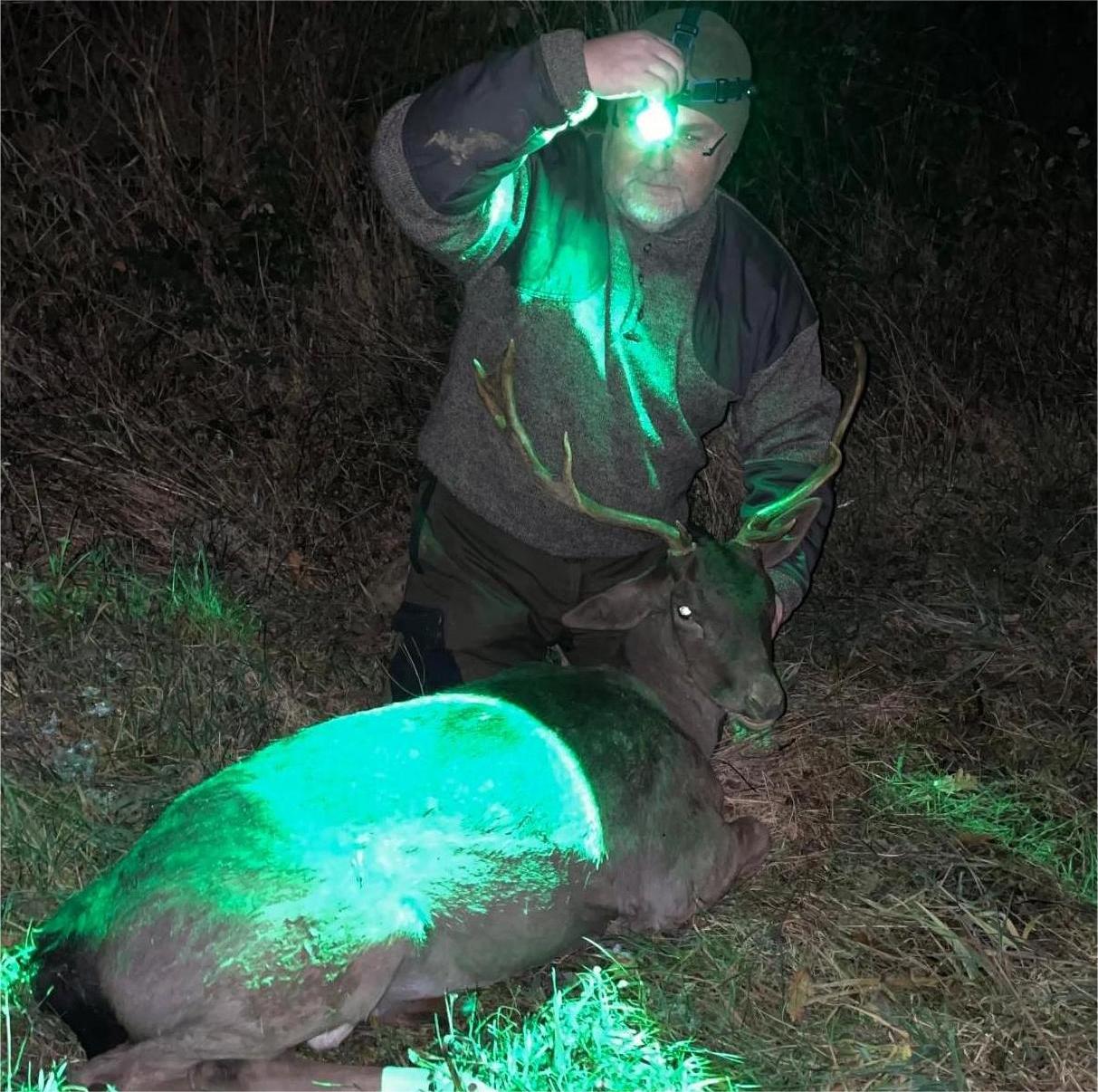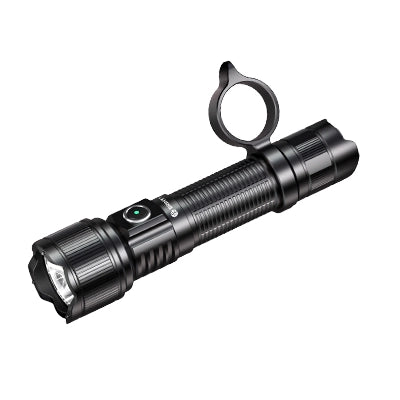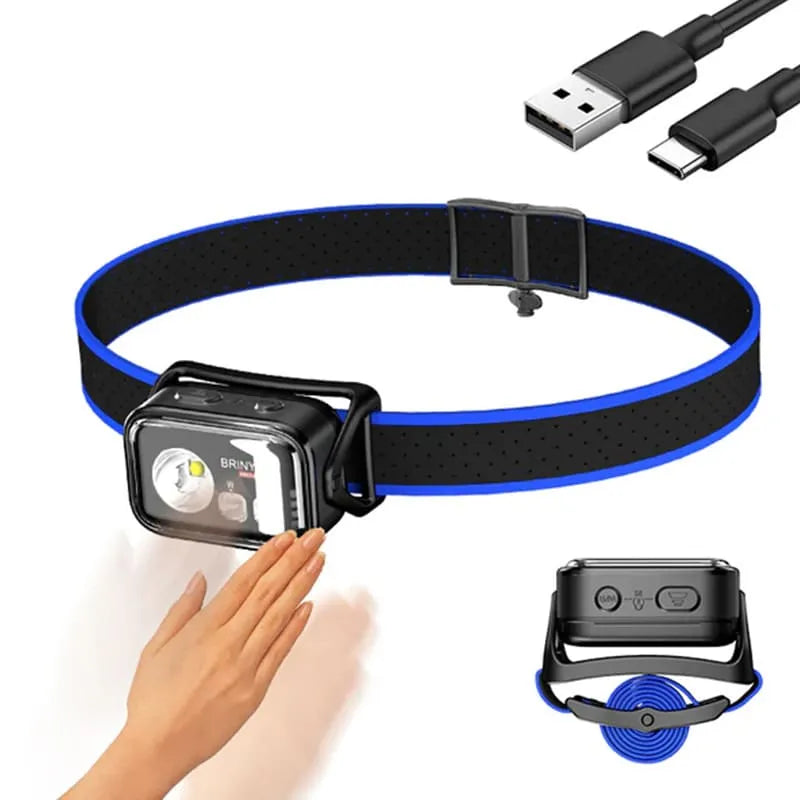


The Brinyte HL18 Noctua is the best camping flashlight for 2026 because it replaces a handheld, a headlamp, and a magnetic work light in one 155g package. Its 90° rotatable head, magnetic tail cap, sealed magnetic charging, and 120‑hour moonlight mode solve real campsite frustrations. Below we show how it beats Fenix and Nitecore on versatility — and why raw lumens alone fail in the backcountry.

✔ Anyone who wants to mount their light on metal surfaces (tent poles, truck hoods)
✔ Backpackers who need one tool for navigation and camp chores
✔ Value‑seeking buyers who want premium features under $60
We analyzed the first 5 Google results for “best camping flashlight 2026” (May 2026). Every article lacked two critical modules:
- 90° rotatable head testing — All top results treated flashlights and headlamps as separate categories. None tested a hybrid light that converts from handheld to headlamp in seconds.
- Magnetic tail cap real‑world scenarios — No article showed how a magnet attaches to a tent pole, truck hood, or camp stove. They only mentioned “magnetic base” without demonstrating hands‑free value.
🏕️ 1. What Campers Actually Need (And Most Flashlights Get Wrong)
You’re back at the trailhead at 10 PM. You need to pitch a tent, but your only light is a 2000‑lumen handheld. You try to hold it in your teeth while threading poles. It’s cold, it’s dark, and you’re frustrated.
After analyzing hundreds of forum discussions on Reddit, Trailspace, and CandlePowerForums, experienced campers consistently identify four real requirements:
- True hands‑free versatility — one light that works as a handheld for trails and a headlamp for camp chores.
- Magnetic mounting — attach to any metal surface without a stand (tent pole, truck hood, stove leg).
- Sealed, mud‑proof charging — exposed USB ports collect trail dirt and fail in damp conditions.
- Ultra‑low moonlight mode — 1,000+ lumens inside a tent ruins night vision and wakes your partner.
The ideal camping flashlight transitions from long‑range trail navigation to hands‑free headlamp to magnetic work light — without adding a second tool to your pack. Single‑function flashlights force compromises that a hybrid 90° rotatable light eliminates entirely.
📊 2. Head‑to‑Head: Brinyte HL18 vs. Fenix PD36R ACE vs. Nitecore EDC35
| Feature | 🏆 Brinyte HL18 Noctua | Fenix PD36R ACE | Nitecore EDC35 |
|---|---|---|---|
| Beam versatility | ✅ 90° rotatable head Flashlight ↔ headlamp |
❌ Fixed straight | ❌ Fixed straight |
| Hands‑free mounting | ✅ Magnetic tail + clip + headband | ❌ Handheld only | ❌ Handheld only |
| Charging port | ✅ Sealed magnetic (IP66) No exposed port |
USB‑C exposed | USB‑C exposed |
| Emergency power bank | ✅ Yes (3100mAh) | ❌ No | ❌ No |
| Peak lumens | 1,600 lm (camp‑optimized) | 3,000 lm | 5,000 lm |
| Moonlight runtime | ✅ 120h at 10 lm | ~50h (≈50 lm, not moonlight) | ~35h (no true moonlight) |
| Weight | ~155g — replaces flashlight+headlamp | 182g + separate headlamp needed | ~170g + separate headlamp |
| Waterproof rating | IP66 | IP68 | IP68 |
| Street price | ~$50 | ~$120 | ~$90 |
※ Fenix & Nitecore specs archived from official sites: Fenix PD36R ACE (archived Mar 2025) · Nitecore EDC35 (archived Mar 2025).
🔍 3. Where Competitors Shine and Where They Fall Short
🔦 Fenix PD36R ACE — Best for Raw Brightness
At 3,000 lumens with USB‑C fast charging and IP68 submersion rating, the PD36R ACE is a strong all‑rounder for hikers who prioritize max throw distance. Build quality is excellent. Where it falls short for camping: no hands‑free mounting — no magnetic tail, no headband compatibility — and the exposed USB‑C port collects debris on muddy trails. At roughly twice the price of the HL18, it’s better for technical hiking where raw beam distance matters, but for general camp use the extra lumens provide no practical advantage over 1,600.
🔦 Nitecore EDC35 — Best for Extreme Output
5,000 lumens from a compact body — genuinely impressive engineering. IP68 waterproofing makes it a serious adverse‑weather light. Where it falls short for camping: at 5,000 lumens, thermal management becomes an issue — the light steps down within minutes, and heat is uncomfortable in tents. No hands‑free mounting, no true moonlight mode for tent reading. It’s an excellent search light, but not designed for multi‑hour campsite use.
💡 4. Brinyte HL18 Noctua: Full Feature Breakdown & Why We Built It
“During 2024–2025, we received consistent product use feedback from campers and backpackers. Several told us: ‘I love Brinyte lights, but I hate carrying both a headlamp and a handheld. Why can’t one light do both?’ A detailed email from a solo camper in Colorado said: ‘At 11 PM, I was setting up my tent in the dark. I had my HL16 as a headlamp — great — but when I needed to scan the tree line for trails, I had to take it off and use it as a handheld. Awkward. If the head could rotate 90°, I could use it as both.’ That feedback directly led to the HL18’s 90° rotatable head and magnetic tail cap. We also added sealed magnetic charging after multiple users complained that mud clogged their USB ports on rainy trips. Now you get one light that adapts to your hands, not the other way around.”
— Xuping Feng, Founder & hunter
90° Rotatable Head
Five locking positions. Forward‑facing on the trail. Rotated 90° in the headband at camp.
Magnetic Tail Cap
Attaches to vehicle frames, camp table legs, or any ferrous surface. True hands‑free at any angle.
Sealed Magnetic Charging
No exposed port to clog. IP66 rated. Also reverse‑charges phones and GPS (power bank).
120h Moonlight Mode
10 lumens for tent reading or night vision preservation — runs all weekend on one charge.
🌲 5. Real Camping Scenarios Where the HL18 Solves the Problem
Headband + rotatable head = both hands free instantly.
Magnetic tail onto stove leg — adjustable angle, no stand needed.
Single press to Turbo: 1,600 lm, 308m beam.
HL18 becomes a power bank. Enough for a call or navigation out.
10 lm Moonlight mode. Doesn't wake your tentmate.
Magnetic tail under the hood. Both hands free in seconds.
👍 6. Pros & Cons: Honest Assessment
✅ Why Choose the HL18 Noctua
- Hybrid flashlight/headlamp — saves pack weight
- True hands‑free: magnet + clip + headband (3 options)
- Sealed magnetic charging — no port failure on muddy trips
- Emergency power bank for phone/GPS
- 120h moonlight — tent reading without recharging all weekend
- ~$50 — significantly less than Fenix or Nitecore equivalents
❌ Consider Alternatives If You Need
- Extreme throw (500m+) — Fenix PD36R or Acebeam throwers
- IP68 submersion for stream crossings — Fenix PD36R, Nitecore EDC35
- 5,000+ lumens for technical SAR — heavier, shorter runtime, heat
- Maximum raw lumens for spotlight photography
📥 Free PDF: 30‑Second Camp Light Matching Chart
One printable page: match your camping style (solo, family, van, backpacking) to the right Brinyte light. Keep it in your gear box.
❓ 7. Frequently Asked Questions
How many lumens do I actually need for camping?
For general campsite tasks — cooking, setting up gear, reading — 100–300 lumens is sufficient. For night hiking between sites or scanning dark perimeters, 500+ lumens provides comfortable distance visibility. The Brinyte HL18 covers the full range from 10 lm (Moonlight, 120h) to 1,600 lm (Turbo).
What is the best rechargeable camping flashlight with a power bank?
The Brinyte HL18 Noctua is the top pick for campers who need emergency charging capability. Its 3100mAh 18650 battery uses sealed magnetic charging (no exposed port) and supports reverse charging — plug your phone or GPS device directly into the HL18 when your device hits critical battery.
Should I buy a headlamp or a flashlight for camping?
Traditionally, serious campers carry both — a handheld flashlight for trail use and a headlamp for hands‑free camp work. The Brinyte HL18 Noctua's 90° rotatable head eliminates this compromise: one tool at ~155g replaces two tools at 200–350g combined.
Is a magnetic flashlight actually useful for camping?
Yes — significantly. A magnetic tail cap lets you attach the light to any metal surface without a stand, holder, or second person. Practical applications: under a vehicle hood, onto a camp stove windscreen, onto metal locker doors. Combined with the HL18's pocket clip and headband, you have three distinct hands‑free mounting options.
How does the Brinyte HL18 compare to the Fenix PD36R for camping?
The Fenix PD36R ACE (3,000 lumens, IP68, ~$120) outperforms the HL18 on peak brightness and submersion waterproofing. The HL18 Noctua (~$50) outperforms the Fenix on every hands‑free metric: 90° rotatable head, magnetic tail cap, headband compatibility, and emergency power bank function. For campers who want one tool for all campsite scenarios, the HL18 is the more practical choice.
🏅 8. Final Verdict: Best Camping Flashlight 2026
Fenix PD36R ACE and Nitecore EDC35 are genuinely excellent flashlights — if raw lumens or extreme waterproofing are your priority, both earn their price. But for the camper whose goal is one reliable, adaptable light that handles every scenario from trail navigation to hands‑free tent setup to emergency power — the HL18 Noctua is the clear 2026 choice.
Ready to Simplify Your Camp Lighting?
Stop juggling two lights. Get the HL18 Noctua — the ultimate outdoor companion for 2026.
👉 Explore Brinyte HL18 Noctua →👉 About Brinyte · About the Author
Founded 2009 · 50+ Patents · ISO9001