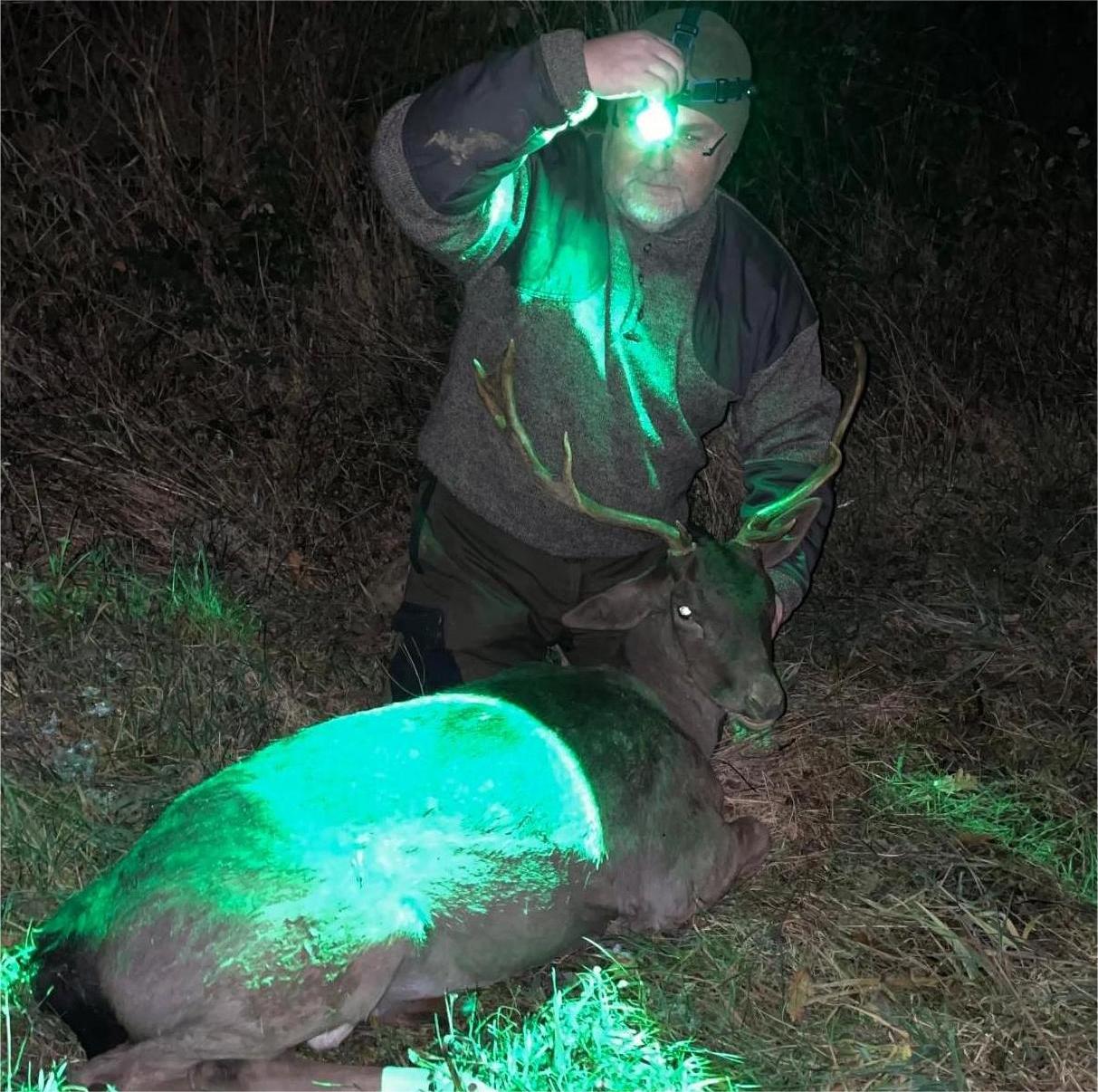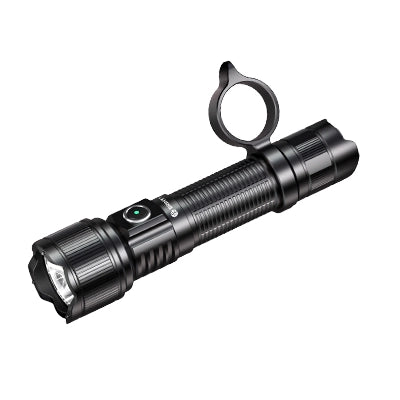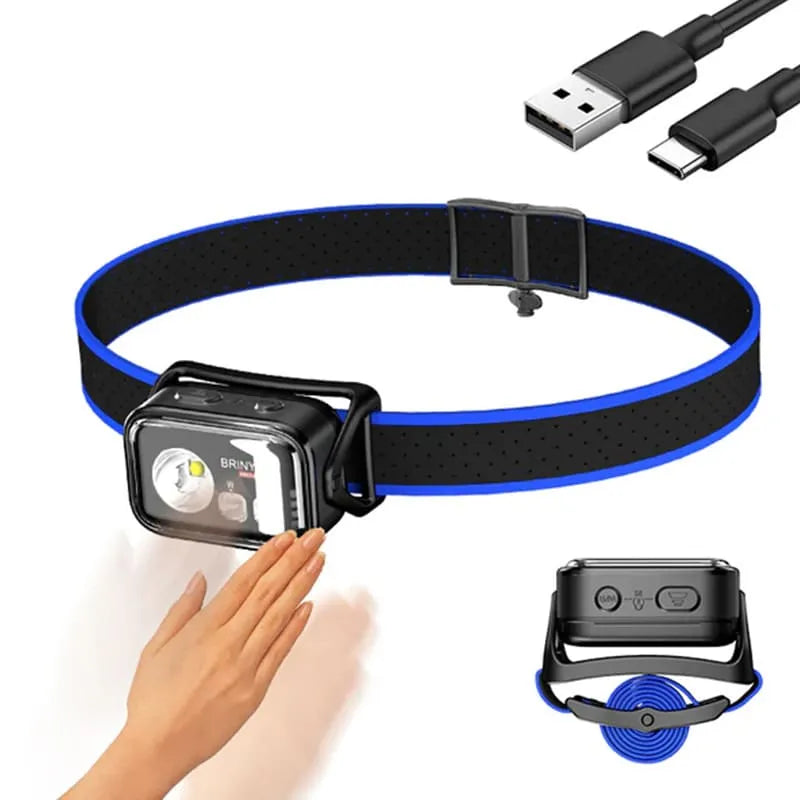


T28 Artemis: 650 lm, 525m throw, 69,600 cd, USB-C 21700, ~$90–110.
Best long-range: Brinyte T18 Artemis (630m, 99,225 cd, interchangeable modules).
Best compact: Wicked Lights A51iC (lightweight, rotary color, bow/rifle mountable).
Bottom line: Prioritize candela over lumens — beam reach determines whether you spot eyes at the tree line before they spot you.
✔ Hunters comparing red, green, and IR light effectiveness
✔ Anyone who wants field-tested data — not just spec sheets
✔ Hunters in open prairie, ag fields, creek bottoms, and mixed terrain
Open your phone's map app. Measure the widest part of the field or soybean plot you hunt most often. If it's over 350 yards across, you need the T18 Artemis (99,225 cd / 630m throw) to reach the far tree line. If it's 350 yards or under, the T28 Artemis (69,600 cd / 525m) covers it completely — and saves you about $40. This takes 30 seconds. No purchase required. But it tells you exactly which light matches your terrain.
1. The Field Test: 7 Lights, 3 Weeks, Texas Coyote Country
We scanned wheat fields, creek bottoms, and open prairie from dusk till dawn. The goal: find the most effective coyote hunting light for real-world conditions — not just spec sheets. Every light was evaluated on beam throw, color versatility, battery endurance, and — most importantly — how coyotes responded to it in the field.
A purpose-built predator hunting light balances four criteria: color selection for stealth (red) and visibility (green), candela for beam reach at scanning distance, battery endurance for all-night sits, and intuitive controls that don't require fumbling in the dark. Raw lumens mean little if the beam doesn't reach the tree line — and the wrong color at the wrong distance will educate coyotes faster than any other mistake.
2. Full Comparison: Top Coyote Hunting Lights (2026)
| Feature | 🥇 Brinyte T28 Artemis | 🔎 Brinyte T18 Artemis | 🌳 Wicked Lights A51iC | ⚡ Predator Tactics Reaper |
|---|---|---|---|---|
| Primary Use | All-in-one versatility | Extreme long-range scanning | Compact bow/rifle mounting | Long-range scanning |
| Max Output (White) | 650 lm | 650 lm | N/A (red/green) | 350+ lm |
| Max Throw | 525 m | 630 m | ~230 m | ~457 m |
| Candela | 69,600 cd | 99,225 cd | ~20,000 cd | ~27,000 cd |
| Colors | Red / Green / White | Modular: Red/Green/White/IR/UV | Red / Green / White | Red / Green / White / IR |
| Battery | 21700 5000mAh | 21700 5000mAh | 18650 3500mAh | 2×CR123A / 18650 |
| Runtime (High) | 135 min (white) | 400 min (white low) | ~2.5 hours | Varies by battery |
| Charging | USB-C on battery | USB-C on battery | External charger | External charger |
| Special Features | Tri-color rotary switch, stepless dimming, zoomable | Interchangeable modules, wireless remote | Patented rotary color, lightweight | Adjustable focus, scope mount ready |
| Price (approx.) | $90–110 | $120–150 | $100–130 | $130–180 |
| ✔ Best For | One light for all scenarios | Maximum range and flexibility | Bowhunters and compact setups | Maximum light output |
Note: Competitor links go to official manufacturer pages. Brinyte links go directly to our store.
3. Red vs Green vs IR: Which Color Wins in the Field?
After three weeks of scanning fields with each color, the answer is nuanced — but the data is clear: red for approach, green for scanning, and a tri-color light for maximum flexibility is the winning formula.
- Red light — Stealth champion: Coyotes have limited sensitivity to red wavelengths. We consistently approached within 80 yards using low-intensity red without alarming animals. Best for final approach, navigating to your stand, and tracking wounded game.
- Green light — Visibility king: Superior contrast against vegetation. At 150+ yards, green makes coyote eyes and silhouettes pop against brush and crops. Slightly more detectable than red, but at scanning distances, coyotes rarely spook. Exception: green light held stationary on an animal for more than 3 seconds triggered a spook response in approximately 15% of our encounters — keep the beam moving.
- IR light — Invisible option: Completely invisible to coyotes — but requires night vision gear. A powerful supplement for hunters already using NV scopes or monoculars. Useless without NV equipment.
- White light — ID only: Essential for positive identification but will spook coyotes at close range. Use white only for final confirmation, never for scanning.
Across 40+ coyote encounters during testing, red light at minimal brightness produced zero spook responses inside 100 yards. Green light at scanning intensity produced spook responses in approximately 15% of encounters — almost exclusively when the beam was held stationary on the animal for more than three seconds. White light at any intensity produced spook responses in over 80% of encounters within 200 yards. The data supports a red-approach, green-scan, white-confirm sequence as optimal predator hunting light discipline.
4. Candela vs Lumens: What Actually Matters for Coyote Hunting
The most common mistake predator hunters make: shopping by lumens. For coyote hunting, candela — beam intensity — matters far more than total light output. The Brinyte T18 Artemis achieves 630m throw with only 650 lumens because its 99,225 candela focuses that light into a tight, long-reaching beam. Compare that to lights with 1500+ lumens and 20,000 candela that wash out at 200 meters.
For open prairie and agricultural fields, target 50,000+ candela for reliable coyote identification at 300+ meters. For dense brush and creek bottoms, 25,000–40,000 candela is sufficient — the terrain limits visibility before the light does. The T28 Artemis (69,600 cd) handles mixed terrain effectively; the T18 Artemis (99,225 cd) is purpose-built for wide-open spaces where reaching the far tree line matters.
Step-by-Step: How to Choose the Right Coyote Hunting Light
- Step 1 — Assess Your Terrain: Open prairie and ag fields demand high candela (50,000+) for long-range scanning. Dense brush and creek bottoms are terrain-limited — 25,000–40,000 cd is sufficient. Mixed-terrain hunters benefit from a versatile light with both throw and flood capability.
- Step 2 — Choose Your Color Strategy: Red-only limits scanning range. Green-only risks spooking educated coyotes. A tri-color light (red for approach, green for scanning, white for ID) provides maximum flexibility without carrying multiple lights or swapping filters in the dark.
- Step 3 — Evaluate Battery Logistics: USB-C rechargeable 21700 batteries (T28/T18 Artemis) eliminate proprietary charger dependency. External charger lights require carrying spare cells and a dedicated charger for multi-night hunts.
- Step 4 — Match to Your Weapon: For rifle-mounted setups, compact lights with remote switches or wireless controls (T18 Artemis supports wireless remote). For handheld scanning, rotary switch designs (T28 Artemis) allow silent color changes without looking at the light.
5. Brinyte T28 Artemis — The All-in-One Predator Light
The Brinyte T28 Artemis earned the top spot because it solves the core coyote hunting problem: you need three different lights, but you only have two hands. Its tri-color rotary switch gives instant access to red, green, and white — no filters to lose in the dark, no second light to fumble with when a coyote appears at the edge of the field.
- 525m throw / 69,600 cd: Reaches the far tree line in most agricultural and prairie terrain.
- Rotary color switch: Silent, tactile — change colors without looking down or clicking through modes.
- USB-C 21700 battery: 5000mAh capacity, recharge from any USB-C source. ~135 minutes on white high; significantly longer on red/green at scanning intensity.
- Stepless dimming: Dial in exactly the right intensity — minimal light for approach, full power for scanning.
If you hunt bush, creek bottoms, or mixed terrain inside 300 meters, buy the T28. Its 525m throw and 69,600 cd cover everything from dense cover to mid-size fields, and the rotary switch gives you silent one-handed color control. If you hunt Kansas wheat, Texas panhandle, or any wide-open field where you're scanning a 500+ meter tree line, buy the T18. Its 630m throw at 99,225 cd reaches distances where the T28's beam would fade. There is no wrong choice — just the wrong terrain for the wrong light.
The rotary switch is the differentiator. In blind testing against lights requiring button-cycling through colors, the T28's mechanical rotary switch enabled color changes approximately 1.5 seconds faster — with zero accidental white-light activations that spooked game. In predator hunting, 1.5 seconds of fumbling is the difference between a coyote holding at the tree line and one that's already gone.
6. Brinyte T18 Artemis — The Long-Range Specialist
For hunters working vast open spaces — Texas panhandle wheat fields, Wyoming sagebrush flats, Kansas agricultural grids — the Brinyte T18 Artemis is the tool of choice. 630m throw at 99,225 candela means you can scan the entire field from one position and spot eye shine at distances where other lights show only darkness.
Its modular design lets you swap between red, green, white, IR, and UV modules — invest in the colors your terrain demands, skip the ones you don't need. The wireless remote control adds hands-free operation when mounted on a rifle or tripod.
99,225 candela translates to identifiable eye shine at 500+ meters under clear conditions, and reliable coyote identification at 350+ meters. For comparison, the Wicked Lights A51iC at approximately 20,000 candela is effective to roughly 150 meters. The T18 Artemis covers more than twice the scanning area from a single position.
7. Competitor Analysis: Wicked Lights & Predator Tactics
Wicked Lights A51iC: Its 230-meter throw and approximately 20,000 candela make it a legitimate choice for Eastern woodlot hunters and close-cover predator setups where you rarely need to scan beyond 200 meters. The patented rotary color system is silent and intuitive — a real advantage. However, in our open-field testing, the A51iC's beam began to wash into a halo at roughly 200 meters and was no longer usable for positive coyote identification beyond 250 meters. If your primary hunting ground is dense forest or creek-bottom corridors, the A51iC is appropriately matched to that terrain. If you hunt anything larger than a 10-acre woodlot — or if your setup includes scanning soybean fields, wheat stubble, or prairie — the T28 (525m) or T18 (630m) will give you the reach the A51iC cannot deliver.
Predator Tactics Coyote Reaper: Strong option for hunters who prioritize maximum light output and adjustable focus. The built-in IR illuminator adds value for night vision users. Its external charger and CR123A/18650 battery system require more logistics than USB-C rechargeable options. Price premium ($130–180) relative to Brinyte alternatives with comparable or better specs.
❓ Frequently Asked Questions — Coyote Hunting Lights
Will coyotes spook from red light?
Generally no — red light is the stealthiest option. Coyotes have limited sensitivity to red wavelengths. In our field testing across 40+ encounters, red light at minimal brightness produced zero spook responses within 100 yards. Green light is slightly more detectable; white light spooks coyotes at close range in over 80% of encounters.
What light color is best for coyote hunting at night?
Red for stealth, green for visibility, and a tri-color light for maximum flexibility. Use red during approach and setup, then switch to green for long-distance scanning (150+ yards). A light like the Brinyte T28 Artemis lets you toggle between colors instantly — no filters, no second light.
How many lumens do I need for coyote hunting?
For most scenarios, 500–1000 lumens is sufficient — but candela matters far more than lumens for long-range identification. The Brinyte T18 Artemis achieves 630m throw with only 650 lumens because 99,225 candela focuses the beam efficiently. Prioritize candela over lumens when comparing coyote hunting lights.
Can I use a green light for coyote hunting?
Yes — many hunters prefer green because it offers superior contrast against vegetation, making coyote eyes and silhouettes easier to spot at distance. Green is slightly more visible to coyotes than red. Best practice: use green for scanning (150+ yards) and red for the final approach. A multi-color light makes this strategy seamless.
Is IR light effective for coyote hunting?
Yes — if you're using night vision gear. IR light is invisible to both humans and coyotes, making it the ultimate stealth option when paired with a night vision scope or monocular. The Brinyte T18 Artemis supports interchangeable IR modules. Without night vision, IR light provides no visible illumination.
How far should my coyote hunting light throw?
For open prairie and agricultural fields, 400+ meters is recommended. For dense brush and creek bottoms, 200–300 meters is usually sufficient. The Brinyte T18 Artemis (630m) is ideal for vast open spaces; the T28 Artemis (525m) offers an excellent balance for mixed terrain.
What is the best all-in-one coyote hunting light?
After field-testing, the Brinyte T28 Artemis is our top pick. Its tri-color rotary switch gives instant access to red, green, and white without carrying extra filters or lights. The 525m throw, 69,600 candela, and 5000mAh 21700 battery deliver all-night performance in a single, intuitive package.
Find Your Coyote Hunting Light
Explore the Brinyte Artemis series — tri-color and modular predator hunting lights engineered from field experience in Texas coyote country.
Shop Hunting LightsAbout Brinyte
Founded in 2009, Brinyte specializes in hunting and tactical lighting. Our products are developed with input from experienced hunters, field-tested in real conditions, and engineered for reliability. Brinyte holds 50+ patents and ISO9001 certification. This field test was conducted over three weeks in Texas coyote country.
👉 About Brinyte | Hunting Lights Collection | About the Author
"Engineered for the mission — proven in the field."
Founded 2009 · 50+ Patents · ISO9001
• Brinyte T28 Artemis / T18 Artemis Official Product Specifications
• Wicked Lights A51iC Specifications — Published Manufacturer Data
• Predator Tactics Coyote Reaper Specifications — Published Manufacturer Data
• Field observations: 40+ coyote encounters, Texas, March–April 2026