
Introduction
Choosing the right light color is one of the most overlooked yet critical decisions for successful night hunting. Different species react differently to red, green, and white light—and understanding these reactions gives hunters a major advantage in visibility, stealth, and control over the environment.
This guide breaks down how red, green, and white light perform in real hunting scenarios, which species they match best, and how to select the right hunting flashlight for your terrain and tactical needs.
Why Light Color Matters in Night Hunting
Animals perceive colors in ways that differ dramatically from humans. Using the wrong color can:
- Spook game instantly
- Reduce your visibility or night vision
- Make scanning ineffective
- Limit your ability to identify animals at distance
On the other hand, the right color allows you to stay hidden, keep animals calm, and maintain clear sightlines while navigating the dark.
Red Light for Hunting — Best for Stealth and Night Vision
Red hunting lights are often the top choice for hunters who prioritize stealth.
Why Red Light Works
- Animals like hogs, coyotes, foxes, and raccoons have limited sensitivity to red wavelengths
- Preserves your natural night vision
- Less intense glare compared to white light
- Excellent for slow scanning and close-range spotting
Best Use Cases for Red Light
- Predator hunting
- Hog hunting
- Short–mid-range scanning
- Sneaking silently into a hunting position
Advantages
- Very low risk of spooking game
- Helps the hunter maintain situational awareness
- Comfortable on eyes during long hunting nights
Limitations
- Limited throw distance
- Not ideal for long-range identification
Recommended for hunters who prioritize stealth and minimal disturbance.

Green Light for Hunting — Best for Long-Range Visibility
Green hunting lights offer a unique balance of brightness, distance, and minimal animal disturbance.
Why Green Light Works
- Human eyes detect green extremely well → excellent clarity
- Provides more throw compared to red
- Many species show low sensitivity to green light
Best Use Cases for Green Light
- Hog hunting
- Varmint hunting
- Field scanning
- Long-distance identification
Advantages
- Strong beam reach
- Sharp visibility without overexposing the environment
- Less intimidating to wildlife compared to white light
Limitations
- Slightly more visible to animals than red
- Can create shadows in thick brush
Ideal for hunters scanning open terrain or needing both distance and reduced disturbance.
White Light for Hunting — Best for Maximum Clarity
White light remains essential, especially when identification and precision are needed.
Why White Light Works
- Provides the highest brightness
- Best for evaluating animal details
- Useful for navigation and field dressing
Best Use Cases for White Light
- Long-range spotting
- Navigating remote areas
- Blood tracking
- Verifying animal species and antler size
Advantages
- Strongest lumen output
- Most natural color rendering
- Crucial for safety and accurate judgment
Limitations
- Most likely to spook wildlife
- Reduces your night vision when used at full power
- Not ideal for scanning unless brightness is reduced
Best used when identification or safety takes priority.
Which Color Should You Choose for Each Species?
| Game Species | Recommended Light Color | Reason |
| Hogs | Red / Green | Least reactive to both colors |
| Coyotes & Foxes | Red | Superior stealth |
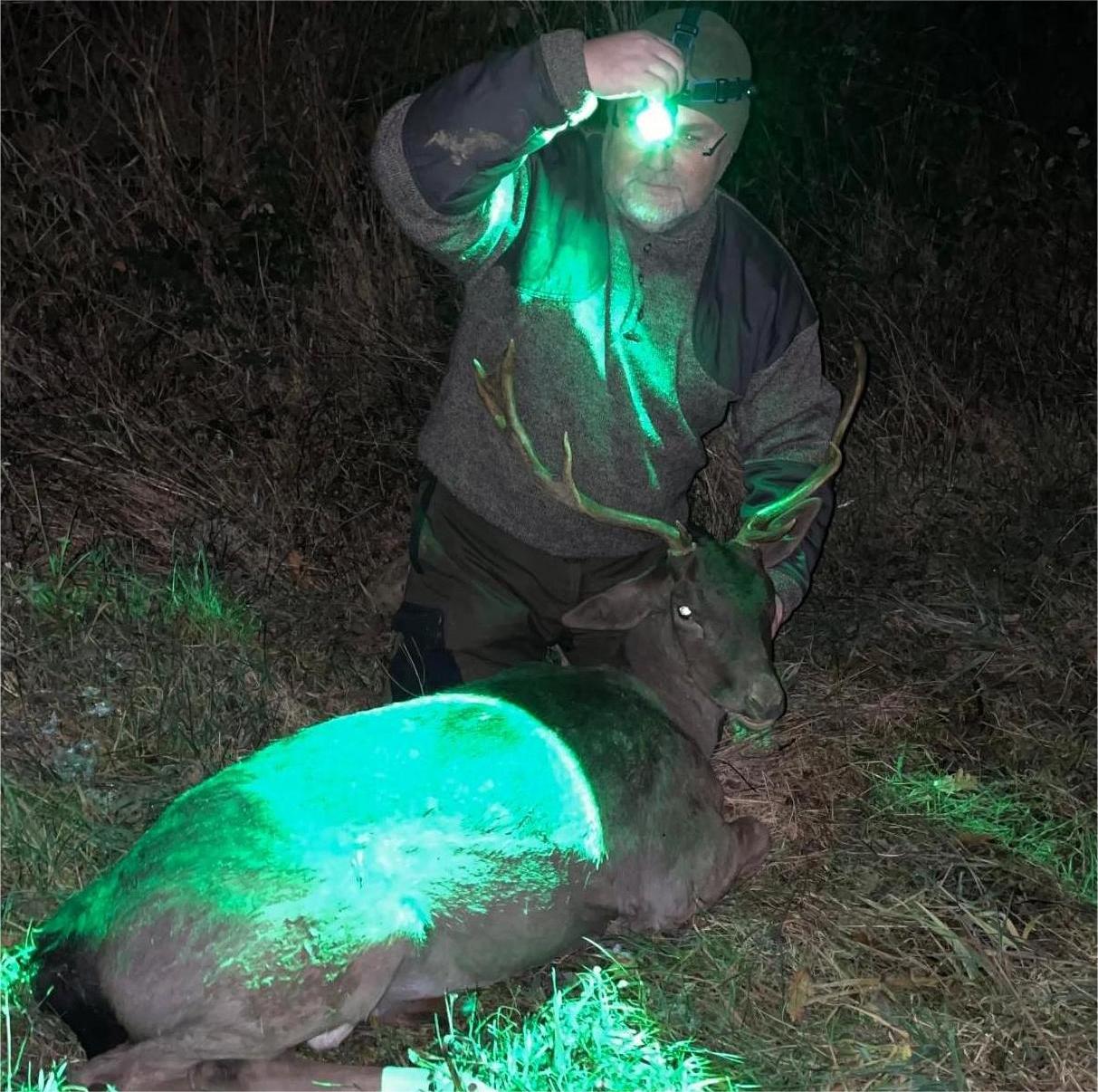
| Deer | Green / Low-white | Deer sense blue/UV strongly, less sensitive to gree |
| Rabbits & Small Game | Red | Gentle illumination |
| Predators (General) | Red | Best for non-spooking |
| Open-field scanning | Green | Stronger throw distance |
Using the right color increases your chances of observation before detection, giving you a tactical edge.
Multi-Color Hunting Flashlights: The Most Versatile Option
Modern hunters increasingly prefer multi-color flashlights because they allow instant adaptation across scanning, tracking, identification, and stealth approaches.
Products offering red, green, and white in one platform deliver unmatched flexibility in the field.
Devices such as:
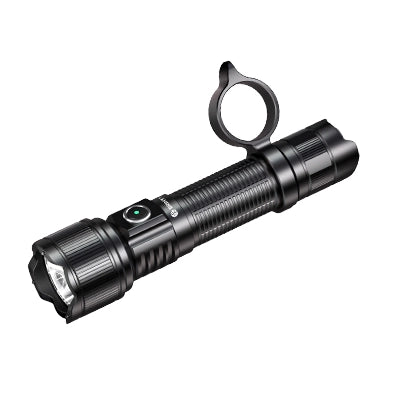
- T28 (Tri-Color Flashlight) — long-range scanning + rapid color switching
- T18 (Red/Green Long-Thrower) — excellent for hogs and predators
- PT16A (High-Output White Light) — general navigation and verification
- HL28 “Artemis” (Tri-Color Headlamp) — hands-free multi-color control for hunters who need mobility and precision

Where HL28 Excels
Brinyte HL28 deserves special attention because it solves a real challenge for night hunters:
balancing stealth, visibility, and hands-free operation.
HL28’s advantages include:
- Instant red/green/white switching without taking your hands off your weapon or gear
- Wide-area flood beam, ideal for scanning forests or thick brush
- Stable, comfortable head-mounted operation for long hunting sessions
- Perfect for tracking, bait-site monitoring, scanning trails, and quiet movement
Brinyte HL28 complements handheld lights like Brinyte T28 or PT16A—many hunters use a headlamp for scanning and a handheld thrower for long-range identification.
Brinyte Flashlights Recommendations
- Brinyte T28 — Tri-color long-range precision
- Brinyte T18 — Red/green thrower for stealth scanning
- Brinyte HL28 — The best tri-color headlamp for hands-free hunting
- Brinyte PT16A — High-lumen white light for navigation & confirmation
Each plays a different role in a hunter’s kit, allowing adaptation to terrain, species, and personal hunting style.
Conclusion
Understanding red vs green vs white light is essential for stealth, clarity, and efficiency in night hunting.
- Red → Stealth, predators, hogs
- Green → Long range, varmint, open fields
- White → Identification, navigation, blood tracking
Choosing the right color gives you a measurable advantage, reduces game disturbance, and enhances overall hunting performance.