

When States Ban Thermal Imaging: Why Hunters Who Can't "Read" Light Are Being Left Behind
✔ Hunters who want to be ready before their state follows Idaho's lead
✔ Traditionalists who believe technology should supplement skill, not replace it
✔ Anyone who has lost a blood trail and wondered "what did I miss?"

1. 2026: The Year Thermal Imaging Started Getting Banned
In March 2026, Idaho Governor Brad Little signed House Bill 939 into law. The bill prohibits the use of thermal imaging, night vision, drones, and real-time transmitting trail cameras for hunting big game from August 30 through December 31. Predators and unprotected wildlife — wolves, coyotes, mountain lions — are fully exempt. The logic is explicit in the bill's language: fair chase. The legislature drew a line between predator management and big game hunting, and placed advanced imaging technology on the wrong side of that line for deer, elk, and other large game.
Idaho is not alone. Wisconsin has long banned night vision and thermal imaging for all hunting. Nevada has one of the strictest bans in the country: no electronic night-vision equipment, thermal imaging devices, or infrared night-vision for locating any game mammal or game bird. Oregon prohibits any light-enhancing device (including thermal) for hunting. Montana has restricted the use of thermal imaging and drones for hunting since 2021, and the regulations have only tightened since.
This is not an isolated trend. It's a legislative direction. And it's forcing a question that a generation of hunters — raised on FLIR and digital NV — never had to answer: when the sensor shuts off, what do you actually know?
States are not banning technology — they're drawing a line between fair chase and technological advantage. Idaho's HB 939 is the most precise expression of this line: thermal is fine for predators, banned for big game. Wisconsin bans it entirely. Nevada bans it entirely. The direction is clear: if you hunt big game, your thermal imaging days may be numbered — regardless of which state you hunt in.
2. Three Things Thermal Can't Do — And You Still Need To
Thermal imaging is an extraordinary tool. It detects temperature differences as small as 0.05°C from hundreds of yards away. A warm-bodied coyote in a cold field is unmistakable. But thermal has three specific blind spots that matter enormously in game recovery — and these blind spots are exactly where traditional light-based hunting skills become irreplaceable.
| Thermal Blind Spot | Why It Happens | What Replaces It |
|---|---|---|
| Stationary cooled bodies | A downed deer that has been dead for 20+ minutes cools to ambient temperature. Thermal sees it as background — indistinguishable from the ground. | Blood tracking strobe — sees blood regardless of body temperature |
| Heavy rain and wet canopy | Water absorbs infrared radiation. Thermal range drops dramatically in rain, and wet leaves create a uniform thermal background that masks heat signatures. | Wide flood beam with red/green light — cuts through wet foliage |
| Dense tree cover | Leaves and branches block infrared — thermal cannot see through solid objects any better than visible light. | High-candela throw beam — reaches through gaps that thermal cannot penetrate |
Thermal imaging finds warm things. It does not find blood. It does not find tracks. It does not tell you what an animal is about to do. These three capabilities — blood tracking, footprint reading, and behavioral prediction — are skills that depend on understanding light, not heat. And when thermal is banned, they become the difference between recovered game and a lost animal.
3. Blood Tracking: How Light Frequency Makes Blood Visible
A deer's blood trail at night is not invisible because it's dark. It's invisible because your eye's scotopic (low-light) vision system cannot distinguish dark red from dark brown or dark green. Rod cells — which dominate your vision at night — are nearly color-blind. They detect brightness, not hue. A blood droplet on a brown leaf, under a white flashlight, appears as a dark spot among dark spots.
The solution is not more light. It's light at a frequency that creates contrast between blood and everything else. This is where the Brinyte SPECTRA T5X was purpose-built.
The Physics of Blood Fluorescence
Blood contains hemoglobin — a protein that absorbs ultraviolet light at 365–415nm and re-emits it as visible orange-pink fluorescence. A standard UV light (365nm) triggers this effect, but the fluorescence is faint and easily overwhelmed by ambient light. The T5X takes a different approach: its dual-frequency strobing at 5Hz and 10Hz exploits a visual phenomenon called temporal contrast enhancement. Your visual cortex is wired to detect change. A steady beam washes blood and leaf into the same gray category. A pulsing beam at specific frequencies separates them — blood droplets that are invisible under constant light become distinct dark spots under the strobe.
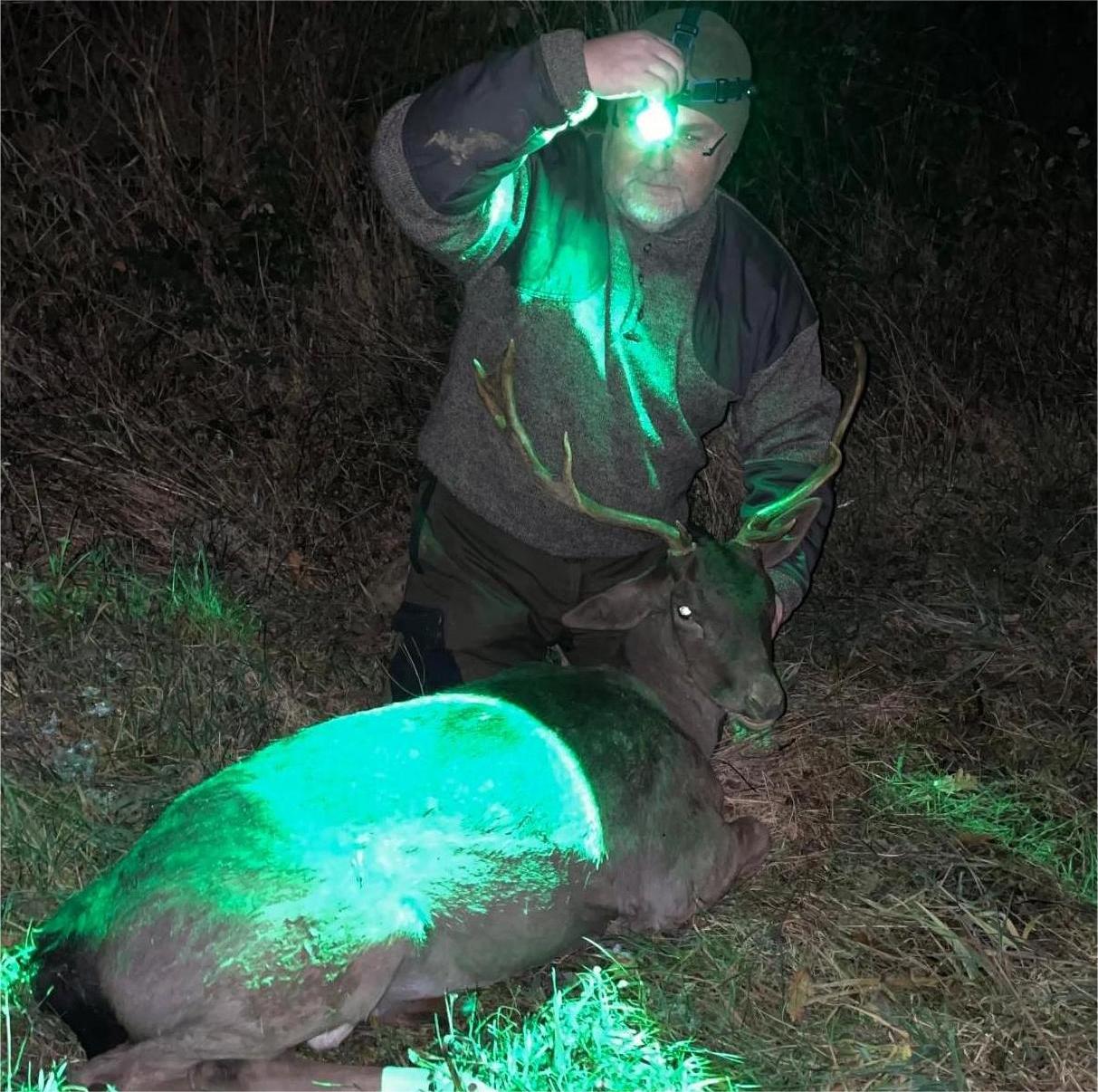
Across multiple hunting forums in 2025–2026, experienced trackers are reporting that a combination of UV + wide-angle white flood + red low-light mode is the most reliable blood-finding toolkit when thermal is unavailable. Several users specifically noted that green light at moderate intensity (300–500 lumens) makes fresh blood appear black against green vegetation — a reversal of the usual contrast dynamic that can reveal droplets missed by white light.

4. Footprint ID: Why Different Light Colors Reveal Different Tracks
If a blood trail runs dry — and even the best-placed shots sometimes produce sparse external bleeding — the next layer of tracking is footprint identification. A wounded animal moves differently than a healthy one: shorter strides, deeper impressions, dragging toes. These signs are on the ground. The question is whether your light can reveal them.
Different soil types reflect and absorb different wavelengths. The color of light you use determines which ground features "pop" and which disappear:
| Surface Type | Best Light Color | Why |
|---|---|---|
| Wet mud / clay | Red light | Red wavelengths are absorbed by dark wet soil but reflected by disturbed surface texture. Fresh tracks appear as lighter impressions against a dark background. |
| Dry sand / loose soil | Green light | Green enhances contrast in granular particles. Sand grains disturbed by a hoof or paw reflect green differently than undisturbed grains — the track outline becomes visible. |
| Rock / hardpan | White light (low angle) | On hard surfaces, tracks are not impressions but scuffs and scratches. White light held at a 15–20° angle casts micro-shadows that reveal texture disruption invisible from above. |
| Leaf litter / forest floor | Red + Green alternating | Disturbed leaves reflect differently than settled leaves. Alternating between red and green makes crushed vegetation stand out — a trick used by SAR trackers for decades. |
The light color that works best for tracking is the one that the ground you're standing on absorbs the most. You're not trying to illuminate the entire forest. You're trying to create the maximum contrast between a disturbed surface and an undisturbed one. A tri-color light — like the Brinyte T28 — lets you switch wavelengths until the tracks appear.
5. Animal Behavior: How Each Species Reacts to Different Light Colors
Understanding how different species perceive light is not academic — it determines whether you see an animal or whether it sees you first. When thermal is banned, you're back to using visible light to scan, approach, and identify. The color you choose at each phase directly affects your success rate.
| Species | Most Sensitive To | Least Sensitive To | Recommended Light Sequence |
|---|---|---|---|
| Whitetail Deer | Blue / White (400–500nm) | Red (620–750nm) | Red approach → Red scanning → White ID only at shot |
| Feral Hog | White / Blue | Green (520–560nm) | Red or green approach → Green scanning → White ID |
| Coyote | White / Blue | Red (partially) | Red approach → Red or IR scanning → White or green ID |
| Elk | Blue / UV | Red | Red only — avoid any white exposure |
6. What Decides a Night Hunt When the Tech Is Gone
The hunters who will thrive under thermal bans are not the ones who buy the most expensive replacement gear. They're the ones who understand three fundamentals that technology never replaced — only obscured:
- Blood reflects specific light frequencies differently than soil, leaves, and water. Learn which frequencies work on which terrain, and you'll find blood that thermal could never see.
- Footprints are not just shapes — they're contrast problems. The right light color makes them visible. The wrong light color makes them disappear. This is not a matter of brightness. It's a matter of wavelength.
- Every game species has a different relationship with light. Deer ignore red. Hogs tolerate green. Coyotes flee from white. Knowing these thresholds — and carrying a light that can adapt to them — is more valuable than knowing how to calibrate a thermal scope.
The legislative trend is clear. Idaho, Wisconsin, Nevada, Oregon, Montana — the list is growing. The hunters who see this coming and rebuild their fundamental light-based skills now will be the ones still recovering game when others are still reading the bill text. The gear that serves them won't be the most expensive sensor on the market. It will be a light that lets them see what the sensor cannot.
Master Light Before the Sensors Go Dark
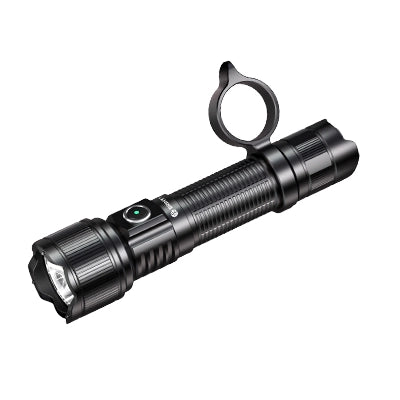
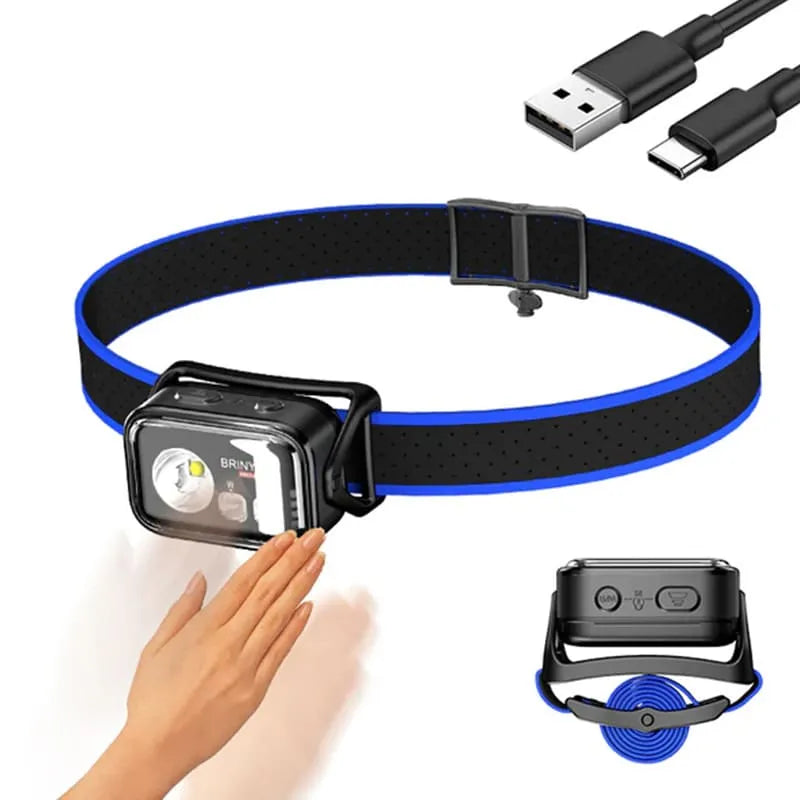
Shop the Brinyte SPECTRA T5X (dual-frequency blood tracking strobe) and T28 Artemis (tri-color rotary switch) — built for the hunter who understands that light is a skill, not a backup plan.
Shop Hunting LightsAbout Brinyte
Founded in 2009, Brinyte designs and manufactures professional-grade illumination tools at our Shenzhen facility under ISO9001 certification. Our hunting lights — T5X, T28, ZT40, XP22 MK3 — are engineered for the hunter who understands that technology supplements skill, not replaces it. Brinyte holds 50+ patents covering optical design, switching mechanisms, and battery architecture.
👉 About Brinyte | Hunting Lights Collection | About the Author
🔍 Fact-Checking Policy: Legislative information sourced from official state bill texts (Idaho HB 939, Nevada NAC 503.1455). Animal vision data based on published wildlife biology research. Product specifications verified against official Brinyte documentation.
"Engineered for the mission — proven in the field."
Founded 2009 · 50+ Patents · ISO9001 · 5-Year Warranty
• Idaho House Bill 939 — Hunting Technology Restrictions, 2026 Session
• Nevada NAC 503.1455 — Thermal Imaging/Optics Prohibition
• Wisconsin DNR — Night Hunting Regulations (2025–2026)
• Brinyte SPECTRA T5X & T28 Artemis Official Product Specifications
• Published Wildlife Biology Research — Ungulate Vision Spectra & Light Sensitivity