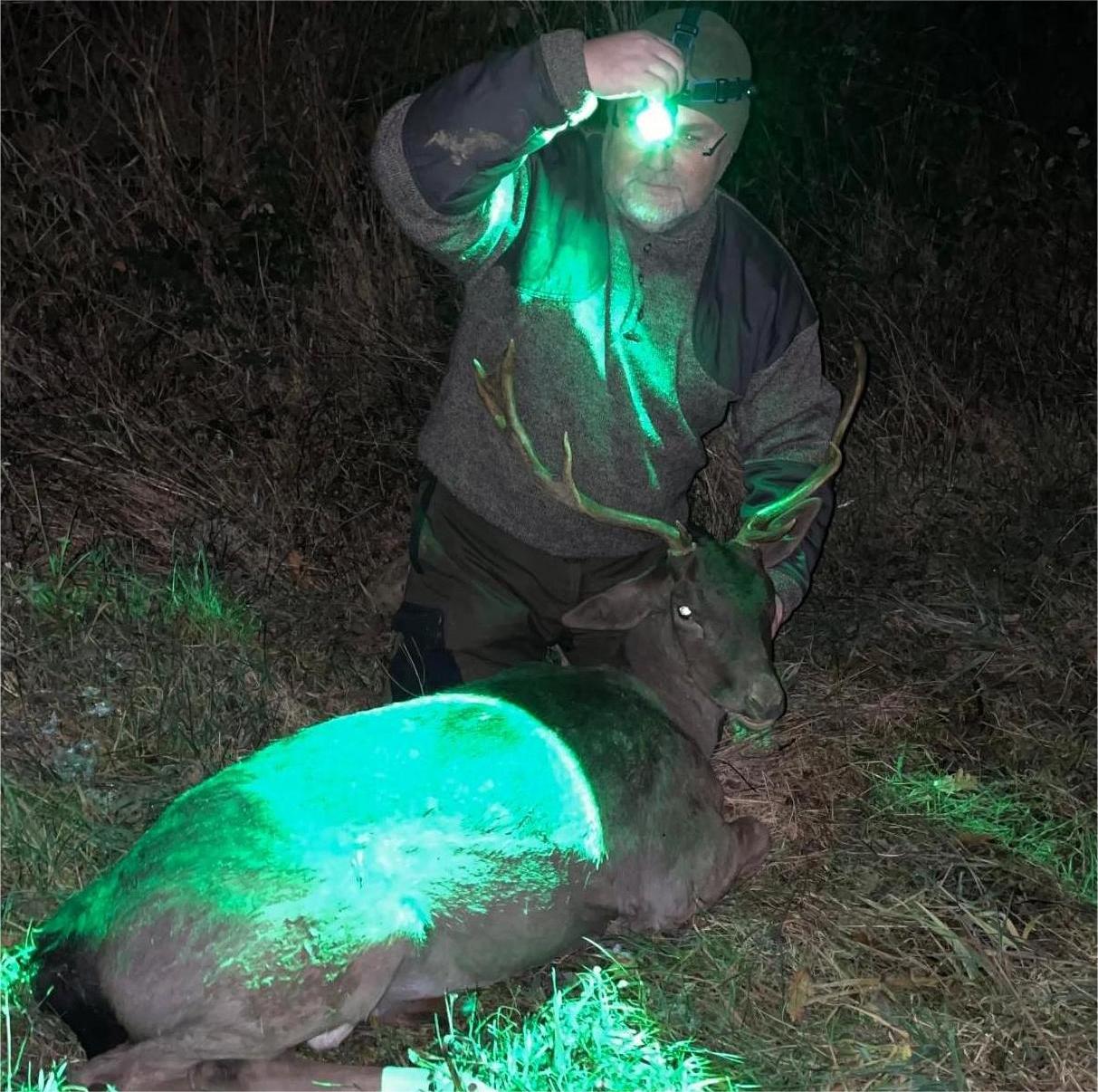


✔ Hunters needing color-specific illumination (green/red/UV)
✔ SAR teams requiring long throw + wide flood in one tool
✔ Tactical buyers choosing between removable battery (ZT40) and built-in battery (PT16A)
1. Why the ZT40 Exists: The Case for a Zoomable Tactical Light
Most tactical flashlights force a compromise. A dedicated thrower (high candela, narrow beam) excels at long-distance identification but creates tunnel vision — you can see what is 400 meters ahead but nothing in your peripheral. A flood light illuminates wide areas comfortably but cannot reach beyond 150 meters with usable intensity. You choose one and hope the other is not needed.
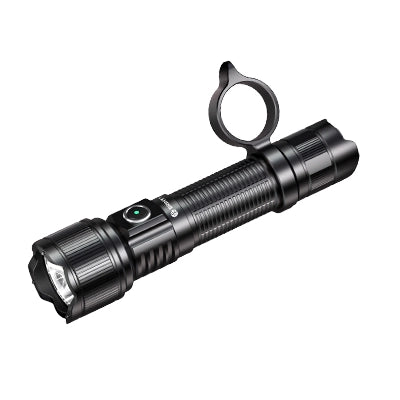
The Brinyte ZT40 rejects this compromise. Its 6°–70° adjustable zoom — achieved by rotating the head to move the lens assembly relative to the LED — provides both beam profiles in a single tool. At 6°, the beam is a tight spotlight producing 60,000 candela and 490 meters of throw on Low mode. At 70°, it is a wide flood for area scanning, campsite illumination, or building clearing. The transition is continuous and one-handed.
This is not a gimmick. For a patrol officer who needs to scan a parking lot (flood) and then identify a subject at distance (spot), the zoom mechanism eliminates the need to carry two lights. For a hunter tracking blood at close range (flood) and then scanning a field for movement (spot), the same transition applies. The ZT40 exists because real missions do not stay at one distance.

A zoomable flashlight (also called a focus-adjustable or variable-focus light) uses a movable lens or reflector system to change the beam angle continuously between a narrow spotlight and a wide flood. The ZT40 achieves this with a rotating head mechanism that shifts the TIR lens position relative to the SFT-25R LED, altering the beam geometry without compromising the IPX8 waterproof seal. Unlike fixed-focus lights, a zoomable design gives the user real-time control over the tradeoff between beam distance (candela) and area coverage (beam width).
2. Build Quality & Hardware: 21700 Power, Hidden USB-C, IPX8
The ZT40 is built around a single 21700 lithium-ion cell (5000mAh, included). This is a standard-format, user-replaceable battery — not a sealed proprietary pack. When the cell eventually degrades after several years of charge cycles, you replace a $15–$25 battery instead of the entire light. This is the same design philosophy as Brinyte's PT16A and T28 Artemis, and it stands in direct contrast to lights with permanently sealed batteries that become e-waste when the cell dies.

Hidden USB-C charging is a standout engineering detail. The USB-C port is concealed under the tailcap threads — you unscrew the tailcap slightly to access it. This design preserves the IPX8 waterproof rating (submersible to 2 meters) by eliminating the exposed rubber flap that fails on many competing lights. A red/green charge indicator shows status at a glance, and a full charge takes approximately 3 hours. The same port works with any standard USB-C cable and power source — car charger, power bank, laptop.
The body is machined from 6061 aluminum with Type III hard anodizing. At 149.5mm long, 27mm tube diameter, and 44mm at the head, it is sized for belt or pack carry — not pocket EDC. Weight is 147g without the battery, approximately 220g with the 21700 cell installed. The single tail switch is a forward-clicky design: half-press for momentary-on, full click for constant-on, with mode memory that recalls the last-used brightness level. The interface is deliberately simple — two modes (High and Low) for white LED versions, avoiding the mode-cycling fatigue that plagues multi-mode lights in high-stress situations.

3. Performance Modes — What the Numbers Mean in the Field
The white LED ZT40 uses a Luminus SFT-25R emitter — a domeless LED optimized for high candela in compact optics. It produces a cool white beam at approximately 6500K color temperature. Independent testing measured 1,640 lumens at turn-on and 1,570 lumens at 30 seconds (ANSI FL1 standard), closely matching the 1,650-lumen rating[reference:0].
| Mode | Beam Type | Output (lm) | Beam Distance (m) | Peak Intensity (cd) | Runtime |
|---|---|---|---|---|---|
| High | Flood-biased | 1,650 | 282 | 12,500 | 1h 35min |
| Low | Spot-biased | 500 | 490 | 60,000 | 5h 20min |
* Measured with included 21700 5000mAh battery per ANSI/PLATO FL1 standards. The ZT40 uses a 2-mode interface (High/Low) for the white LED version.
Runtime Behavior: The Step-Down You Need to Know About
Independent testing reveals a critical thermal behavior: High mode starts at approximately 1,650 lumens and begins stepping down within 30–40 seconds as the light reaches its thermal limit. Output stabilizes around 800–900 lumens before dropping further to approximately 300 lumens for the remainder of the 1-hour-35-minute runtime. This is not a defect — it is the ZT40's thermal regulation preventing the LED from overheating in a compact body without aggressive cooling fins[reference:1].
The practical implication: High mode should be treated as a short-duration turbo for momentary distance needs — checking a suspicious vehicle, scanning a field edge, signaling. For sustained illumination, Low mode (500 lumens, 5+ hours) is the ZT40's true working mode — and at 490 meters of throw, it reaches farther than most lights' turbo modes.
The ZT40's 1,650-lumen High mode is a peak, not a plateau. Like most lights in this form factor, it thermally throttles within the first minute. The headline number that matters is not 1,650 lumens — it is 490 meters of throw on Low mode for over 5 hours, a combination of reach and endurance that few zoomable lights in this price range match.
4. The Multi-Color Lineup — One Light, Six Missions
The ZT40 series is available in six distinct LED colors, each purpose-built for a specific operational need:
| LED Color | High Output | Best For | Key Advantage |
|---|---|---|---|
| White (SFT-25R) | 1,650 lm | Tactical ops, SAR, general illumination | Maximum brightness and throw; 490m beam distance on Low |
| Red | 450 lm | Stealth hunting (deer, predators) | Preserves night vision; minimally detectable by game mammals |
| Green | 500 lm | Hog hunting, open-field scanning | Hogs are effectively colorblind to green; superior human perception for detail at distance |
| IR850 | 100 lm (IR) | Night vision (Gen 2+, digital NV) | Longer throw for NV scopes; faint red glow visible to humans |
| IR940 | 100 lm (IR) | Covert NV operations | Zero visible signature — completely invisible to humans and animals |
| UV (365nm) | 145 lm (UV) | Blood tracking, forensic inspection | Causes hemoglobin to fluoresce; reveals trails invisible to white light |
* All color versions share the same body, zoom mechanism, IPX8 rating, and removable 21700 battery architecture.
5. Technical Specifications
| LED | Luminus SFT‑25R White (multi-color versions available) |
|---|---|
| Battery | 1 × 21700 5000mAh (included, user-replaceable, USB‑C rechargeable) |
| Charging | Hidden USB‑C port (under tailcap), red/green charge indicator, ~3h full charge |
| Water Resistance | IPX8 (submersible up to 2m) |
| Impact Resistance | 1m |
| Focus Range | 6° (spot) to 70° (flood) via rotating head |
| Interface | Forward-clicky tail switch (momentary-on), 2-mode (High/Low), mode memory |
| Dimensions | Tube 27mm (1.06″), Head 44mm (1.73″), Length 149.5mm (5.88″) |
| Net Weight | 147g (0.324lb) excluding battery |
| Accessories | Optional: tactical finger ring, remote pressure switch, belt clip, lanyard |
6. ZT40 vs PT16A: Removable Battery vs Built-in Battery — Which Philosophy Fits You?
Brinyte's two flagship tactical lights serve different users with different priorities. The ZT40 and PT16A are not competitors — they are complementary tools built around a genuine engineering tradeoff:
| Decision Factor | Brinyte ZT40 | Brinyte PT16A |
|---|---|---|
| Max Output | 1,650 lumens | 3,000 lumens |
| Max Throw | 490m (Low mode, spot focus) | 458m (Turbo mode) |
| Beam Control | 6°–70° adjustable zoom | Fixed reflector (balanced throw/flood) |
| Battery | Removable 21700 (user-swappable) | Built-in 21700 (non-removable) |
| Charging | Hidden USB-C (under tailcap) | Exposed USB-C (waterproof port) |
| Waterproof | IPX8 (submersible to 2m) | IP68 (submersible to 2m, dust-tight) |
| Interface | Single tail switch, 2 modes | Dual tail switches (power + mode), 6 modes |
| Head Diameter | 44mm | 39mm |
| Weight | 147g (w/o battery) | 152g (w/ built-in battery) |
The core difference is battery architecture. The ZT40 uses a removable standard-format 21700 cell — when the battery eventually reaches end-of-life after several years, you unscrew the tailcap, swap in a new $15–$25 cell, and the light continues. The PT16A uses a built-in 5000mAh battery — more convenient (no cell to remove, no external charger needed; the waterproof USB-C port is always accessible), but the battery cannot be replaced by the user. This is the same design philosophy debate explored in our Reddit battery debate analysis[reference:2][reference:3].
Choose the ZT40 if: you want zoomable beam control for varying distances, need a removable battery for extended field missions (carry spare 21700 cells), or operate in wet conditions where the hidden USB-C port adds long-term reliability. Choose the PT16A if: you need maximum lumen output (3,000 lumens) for defensive use, prefer the dual-switch interface with instant strobe, or want the simplicity of a built-in battery with external USB-C charging — no cell to manage.
7. Real-World Use Scenarios
🔹 Law Enforcement & Security
Patrol officers need instant access to both blinding light (for disorientation) and wide flood (for scene assessment). The ZT40's single tail switch — half-press for momentary, full-click for constant — provides intuitive one-handed operation under stress. The zoom mechanism allows transitioning from a wide building-search flood to a pinpoint alleyway spot in seconds.
🔹 Night Hunting (Hogs, Coyotes, Varmints)
The green LED ZT40 is ideal for hog hunting — hogs have minimal sensitivity to green wavelengths, and the zoomable beam lets you scan fields in flood mode before tightening to spot for long-range identification at up to 490 meters. Red LED versions serve the same role for coyote and predator hunting where maximum stealth is required.
🔹 Search & Rescue
When every second counts, the ZT40's Low mode (500 lumens, 490m throw, 5+ hours runtime) becomes a search grid tool — tight enough to reach treelines and ridgelines, sustained long enough to methodically sweep a sector. The removable battery means the SAR operator can carry spare 21700 cells and swap them in seconds without waiting for a recharge.
🔹 Outdoor & EDC
Campers, hikers, and mechanics will find the adjustable beam invaluable. Wide flood for campsite illumination; narrow spot for inspecting a distant trail or a mechanical component. At 220g with a loaded battery, it is not an ultralight EDC option — but for pack carry or vehicle storage, the versatility outweighs the weight.
8. Final Verdict: The Right Tool for the Right Mission
The Brinyte ZT40 excels where adaptability matters more than any single specification. Its combination of adjustable beam, long throw, user-replaceable battery, and hidden USB-C charging makes it a compelling choice for professionals and serious outdoor users who need one light to cover multiple roles.
Strengths: Zoomable beam eliminates the need for multiple lights. 490m throw on Low mode with 5+ hours of runtime. Removable 21700 battery ensures long-term serviceability. Hidden USB-C port preserves waterproof integrity. Six color options cover white light through IR and UV missions.
Limitations: High mode thermally throttles within the first minute (not a design flaw, but a physical reality of the form factor). Single tail switch means mode cycling — though with only 2 modes, this is less burdensome than on multi-mode lights. IPX8 (not IP68) means dust ingress protection is not certified, though the hidden port design provides effective sealing. Head diameter of 44mm makes it bulkier than fixed-focus alternatives.
For law enforcement, hunters, SAR personnel, and outdoor professionals who need a zoomable, long-throw light with a battery architecture built for years of service, the ZT40 earns its place. For users who prioritize maximum lumen output and a more compact head, the PT16A (3,000 lumens, 458m, fixed reflector) is the complementary alternative.
The ZT40 is not the brightest light Brinyte makes, nor the most compact. It is the most adaptable — and for the professional who faces variable distances, variable environments, and variable missions in a single shift, that adaptability is worth more than any incremental lumen gain. The removable 21700 battery and hidden USB-C port mean this light will still be in service long after sealed-battery alternatives have been discarded.
Step-by-Step: How to Deploy the ZT40 in the Field
- Set beam width for the task: Rotate the head counterclockwise to 70° for wide flood (area scanning, campsite, building clearing). Rotate clockwise to 6° for tight spotlight (long-range identification, signaling). The zoom is continuous — stop at any intermediate angle for balanced throw and spill.
- Select mode based on duration needs: Use High mode (1,650 lumens) for momentary tasks under 60 seconds — subject identification, signaling, defensive disorientation. Use Low mode (500 lumens, 5+ hours) for sustained work — search grid sweeps, blood tracking, campsite illumination. Mode memory recalls your last setting.
- Swap battery for extended runtime: Unscrew the tailcap, remove the depleted 21700 cell, insert a charged spare, and retighten. Practice this in the dark before you need to do it in the field. Carry spare cells in a non-conductive case — not loose in a pocket with keys or coins.
Ready to Add the ZT40 to Your Kit?
Available in 6 LED colors — white, red, green, IR850, IR940, UV. Includes 21700 5000mAh battery, USB-C charging cable, and spare O-rings.
Shop ZT40 Now →About Brinyte
Founded in 2009, Brinyte designs and manufactures tactical, hunting, and outdoor lighting in-house — no OEM outsourcing. 50+ patents. ISO9001 certification. All core products use standard removable batteries with onboard USB-C charging — built for professionals who need tools that last longer than a single battery cycle.
“Engineered for the mission — proven in the field.”
Founded 2009 · 50+ Patents · ISO9001
9. Frequently Asked Questions
How do I charge the Brinyte ZT40?
Unscrew the tailcap slightly to reveal the hidden USB‑C port. Connect a USB‑C cable (any standard charger or power bank). The red indicator shows charging; green means fully charged (~3 hours). The hidden port design preserves the IPX8 waterproof rating.
Is the ZT40 compatible with weapon mounts?
Yes. The 27mm (1.06″) body diameter fits most standard 1-inch flashlight mounts. Optional remote pressure switches and Picatinny/M‑LOK adapters are available separately. The forward-clicky tail switch with momentary-on is compatible with pressure pad activation.
Which light color is best for hog hunting?
Green light is generally preferred because hogs have minimal sensitivity to green wavelengths, and it provides good contrast in vegetation. The ZT40 green version delivers 500 lumens with the same zoomable beam as the white version. For more on this topic, see our Red vs Green Hunting Light guide.
How does the zoom mechanism work? Does it affect waterproofing?
Rotate the head smoothly from 6° (spot) to 70° (flood). The mechanism shifts the TIR lens position relative to the SFT-25R LED. The IPX8 rating is maintained even when zoomed — internal O‑rings keep water out regardless of the head position.
Can I use a different 21700 battery in the ZT40?
Yes. The ZT40 accepts standard unprotected 21700 cells (flat top or button top). The included 5000mAh battery is optimized for best performance, but any quality 21700 from Samsung, LG, Molicel, or Panasonic will work. This is the advantage of a removable standard-format battery over a proprietary sealed pack.
What is the difference between IPX8 and IP68?
Both are submersible. IP68 means dust-tight (first digit '6') plus continuous submersion beyond 1 meter. IPX8 means continuous submersion beyond 1 meter, but the 'X' indicates dust protection was not formally tested — not that it is absent. The ZT40's hidden USB-C port and O-ring seals provide effective dust protection in practice, even though the rating omits the dust test.