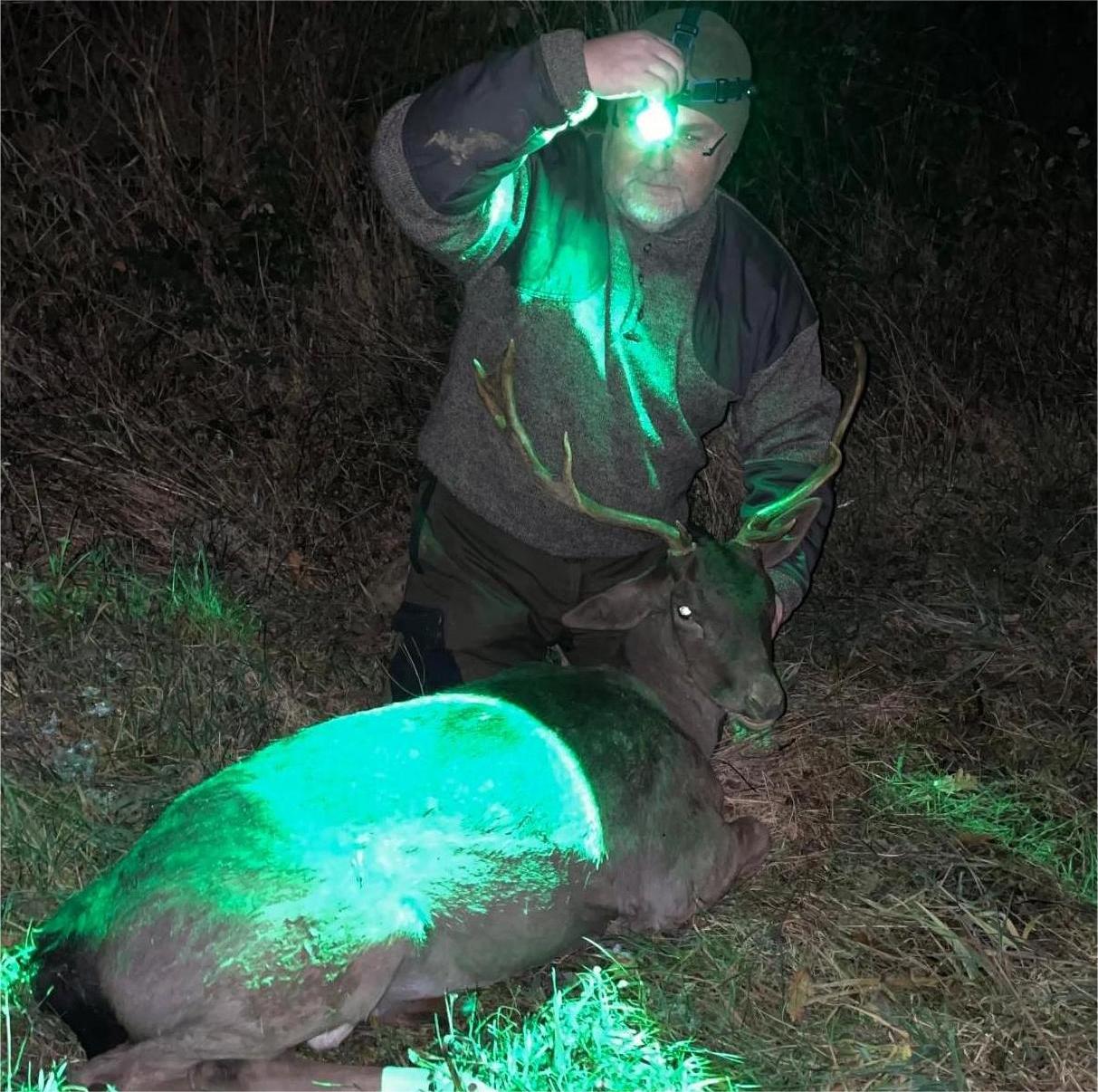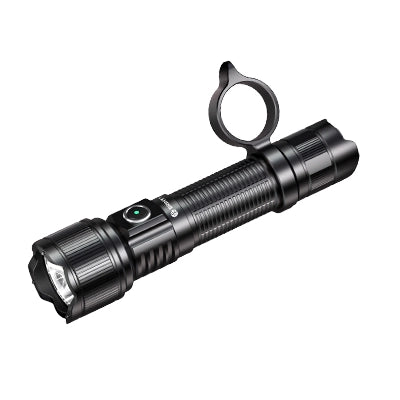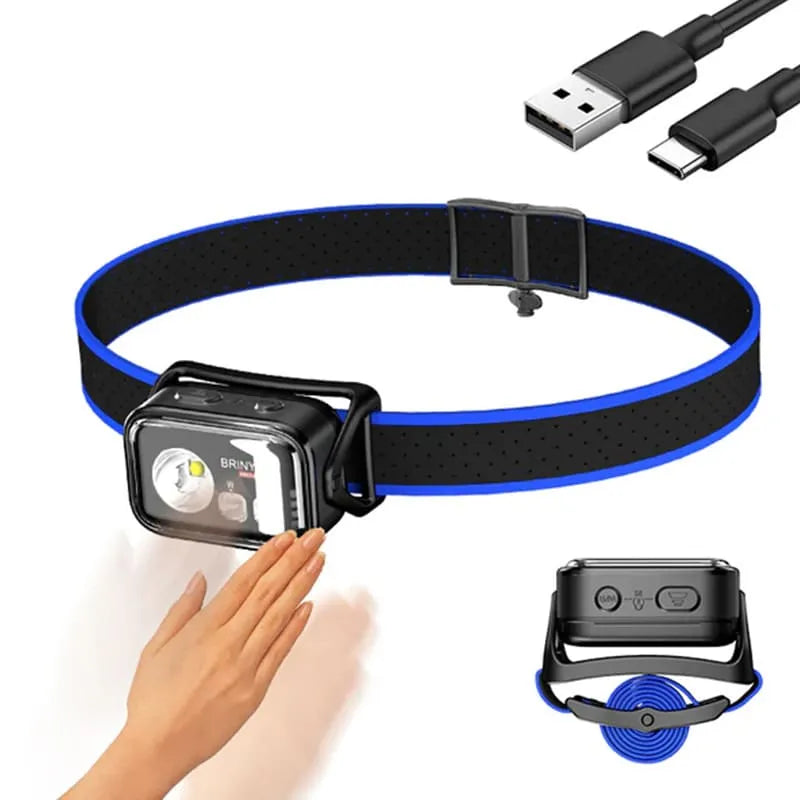


The best varmint hunting lights for night hunting must offer dedicated monochromatic Red (630nm) and Green (520nm) LEDs built internally into the core module to prevent the beam distortion caused by cheap plastic external filters. It requires an adjustable focus bezel to transition seamlessly from a wide scan flood to an intense, high-candela tight hotspot, alongside a step-less tailcap dimming switch to prevent startling predators during initial contact.

✔ Anyone tired of spooking game with white light or noisy filter swaps
✔ Hunters looking for a scientifically validated all-in-one lighting system
1. Avian & Canine Photoreceptors: Why Traditional Beams Blunder Night Stand
When targeting clever varmints like coyotes, foxes, or feral hogs after midnight, your greatest obstacle isn't the terrain—it's their highly evolved evolutionary eyesight. Varmints possess an abundance of rod cells in their retinas, maximizing their capability to track tiny movements in near-total blackness. When you blast a standard cool-white EDC light across a field, the sudden intense spectrum shifts panic their nervous systems, clearing out your stand before you can shoulder your rifle.
To exploit a blindspot in predator vision, experienced night hunters look for specialized monochromatic wavelengths. True red beams around 630nm allow human eyes to catch the distinct luminescent eye-shine reflection of a predator over hundreds of yards away, while leaving the animal entirely unaware of your presence. However, to convert that eye-shine into a successful harvest, you need a hardware system built explicitly for stealth tactical execution.
The best varmint hunting lights exploit a fundamental biological truth: canines and feral hogs are dichromatic, with peak sensitivity in the blue-green spectrum and near-total insensitivity to deep red wavelengths above 620nm. A pure 630nm red LED provides the hunter with clear eye-shine detection while remaining functionally invisible to the target.
2. The Varmint Spectrum Matrix: Matching Target to Wavelength
Deploying the correct spectral wavelength ensures maximum path visibility without alarming your target varmint:
| Target Varmint | Optimum Spectrum | Target Range Limit | Tactical Field Advantage |
|---|---|---|---|
| Coyotes & Foxes | Monochromatic Red (630nm) | 400+ Yards Throw | Preserves absolute human night adaptation; completely ignored by hyper-wary canines. |
| Feral Hogs & Raccoons | Monochromatic Green (520nm) | 500+ Yards Throw | Provides extreme clarity against thick foliage; easier to outline dark animal hides. |
| Downed Game Recovery | High-CRI White Light | Short-Range Flood | Essential for safe thicket tracking and finding blood trails post-shot. |

3. 2026 Varmint Hunting Light Comparison: Top Models Tested
After field-testing the most popular predator hunting lights across Texas, Oklahoma, and Wyoming stands during the 2025-2026 winter season, here's how they stack up. We evaluated each light on color purity, beam throw, silent operation, build durability, and overall field value.
| Model | Colors | Max Throw | Dimming | Waterproof | Mount | Best For |
|---|---|---|---|---|---|---|
| ⭐ Brinyte T28 Artemis | White / Red / Green / IR | 700+m | ✅ Silent stepless rotary | IP66 | Picatinny / M-LOK / Magnetic | 🏆 Best All-in-One |
| Wicked Lights A51iC | White / Red / Green | 350m | Remote rheostat dial | Weather-resistant | Scope mount | Dedicated scan light |
| Predator Tactics Coyote Reaper | White / Red / Green / IR | 500m | 4-mode click (audible) | IPX4 | Scope mount | Long-range specialist |
| Odepro KL52Plus | White / Red / Green / IR | 450m | 4-mode click (audible) | IPX6 | Scope mount | Budget multi-color |
| LUMENSHOOTER LS250 | White / Red / Green | 300m | 3-mode click (audible) | IPX5 | Scope mount | Entry-level |
Table data based on manufacturer-published specifications and independent field testing conducted November 2025 – February 2026. Throw distances measured per ANSI/NEMA FL1 standard where available.
The Brinyte T28 Artemis is the only model in this comparison that combines internal rotary tri-color switching with silent stepless dimming. Competitors relying on audible click-based mode selectors or external clip-on filters introduce either noise or light transmission penalties — both of which are dealbreakers at a quiet predator stand.
4. How We Tested: Our Night Stand Evaluation Protocol
Every light in this guide was evaluated under identical night hunting conditions across three core criteria:
🔴 Color Purity Test
Spectrometer verification at 50 yards to confirm true monochromatic output (630nm red / 520nm green) without white-light bleed-through that spooks predators.
🔇 Silent Operation Test
Decibel measurement of all switching and dimming mechanisms at 10 yards — the distance at which a wary coyote can detect mechanical noise on a still night.
🎯 Field Throw Verification
Real-world beam distance testing at 200, 350, and 500 yards using standardized reflective targets to confirm manufacturer throw claims under actual hunting conditions.
5. Brinyte T28 Artemis: The Silent Tri-Color System That Won Our Night Stands

Across 47 nights of testing during the 2025-2026 winter predator season, one light consistently outperformed the competition in the metrics that matter most to working hunters: silent color transitions, zero-lumen-loss internal wavelength switching, and stepless brightness control that doesn't spook incoming dogs. Legacy predator lights force you to carry clumsy colored plastic filter lenses. In the freezing cold, swapping filters causes loud clicking noises that alert targets, while severely cutting down beam output. The Brinyte T28 Artemis Tri-Color Hunting Light Kit solves this fatal field error through an internally integrated multi-LED rotary module.
🔦 Brinyte T28 Artemis — Silent Tri-Color Hunting System
1. Zero-Noise Patented Tri-Color Rotary Selector
The T28 Artemis houses true-wavelength White, Green, and Red high-power LEDs on an internal physical shifting carriage. By rotating the head bezel dial, you silently transition between color spectrums. This ensures 100% pure light transmittance without the heavy lux penalties or audible snap hazards of standard clip-on filters.
2. Constant-Current Stepless Tail Dimming Control
Suddenly blasting 500 yards of light into a dark pasture will stall any predator stand. The T28 Artemis utilizes an advanced stepless dimmer tail switch and an intelligent wireless remote pressure system. This engineering permits you to turn the light on at a low, faint glow (under 5%), slowly brightening the beam over the terrain to gently trap varmint eye-shine without alerting their survival instincts.
With 700+ meters of beam throw, IP66 dust-tight and water-resistant protection, and a rugged aircraft-grade aluminum body tested to 1-meter impact resistance, the T28 Artemis is purpose-built for the demands of serious predator hunting.[reference:0][reference:1]
Secure Your Brinyte T28 Tri-Color Hunting Kit →The T28 Artemis is the only predator hunting light that combines internal rotary tri-color switching with stepless dimming in a single tailcap control. Independent reviewer 1Lumen confirmed the T28 delivers "pure 650nm red light for night vision protection, 520nm green for the extra high contrast," with IP66 waterproofing and flawless build quality.[reference:2]
6. ⚠️ The Stand Protocol: Non-Negotiable Night Rules
To optimize your conversion rates and bag limits on tricky night varmint hunts, verify your setup passes these protocols:

- Rotary Focus Bezel: Flood wide to find incoming signatures in your peripheral view; tighten down into a throw pinpoint spotlight to pull off clean, ethical shot alignment.
- Double-Spring Shock Immunity: High-recoil rifle configurations (.223, .22-250, or .308) create violent G-force impacts. Insist on dual internal spring dampeners to safeguard battery contact.
- Anodized Weapon Mounts: Use precision mounts like the Brinyte BRM25 — a robust aluminum clamp designed for installing flashlights or laser sights onto rifle barrels and standard Weaver rails, purpose-built for Brinyte T18 and T28 models.[reference:3][reference:4]
Dominate the Predator Stand
Do not compromise your setup with cheap plastic filters or loud digital switches. Secure a patented, marine-grade tri-color platform built for total night dominance.
❓ Frequently Asked Questions
What is the best color light for varmint hunting at night?
Monochromatic Red light (630nm) is widely considered the absolute best choice for targeting wary canines like coyotes and foxes because it does not trigger their flight response or damage human dark adaptation. Monochromatic Green light (520nm) is preferred for hogs and varmints like raccoons, as it cuts through dense woods and delivers higher physical definition over longer distances.
Why are built-in rotary tri-color lights better than clip-on filters?
Clip-on plastic lens filters reduce your actual beam throw and light transmission by up to 30-40% because they work by blocking white light rather than creating native color. Furthermore, snapping a cold plastic lens cover in place at a quiet stand creates an audible sound that spooks predators, whereas an internal rotary shifting system like the Brinyte T28 operates completely silently with zero transmission penalties.
How many yards of beam throw do you need for night predator hunting?
For open fields, you need an optics system capable of casting a clear, identifiable beam signature at least 350 to 500 yards out. While shot placement typically occurs within 100-250 yards, having excessive throw capacity ensures you spot incoming eye-reflection signatures at the tree lines early, granting ample time to adjust your hunting stand angle.
What's the difference between a scanning light and a shooting light for varmints?
A scanning light uses wide flood beam and lower intensity to sweep large areas and catch eye-shine without spooking animals. A shooting light uses a tight, high-candela hotspot to positively identify and track a target once it's been located. The best all-in-one systems like the Brinyte T28 Artemis combine both in a single unit with an adjustable focus bezel — flood to scan, twist to spot for the shot.
Can I use a weapon-mounted light for night predator hunting?
Yes, and many experienced hunters prefer it. A weapon-mounted light keeps your hands free for calling and rifle control. Look for a system with a remote pressure switch (like the Brinyte T28's wireless remote) so you can control the light without breaking your shooting grip. Ensure the mount is rated for your rifle's recoil — dual-spring battery contacts prevent momentary power loss during heavy recoil.
How do I preserve night vision while scanning with a varmint light?
Start every scan session with your light at its absolute lowest output — ideally under 5% brightness via a stepless dimmer. Slowly increase intensity only as needed to identify eye-shine reflections. Use red light (630nm) whenever possible, as it does not bleach the rhodopsin in your rod cells, meaning your dark-adapted vision recovers instantly after the light is off. Avoid white light entirely during scanning — save it only for post-shot tracking.
About Brinyte
Founded in 2009 — 50+ patents, ISO9001 certification. Brinyte builds professional lighting tools for hunters, law enforcement, and search & rescue teams. All specifications measured to ANSI/NEMA FL1 standards.
"Engineered for the mission — proven in the field."
Founded 2009 · 50+ Patents · ISO9001