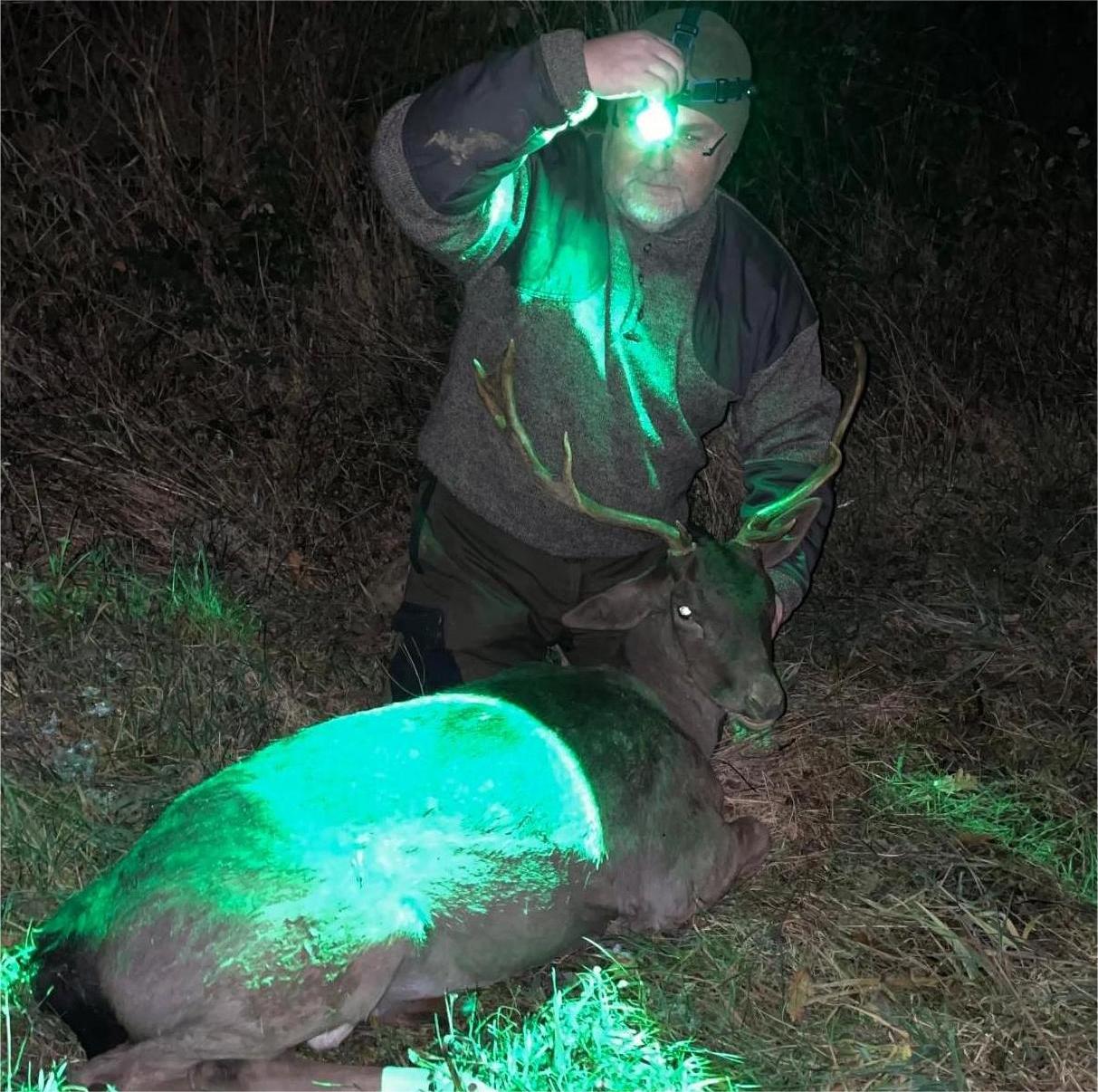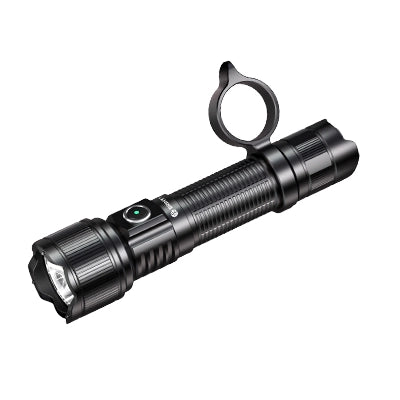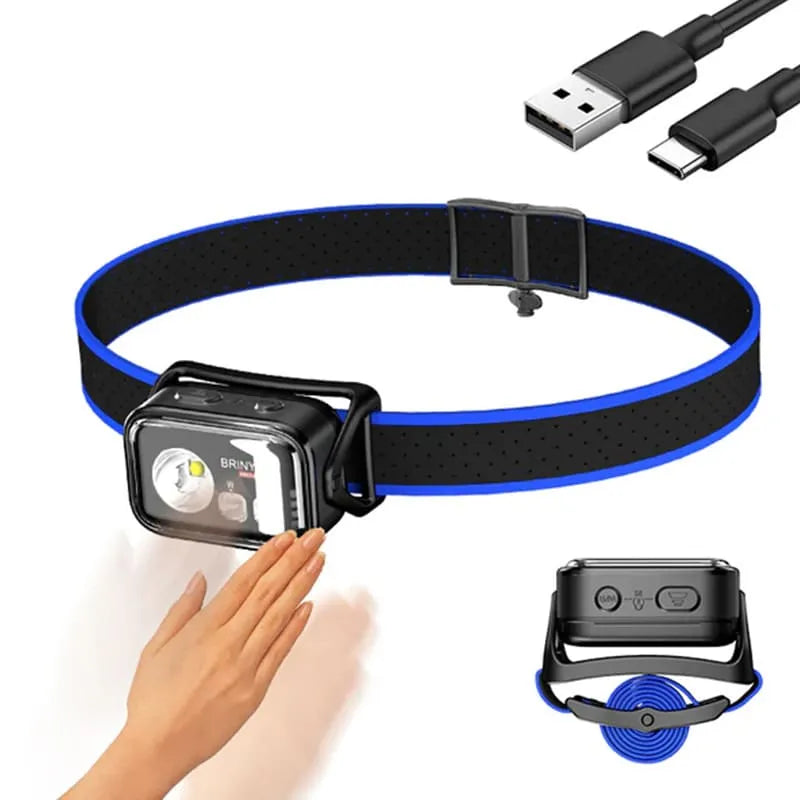


To effectively preserve night vision in the dark, a hunter must master light discipline — using low-intensity red hunting lights above 620nm during approach and gear checks. Human rod cells are structurally blind to long-wavelength red light, allowing full dark adaptation to persist while you navigate. Avoid high-lumen white light flashes entirely. Keep beams angled 10–15° downward. Use short 1–3 second bursts instead of constant-on illumination. And choose tools with dedicated red-mode access that never forces a white-light cycle.
1. The Fatal Flash That Blinds the Hunter
You have been navigating the dense timber for forty minutes, letting your eyes adjust to the starlit canopy. It is 5:45 a.m. — peak movement time for big game. You reach down to check your topographic map or verify a gear strap. You click on a standard white flashlight for just two seconds.
Instantly, the darkness closes in. When you shut the light off, you are functionally blind, trapped in a veil of pitch black. You have just committed the ultimate tactical error in the woods: you broke light discipline, and you destroyed your own hard-earned night vision.
Most tactical discussions around night hunting revolve entirely around what the animal sees. But the most successful hunters know that protecting your own physiological capability — knowing exactly how to preserve night vision in the dark — is the true foundation of stealth harvesting.
A single two-second burst of white light destroys 30 minutes of dark adaptation. The hunter who masters red-light discipline arrives at the stand with fully operational scotopic vision. The hunter who doesn't arrives blind — and waits half an hour for their eyes to recover while the game moves elsewhere.
2. What Is Light Discipline — The Tactical Management of Photons
In professional tracking, light discipline is defined as the deliberate, phase-appropriate control of artificial illumination sources in the field. It requires the hunter to match beam color, brightness, angle, and activation timing to the specific demands of each phase of the hunt without compromising tactical awareness.
The most common mistake among modern hunters is over-lighting. Flooding an open trail with 2,000 lumens of cool white light might make you feel secure, but it does two catastrophic things: it broadcasts your position to every animal within line of sight, and it completely bleaches your retinas, forcing your eyes to reset their dark adaptation process from zero.
Q: What's the single most common night vision mistake hunters make?
A: Using a white-light flashlight that forces you to cycle through turbo mode to reach the red setting. One accidental white flash during that cycle destroys your scotopic adaptation. Hunters who succeed in the dark carry tools with dedicated, zero-click red access — and they never, ever cycle through white while on the trail.
3. The Science: Human Dark Adaptation vs. High-Lumen Exposure
To understand how to preserve night vision in the dark, you must understand the biological machinery of the human eye. The retina relies on two primary types of photoreceptors:
- Cone Cells: Concentrated in the center of your vision. Optimized for daylight, high acuity, and full-color discrimination.
- Rod Cells: Packed tightly across your peripheral retina. Optimized for low-light conditions, movement detection, and structural tracking.
When you step away from ambient light, your eyes require roughly 20 to 30 minutes of total darkness to fully synthesize rhodopsin (the visual purple pigment), allowing your rod cells to reach peak scotopic vision. However, a fraction of a second of exposure to high-lumen full-spectrum white light instantly photobleaches this pigment, causing immediate night blindness and forcing your body to restart the 30-minute adaptation clock.
Why a Dedicated Red Hunting Flashlight Saves Your Vision
Human rod cells are structurally insensitive to long wavelengths of light on the electromagnetic spectrum — specifically red light exceeding 620nm. When you engage a low-intensity, premium red light source:
- Your cone cells register the wavelength, giving you enough visual definition to walk trails, rig gear, or read maps.
- Your rod cells remain completely unexcited, preserving 100% of your dark adaptation and situational peripheral awareness.
- The moment the light source is cut, your eyes return to absolute dark adaptation in under 5 seconds, compared to the grueling 20–30 minutes demanded by white or green light exposure.
Red light above 620nm is invisible to your rod cells. It illuminates the trail without touching the rhodopsin that makes your night vision possible. You can read a map, check your gear, and navigate dense timber — and the moment the light goes off, you see the dark like you never turned it on at all.
4. Practical Light Discipline Techniques: The Human-Centric Strategy
Preserving your visual dominance while tracking predators or big game requires rigorous, muscle-memory habits in the field:
| Hunting Scenario | Wavelength / Color | Lumen Level | Night Vision Preservation Technique |
|---|---|---|---|
| Trail Approach & Navigation | Deep Red (>620nm) | Low (30–80 lm) | Angle beam downward 10–15° at your footsteps. Use short, intermittent 2-second bursts instead of steady beams. |
| Open Terrain Scanning | Green or Red | Medium (100–300 lm) | Utilize the "Halo Method." Keep the intense center spot off reflective brush; scan using the dim outer spill light. |
| Final Identification & Shot | White (or IR for NVG) | High (500+ lm) | One brief burst to confirm target, sex, and backdrop. Execute shot. Kill light instantly to preserve recovery vision. |
| Blood Tracking | Green or Strobe | As Required | Keep beam directed strictly at the ground. Never cast a tracking beam toward the horizon, which ruins dark adjustment. |
Critical Night Vision Preservation Habits:
- Eliminate "Flash Inadvertent": Never use flashlights that require you to click through white or turbo modes to access the red setting. One mistake destroys your scotopic vision.
- Manage Spill Light: Shield your flashlight lens with your hand or the brim of your hat to prevent peripheral glare from bouncing off nearby branches directly back into your eyes.
- Pre-set Settings at the Vehicle: Adjust your gear, dials, and lumen configurations before leaving your truck. Fumbling with mode switches in pitch darkness leads to accidental white light activation.
5. Engineered Tools: Brinyte Flashlights Built for Vision Protection
Standard tactical flashlights are designed for raw power, which often results in visual self-sabotage. Brinyte builds professional hunting systems engineered explicitly around the mechanics of human dark adaptation.
🔴 Brinyte T28 Artemis — The Ultimate Tool to Preserve Night Vision in the Dark
The T28 Artemis features a patented silent rotary dimmer switch. This engineering breakthrough allows you to switch seamlessly between White, Red, and Green light without clicking — and more importantly, without ever cycling through white light by accident.
Tactical Application: Start the hunt in absolute blackout. Rotate the silent dial directly into low-lumen red mode to check your rig. Your rod cells stay protected. Your position remains completely concealed. You bypass night blindness entirely.
Shop T28 Artemis →🔦 Brinyte ZT40 — Preventing Tactical Tunnel Vision
When searching at night with tight beams, the human eye suffers from psychological "tunnel vision," destroying situational awareness. The ZT40 features an adjustable 6° to 70° zoomable beam mechanism, powered by a swappable 21700 battery with fast USB-C recharging.
Tactical Application: Twist the bezel to the 70° ultra-wide flood mode in red or green light. This bathes your immediate walking path in soft, diffuse illumination, preserving your peripheral night vision while keeping you completely aware of your surroundings.
Shop ZT40 →6. Frequently Asked Questions: Night Vision Preservation in Hunting
How can I preserve my night vision in the dark while hunting?
To preserve your night vision in the dark, avoid full-spectrum white light. Utilize a low-lumen red hunting flashlight (620-750nm), angle the beam downward at a 10–15° angle to reduce environmental glare, utilize short 2-second bursts instead of steady streams, and choose illumination tools featuring silent rotary switches that prevent accidental white light activation.
Why does white light ruin night vision faster than red light?
White light instantly photobleaches rhodopsin, the highly sensitive light pigment packed inside human rod cells, causing immediate night blindness that takes up to 30 minutes to recover from. Red light operates at longer wavelengths that human rod cells are biologically incapable of perceiving, allowing you to read maps or navigate safely while keeping your eyes adapted to the dark.
How long does it take for human eyes to adapt to total darkness?
It takes the average human eye approximately 20 to 30 minutes in complete darkness to fully transition to scotopic vision and achieve maximum night acuity. However, a single brief flash of a high-lumen tactical flashlight will instantly reset this biological clock. Red light exposure allows re-adaptation in under 5 seconds.
What is the best light color for preserving night vision?
Deep red light above 620nm is the only color that fully preserves scotopic vision. Rod cells are structurally insensitive to these wavelengths. Green light, while better than white for animal stealth, still stimulates rod cells and causes partial rhodopsin bleaching. For pure night vision preservation during trail navigation and gear checks, red is non-negotiable.
Stop Destroying Your Night Vision. Master Light Discipline.
Browse Brinyte's red-light-first hunting tools — engineered with silent rotary switches and dedicated red access that never forces a white-light cycle.
Shop Red Hunting LightsAbout Brinyte
Founded in 2009 — 50+ patents, ISO9001 certification. Brinyte builds hunting lights for the hunter who understands that the most important eyes in the woods are his own. All products tested to ANSI/NEMA FL1 standards. No companion app. No firmware updates. Just silent rotary switches, dedicated red access, and the confidence that your night vision is intact when the shot presents itself.
"Engineered for the mission — proven in the field."
Founded 2009 · 50+ Patents · ISO9001