

Tactical Flashlight Self-Defense Guide: Techniques, Legal Tips & EDC Picks (2026)
Activation: Instant-access tail switch with momentary/strobe.
Technique: Disorient with light, then escape — never strike.
Legality: Legal almost everywhere, non-lethal, defensible.
Top picks: Brinyte PT16A (high output), XP22 MK3 (weapon-ready).
✔ Those new to tactical flashlights for self-defense
✔ EDC users wanting legal, effective techniques
✔ Home defenders seeking non-lethal options
Introduction
A tactical flashlight is one of the most underrated but effective self-defense tools. Unlike weapons, a flashlight is legal to carry almost everywhere, useful in daily life, and capable of giving you a critical advantage in low-light encounters. But most people don’t know how to actually use it for real-world self-protection.
This guide explains practical, safe, and legally appropriate techniques for using a tactical flashlight for awareness, de-escalation, and escape.
1. Why a Tactical Flashlight Is a Smart Self-Defense Tool
- Legal to carry in almost all regions
- Non-lethal, reduces risk of escalation
- Provides instant visibility in uncertain environments
- Enables distraction, signaling, and escape
- Works even if the attacker doesn’t fear weapons
- Useful every day — even without threats
- Functions during power outages, emergencies, or outdoor travel
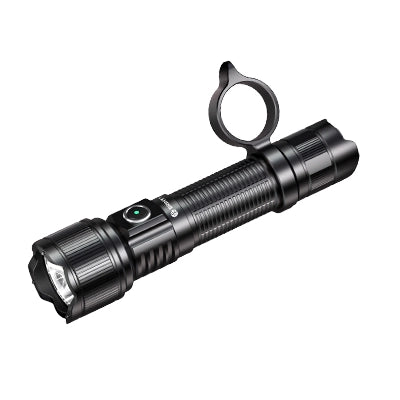
Models like Brinyte PT28 and Brinyte PT16A combine high-output beams, durable bodies, and true tactical switches, making them reliable EDC options for defense and preparedness.

2. Essential Features You Need in a Self-Defense Flashlight
1,000–2,000+ Lumens for Maximum Visual Control
Bright enough to interrupt night vision and create distance. (Example: Brinyte PT28, 1600 lumens balanced tactical beam.)
Instant-Access Tail Switch
Allows one-handed operation under stress.
Strobe Mode with Quick Activation
Strobe is not a weapon — it is a disorientation tool to create escape opportunities.
Durable, Grip-Secure Body
Aerospace aluminum, anti-slip knurling, impact resistance, waterproof (IPX8 ideal).
Compact Size (Pocket or Belt Carry)
The light you carry every day is better than the powerful one left at home.
For compact defensive carry, Brinyte XP22 MK3 is a standout — dual switches, instant strobe, and weapon-mount capability.
A defensive flashlight is defined by three characteristics: instant-activation tail switch (no mode cycling under stress), 1000+ lumens output (sufficient to disrupt dark-adapted vision), and compact enough for daily pocket carry. A light missing any one of these is an illumination tool — not a defensive tool.
3. Situational Awareness: The First Line of Self-Defense
Before any “technique,” the real purpose of a tactical flashlight is awareness.
Use it to:
- Illuminate dark alleys, stairwells, or parking lots
- Identify movement ahead
- Avoid walking into unsafe zones
- Check around or under your vehicle
- Reduce blind spots
Rule: If an area looks suspicious, light it up before entering. This alone prevents more encounters than any self-defense move.
4. The Three Core Defensive Techniques (Safe & Legal)
Purpose: Disrupt the attacker’s night vision long enough for you to reposition or escape.
How to perform: Raise light to eye level (not blocking your own vision). Activate High Mode or Strobe instantly. Keep distance and move diagonally — not backward in a straight line.
Safety notes: Do not move toward the person. Do not keep the light static — use short bursts. Your goal is escape, not confrontation.
Never assume someone is a threat without confirming.
Use your light to: Identify faces, identify hands, check if someone is approaching intentionally or coincidentally, avoid reacting out of fear.
This reduces risk of unnecessary escalation and keeps your actions legally defensible.
A flashlight helps create a barrier while keeping your hands visible.
How: Light in dominant hand, chin level. Non-dominant hand relaxed but raised. Keep posture neutral — not confrontational.
This communicates: “I’m aware.” “I don’t want conflict.” “I am prepared to protect myself if necessary.”
“I carry a Brinyte PT28 daily. Walking to my car late one night, I saw someone lingering near the driver’s side. I lit him up from 30 feet away with a quick strobe burst — he immediately turned and walked off. I didn’t have to strike or threaten. The light alone gave me time to get in my car and lock the doors. This guide’s principles work.”
5. What You Should NEVER Do With a Tactical Flashlight
- ❌ Never strike someone with the light (legal risk + escalation)
- ❌ Never threaten someone by “shining aggressively” without reason
- ❌ Never chase, confront, or pursue
- ❌ Never use strobe irresponsibly (e.g., toward vehicles)
- ❌ Never rely on a flashlight as your only safety plan
A tactical flashlight is a tool for awareness and escape, not combat.
6. How to Carry Your Flashlight for Fast Access
Consistency matters more than technique.
Recommended carry:
- Front pocket (clip outward)
- Belt holster
- Jacket pocket
- Weapon-mounted (Brinyte XP22 MK3) if legally allowed
Test your draw until you can deploy light in 1–2 seconds without looking.
7. Brinyte Models Ideal for Self-Defense & EDC
🔦 Brinyte PT28
Dual tactical tail switch · Balanced beam for indoor + outdoor · Instant strobe · Practical for law enforcement and civilian EDC.
View PT28 →🔦 Brinyte PT16A
3000 lumens burst output · Strong long-range visibility · Great for night patrol or outdoor defense.
View PT16A →🔦 Brinyte XP22 MK3
Compact · Dual tail switch · Designed for weapon-light compatibility · Ideal for home defense and tactical setups.
View XP22 MK3 →
8. Frequently Asked Questions
Can a tactical flashlight legally be used for self-defense?
Yes. A tactical flashlight is a legal, non-lethal defensive tool designed for threat identification and safe disengagement. Using light to create distance and escape is defensible in virtually all jurisdictions.
Is shining a bright light at someone considered self-defense?
If the action is used to escape danger, interrupt an attack, or prevent harm, it is considered a defensive response rather than aggression. The key legal distinction is intent: illumination to escape vs. illumination to harass.
How many lumens do I need for a self-defense flashlight?
For indoor environments, 1000–1600 lumens is ideal. For outdoor scenarios or open spaces, 2000+ lumens provides stronger reach and threat identification. The Brinyte PT16A delivers 3000 lumens for maximum visual disruption at distance.
Should a self-defense flashlight include a strobe mode?
Yes. A strobe mode can temporarily disrupt an attacker’s vision and coordination, giving you a critical 2–5 second window to escape. The Brinyte PT16A and XP22 MK3 both feature instant-access strobe via dedicated tail switch.
What is the best grip technique for tactical self-defense use?
A thumb-forward tail switch grip provides fast access to momentary light activation while maintaining full control of the flashlight. Practice drawing and activating from your usual carry position until it becomes muscle memory.
Can a tactical flashlight replace other self-defense tools?
No. It enhances situational awareness and provides a safe, legal defensive option, but it does not fully replace other protective tools or safety practices. A flashlight is one layer in a complete personal safety strategy — not the entire strategy.
Is the Brinyte XP22 MK3 suitable for home defense?
Yes. The XP22 MK3’s dual-switch design, instant strobe, and high-intensity output make it ideal for high-pressure, close-range defense situations. Its ultra-low profile (14.55mm) also makes it compatible with rifle and pistol mounting for home defense setups.
Is it better to carry a tactical flashlight in a pocket or holster?
For the fastest reaction time, front pocket carry with a clip or front-waist positioning offers quicker access than a belt holster. The goal is a sub-2-second draw from your natural hand position — test both and choose what is fastest for you.
Is a tactical flashlight safe to carry for everyday use (EDC)?
Yes. Tactical flashlights are non-lethal, legal, and one of the safest and most practical EDC tools available. Unlike knives or pepper spray, a flashlight raises no legal questions at security checkpoints and is welcome in virtually every public space.
Is momentary mode important for self-defense situations?
Absolutely. Momentary mode allows quick bursts of light without revealing your position. In low-light defensive scenarios, constant-on illumination turns you into a visible target. Momentary activation — a half-press of the tail switch — delivers light only when you need it and preserves your tactical advantage.
Step-by-Step: The Three Core Defensive Techniques
- The Disorienting Flash: Raise light to eye level (not blocking your own vision). Activate High Mode or Strobe instantly. Keep distance and move diagonally — not backward in a straight line. Your goal is escape, not confrontation.
- The Identify-First Rule: Use light to identify faces and hands before assuming threat. Check whether someone is approaching intentionally or coincidentally. Avoid reacting out of fear. This keeps your actions legally defensible.
- The Tactical Fence Position: Hold light in dominant hand at chin level. Keep non-dominant hand relaxed but raised. Maintain neutral posture — not confrontational. This communicates awareness without provocation.
Ready to Carry a Smarter Self-Defense Tool?
Browse our tactical flashlight collection — all tested for EDC reliability, with instant strobe, high lumens, and legal carry. Free shipping over $49.
Shop Tactical Lights →About Brinyte
Founded in 2009, Brinyte designs tactical and outdoor lighting trusted by law enforcement, military, and search-and-rescue professionals. Every product is engineered for reliability in extreme conditions — and backed by 50+ patents and ISO9001 certification. Our tactical flashlights are built for professionals and civilians who need tools that work under pressure.
“Engineered for the mission — proven in the field.”
Founded 2009 · 50+ Patents · ISO9001